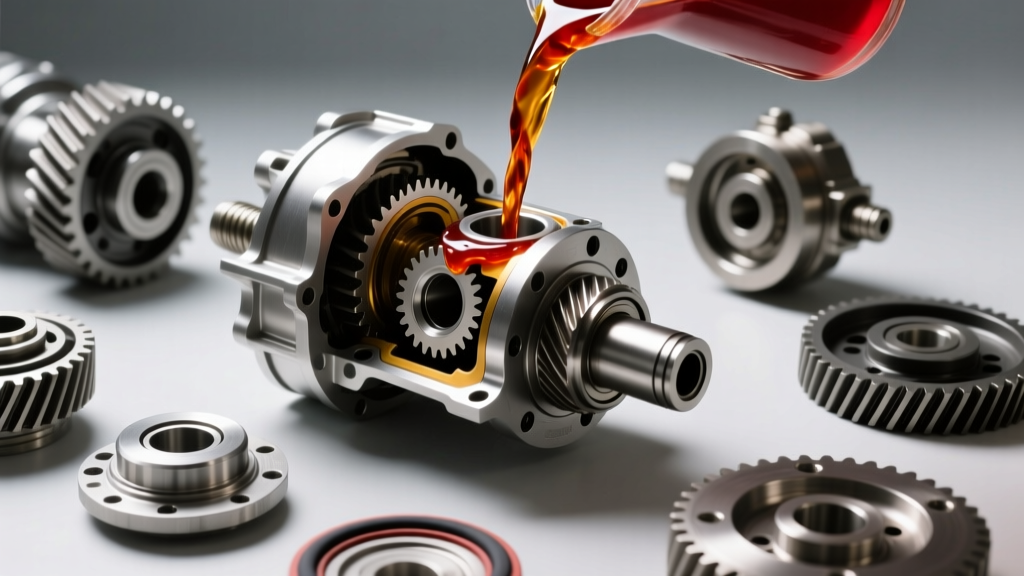
The Critical Role of Fluid in Small-Format Differentials
When enthusiasts think of differential maintenance, they usually picture heavy-duty truck axles or performance car limited-slip units. However, the go cart differential—whether it is a standalone 1-inch live axle carrier on a custom build or an integrated transaxle unit in a TrailMaster 150XRS or Carter Talon—requires just as much diagnostic attention. In fact, because small off-road karts operate with incredibly low fluid volumes (often between 250ml and 450ml), any contamination or thermal breakdown is highly concentrated and can destroy ring and pinion gears in a matter of hours.
As of 2026, modern off-road karts and racing buggies are pushing more horsepower through smaller drivetrains than ever before. Reading your gear oil’s color, texture, and odor is the single most effective preventive maintenance diagnostic you can perform. This guide will teach you how to decode the condition of your differential fluid, identify impending catastrophic failures, and execute a flawless fluid service.
Baseline: What Fresh Gear Oil Looks Like
Before you can diagnose a problem, you must understand the baseline. Most go cart differentials and small CVT transaxles require an API GL-5 rated gear oil, typically in a 75W-90 or 80W-90 viscosity. According to the SAE J306 viscosity classification standard, these fluids are engineered to maintain a protective hydrodynamic film under the extreme sliding friction of hypoid and bevel gears.
| Fluid Type | Viscosity | Fresh Color | Common Applications |
|---|---|---|---|
| Conventional GL-5 | 80W-90 | Amber / Honey | Standard live axle diffs, older Yerf-Dog models |
| Synthetic GL-5 | 75W-90 | Clear Amber / Light Gold | High-RPM racing karts, severe off-road buggies |
| LS (Limited Slip) Formulation | 80W-90 | Dark Brown / Opaque | Karts equipped with positraction or spool-lock mods |
| ATF (Dexron III) | N/A | Translucent Red | Specific enclosed chain-cases or vintage transaxles |
Diagnostic Matrix: Decoding Fluid Color, Texture, and Odor
When you pull the drain plug on your go cart differential, do not just let the fluid drain into a pan and discard it. Catch it in a clean, white-plastic or clear glass inspection pan. Evaluate the fluid against the following diagnostic matrix to determine the internal health of your axle.
1. Milky, Frothy, or 'Chocolate Milk' Appearance
Diagnosis: Severe water intrusion.
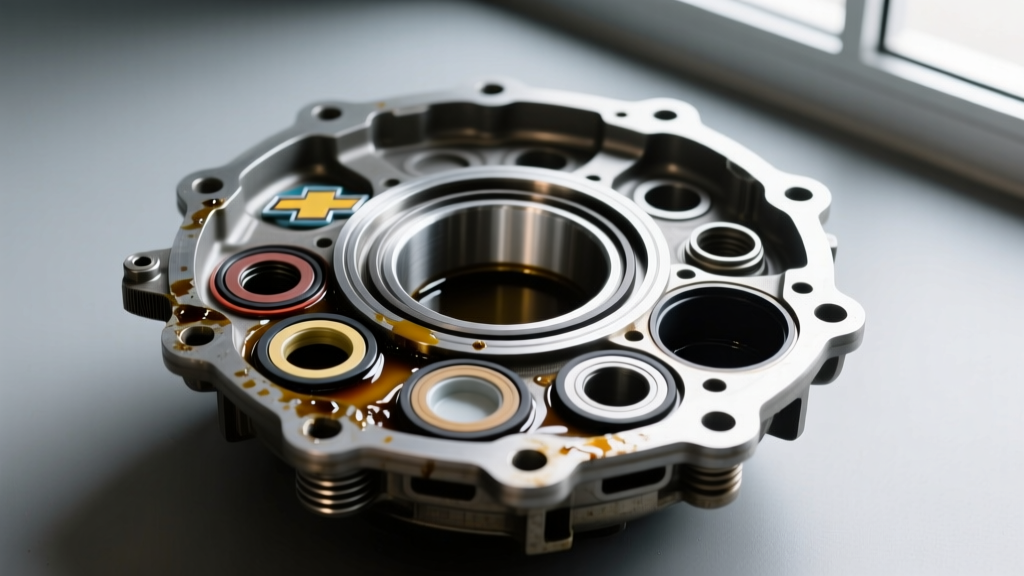
Root Cause: Off-road karts are frequently subjected to mud bogging, deep puddle crossings, and high-pressure power washing. If the axle seals (typically 25x40x10mm double-lip TC seals) are worn, or if the differential breather vent is clogged or submerged, water will bypass the seals. As the gears churn the water and oil together, it emulsifies into a thick, milky sludge.
The Danger: Water destroys the hydrodynamic film. Furthermore, GL-5 gear oils rely on sulfur-phosphorus extreme pressure (EP) additives. When these additives mix with water and heat, they can form mild sulfuric and phosphoric acids, which will rapidly etch and corrode the yellow metals (bronze bushings and synchronizers) found inside integrated kart transaxles. For a deeper dive into how EP additives interact with moisture, refer to this comprehensive guide on gear oil basics.
2. Metallic Glitter or 'Silver Paste'
Diagnosis: Normal break-in wear OR advanced bearing degradation.
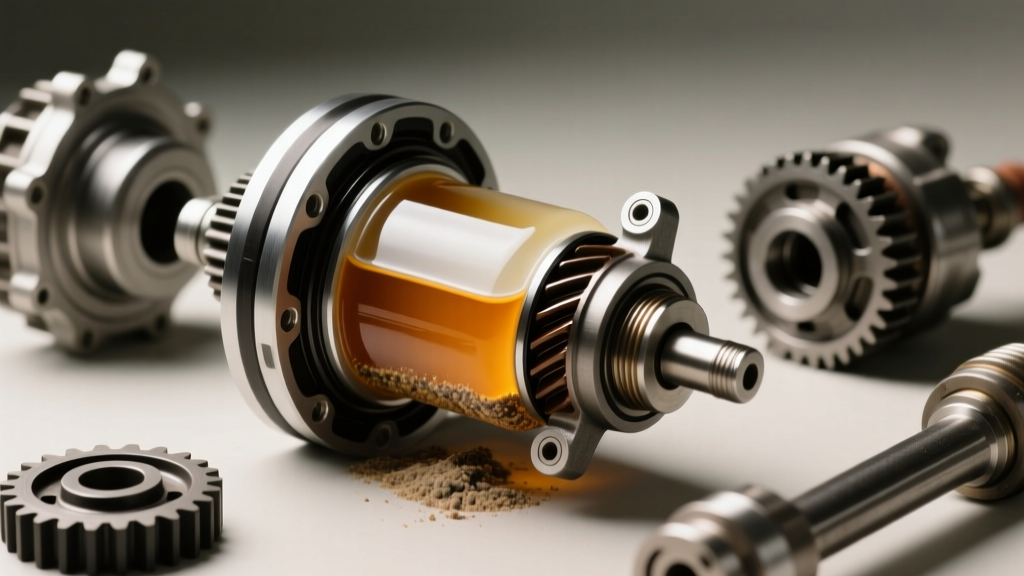
Root Cause: If the kart is brand new (under 10 hours of run time), a slight silver sheen or microscopic glitter is normal as the ring and pinion gears wear into their mating pattern. However, if the kart has over 50 hours and the fluid resembles metallic grey paste, your needle bearings or carrier bearings are disintegrating.
Action: Run a rare-earth magnet through the drained fluid. If it pulls out chunky metal shards or needles, the differential requires a complete teardown and rebuild. Do not simply refill and run.
3. Jet Black with a Burnt, Acrid Odor
Diagnosis: Thermal breakdown and severe overheating.
Root Cause: Small differential housings lack the surface area to dissipate heat effectively. If a kart is consistently run at wide-open throttle (WOT) in deep sand, mud, or while climbing steep inclines, the fluid temperatures can exceed 250°F (121°C). At this threshold, the base oil oxidizes, turning jet black and losing its viscosity. The burnt smell is the sulfur additives literally cooking off.
>Action: Upgrade to a full-synthetic 75W-140 gear oil (such as Red Line 75W140 GL-5, Part #50304) to increase the thermal threshold, and consider fabricating cooling fins or a fan-shroud for the differential housing.
4. Chunky Black Sludge or Carbon Deposits
Diagnosis: Clutch material contamination (Transaxle specific).
Root Cause: On karts where the differential shares a fluid bath with a wet clutch or a CVT torque converter (common in 150cc to 250cc Chinese-manufactured buggies), aggressive riding or a slipping reverse gear will shed friction material into the oil. This creates a thick, abrasive sludge that will score the cylinder walls and block internal oil pickup screens.
Preventive Maintenance: The Drain, Inspect, and Refill Protocol
To ensure maximum lifespan for your go cart differential, adhere to a strict preventive maintenance schedule. For off-road and trail karts, change the fluid after the first 5 hours of operation (break-in), and subsequently every 25 to 40 hours, or at the end of every riding season.
Step 1: Preparation and Extraction
- Warm the Fluid: Run the kart for 5-10 minutes. Warm oil flows faster and keeps abrasive particles suspended, ensuring they drain out rather than settling at the bottom of the housing.
- Remove Plugs: Most small live-axle carriers use an M8x1.25 or M10x1.25 hex-head bolt for the drain and fill plugs. Use a high-quality metric hex socket to avoid stripping the soft cast aluminum housings.
- Vacuum Extraction (Alternative): If your differential housing lacks a dedicated drain plug (common on sealed transaxles), use a pneumatic fluid evacuator with a 6mm extraction tube inserted through the fill/dipstick hole.
Step 2: Housing Flush (If Contaminated)
If you drained milky or heavily metallic fluid, do not just refill. Flush the housing with 4 ounces of cheap, lightweight ATF or a dedicated gear-case flush. Jack up the rear axle, spin the wheels by hand in neutral for two minutes to circulate the flush, and drain it completely before adding new gear oil.
Step 3: Refilling and Torque Specifications
Refill the differential through the top or side fill plug until the fluid reaches the exact bottom edge of the fill hole threads. Overfilling a small go cart differential will cause the gears to aerate the oil (creating froth), which leads to overheating and blown axle seals due to internal pressure buildup.
| Component / Fastener | Specification / Torque | Notes |
|---|---|---|
| M8x1.25 Drain/Fill Plug | 14 - 16 lb-ft | Apply blue Loctite 243 to threads; use a new crush washer. |
| M10x1.25 Drain/Fill Plug | 20 - 24 lb-ft | Do not overtighten; cast aluminum strips easily. |
| Standard 1" Live Axle Carrier | 300ml - 400ml Capacity | Fill to bottom of fill-hole threads. |
| 150cc CVT Transaxle Diff | 450ml - 600ml Capacity | Verify if transaxle shares fluid with gearbox. |
| Standard Axle Seal (1" Bore) | TC 25x40x10mm | Replace if fluid is milky; pack lip with grease on install. |
Upgrading Your Hardware for Better Diagnostics
One of the best preventive maintenance upgrades you can perform on a go cart differential is replacing the stock, cheap steel drain plug with a magnetic M10 or M8 drain plug. Brands like GoldPlug or generic magnetic hardware store alternatives cost less than $15. This simple upgrade ensures that microscopic ferrous wear particles are pulled out of suspension and held safely away from your ring and pinion gears, making your next visual inspection significantly more accurate.
Final Thoughts on Drivetrain Longevity
Your go cart differential operates in one of the harshest environments in motorsports: low speeds, high torque, massive shock loads from jumps and whoops, and constant exposure to the elements. By treating your differential fluid not just as a consumable, but as a diagnostic window into the health of your drivetrain, you can catch a $20 seal failure before it turns into a $400 transaxle replacement. Inspect the color, feel the texture, smell the oil, and keep your kart on the trail and out of the scrap pile.