The Engineering Flaw: Why GM 6L80 and 8L90 Cooler Lines Fail
When it comes to heavy-duty towing and daily driving in GM’s 1500-series trucks (Silverado, Sierra, Tahoe, Suburban), the 6L80 and 8L90 transmissions are legendary workhorses. However, their Achilles' heel lies in the thermal management system. As of 2026, repair shops have documented a massive surge in catastrophic failures stemming from degraded cooling lines and internal radiator breaches. Performing a proper transmission oil cooler line repair on these specific platforms requires more than just swapping hoses; it demands a complete understanding of galvanic corrosion, thermal bypass valves, and fluid viscosity requirements.
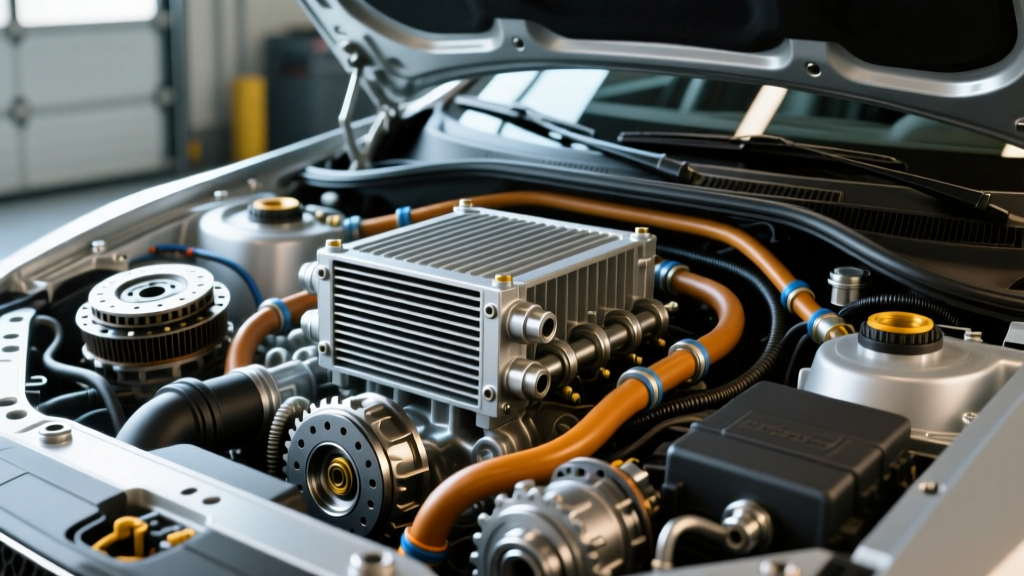
The factory routing of the transmission cooler lines on 2014-2023 GM trucks places the steel-to-rubber transition crimps dangerously close to the exhaust manifolds and catalytic converters. Over 80,000 to 120,000 miles, extreme heat cycling degrades the rubber isolator sections, leading to micro-weeping and eventual blowouts. Furthermore, where the steel lines thread directly into the aluminum transmission case, galvanic corrosion seizes the fittings. Attempting a standard repair without addressing this corrosion often results in stripped case threads or snapped hard lines.
Executing the Repair: Quick-Connects and Hard Line Replacements
Unlike older vehicles that used simple flare nuts, the 8L90 and later 6L80 models utilize push-to-connect quick-disconnect fittings at both the transmission case and the radiator. To execute a reliable transmission oil cooler line repair, you must use the correct release tools and replacement retainers.
Step-by-Step Line Replacement Protocol
- Depressurize and Drain: Remove the transmission pan to drop the fluid level below the cooler line ports. This prevents a massive spill when the lines are disconnected.
- Release the Quick-Connects: Use a dedicated 3/8-inch and 1/2-inch fuel line disconnect tool. Do not pry with screwdrivers, as this will gouge the aluminum case ports.
- Address Case Corrosion: If the steel line is seized in the aluminum case, apply a penetrating catalyst like Kroil and use localized heat (up to 250°F) on the aluminum case to break the galvanic bond. Never use a torch directly on the steel line near the case.
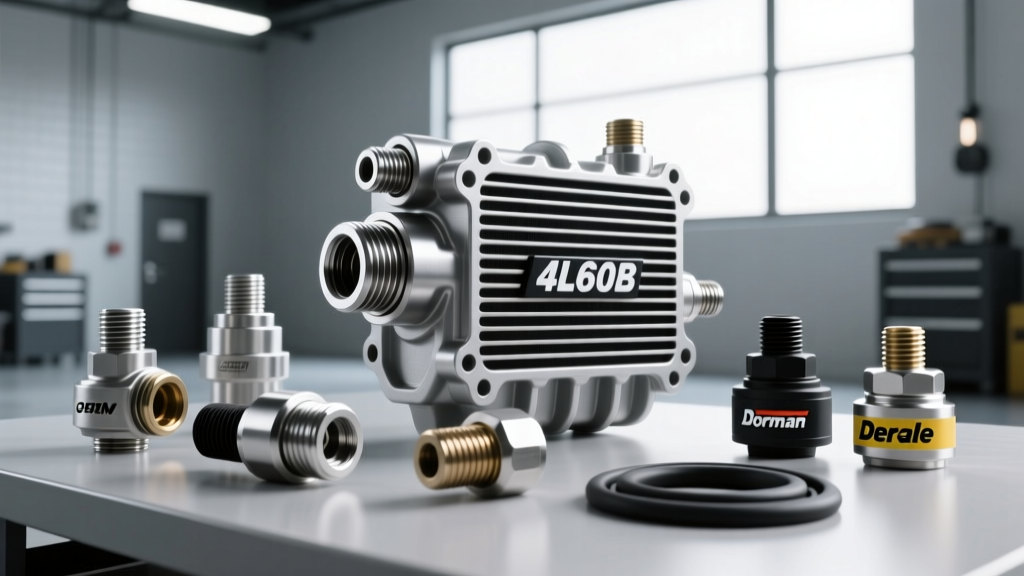
- Install New Retainers: According to Dorman Products, reusing OEM plastic retainer clips is a primary cause of post-repair leaks. Always install new Dorman 800-604 (for 1/2-inch lines) or 800-605 (for 3/8-inch lines) quick-connect retainers.
Pro-Tip: If the hard line is damaged but the routing is intact, you can perform a localized transmission oil cooler line repair using Dorman 800-705 union fittings to splice in a new section of nickel-copper (NiCop) hard line, which resists corrosion far better than OEM steel.
The 'Strawberry Milkshake' and Radiator Bypass Strategies
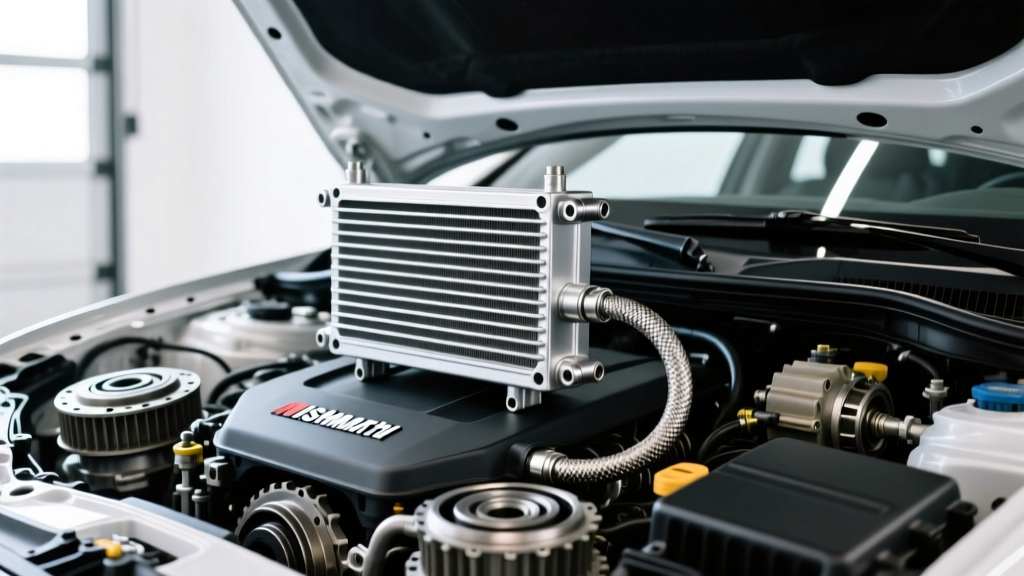
The most devastating failure mode for GM trucks is the internal radiator cooler breach. The OEM transmission cooler is integrated into the engine radiator's plastic side tank. When this internal barrier cracks, engine coolant mixes with ATF, creating a pink emulsion known as the 'strawberry milkshake.' This fluid destroys the friction materials in the 6L80 and 8L90 clutch packs within miles. To prevent this, many fleet managers and towing enthusiasts opt for a radiator bypass, deleting the internal cooler and routing the lines directly to a dedicated external stacked-plate cooler.
Auxiliary Cooler Comparison for GM 1500 Trucks (2026 Market Data)
| Cooler Brand / Model | Part Number | Design Type | BTU Rating (Est.) | Price Range (2026) | Best Application |
|---|---|---|---|---|---|
| OEM ACDelco Replacement | 24239173 (Internal) | Tube-and-Fin (In-Radiator) | 12,000 | $180 - $240 | Stock Daily Driving |
| Mishimoto Stacked-Plate | MMTC-SLVR-14 | Stacked-Plate | 28,000 | $220 - $260 | Heavy Towing / Bypass |
| Derale Series 8000 | 15960 | Plate-and-Fin | 24,000 | $140 - $170 | Budget Auxiliary Add-on |
When performing a full bypass, you must cap the radiator ATF ports and plumb the transmission directly to the external cooler. As noted by transmission specialists at Sonnax, maintaining adequate line pressure and flow volume is critical; stacked-plate coolers like the Mishimoto offer the lowest flow restriction, ensuring the 6L80's lube circuit doesn't starve at idle.
Ford 10R120 Thermal Management Module Considerations
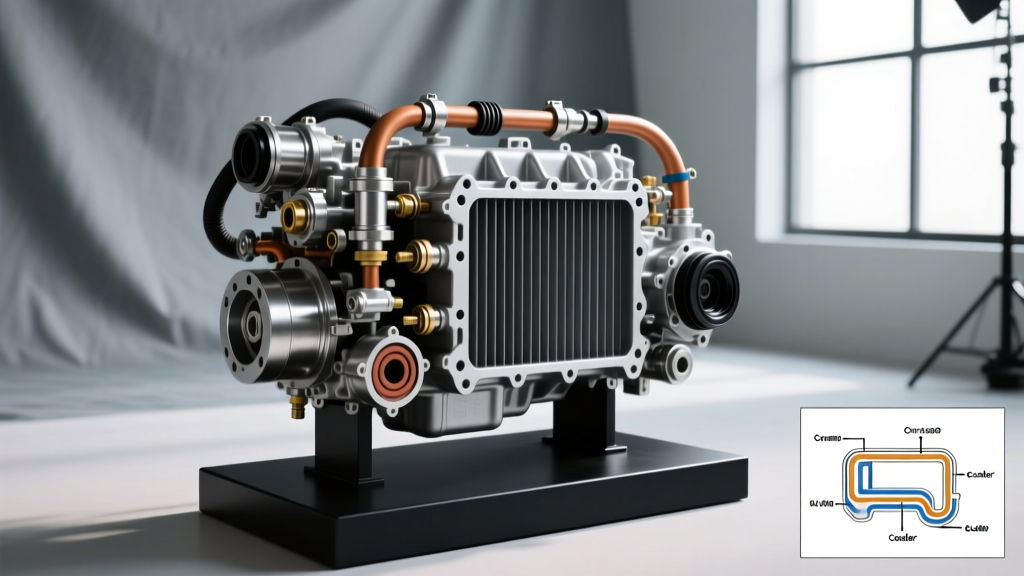
While GM trucks struggle with hard line corrosion, the Ford F-150 equipped with the 10R120 transmission faces a different cooler-related hurdle: the Thermal Management Module (TMM). The 10R120 uses a complex electronic thermal bypass valve designed to keep the transmission fluid cold for emissions purposes, only opening the cooler circuit once the fluid reaches operating temperature. These valves frequently stick closed, causing severe overheating during towing.
A transmission oil cooler line repair on a 10R120 often involves bypassing or deleting the TMM entirely. By installing a mechanical thermostat bypass kit and routing the lines to an external Derale or Mishimoto cooler, you eliminate the electronic failure point. Note that deleting the TMM will trigger a soft code in the TCM; a custom tune via HP Tuners is required to disable the thermal management logic and prevent limp-mode triggers.
Critical Torque Specs, Fluid Capacities, and Bleeding
Whether you are repairing a leaking quick-connect or installing an external bypass cooler, adhering to exact torque specifications and fluid protocols is non-negotiable. The 8L90 and 10R120 are incredibly sensitive to fluid viscosity and aeration.
- Case Fitting Torque (6L80 Steel Lines): 18 lb-ft (24 Nm). Do not exceed 20 lb-ft, or you will strip the aluminum case threads, requiring a Timesert or Helicoil repair.
- Transmission Pan Bolts (8L90/6L80): 89 lb-in (10 Nm). These are small T-40 Torx bolts that snap easily if over-torqued with a standard 1/2-inch drive wrench.
- Fluid Capacity (Dry Fill): 6L80 holds 11.2 quarts; 8L90 holds 11.8 quarts. A standard cooler line and pan drop repair will require 6 to 8 quarts.
- Fluid Specification: The 6L80 requires Dexron VI. The 8L90 and Ford 10R120 strictly require Dexron ULV (Ultra Low Viscosity) or Mercon ULV. Mixing ULV with standard Dexron VI will cause immediate shift flare and clutch slippage due to the altered friction modifiers and viscosity index.
The Proper Bleeding Procedure
After completing your transmission oil cooler line repair or external cooler installation, the system must be bled to prevent air from entering the torque converter and lube circuit. Start the engine, allow it to idle in Park for 2 minutes to prime the pump. Shift through each gear (P-R-N-D), pausing for 5 seconds in each. With the engine still running and the transmission at operating temperature (180°F - 200°F), check the fluid level at the dipstick or the side-level check plug. Top off with the correct ULV or VI fluid until it drips from the check port. Failure to bleed the cooler lines will result in delayed forward engagement and severe pump cavitation.