The Short Answer: Do Front Wheel Drives Have Differentials?
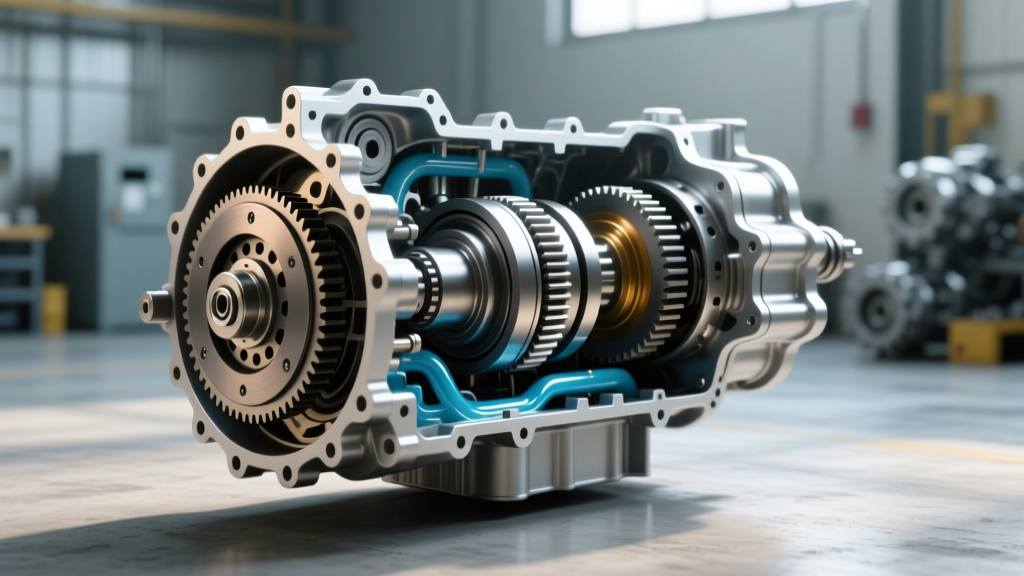
When enthusiasts or DIY mechanics ask, do front wheel drives have differentials, the answer is an unequivocal yes. However, unlike rear-wheel-drive (RWD) vehicles where the differential is a distinct, standalone pumpkin bolted to a solid or independent rear axle, front-wheel-drive (FWD) vehicles utilize a transaxle. In a transaxle layout, the transmission and the differential are integrated into a single, unified casing.
As of 2026, the vast majority of passenger vehicles on the road utilize a transverse-engine FWD or FWD-based AWD architecture. Understanding how the differential operates within this confined space is critical for accurate diagnostics, fluid maintenance, and eventual rebuilds. In this model-specific repair guide, we will dissect the FWD transaxle differential, focusing on two of the most common platforms on the road: the Toyota U760E 6-speed automatic and the Volkswagen DQ250 6-speed DSG.
Anatomy of a FWD Transaxle Differential
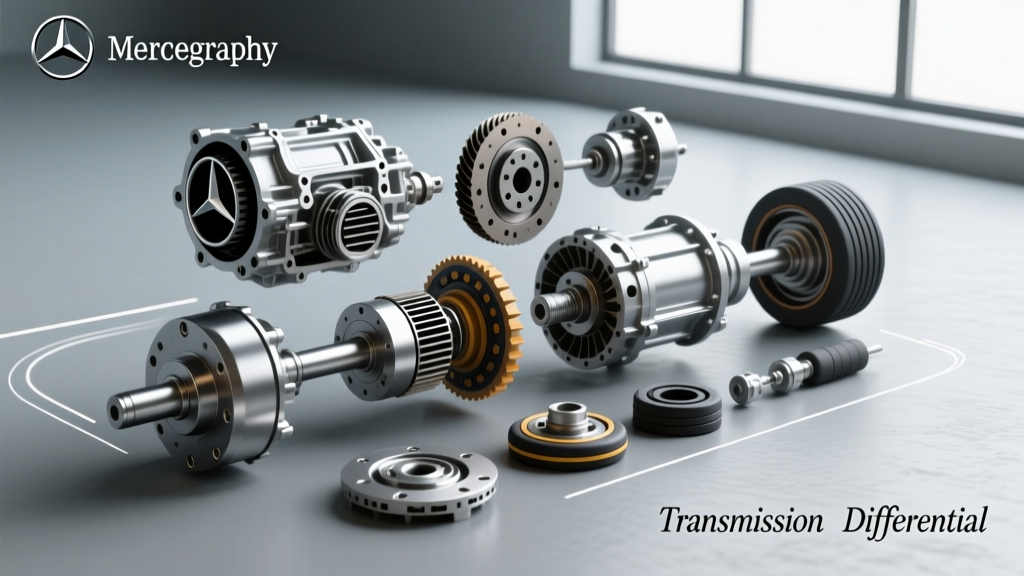
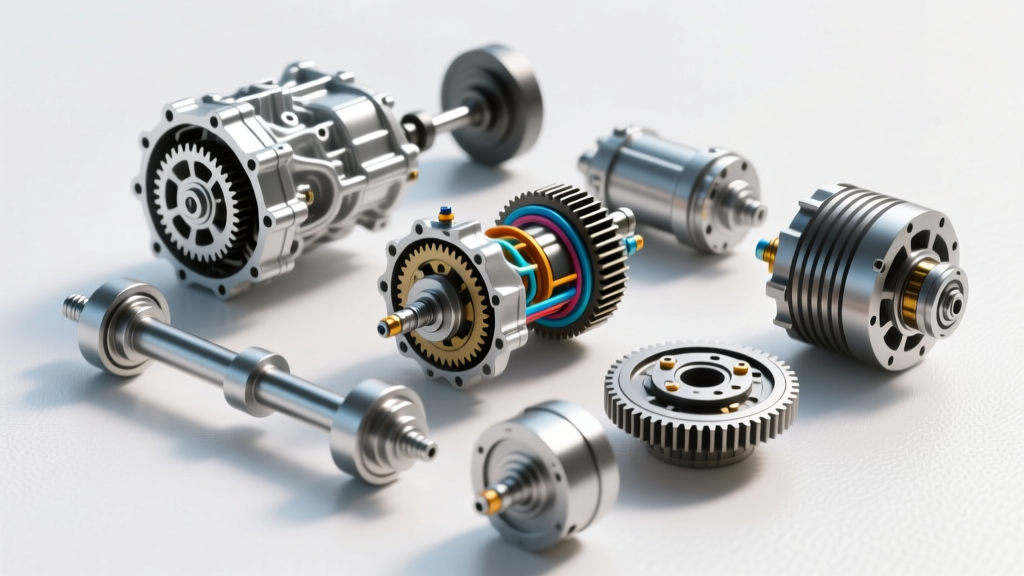
Despite being housed inside the transmission case, the internal mechanics of a FWD differential mirror traditional hypoid gear sets. The assembly typically consists of:
- Ring and Pinion Gear: Transfers rotational force from the transmission's output shaft (or transfer gear) to the differential carrier at a 90-degree angle.
- Differential Carrier: Houses the spider gears and side gears, allowing the left and right axle shafts to rotate at different speeds during cornering.
- Carrier Bearings: Tapered roller bearings that support the carrier within the transaxle case. Preload on these bearings is critical to prevent gear whine and catastrophic failure.
- Speedometer/Reluctor Ring: Often pressed onto the differential housing to provide wheel speed data to the ABS and TCM modules.
Mechanic's Note: Because the FWD differential shares a sump with the transmission's planetary gearsets, clutches, and valve body, any catastrophic differential failure (like a shattered spider gear) will send metallic shrapnel through the entire transmission, usually totaling the unit.
Model-Specific Repair Focus: Toyota U760E Transaxle
The Toyota U760E (and its AWD counterpart, the U760F) is a ubiquitous 6-speed automatic transaxle found in the Toyota Camry, RAV4, and Lexus NX. The differential is located at the bottom-rear of the transaxle case, bathed in the same fluid as the hydraulic control system.
Fluid Specifications and Service Intervals
Toyota specifies Toyota Genuine ATF WS (World Standard) for this transaxle. While Toyota often labels this fluid as 'lifetime' under normal driving conditions, severe duty (towing, mountain driving, ride-sharing) necessitates a drain-and-fill every 60,000 miles to protect the differential bearings and ring gear.
- Total Dry Capacity: ~6.5 Liters
- Drain and Fill Capacity: ~2.5 to 3.0 Liters
- Drain Plug Torque: 38 Nm (28 lb-ft)
- Fill/Level Check Plug Torque: 38 Nm (28 lb-ft)
Differential Bearing Preload Adjustment
If you are rebuilding a U760E due to differential whine, simply swapping the carrier bearings is not enough. You must set the carrier bearing preload using selective shims located behind the outer bearing races. According to Toyota TechInfo documentation, preload must be measured with a torque wrench on the pinion shaft. The target preload is typically between 0.8 to 1.2 Nm (7 to 11 in-lbs) of rolling resistance. Shims are available in 0.05mm increments from the dealer. Incorrect preload will result in immediate gear whine or premature bearing spalling.
Model-Specific Repair Focus: VW DQ250 (6-Speed DSG)
The Volkswagen DQ250 (02E) transverse DSG transaxle is found in the Golf GTI, Audi A3, and numerous MQB-platform vehicles. This transaxle presents a unique engineering challenge: the differential, the wet dual-clutches, and the mechatronic valve body all share the exact same fluid sump.
The Contamination Danger
The DQ250 uses a specific synthetic fluid, typically G 052 182 A2. Because the differential gears are constantly meshing and shedding microscopic metallic particulates, the fluid becomes contaminated over time. If the 60,000-mile DSG service is ignored, differential debris bypasses the clogged internal filter and enters the mechatronic unit, clogging the solenoid valves that control clutch engagement. This results in the dreaded 'Mechatronic Failure' code and harsh shifting.
DQ250 Differential Service Procedure
- Level the Vehicle: The car must be perfectly level. Use an OBD2 scanner to monitor the transmission fluid temperature. The level check must be performed when the fluid is between 35°C and 45°C.
- Drain: Remove the 14mm hex drain plug (Torque: 45 Nm). Expect to drain roughly 3.5 to 4.0 liters.
- Filter Replacement: The filter (Part Number: 02E 305 051 C) is located under the top-mounted mechatronic cover. This requires removing the battery and airbox. Torque the filter housing bolts to 10 Nm in a spiral pattern.
- Fill: Pump exactly 4.5 liters of G 052 182 through the drain hole using a fluid transfer pump, then install the level-check snorkel tube and tighten the drain plug to 45 Nm.
Common FWD Differential Failure Modes & Diagnostics
Diagnosing a failing FWD differential requires isolating the noise from wheel bearings and tire cupping. Here is a diagnostic framework used by drivetrain specialists:
- Differential Whine: A high-pitched howl that changes pitch strictly with vehicle speed and load. Test: If the whine gets louder under acceleration and quieter on deceleration (or vice versa), the ring and pinion gear lash is compromised, or the pinion bearing is failing. Wheel bearing noise, by contrast, will change pitch when swerving left or right to shift the vehicle's weight.
- Cornering Chatter (Limited Slip/Clutch Pack): If your FWD vehicle is equipped with a front limited-slip differential (LSD) or an electronic torque-vectoring diff (like the Ford Focus RS or Honda Civic Type R), chatter during tight, low-speed turns indicates degraded LSD clutch friction modifier fluid or worn clutch plates.
- Clicking on Deceleration: Excessive backlash between the spider gears and side gears, often caused by running low on transaxle fluid, leading to inadequate lubrication of the carrier assembly.
Drivetrain Types and Differential Configurations
To contextualize where the FWD transaxle fits into the broader automotive landscape, refer to the comparison table below detailing how differentials are packaged across various drivetrain layouts.
| Drivetrain Layout | Differential Location | Typical Fluid Type | Common Failure Point |
|---|---|---|---|
| FWD (Transverse) | Integrated inside Transaxle case | ATF, CVTF, or MTF (Shared sump) | Carrier bearing wear, fluid starvation |
| RWD (Solid Axle) | Standalone center 'pumpkin' | 75W-90 or 75W-140 Gear Oil | Pinion seal leaks, spider gear wear |
| RWD (IRS) | Rear-mounted subframe unit | Synthetic Hypoid Gear Oil | Subframe bushing deflection causing gear misalignment |
| AWD (FWD-Biased) | Front Transaxle + Rear PTO/Drive Shaft | ATF (Front) / Gear Oil (Rear) | PTO splines stripping, transfer case fluid degradation |
Repair Costs and Sourcing Parts
When a FWD transaxle differential fails, you are generally faced with two options: a targeted differential rebuild (requiring transaxle removal and teardown) or a full remanufactured transaxle swap. As of 2026, labor rates and parts availability dictate the following average costs:
- Transaxle R&R (Remove & Replace) Labor: $800 - $1,400 (FWD transverse engines require subframe dropping and axle extraction).
- Differential Rebuild Kit: $250 - $500 (Includes Timken or Koyo carrier bearings, seals, and shim kits). Sourcing from reputable suppliers like RockAuto ensures OEM-grade metallurgy.
- Ring and Pinion Gear Set: $400 - $900 (Often difficult to source for specific FWD transaxles without going through a dealership network).
- Full Remanufactured Transaxle: $2,500 - $4,500 (Core charge usually applies).
Final Thoughts on FWD Drivetrain Maintenance
So, do front wheel drives have differentials? Absolutely. They are highly stressed, precision-machined hypoid gearsets that are entirely dependent on the health of your transmission fluid. Whether you are maintaining a Toyota Camry's U760E or servicing a VW GTI's DQ250 DSG, adhering strictly to fluid specifications, torque sequences, and temperature-dependent level checks is the only way to ensure the integrated differential survives the life of the vehicle. For deeper engineering principles on transaxle gear mesh and lubrication dynamics, refer to technical papers published by SAE International.