Introduction to the 5th-Gen THS FWD Layout
The 2025 Toyota Camry Hybrid represents a significant evolution in Toyota's Hybrid Synergy Drive, utilizing the 5th-generation Toyota Hybrid System (THS). For technicians and advanced DIYers, understanding the 2025 Toyota Camry hybrid drivetrain requires a departure from traditional automatic transmission diagnostics. The front-wheel drive (FWD) configuration in this generation relies on the P810 e-CVT transaxle, which eliminates the torque converter and traditional planetary gearsets found in conventional FWD vehicles. Instead, it uses a Power Split Device (PSD) and dual Motor-Generators (MG1 and MG2) to route torque to the front wheels. When diagnosing drivetrain malfunctions, whining noises, or vibration issues, technicians must evaluate both the mechanical FWD hard parts and the high-voltage electrical integration. This guide provides a comprehensive troubleshooting framework for the FWD operation, complete with OEM torque specifications, fluid diagnostics, and failure mode analysis.
Core FWD Components in the P810 e-CVT Transaxle
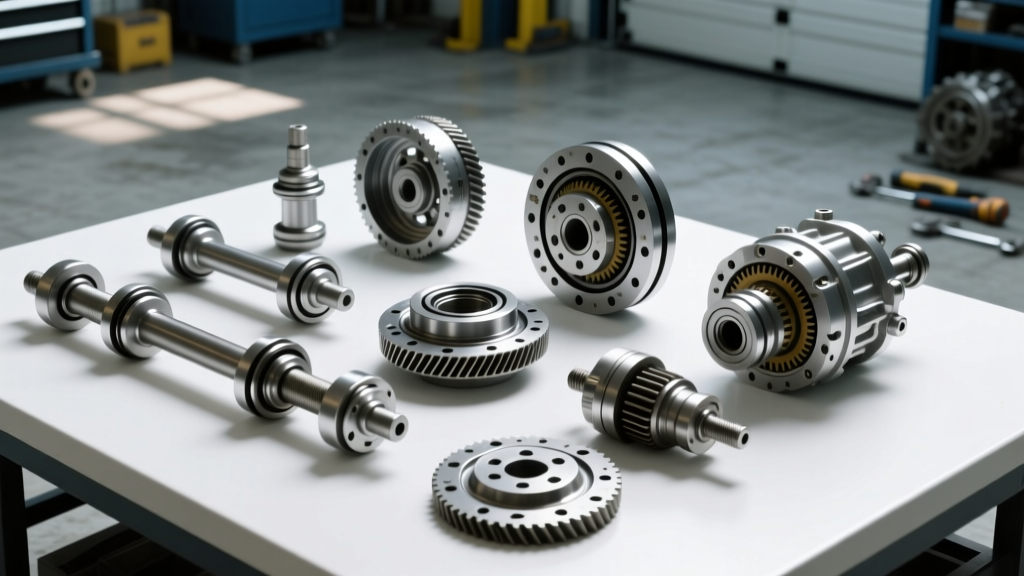
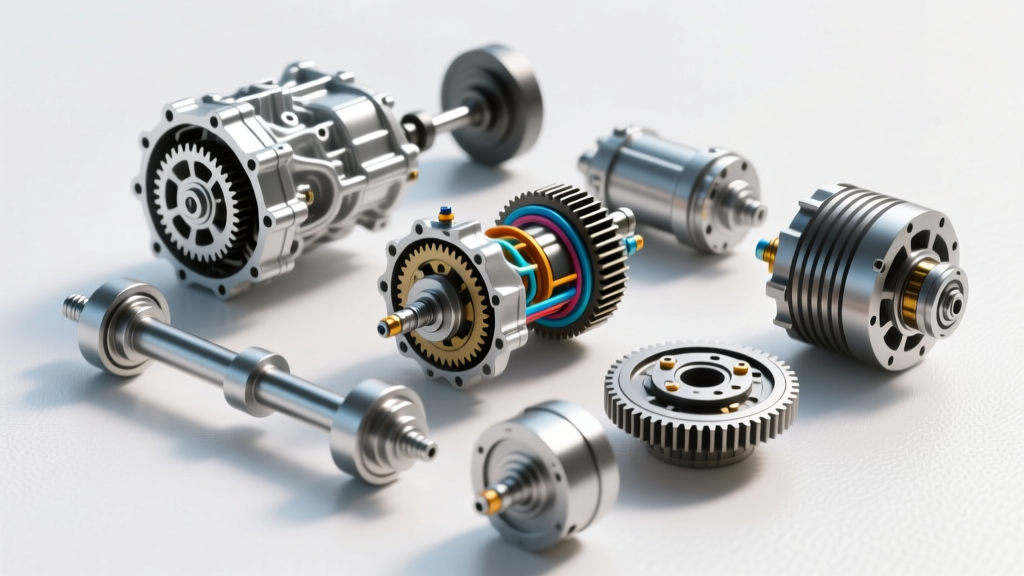
To accurately troubleshoot the 2025 Toyota Camry hybrid drivetrain, you must first understand how the FWD power is physically delivered to the pavement. The 2.5L A25A-FXS inline-four engine connects directly to the transaxle input damper. Inside the P810 housing, the Power Split Device—a single planetary gearset—acts as a continuously variable transmission by balancing the mechanical power from the engine with the electrical power from MG1 (the generator). MG2, the primary traction motor, produces up to 100 kW (134 hp) and 208 Nm (153 lb-ft) of torque. This torque is routed through a helical reduction gear and a chain-driven secondary reduction to the front differential. From the differential, power is distributed to the left and right front wheels via unequal-length CV axles, with the right side utilizing an intermediate shaft to mitigate torque steer. Because MG2 can deliver instantaneous peak torque at 0 RPM, the mechanical stress on the FWD differential pinions and CV axle splines during hard launches is substantially higher than in previous generations.
Symptom Diagnosis: Mapping Noises to Drivetrain Faults
Diagnosing FWD drivetrain faults in the 2025 Camry Hybrid requires isolating mechanical wear from inverter or motor-generator anomalies. Below is a diagnostic matrix mapping common customer complaints to specific FWD component failures.
| Symptom | Probable Cause | Diagnostic Step | Est. Repair Cost |
|---|---|---|---|
| High-frequency whine at 45+ mph | P810 reduction gear chain stretch or MG2 bearing wear | Use chassis ears on transaxle case; log MG2 RPM vs Vehicle Speed via Techstream | $3,500 - $5,200 (Transaxle R&R) |
| Clunk on Park-to-Drive engagement | Differential pinion backlash or worn torque strut mount | Pry bar inspection on engine/transaxle mounts; check ATF WS for metallic glitter | $150 (Mount) to $4,500 (Diff Rebuild) |
| Clicking on full-lock turns | Outer CV joint cage wear or boot contamination | Visual inspection of CV boots; road test in tight circles on full lock | $280 - $350 (OEM Axle Assembly) |
| Vibration at 55 mph under load | Intermediate shaft carrier bearing degradation | Chassis stethoscope on right-side bearing bracket while on lift | $400 - $550 (Shaft & Bearing) |
| Shudder during regenerative braking | MG2 resolver sensor misalignment or inverter capacitor fault | Techstream data log of MG2 temperature and resolver angle; HV system check | $1,200+ (Dealer-level HV repair) |
Step-by-Step Troubleshooting: Vibration and Clunking
Inspecting the Intermediate Shaft and Carrier Bearing
A frequent complaint on FWD Toyota platforms is a driveline vibration that peaks between 50 and 65 mph, specifically under moderate acceleration. In the 2025 Camry, this is often traced to the right-side intermediate shaft. Because the transaxle is offset to the driver's side, the right CV axle is significantly longer than the left. To prevent severe torque steer and harmonic vibration, Toyota uses an intermediate shaft supported by a carrier bearing bolted to the engine block. When the rubber isolator on this carrier bearing degrades or the bearing itself develops axial play, the shaft wobbles under MG2's instantaneous torque delivery. To diagnose, safely raise the vehicle on a lift, run it in Drive (with wheels free), and use an automotive stethoscope on the intermediate shaft support bracket. If you hear grinding or feel severe vibration, replacement is required. When reinstalling the new intermediate shaft, the carrier bearing bracket bolts must be torqued to 47 Nm (35 ft-lbs), and the shaft-to-differential flange bolts must be tightened to 54 Nm (40 ft-lbs).
CV Axle and Hub Assembly Torque Specifications
If the vehicle exhibits a rhythmic clicking or popping noise during low-speed, full-lock turns, the outer CV joint is the primary suspect. The high low-end torque of the 5th-gen hybrid system accelerates wear on the CV joint ball bearings and cage if the protective rubber boot is compromised and grease is expelled. When replacing a front CV axle on the 2025 Camry Hybrid, proper torque procedures are critical to prevent hub bearing failure and axle spline stripping. The front axle nut is a single-use, prevailing-torque fastener. According to Toyota Technical Information System (TIS), the 30mm front axle nut must be torqued to a massive 294 Nm (217 ft-lbs). Never reuse the factory axle nut, and never use an impact wrench to achieve final torque, as this can damage the internal threads and compromise the hub bearing preload. The hub assembly itself is secured by four bolts requiring 103 Nm (76 ft-lbs).
Fluid Diagnostics: Toyota ATF WS Contamination
Unlike traditional automatics, the P810 e-CVT does not have a hydraulic valve body or clutch packs; therefore, the fluid is not subjected to the same friction-material degradation. However, the fluid still lubricates the Power Split Device bearings, the reduction gears, and the front differential. The specified fluid is Toyota Genuine ATF WS (World Standard), part number 00289-ATPWS. The total dry fill capacity is approximately 3.5 quarts (3.3L), but a standard drain and fill yields about 2.6 quarts (2.5L). Both the 24mm drain and fill plugs require a torque of 39 Nm (29 ft-lbs) with new aluminum crush washers. When performing a fluid analysis, drain the fluid into a clean white pan and inspect it under bright light. A slight metallic sheen is normal for the first 30,000 miles as the gears wear in. However, if you find chunky metallic particles or 'glitter' that sticks to a magnet, this indicates catastrophic wear on the differential pinion thrust washers or the PSD planetary bearings. Because the P810 uses a simple internal strainer rather than a replaceable inline filter, metallic contamination requires a complete transaxle teardown or replacement.
When to Escalate to Dealership-Level Techstream Diagnostics
Not all 2025 Toyota Camry hybrid drivetrain faults are purely mechanical. If a customer reports a 'Check Hybrid System' warning accompanied by a loss of FWD traction or severe shuddering, the issue may lie in the MG2 inverter or the high-voltage cabling. The inverter converts the DC power from the hybrid battery into the AC power required by MG2. If the inverter's internal IGBT modules overheat or fail, the system will limit torque to the front wheels to protect the drivetrain. Diagnosing this requires Toyota's proprietary Techstream software to read live data parameters such as 'MG2 Inverter Temperature', 'MG2 Stator Coil Temp', and 'HV Battery Voltage'. Furthermore, checking the 'Resolver Sensor' data is vital; the resolver tells the inverter the exact rotational position of the MG2 rotor. If the resolver is misaligned or faulty, the inverter will send AC current out of phase, resulting in violent drivetrain shuddering and a flashing malfunction indicator.
Expert Safety Warning: Never attempt to physically disconnect or probe the orange high-voltage cables connecting the inverter to the transaxle MG1 and MG2 terminals without first executing the proper HV system shutdown procedure and verifying 0V at the service plug grip with a Category III multimeter. The P810 transaxle operates on a nominal 240V+ system that can be lethal.
For persistent electrical drivetrain faults, always check the NHTSA recalls database and Toyota TIS for the latest Technical Service Bulletins (TSBs). Early production runs of new hybrid architectures often receive software updates to refine the torque-mapping between the engine and MG2, which can resolve perceived mechanical 'clunks' or 'shudders' without requiring physical hardware replacement.