When a vehicle loses propulsion or exhibits severe vibration, the root cause is heavily dictated by its drivetrain layout. Front-wheel drive (FWD), rear-wheel drive (RWD), and all-wheel drive (AWD) architectures distribute torque differently, which fundamentally changes how components wear, fail, and must be repaired. As we navigate the 2026 repair landscape, independent shop rates for specialized drivetrain extraction average $175 to $240 per hour, making accurate, layout-specific diagnostics more critical than ever.
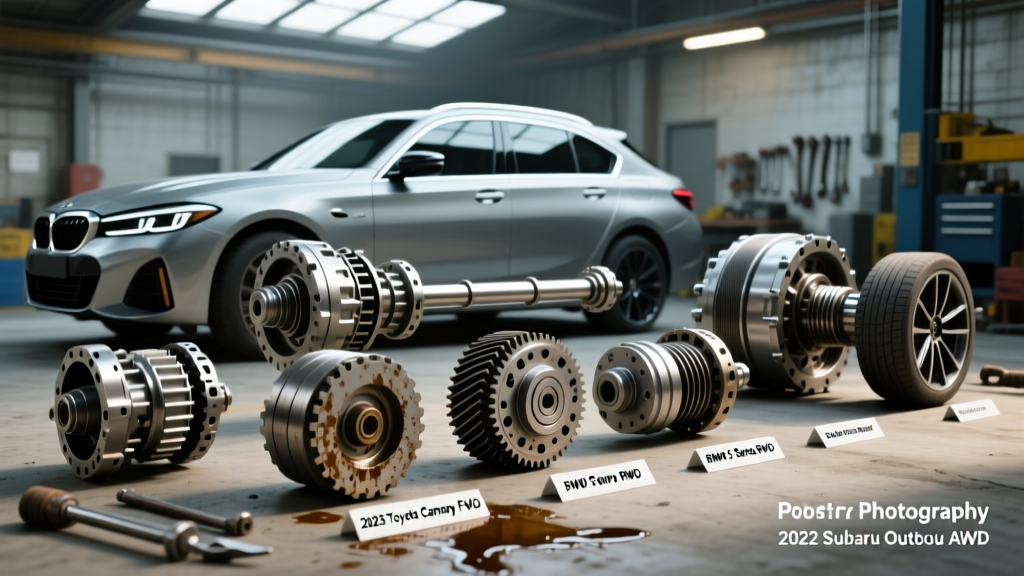
In this model-specific repair guide, we will dissect common drivetrain problems across three distinct platforms: the FWD Toyota Camry (U760E transaxle), the RWD BMW 3 Series (ZF 8HP45), and the AWD Subaru Outback (TR690 Lineartronic). By examining exact failure modes, OEM torque specifications, and real-world repair costs, technicians and enthusiasts can approach drivetrain repairs with surgical precision.
The Architecture of Failure: How Layout Dictates Drivetrain Problems
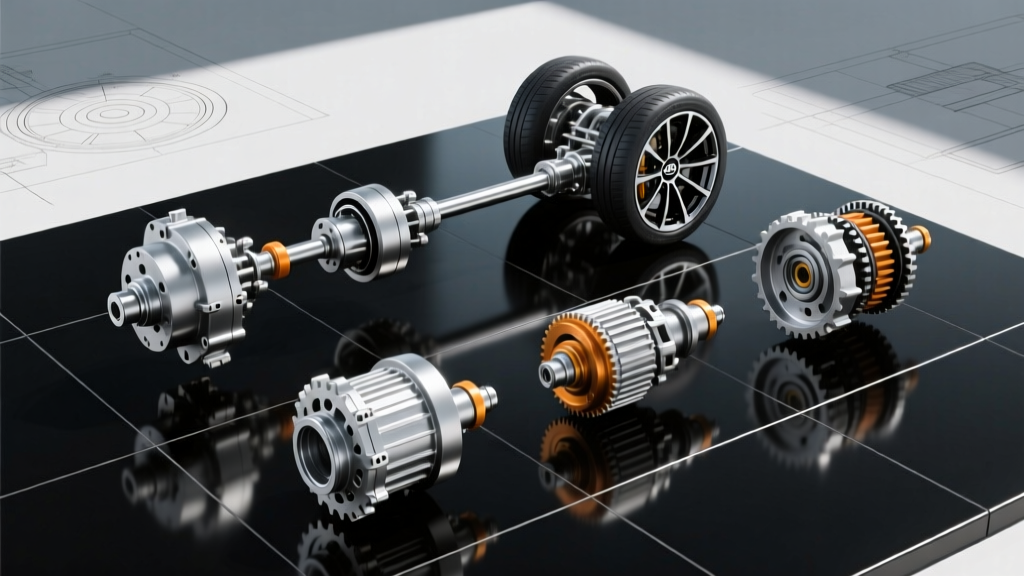
Before tearing into a specific chassis, it is vital to understand the mechanical compromises inherent to each layout. FWD systems package the transmission and differential into a single transaxle housing, meaning a catastrophic differential failure often necessitates a complete transmission teardown. RWD systems separate the transmission and differential via a driveshaft, isolating failures but introducing complex rotational harmonics. AWD systems add a layer of torque-distribution hardware (transfer cases, center differentials, or wet clutch packs), creating vulnerability to tire-mismatch binding and thermal degradation.
FWD Repair Deep Dive: Toyota Camry (U760E Transaxle)
The Toyota U760E 6-speed automatic transaxle is a staple of FWD engineering. Because the differential shares the same fluid sump as the planetary gearsets, drivetrain problems in the final drive quickly contaminate the entire transmission.
Common Failure: Differential Bearing Whine & Case Wear
A frequent complaint on higher-mileage Camrys is a distinct whine that changes pitch with vehicle speed, not engine RPM. This is often traced to the differential side bearings wearing into the aluminum transaxle case. If a front CV axle binds or a wheel bearing seizes, the shock load transfers directly through the axle stub into the differential side gears, accelerating case wear.
Repair Specs & Procedures
- Fluid Specification: Toyota ATF WS (World Standard). Dry fill capacity is 6.5L; a standard drain-and-fill yields roughly 3.2L.
- Bearing Preload: When replacing the differential taper roller bearings, the OEM preload specification is 0.05 mm to 0.15 mm of drag torque, measured with a specialized inch-pound dial indicator.
- Case Machining: If the aluminum case is scored, machine shops must bore the bearing race seat and install a steel sleeve shimmed to 0.02mm over standard outer diameter.
Estimated 2026 Repair Cost: Transaxle removal, teardown, and differential bearing replacement ranges from $1,800 to $2,600, heavily dependent on whether the case requires aftermarket sleeving.
RWD Repair Deep Dive: BMW 3 Series (ZF 8HP45 & Driveshaft)
The longitudinal RWD layout of the BMW F30/G20 3 Series utilizes the legendary ZF 8HP45 8-speed automatic transmission. While the ZF unit is remarkably robust, the physical separation of the drivetrain components introduces unique rotational and sealing vulnerabilities.
Common Failure: Guibo Disintegration & Mechatronic Sleeve Leaks
The RWD drivetrain relies on a rubber flex disc, commonly known as a 'Guibo,' to absorb torsional spikes from the engine before they reach the transmission output shaft. When the Guibo cracks and disintegrates, the driveshaft drops, destroying the transmission output shaft seal and potentially damaging the transfer case (on xDrive models) or rear differential pinion flange.
Simultaneously, the ZF 8HP45 suffers from a notorious leak at the Mechatronic sealing sleeve (where the electrical harness plugs into the transmission pan). Fluid wicks up the harness connector and pools in the bellhousing, mimicking a rear main seal failure.
Repair Specs & Procedures
- Guibo P/N: OEM 26117527475. Crucial Step: You must release the tensioning strap before installation, and remove it only after the driveshaft is fully seated.
- Torque Specifications: The M10x1.25 Guibo-to-output flange bolts must be torqued to 56 Nm + an additional 90 degrees of rotation. Always use new stretch bolts.
- Mechatronic Sleeve P/N: 24347588725. Requires dropping the ZF plastic oil pan (which integrates the filter) and unclipping the solenoid harness inside the valve body.
- Fluid: ZF LifeguardFluid 8. A pan-drop refill requires approximately 8.5L, leveled at the fill plug with the fluid temperature between 30°C and 50°C.
Estimated 2026 Repair Cost: Guibo replacement is roughly $450 - $600. Mechatronic sleeve and ZF pan replacement is $1,200 - $1,500.
AWD Repair Deep Dive: Subaru Outback (TR690 Lineartronic & Rear Diff)
Subaru's Symmetrical AWD system is highly regarded for traction, but its reliance on wet multi-plate transfer clutches inside the CVT makes it highly sensitive to maintenance and tire variances.
Common Failure: AWD Binding & Transfer Clutch Solenoid Degradation
The most severe AWD-specific drivetrain problems manifest as 'binding' or 'hopping' during tight, low-speed turns. This is rarely a mechanical failure of the gears; it is a thermal or hydraulic failure of the AWD transfer clutch pack inside the TR690 Lineartronic CVT extension housing. If a driver replaces only one or two tires, the resulting circumference mismatch forces the transfer clutch to slip continuously, overheating the fluid and glazing the friction discs.
Repair Specs & Procedures
- Solenoid Diagnostics: Before dropping the transmission, test the AWD clutch solenoid resistance via the valve body harness. The spec is 4.5 to 5.5 ohms at 68°F (20°C). An out-of-spec reading indicates a burnt solenoid coil, not necessarily fried clutch packs.
- Clutch Pack Clearance: If the extension housing is removed to replace the clutch pack, the snap-ring selection must yield a clearance of 0.8 mm to 1.2 mm between the pressure plate and snap ring.
- Rear Differential: Often neglected during AWD binding diagnoses. Requires 0.8L of 75W-90 GL-5 gear oil. Drain and fill to verify no metal particulate from the crown gear.
Estimated 2026 Repair Cost: Valve body/solenoid replacement is $900 - $1,300. Full CVT removal and transfer clutch pack replacement ranges from $2,800 to $3,500.
Diagnostic Tooling for Layout-Specific Drivetrain Problems
Modern drivetrain diagnostics require more than a mechanical stethoscope. To accurately isolate FWD, RWD, and AWD faults, technicians must utilize bi-directional OBD2 scanners and digital storage oscilloscopes (DSO).
- AWD Binding Scope Test: By back-probing the ABS wheel speed sensors with a DSO, technicians can overlay all four wheel speed waveforms. During a tight turn, if the rear wheel speeds do not appropriately deviate from the front, the AWD transfer clutch is mechanically locked (binding).
- RWD Harmonic Analysis: Use a chassis ear (wireless accelerometer microphones) clamped to the rear differential pinion snout, the center support bearing, and the transmission tail housing to isolate driveshaft phasing vibrations.
Comparative Analysis: Repair Complexity & Cost Matrix
| Layout | Primary Vulnerability | Avg. Labor Hours (Major Repair) | Fluid Complexity | Estimated Major Repair Cost |
|---|---|---|---|---|
| FWD (Transaxle) | Differential bearings / Case wear | 8.0 - 12.0 hrs | Single fluid (ATF/CVTF) | $1,800 - $2,600 |
| RWD (Longitudinal) | Driveshaft Guibo / Output Seals | 3.5 - 6.0 hrs | Multi-fluid (ATF, Diff, Guibo) | $1,200 - $1,500 |
| AWD (Integrated) | Transfer Clutch / Thermal Glazing | 10.0 - 16.0 hrs | High (CVTF, Diff, Reduction Gear) | $2,800 - $3,500 |
Preventative Maintenance Schedules by Layout
To avoid catastrophic drivetrain problems, adhere to these layout-specific maintenance intervals, ignoring the 'lifetime fluid' marketing myths perpetuated by OEMs:
- FWD Transaxles: Drain and fill every 60,000 miles. Inspect CV axle boots for tearing; a torn boot allows moisture into the transaxle differential, emulsifying the fluid and destroying the side gears.
- RWD Drivetrains: Inspect the Guibo and center support bearing every 50,000 miles. Drop the transmission pan to inspect for Mechatronic sleeve leaks at 80,000 miles. Service the rear differential with 75W-85 GL-4 fluid every 60,000 miles.
- AWD Systems: Never mix tire brands or tread depths. Replace tires in sets of four, or have a new tire 'shaved' to match the circumference of the remaining three. Service the rear differential and CVT transfer reduction gear oil every 50,000 miles.
Expert Insight: According to data aggregated by SKF Automotive, over 40% of premature differential failures in FWD and AWD platforms are directly correlated to improper wheel bearing torque or seized CV joints transferring lateral shock loads into the final drive assembly. Always torque axle nuts to spec using a calibrated torque wrench, never an impact gun.
Understanding the mechanical nuances of FWD, RWD, and AWD layouts transforms a daunting drivetrain repair into a logical, step-by-step procedure. By respecting torque specifications, utilizing advanced diagnostic tooling, and adhering to strict maintenance intervals, you can ensure long-term propulsion reliability regardless of the architecture beneath the chassis.