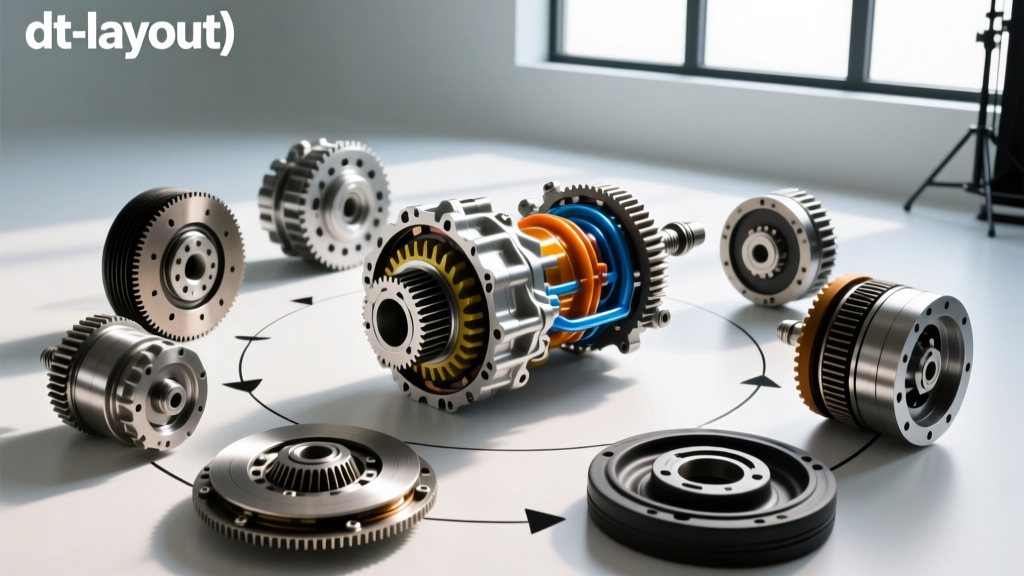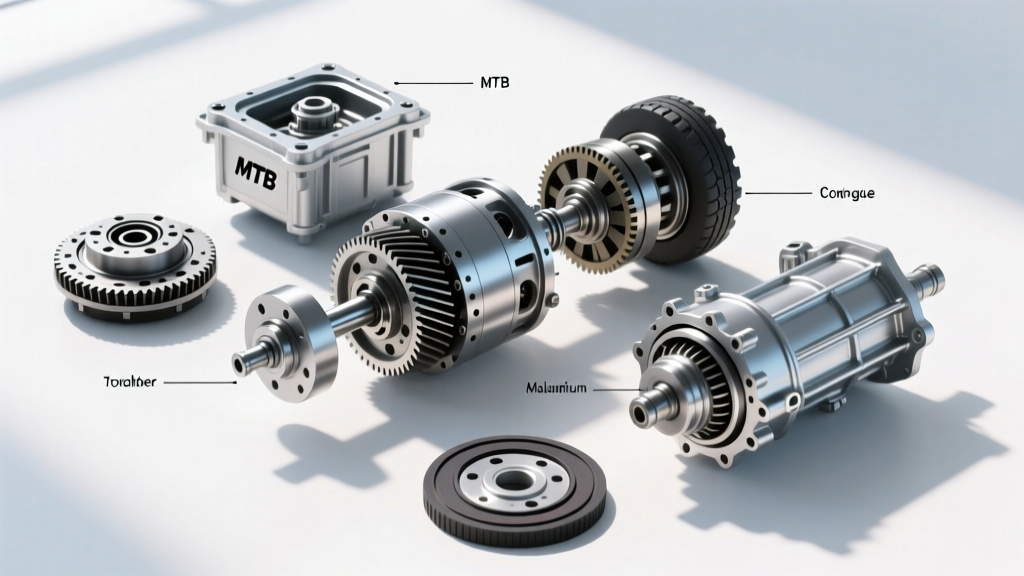
Understanding the Drivetrain MTB (Manual Transfer Box) Architecture
As we navigate the automotive landscape in 2026, the rapid proliferation of electric vehicles and sophisticated torque-vectoring AWD systems has fundamentally changed daily commuting. However, for heavy-duty commercial fleets, off-road platforms, and rugged utility vehicles, the traditional drivetrain MTB (Manual Transfer Box) remains the undisputed gold standard for mechanical torque distribution. Unlike electronic clutch-pack systems that rely on software and hydraulic pressure, an MTB provides a direct, locked mechanical link between the front and rear axles.
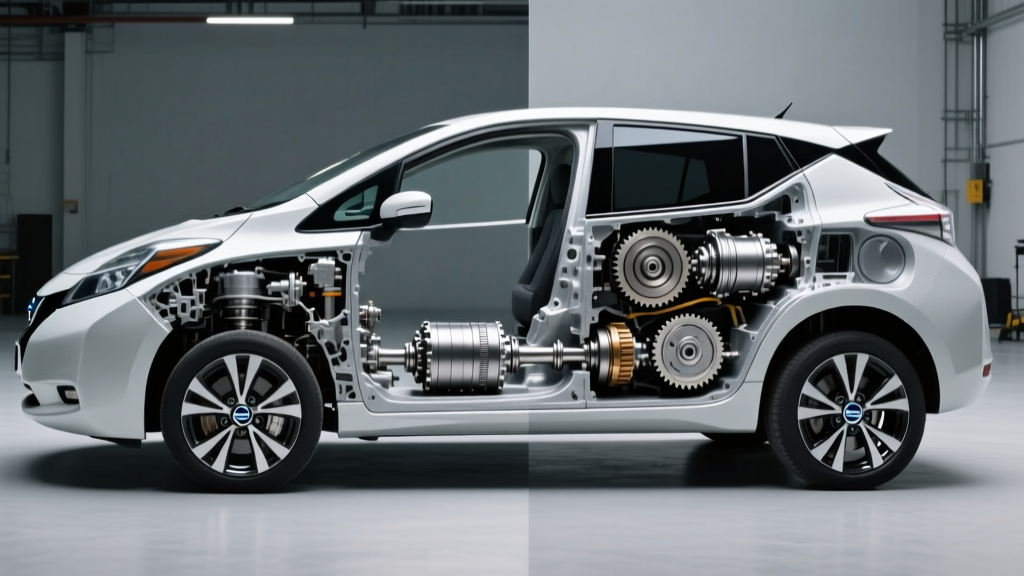
When analyzing drivetrain types for different vehicles, it is critical to distinguish between a transaxle (FWD), an open differential with a longitudinal driveshaft (RWD), an active center differential (AWD), and a part-time 4WD system utilizing an MTB. The MTB is the heart of the part-time 4WD layout, allowing the driver to manually select between 2WD, 4WD High, and 4WD Low via a physical shift lever or an electric actuator driving a mechanical fork.
Comparing Drivetrain Types Across Vehicle Platforms
To understand where the MTB fits into the broader automotive ecosystem, we must compare it against other primary drivetrain layouts. Each configuration serves a distinct engineering purpose, dictated by vehicle weight, intended terrain, and packaging constraints.
| Drivetrain Type | Primary Architecture | Common Vehicle Applications | Torque Biasing / Locking Mechanism |
|---|---|---|---|
| FWD (Front-Wheel Drive) | Transverse engine, integrated transaxle | Honda Civic, Toyota Camry | Open differential (Traction control via braking) |
| RWD (Rear-Wheel Drive) | Longitudinal engine, rear-mounted differential | Ford Mustang, BMW 3 Series | Open or Limited-Slip Differential (LSD) |
| AWD (All-Wheel Drive) | Longitudinal/Transverse, active center diff | Subaru Outback, Audi Quattro | Torsen gearset or Haldex electro-hydraulic clutch |
| 4WD MTB (Manual Transfer Box) | Longitudinal, chain/gear-driven transfer case | Jeep Wrangler, Land Rover Defender | Locked planetary gearset / Direct mechanical lock |
Model-Specific MTB Configurations: The Big Three
Not all transfer boxes are created equal. The engineering philosophy behind a drivetrain MTB varies wildly depending on the manufacturer's target demographic. Below, we break down the three most iconic MTB configurations encountered in modern repair bays.
1. Jeep Wrangler: The New Venture NV241OR (Off-Road)
Used extensively in the JK and early JL generations, the NV241OR is a chain-driven, part-time MTB featuring a 4.0:1 low-range planetary gearset. It utilizes a BorgWarner Morse chain to transfer torque to the rear output shaft. Its aluminum housing is lightweight but prone to case-flex under extreme torque loads, leading to chain misalignment.
2. Land Rover Defender: The LT230
A legend in the off-road community, the LT230 is a gear-driven MTB. Unlike chain-driven units, it uses a massive idler gear and a lockable center differential. While incredibly robust, the LT230 is notorious for intermediate shaft spline wear and input gear fatigue if operated without adequate lubrication.
3. Toyota Land Cruiser: The VF4B / Transfer Case Assembly
Toyota’s approach to the MTB focuses on silent operation and longevity. The VF series utilizes a helical-cut gearset for high-range and a robust planetary setup for low-range, often paired with a Torsen-style limited-slip center differential, bridging the gap between a traditional locked MTB and a full-time AWD system.
Model-Specific Repair Guide: Rebuilding the NV241OR MTB
For technicians and advanced DIYers, rebuilding a chain-driven MTB like the NV241OR requires precision, specific tooling, and adherence to strict torque specifications. A standard rebuild addresses chain stretch, bearing play, and synchro-ring degradation.
Required Tools and Parts
- Rebuild Kit: OEM or high-quality aftermarket (e.g., Crown Automotive or Spicer) including seals, snap rings, and shift pads ($180 - $280).
- Replacement Chain: BorgWarner Morse Chain, 1.5-inch pitch, 49 links (Part # NV241-OR-CHAIN, ~$140).
- Bearings: SKF or Timken deep-groove ball bearings (e.g., SKF 6208-2RS for the main shaft rear).
- Tooling: Heavy-duty internal/external snap-ring pliers, dial indicator with magnetic base, 1/2-inch torque wrench, and a 10-ton arbor press.
Step-by-Step Teardown and Assembly
- Extraction and Drain: Remove the MTB from the vehicle. Drain the fluid (Capacity: 2.0 quarts). Inspect the drain plug for ferrous metals; a fine metallic paste is normal, but chunky gear fragments indicate catastrophic planetary failure.
- Case Splitting: Remove the perimeter case bolts (M8 x 1.25). Use a soft-faced mallet to separate the case halves. Do not pry with a screwdriver, as this will gouge the aluminum mating surface and guarantee a fluid leak.
- Chain and Sprocket Inspection: Measure the Morse chain for stretch. If the chain deflects more than 3/8-inch under moderate thumb pressure between the sprockets, replacement is mandatory. Inspect the sprocket teeth for 'hooking' or shearing.
- Bearing and Seal Replacement: Press out the old rear output shaft bearing using the arbor press. Freeze the new SKF bearings for 2 hours prior to installation to allow for thermal contraction, then press them squarely onto the shafts. Install new double-lip viton seals using a dedicated seal driver to avoid cocking the seal housing.
- Reassembly and Torque Specs: Apply a thin bead of RTV Silicone (Permatex Ultra-Black) to the case mating surface. Reinstall the case halves and torque the perimeter bolts to 22 Nm (16 lb-ft) in a crisscross pattern. Torque the rear output flange nut to 200 Nm (147 lb-ft) while holding the flange with a specialized holding tool.
Expert Insight: Never reuse the staked output flange nuts on an MTB. Thestaking collar deforms upon initial installation. Reusing them is the leading cause of output shaft yoke separation on the highway. Always use a new OEM staked nut (Mopar Part #6508523AA).
Common Drivetrain MTB Failure Modes & Diagnostics
Diagnosing an MTB requires isolating the noise or vibration from the transmission and the axles. Here are the most frequent failure modes we see in repair facilities today:
1. High-Speed Whining (45–65 MPH)
Cause: Chain stretch or low fluid levels causing the chain to slap against the aluminum case, or wear on the helical-cut planetary gears.
Fix: Verify fluid level first. If full, drop the MTB and measure chain deflection. Replace the chain and sprockets as a matched set.
2. 'Clunk' When Shifting from 2WD to 4WD
Cause: Worn shift fork pads or degraded synchro rings. The shift collar is not fully engaging the planetary gearset, causing a delayed engagement and subsequent mechanical slam.
Fix: Replace the nylon shift pads (often disintegrated into the oil pan) and inspect the synchro blocker rings for brass flaking.
3. Binding and Hopping on Dry Pavement in 4WD
Cause: This is not a failure, but a characteristic of a part-time MTB. Because the MTB locks the front and rear driveshafts together at a 1:1 ratio, the vehicle cannot differentiate wheel speeds during turns.
Fix: Educate the driver. Part-time MTBs must only be engaged on low-traction surfaces (mud, snow, sand). For dry pavement, the vehicle must remain in 2WD unless equipped with an unlocked center differential.
Fluid Specifications and Maintenance Intervals
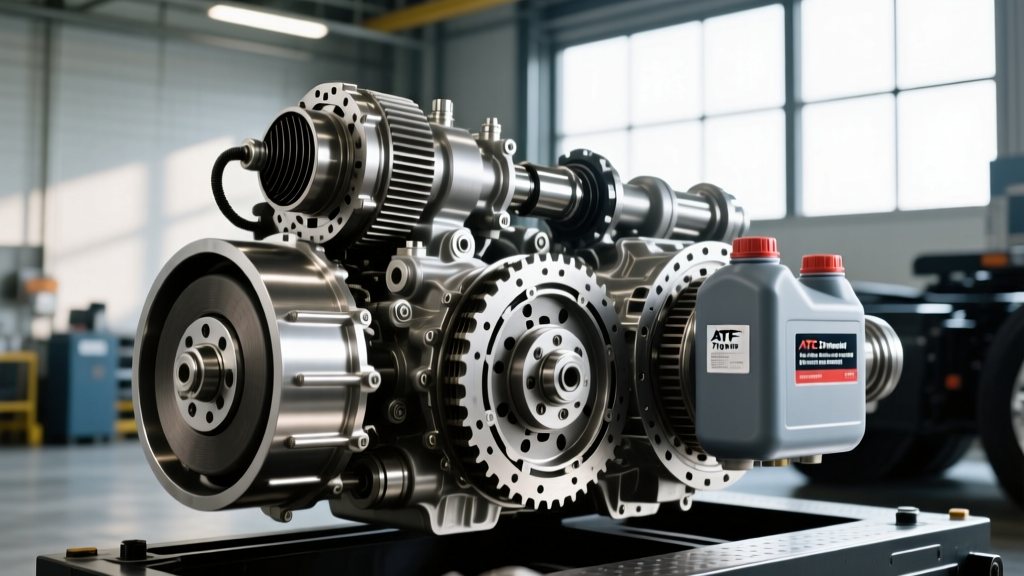
The longevity of a drivetrain MTB is directly tied to fluid shear stability. Operating an MTB with degraded fluid leads to rapid chain wear and shift-collar galling. Below is the 2026 reference chart for the most common MTB units.
| Transfer Case (MTB) | Recommended Fluid | Capacity | Service Interval |
|---|---|---|---|
| NP241OR / NP241DLD | ATF+4 (Mopar) or Dexron VI | 2.0 Quarts (1.9L) | 30,000 Miles / 48 Months |
| Land Rover LT230 | 75W-90 Synthetic Gear Oil (API GL-5) | 2.3 Quarts (2.2L) | 24,000 Miles / 36 Months |
| Ford BW4406 | Mercon V or XL-12 Transfer Case Fluid | 2.0 Quarts (1.9L) | 60,000 Miles / 72 Months |
Cost Analysis: Rebuild vs. Remanufactured Replacement
When facing a catastrophic MTB failure, owners must weigh the cost of a professional rebuild against purchasing a remanufactured unit. As of 2026, supply chain stabilization has brought remanufactured transfer case prices down slightly, but core charges remain steep.
- DIY Rebuild (Parts Only): $350 - $550 (Includes bearings, seals, chain, and synchros).
- Professional Shop Rebuild: $1,200 - $1,600 (Includes labor, machine shop surfacing, and OEM parts).
- Remanufactured Unit (e.g., Jasper Engines): $1,800 - $2,400 + $500 Core Charge (Includes 3-year/100k warranty).
For fleet vehicles or daily-driven commercial trucks, the remanufactured route offers the best warranty protection and minimized downtime. For dedicated off-road builds and weekend warriors, a meticulous DIY rebuild using upgraded components (like a heavy-duty billet sprocket from Novak Conversions) provides superior strength at a lower cost.
Final Thoughts on MTB Drivetrain Engineering
The drivetrain MTB represents the pinnacle of mechanical reliability in an increasingly software-dependent automotive world. Whether you are servicing a Land Rover LT230 in a dusty trail-side garage or rebuilding an NV241OR in a climate-controlled shop, understanding the specific torque specs, fluid dynamics, and failure modes of these transfer boxes is essential. By adhering to model-specific repair protocols and utilizing high-quality bearings from trusted manufacturers like SKF Automotive, you can ensure these mechanical marvels continue to conquer the world's harshest terrains for decades to come.
For further reading on drivetrain component specifications and spline configurations, consult the engineering catalogs provided by Spicer Parts to verify exact part numbers for your specific vehicle application.