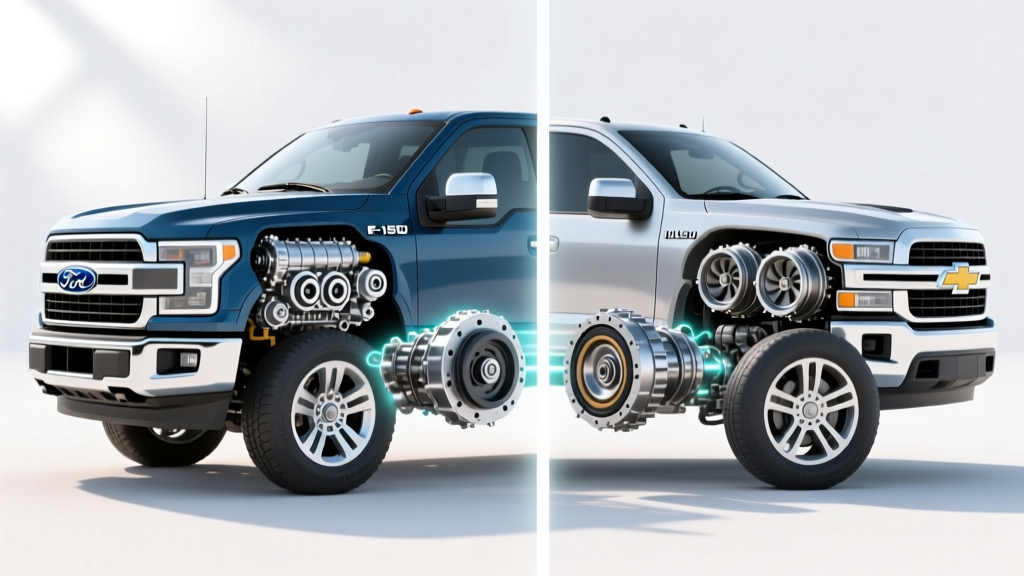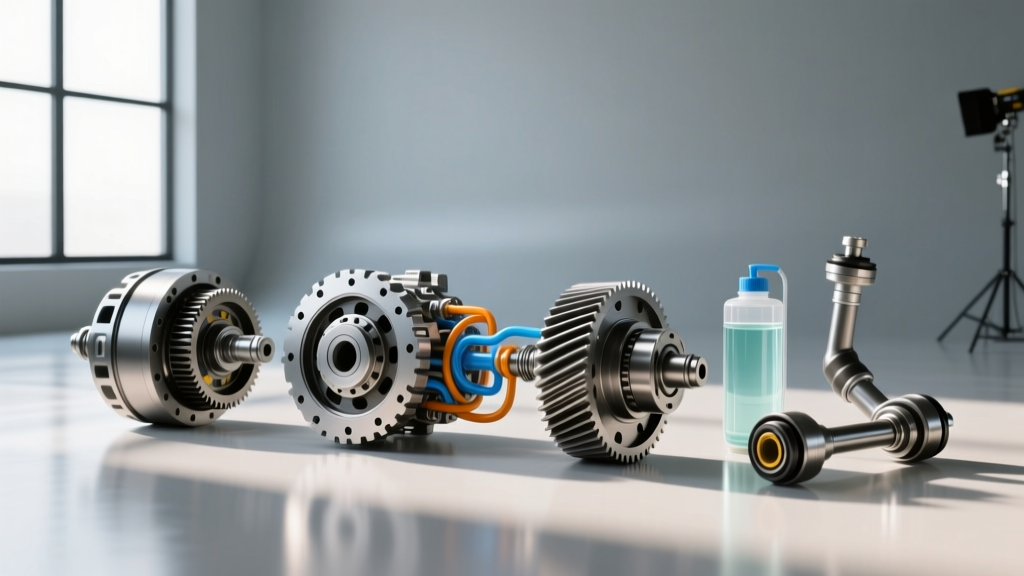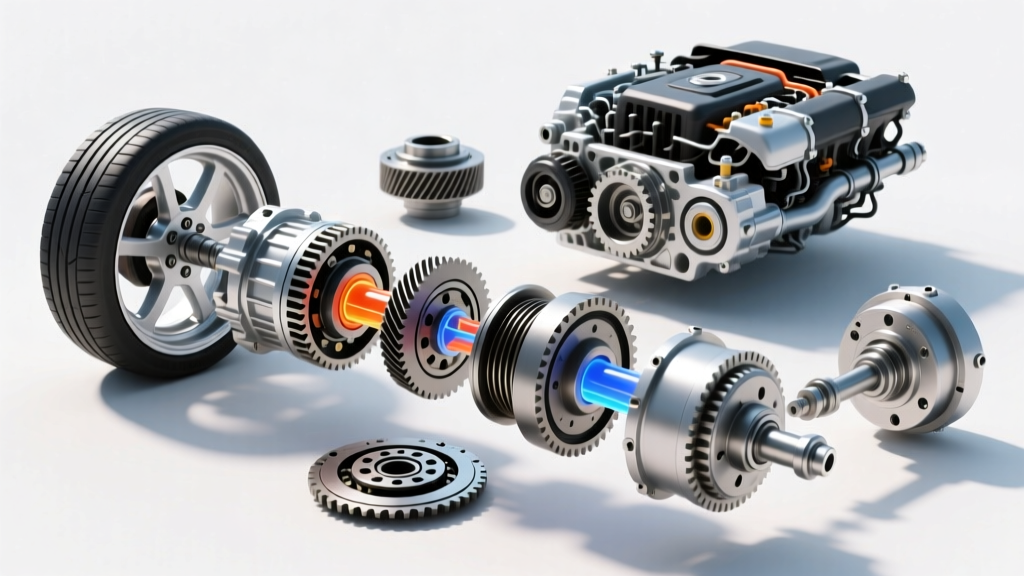
Editor's Note (2026): As automotive architectures continue to diverge between dedicated EV skateboards, transverse FWD platforms, and longitudinal RWD/AWD setups, understanding the fundamental physics of your drivetrain is critical. This guide bridges the mechanical realities of Front-Wheel Drive (FWD) operation with the specific diagnostic frameworks required for modern BMW CLAR-platform vehicles.
The Architecture of Front-Wheel Drive (FWD) Operation
To diagnose any drivetrain issue, one must first understand the mechanical layout of the system in question. Front-wheel drive (FWD) systems package the engine, transmission, and differential into a single, transverse-mounted unit known as a transaxle. This layout dominates the compact and midsize segments due to its space efficiency and inherent traction advantages in low-grip conditions, as the engine weight rests directly over the driven wheels.
Core FWD Components and Power Flow
In a standard FWD configuration, power flows from the engine's crankshaft into the transaxle's torque converter (or clutch pack in manual/DCT setups). From there, it routes through the planetary gearsets or helical gears, into an integrated front differential, and finally out to the wheels via two half-shafts (drive axles). These half-shafts utilize inner and outer Constant Velocity (CV) joints to accommodate suspension travel and steering angles.
- Transaxle: Combines transmission and differential. Common modern examples include the Aisin 8-speed automatic found in transverse platforms.
- Intermediate Shaft: Used in high-torque FWD applications to equalize the length of the left and right half-shafts, mitigating torque steer.
- CV Joints: Inner tripod or ball-type joints handle plunge (in-and-out movement), while outer Rzeppa joints handle extreme steering angles up to 47 degrees.
Torque Steer and Mitigation Strategies
A classic symptom of FWD operation under heavy acceleration is torque steer—a pulling sensation to one side. This occurs when unequal half-shaft lengths cause differing torsional wind-up and suspension geometry alterations. Engineers mitigate this by utilizing stiffer lower control arm bushings, optimized steering axis inclination (SAI), and intermediate shafts with equal-length outer half-shafts. When diagnosing FWD pulling issues, always check the lower control arm compliance bushings for tearing before suspecting internal differential wear.
The Great Platform Confusion: UKL2 vs. CLAR
When novice enthusiasts or new owners search for how to fix drivetrain malfunction BMW 3 series errors, a fundamental misunderstanding of BMW's platform architecture often clouds the diagnostic process. It is a common misconception that the BMW 3 Series utilizes a front-wheel drive system. In reality, the 3 Series (including the current G20 generation) is built on BMW's longitudinal CLAR platform, meaning it is strictly Rear-Wheel Drive (RWD) or All-Wheel Drive (xDrive).
BMW's FWD systems are reserved for the UKL2 platform vehicles, such as the 2 Series Active Tourer or the F40 1 Series, which utilize transverse engines and transaxles. The notorious 'Drivetrain Malfunction' warning on the iDrive screen of a 3 Series is rarely a mechanical failure of the physical driveline (such as a broken driveshaft or worn U-joint). Instead, it is a generic limp-mode safeguard triggered by the Digital Motor Electronics (DME) or the Transmission Control Unit (TCU) when it detects anomalies in engine output, fuel delivery, or the ZF 8HP automatic transmission.
FWD Transaxle vs. BMW 3 Series RWD/xDrive Drivetrain
| Feature | FWD System (e.g., BMW UKL2 Platform) | BMW 3 Series RWD/xDrive (CLAR Platform) |
|---|---|---|
| Engine Orientation | Transverse (East-West) | Longitudinal (North-South) |
| Transmission Type | Transaxle (e.g., Aisin 8F) | ZF 8HP45 / 8HP50 Automatic |
| Differential Location | Integrated inside transaxle casing | Rear axle housing (plus front transfer case on xDrive) |
| Driveshaft | None (uses front half-shafts) | Carbon fiber or steel 2-piece driveshaft with guibo |
| Common Failure Point | Outer CV joints, engine mounts | Mechatronic sleeve leaks, Valvetronic sensors, HPFP |
How to Fix Drivetrain Malfunction BMW 3 Series: A Diagnostic Framework
If you are driving a 3 Series and the iDrive system displays the dreaded 'Drivetrain Malfunction: Maximum power not available' warning, do not waste time inspecting FWD components your car does not have. Follow this expert-level diagnostic protocol to isolate the fault.
Step 1: Perform a Deep-Level Module Scan
Standard OBD2 scanners will not read BMW-specific shadow codes or TCU adaptations. You must use a tool capable of querying the DME and EGS (Transmission) modules directly. Software like ISTA+ (BMW's factory diagnostic suite) or enthusiast tools like BimmerCode/BimmerLink via an MHD or OBD11 adapter is mandatory. Look for hex codes related to fuel pressure deviations, Valvetronic limits, or EGS hydraulic pressure faults.
Step 2: Inspect the Valvetronic Eccentric Shaft Sensor
One of the most frequent culprits for a drivetrain malfunction warning on B48 and B58 engines is a failing Valvetronic eccentric shaft sensor. Oil wicks up through the sensor's internal wiring harness, contaminating the connector and causing erratic valve lift readings.
Part Number: 11387600935
Diagnostic Tip: Unplug the sensor on the top of the valve cover. If you see oil pooling inside the 6-pin connector, the sensor and the wiring pigtail must be replaced. Clean the harness with electronic contact cleaner. Torque the replacement sensor retaining bolt to exactly 10 Nm.
Step 3: Evaluate the High-Pressure Fuel Pump (HPFP)
The B58 engine relies on a mechanical HPFP driven by the exhaust camshaft. If the internal plunger wears or the pump's internal check valve fails, the DME cannot achieve the target rail pressure of 250-350 bar during wide-open throttle, instantly triggering limp mode.
Part Number: 13518647614 (Verify against your specific VIN).
Torque Spec: HPFP mounting nuts require 10 Nm, while the fuel line union nut requires 24 Nm. Always use a flare-nut wrench to prevent rounding the soft steel fuel lines.
Step 4: ZF 8HP Mechatronic Adapter Sleeve Leaks
While the ZF 8HP is a masterpiece of longitudinal transmission engineering, the mechatronic unit's electrical adapter sleeve is prone to degrading. The rubber seals flatten over time, allowing ZF LifeguardFluid 8 to weep onto the transmission pan, potentially damaging the TCU connector.
Part Number: 28257646447 (Mechatronic sealing sleeve).
Fluid Note: If you are dropping the pan to replace this sleeve, remember that the ZF 8HP45/50 takes approximately 8.5 liters of fluid. BMW claims the fluid is 'lifetime,' but ZF Aftermarket officially recommends a fluid and filter service every 60,000 to 80,000 miles to prevent clutch pack degradation. Refer to ZF Aftermarket guidelines for the exact temperature-dependent filling procedure (fluid must be between 30°C and 50°C during the final level check).
Step 5: Check the Flex Disc (Guibo) and Center Support Bearing
If the drivetrain malfunction is accompanied by a severe clunk upon shifting from Park to Drive, or a rhythmic vibration at 50-60 mph, inspect the physical driveline. The rubber flex disc (guibo) connecting the transmission output shaft to the front driveshaft absorbs torsional shock. Cracking or missing chunks of rubber will trigger driveline stress warnings in modern xDrive models due to rotational speed discrepancies between the front and rear axles. Torque the driveshaft flex disc bolts to 100 Nm plus an additional 90 degrees of rotation, using new stretch bolts.
Summary: Know Your Platform Before Wrenching
Understanding the difference between a transverse FWD transaxle and a longitudinal RWD/xDrive driveline is the hallmark of an informed technician or DIYer. While FWD systems require vigilance regarding CV joint angles and torque steer bushings, the BMW 3 Series demands a focus on electronic engine management, high-pressure fuel delivery, and ZF hydraulic integrity. By utilizing proper scanning tools and adhering to factory torque specifications, you can accurately diagnose and resolve the 'Drivetrain Malfunction' warning, restoring your vehicle to its full dynamic potential. For deeper community-sourced diagnostic threads and real-world coding solutions, the archives at Bimmerpost remain an invaluable resource for CLAR-platform owners.