Beyond the Battery: The Reality of EV Drivetrain Maintenance
When consumers and novice technicians think of electric vehicle (EV) maintenance, the conversation almost exclusively revolves around battery health and software updates. However, as an automotive transmission and drivetrain specialist, I can tell you that the electric car drivetrain is a highly stressed mechanical assembly that demands rigorous, precise maintenance. While EVs eliminate the need for oil changes, spark plugs, and exhaust system repairs, they introduce immense instantaneous torque, ultra-high rotational speeds (often exceeding 16,000 to 20,000 RPM), and complex 800V thermal management systems.
According to the U.S. Department of Energy's Alternative Fuels Data Center, while EVs generally have fewer moving parts than internal combustion engine (ICE) vehicles, the reduction gearboxes, differentials, and half-shafts are subjected to brutal mechanical shear. In 2026, with the widespread adoption of high-output dual-motor platforms and 800-volt architectures, understanding the nuances of EV drivetrain service is no longer optional—it is critical for longevity and performance.
The Anatomy of an Electric Car Drivetrain
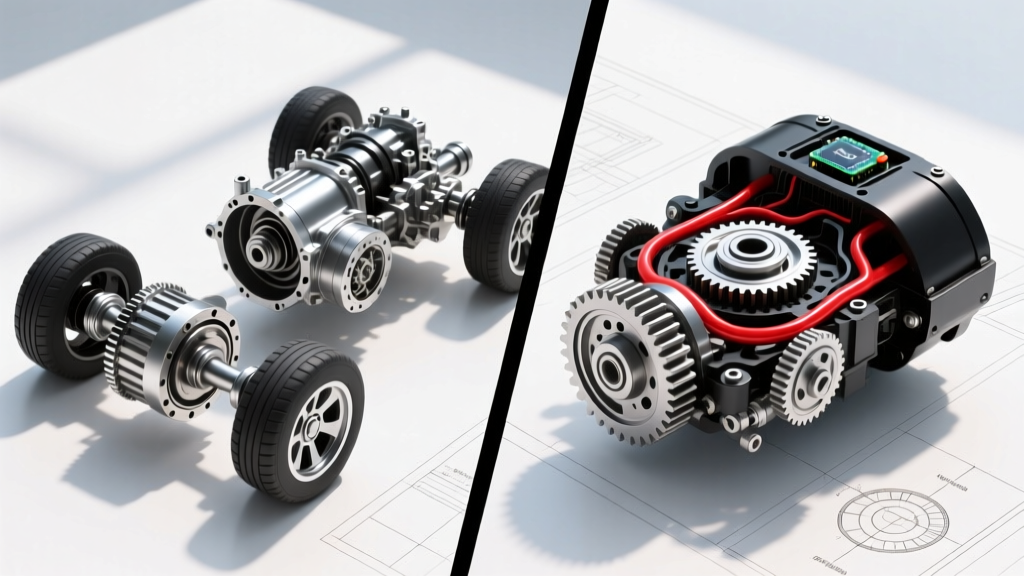
To service the system, you must first understand its layout. Unlike an ICE vehicle with a multi-speed transmission, most EVs utilize a single-speed reduction gearbox integrated directly with the electric motor and differential (often called an e-Axle or Power Electric [PE] system). High-performance models, like the Porsche Taycan, utilize a two-speed rear axle to balance blistering acceleration with high-speed efficiency.
- Electric Motor: Generates rotational force; often cooled directly by the drivetrain fluid or a dedicated dielectric coolant loop.
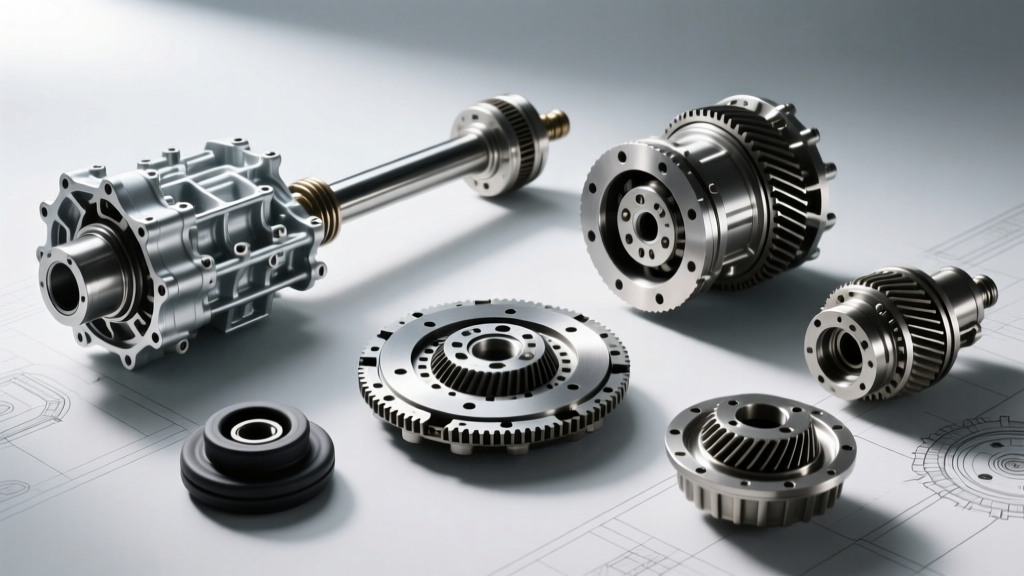
- Reduction Gearset: A planetary or parallel-axis gearset that multiplies torque (typically a 9:1 to 11:1 ratio) while stepping down the extreme RPM of the motor to usable wheel speeds.
- Differential: Distributes power to the half-shafts, allowing for cornering speed variances.
- Half-Shafts & CV Joints: Transfer power to the wheels, enduring massive torsional stress from instant electric torque.
Reduction Gearbox Fluid: The Lifeblood of the EV Drivetrain
The most critical maintenance interval for any electric car drivetrain is the reduction gear fluid service. EV fluids are not merely lubricants; they are highly engineered dielectric and thermal transfer mediums. In platforms where the fluid cools the motor windings directly (wet-rotor designs), the fluid must resist electrical conductivity to prevent short circuits and copper corrosion.
Over time, extreme shear forces from high-RPM operation break down the fluid's viscosity modifiers. Furthermore, stray voltages and electromagnetic fields can cause microscopic pitting on bearings and gear teeth, contaminating the fluid with conductive metal particulates. Castrol's EV fluid engineering guidelines emphasize that degraded EV fluid loses its dielectric strength, leading to electrical arcing inside the gearbox and catastrophic bearing failure (often referred to as electrical fluting).
2026 EV Drivetrain Fluid Specifications & Capacities
Never use standard ICE automatic transmission fluid (ATF) or gear oil in an EV reduction gear unless explicitly specified by the OEM. The friction modifiers and anti-wear additives in standard fluids can damage EV-specific copper windings and carbon-fiber clutch packs (in 2-speed units).
| Vehicle Platform | OEM Fluid Specification | Approx. Capacity (Rear) | Drain / Fill Plug Torque |
|---|---|---|---|
| Tesla Model 3 / Model Y (Rear DU) | Pentosin ATF 9 / Tesla 1135263-00-A | 1.6 Liters | 35 Nm (26 lb-ft) |
| Hyundai Ioniq 5 / Kia EV6 (E-GMP) | SK Enovative EV / API GL-4 70W | 3.2 Liters | 40 Nm (29.5 lb-ft) |
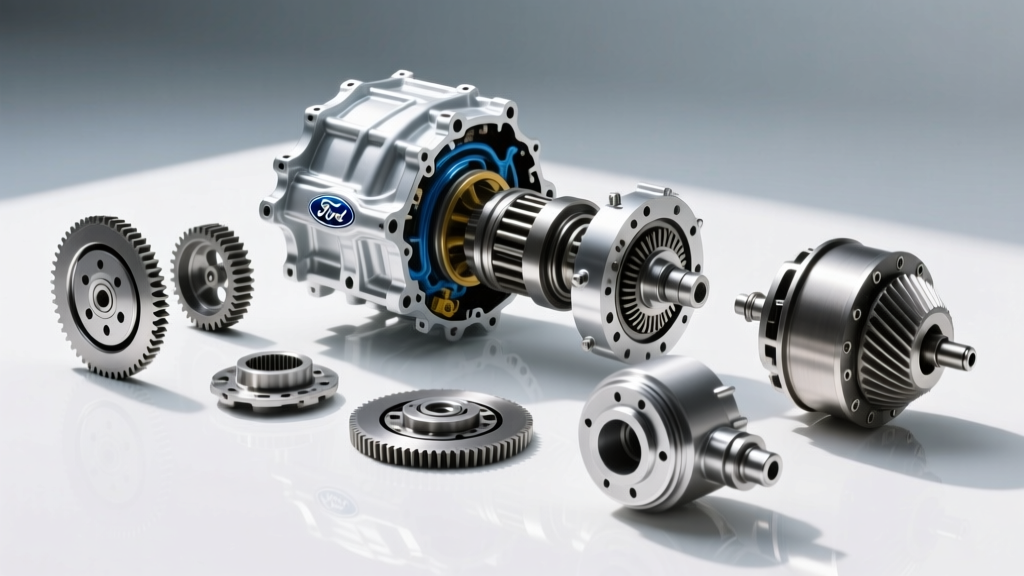
| Ford Mustang Mach-E (Rear e-Axle) | Motorcraft MERCON ULV ATF | 1.8 Liters | 38 Nm (28 lb-ft) |
| Porsche Taycan (Rear 2-Speed) | Porsche FFL-3 (EV Specific) | 2.8 Liters | 45 Nm (33 lb-ft) |
Step-by-Step Reduction Gear Fluid Service Procedure
Servicing an EV reduction gear requires precision. Unlike a traditional differential where you simply drain and fill to the weep hole, many modern e-Axles require temperature-specific leveling procedures to ensure the correct fluid volume, accounting for thermal expansion.
1. Thermal Preparation
Before draining, the vehicle must be driven to bring the drivetrain fluid to operating temperature (typically 40°C / 104°F). Use an infrared thermometer or an OBD2 bi-directional scanner to read the internal drivetrain temperature sensor. Leveling the fluid at the wrong temperature will result in under-filling (causing gear whine and overheating) or over-filling (causing aeration and foaming).
2. Drain and Forensic Inspection
Remove the fill plug first to ensure you can refill the unit before draining it completely. Remove the drain plug and collect the fluid. Most EV drain plugs are magnetic. Inspect the magnet closely:
- Normal: A fine, dark metallic paste (normal gear and bearing wear).
- Abnormal: Large metal shards, brass-colored flakes (synchro or bushing wear in 2-speed units), or a burnt, acrid smell indicating severe thermal breakdown.
3. Precision Filling and Leveling
Using a clean, dedicated fluid pump, inject the exact OEM-specified fluid until it reaches the bottom of the fill hole threads. Wait exactly 60 seconds for air bubbles to dissipate. Reinstall the fill plug and torque to the manufacturer's specification (e.g., 35 Nm for the Tesla rear drive unit, as noted in the Tesla Model Y Owner's Manual). Always replace the crush washers on both plugs to prevent weeping.
Half-Shaft and CV Joint Maintenance in High-Torque EVs
Electric motors deliver 100% of their torque at 0 RPM. This instantaneous twist places extraordinary stress on Constant Velocity (CV) joints and half-shafts, particularly in high-horsepower models like the Lucid Air or Tesla Model S Plaid. While CV joints are technically 'sealed for life,' the boots are highly susceptible to tearing from road debris and dry rot.
Expert Tip: During every tire rotation, physically manipulate the CV boots and inspect for micro-tears or weeping grease. If a boot is compromised, do not simply replace the boot. In high-torque EVs, once dirt and moisture enter the CV joint, the molybdenum disulfide (MoS2) grease is quickly compromised, leading to pitting on the bearing races. Replace the entire half-shaft assembly to prevent a catastrophic failure under hard acceleration, which can result in the shaft whipping and destroying the battery casing or high-voltage lines.
Thermal Management System Flushes
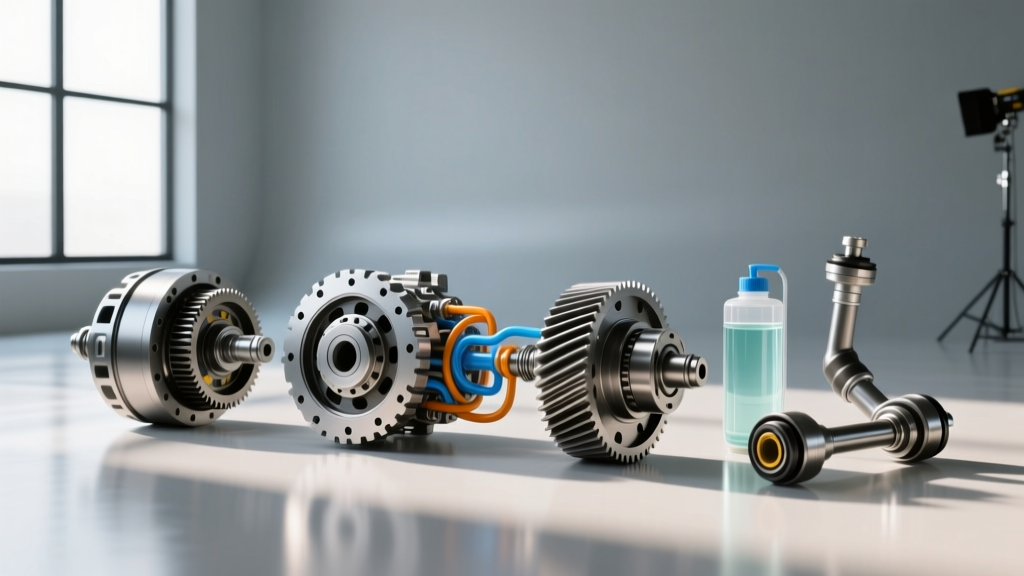
The electric car drivetrain relies heavily on active liquid cooling. The stator windings and the power electronics (inverter) generate massive heat. Many modern EVs use low-conductivity coolants specifically formulated to prevent electrical shorting if a leak occurs inside the motor housing.
Maintenance Interval: Flush the drivetrain cooling loop every 5 years or 100,000 miles. Using standard ethylene glycol antifreeze instead of OEM low-conductivity coolant (like Motorcraft Orange/Yellow EV spec or specific BASF Glysantin formulations) will increase the fluid's electrical conductivity. If a micro-crack develops in the internal heat exchanger, conductive coolant will short the high-voltage windings, resulting in a $10,000+ drive unit replacement.
Drivetrain Bearing and NVH Diagnostics
Without the masking noise of an internal combustion engine, Noise, Vibration, and Harshness (NVH) anomalies in an EV drivetrain are immediately apparent to the driver. The most common failure point in high-mileage EV reduction gears is the high-speed input shaft bearing.
When diagnosing drivetrain whine, use a digital chassis ear or an accelerometer-based NVH analyzer. Bearing frequencies typically manifest between 200Hz and 2,000Hz, scaling linearly with vehicle speed. If the whine changes pitch precisely with motor RPM (independent of road surface) and is accompanied by a low-frequency vibration under deceleration (regenerative braking load), the reduction gear input bearings are likely suffering from electrical fluting or mechanical spalling. Early detection via fluid analysis and acoustic diagnostics allows for a bearing overhaul before the gearset is destroyed by misalignment.
Summary: The 2026 EV Drivetrain Service Checklist
Master Technician's Rule: Treat the EV reduction gear with the same respect as a ZF 8HP automatic transmission. The absence of a traditional engine does not mean the absence of complex, high-stress mechanical engineering.
- Verify drivetrain fluid temperature before draining and leveling.
- Use only OEM-specified, dielectric-safe EV fluids.
- Torque all drain and fill plugs to exact Nm specifications with new crush washers.
- Inspect CV boots and half-shafts for torsional stress and grease weeping.
- Flush thermal loops with low-conductivity coolant only.
- Utilize frequency analysis tools to isolate high-speed bearing whine early.
By adhering to these expert best practices, technicians and dedicated DIYers can ensure the electric car drivetrain operates flawlessly, maximizing both the performance and the lifespan of the vehicle's most critical mechanical components.