The FWD Hybrid Drivetrain: Beyond the Basic Transaxle
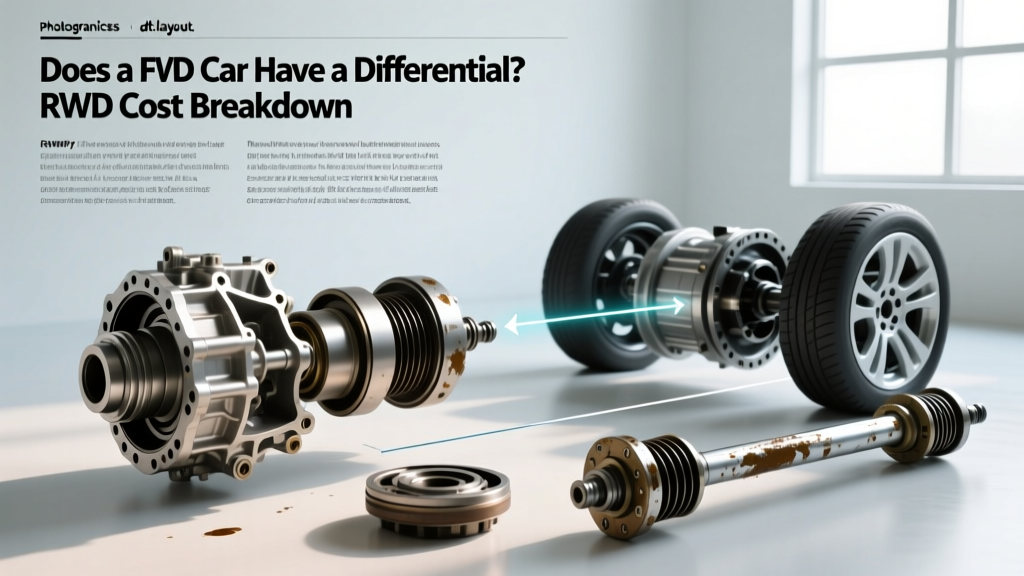
When owners of electrified commuter cars search for answers to the question, does a front wheel drive have a differential, they are often confused by the lack of a traditional rear-axle "pumpkin" or standalone differential housing. The short answer is an absolute yes: every front-wheel-drive (FWD) vehicle requires a differential to allow the outer wheel to rotate faster than the inner wheel during cornering. However, in FWD architectures—and specifically in FWD hybrid vehicles—this differential is intricately integrated into the front transaxle assembly.
As we navigate the 2026 automotive landscape, the first generation of mainstream plug-in and standard hybrids (like the Toyota Prius, Honda Insight, and Hyundai Ioniq) are aging out of their factory powertrain warranties. Understanding the mechanical synergy between the internal combustion engine (ICE), the motor-generators (MGs), and the final drive differential is critical for independent repair shops and DIY enthusiasts. This preventive maintenance guide dives deep into the FWD hybrid transaxle, exploring fluid dynamics, thermal management, and exact torque specifications required to keep these complex drivetrains operational.
Anatomy of a FWD Hybrid Transaxle and Differential
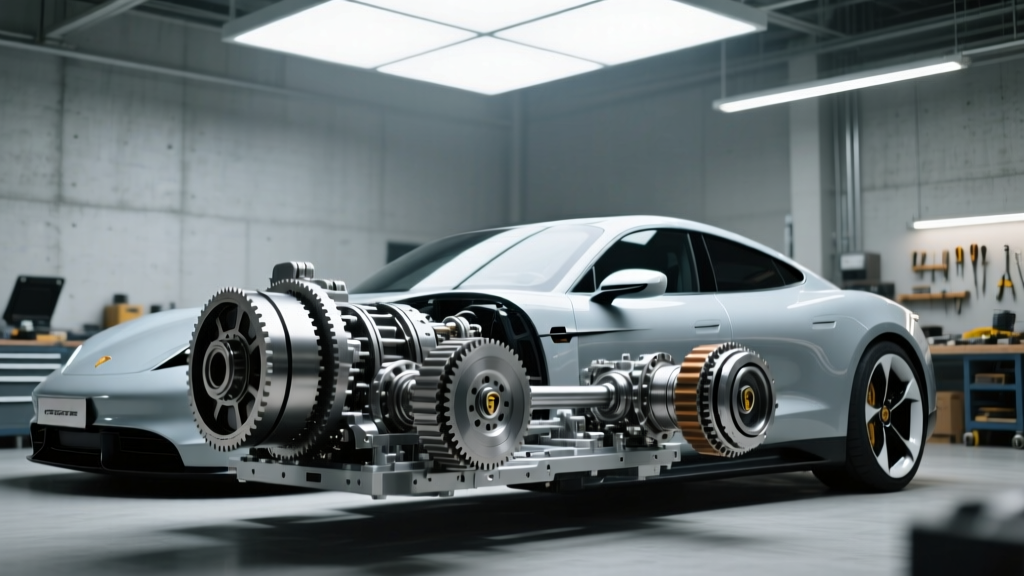
To understand maintenance, we must first map the hardware. In a conventional FWD vehicle, the transmission and differential share a single casing (the transaxle), lubricated by a shared pool of gear oil or automatic transmission fluid (ATF). Hybrid systems complicate this by embedding electric motors directly into the drivetrain path.
Toyota Hybrid System (THS) / eCVT Architecture
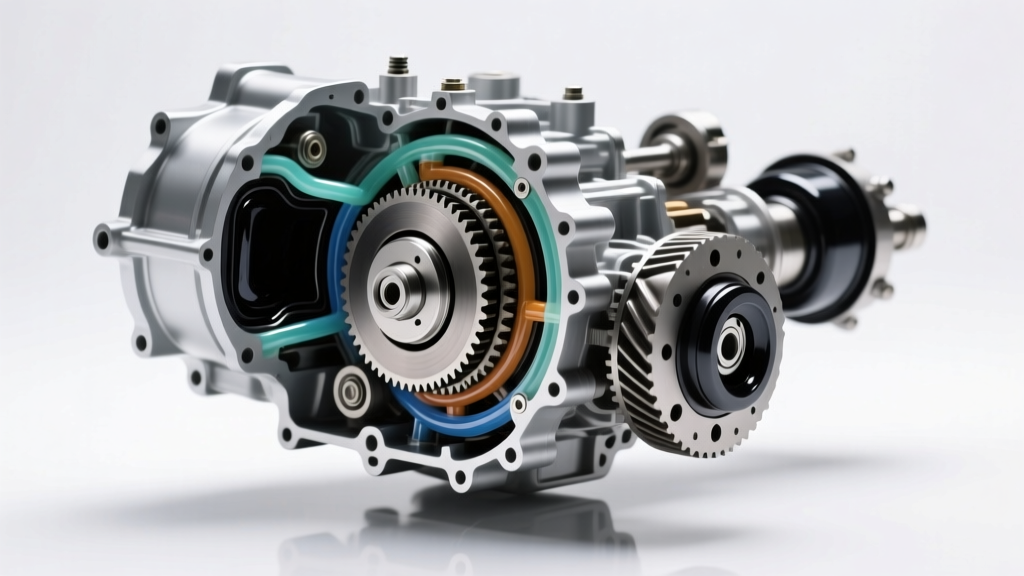
Take the ubiquitous Toyota P610 eCVT transaxle found in the 4th-generation Prius. This unit does not use a traditional belt-and-pulley continuously variable transmission. Instead, it relies on a planetary gearset acting as a power-split device. The differential is housed in the lower section of the aluminum casing, receiving torque multiplication from a counter-gear reduction assembly linked to MG2 (the primary traction motor) and the ICE.
- MG1 (Motor-Generator 1): Acts primarily as a generator and engine starter, controlling the planetary gearset's ring/sun gear relationship.
- MG2 (Motor-Generator 2): Provides direct propulsion torque to the reduction gear and differential.
- The Differential: A helical-cut, open differential that distributes torque to the left and right front CV axles. Because hybrid torque delivery is instantaneous, the differential gears experience unique shock-loading characteristics compared to ICE-only vehicles.
Honda i-MMD (Intelligent Multi-Mode Drive)
Honda’s approach in models like the Accord Hybrid differs vastly. The i-MMD system operates primarily as a series hybrid, where the ICE drives a generator to power the traction motor. However, at highway speeds, a lock-up clutch mechanically links the engine to the FWD wheels via a single-speed reduction gear and an integrated open differential. The preventive maintenance focus here shifts heavily toward the lock-up clutch actuator and the shared cooling loops.
Preventive Maintenance: Fluids, Torques, and Thermal Management
Many manufacturers label FWD hybrid transaxle fluids as "lifetime." From a 2026 engineering perspective, this is a liability. The introduction of high-voltage copper windings, inverter heat, and instantaneous electric torque accelerates fluid shearing and oxidation. Adhering to a strict preventive maintenance schedule is paramount.
Transaxle and Differential Fluid Service
The differential bearings and helical gears in a hybrid transaxle rely on splash lubrication, while the MG stators often rely on the same fluid for direct cooling or heat exchange via an internal oil-to-coolant heat exchanger. Using the incorrect fluid can lead to dielectric breakdown or catastrophic bearing failure.
| Transaxle Model | Required Fluid | Capacity (Dry/Fill) | Drain Plug Torque | Fill Plug Torque | 2026 Service Interval |
|---|---|---|---|---|---|
| Toyota P610 (Prius eCVT) | Toyota ATF WS | 3.6L (3.8 qt) | 39 N·m (29 ft-lbs) | 49 N·m (36 ft-lbs) | 60,000 Miles / 72 Months |
| Honda i-MMD (Accord) | Honda ATF DW-1 | 3.8L (4.0 qt) | 44 N·m (33 ft-lbs) | 44 N·m (33 ft-lbs) | 45,000 Miles / 60 Months |
| Hyundai D6LF1 (Ioniq) | Hyundai Genuine ATF SP-IV | 4.2L (4.4 qt) | 35 N·m (26 ft-lbs) | 45 N·m (33 ft-lbs) | 60,000 Miles / 72 Months |
Expert Insight: When draining a Toyota P610 eCVT, always remove the fill plug before the drain plug. If the fill plug is seized due to galvanic corrosion between the steel plug and aluminum casing, you will be left with an empty transaxle and no way to refill it, requiring a complete casing teardown.
Inverter and MG Cooling Loop Bleeding
The differential and reduction gears share the transaxle casing with components that generate immense heat. The inverter and MGs are cooled by a dedicated low-temperature coolant loop. If air pockets form in this loop, the inverter will thermally throttle, and the transaxle fluid temperatures will spike, degrading the ATF's viscosity and leaving the differential pinion bearings starved of adequate film strength.
- Use only specific low-conductivity coolants (e.g., Toyota Super Long Life Coolant - SLLC). Standard ethylene glycol can cause high-voltage isolation faults.
- Utilize a vacuum-fill tool to pull a 28-inHg vacuum on the cooling system before introducing the coolant. This prevents air entrapment in the inverter's micro-channels.
- Verify the electric water pump is cycling via an advanced OBD2 bi-directional scanner (such as an Autel MaxiSys or Snap-on Zeus) to ensure flow rate parameters match factory specs.
Diagnosing Drivetrain Noise: Differential vs. Motor-Generator
One of the most common complaints in aging FWD hybrids is a high-pitched whine under acceleration. Because the MG2 rotor, the reduction counter-gears, and the differential all rotate at varying proportional speeds to vehicle velocity, isolating the noise requires a methodical approach. According to diagnostic frameworks published by SAE International Technical Papers, acoustic frequency analysis is the most reliable method.
The Differential Whine Profile
A failing differential pinion bearing or worn helical gear mesh will produce a frequency that correlates directly to wheel speed (final drive ratio). In a Prius, the final drive ratio is roughly 3.26:1. If the whine changes pitch strictly in relation to road speed and remains audible even when the vehicle is coasting in EV mode with the ICE completely shut off, the differential or reduction bearings are the primary suspects. Replacement requires splitting the transaxle casing; NSK and KOYO hybrid-specific bearing kits typically cost between $350 and $600 in 2026, with labor pushing the total repair to $2,200+.
The MG2 Stator Whine Profile
Conversely, a failing MG2 stator or inverter switching noise will manifest as an electromagnetic whine that fluctuates with electrical load (amperage) rather than purely mechanical speed. This can be verified by monitoring the MG2 torque request PID via OBD2 while driving. If the noise spikes precisely with high-current regeneration or acceleration pulses, the issue lies in the electric motor assembly, not the mechanical differential.
Long-Term Preservation of the FWD Hybrid Drivetrain
As detailed in the EPA Green Vehicles Guide, the efficiency of hybrid drivetrains relies heavily on minimizing parasitic loss. A neglected differential filled with sheared, oxidized ATF WS fluid increases rotational drag, directly reducing your MPG and EV-only range.
Furthermore, owners must inspect the inner CV joints that slide into the transaxle differential side gears. The instant torque of MG2 can accelerate wear on the CV joint spider gears. If you notice a clunk when shifting from Reverse to Drive, or a shudder during low-speed EV acceleration, inspect the axle stubs for excessive spline play within the differential side gears. Catching a worn axle stub early prevents it from gouging the differential side gear bores, saving you from a $4,500 transaxle replacement.
Final Thoughts
So, does a front wheel drive have a differential? Yes, and in a hybrid vehicle, it is the unsung hero that translates the combined fury of gasoline and high-voltage electricity into forward motion. By abandoning the "lifetime fluid" myth and adhering to strict thermal and mechanical maintenance intervals, you can easily push a FWD hybrid transaxle well past the 250,000-mile mark. For factory service manuals and exact wiring schematics, always consult your manufacturer's portal, such as the Toyota Technical Information System (TIS), before putting a wrench to the casing.