The Mechanics of Front Limited Slip Differentials
In modern four-wheel-drive (4WD) and all-wheel-drive (AWD) platforms, the front axle is subjected to extreme steering angles, driveline shock, and severe torque loads. When diagnosing drivetrain anomalies, understanding the internal architecture of your front carrier is critical. If you are researching how to tell if front differential is bad, it is crucial to first determine whether your axle houses a standard open carrier or a Limited Slip Differential (LSD). The operational mechanics of an LSD fundamentally change the acoustic and vibrational signatures of a failing unit.
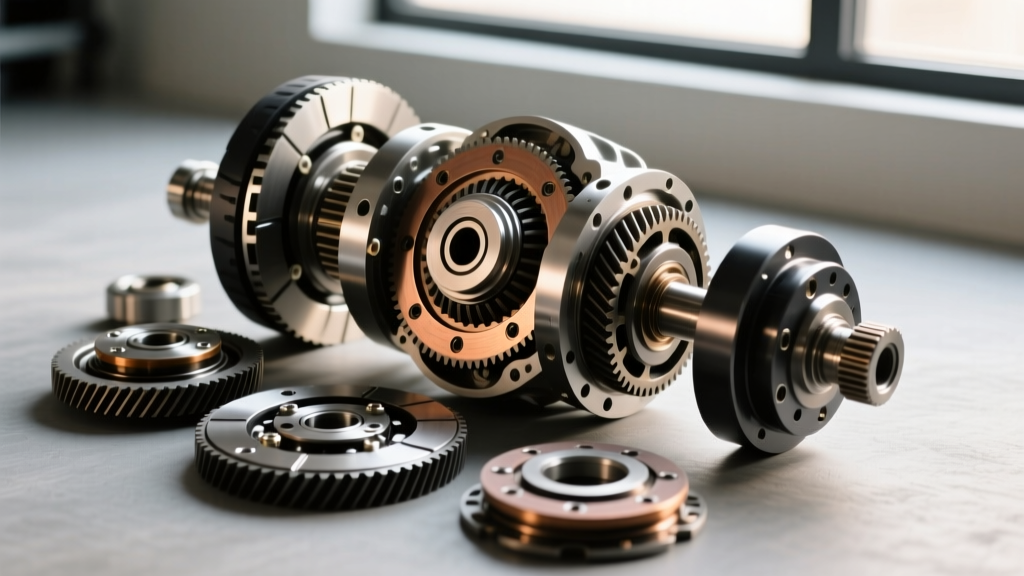
Clutch-Pack vs. Helical Gear Architectures
Front LSDs generally fall into two distinct mechanical categories, each with unique failure modes:
- Clutch-Pack LSDs (e.g., Eaton Posi, Auburn Pro-Series): These rely on preloaded S-wave springs and composite or paper-based friction clutches sandwiched between the side gears and the carrier. They provide a fixed Torque Bias Ratio (TBR), typically between 2.0:1 and 3.5:1. Failure usually manifests as clutch glazing, spring fatigue, or severe chatter due to degraded friction modifiers.
- Helical Gear LSDs (e.g., Eaton Truetrac, Torsen T-1): These utilize complex planetary worm-gear sets to create binding forces that multiply torque to the wheel with traction. They contain no wearable clutch packs and require no specialized friction modifiers. Failure here is rare but typically involves catastrophic gear spalling or thrust washer disintegration under extreme shock loads.
How to Tell If Front Differential Is Bad: LSD-Specific Symptoms
When owners search for how to tell if front differential is bad, they often misinterpret normal LSD operational characteristics as mechanical failures. However, true degradation presents specific, repeatable symptoms. Below is a diagnostic matrix tailored for front LSD axles.
| Symptom | Operational Trigger | LSD Root Cause | Corrective Action |
|---|---|---|---|
| Low-Speed Chatter / Binding | Full-lock steering (parking lots) | Clutch pack glazing or depleted friction modifier | Fluid flush with 2-4 oz OEM friction modifier; perform Figure-8 bleed test |
| Coast-Down Whine | Deceleration between 45-65 MPH | Pinion bearing preload loss or ring gear deflection | Check pinion nut torque; inspect crush sleeve; measure gear backlash |
| AWD Understeer / Push | Accelerating out of low-traction corners | Worn clutches failing to lock; open-differential behavior | Carrier rebuild or upgrade to helical LSD (e.g., Eaton Truetrac) |
| Grinding / Metallic Crunch | 4WD engagement under load | Spalled thrust washers or shattered cross-pin (helical/clutch) | Immediate teardown; inspect ring and pinion for collateral damage |
The Figure-8 Bleed Test
Before condemning a chattering front clutch-type LSD, perform the Figure-8 test. Find a clean, dry, paved surface. Put the vehicle in 4WD (if applicable) or AWD, and drive in tight, continuous figure-8 patterns for 10 to 15 repetitions. This forces the side gears to rotate at different speeds, pumping fresh gear oil and friction modifier directly into the clutch packs. If the chatter subsides, the unit is mechanically sound but was suffering from localized fluid starvation or modifier settling.
Fluid Specifications and Friction Modifier Chemistry
As of 2026, synthetic 75W-90 and 75W-140 formulations have largely superseded conventional 80W-90 mineral oils in heavy-duty and performance front axles. The American Petroleum Institute (API) GL-5 rating is mandatory for hypoid ring and pinion gears due to the extreme sliding friction inherent in their geometry.
The Role of Extreme Pressure (EP) Additives
GL-5 gear oils utilize sulfur-phosphorus EP additives. Under the immense pressure of the hypoid gear contact patch (which can exceed 300,000 PSI), these additives react with the iron surfaces to form a sacrificial solid film of iron sulfide and iron phosphate. This prevents micro-welding and gear spalling. However, these same sulfur compounds can cause corrosion on yellow metals (bronze/copper) if the oil is not properly formulated, which is a critical consideration for front axles utilizing bronze thrust washers.
Friction Modifier Science
For clutch-type LSDs, standard GL-5 oil is insufficient. The static friction coefficient of the clutch material must be carefully managed to prevent 'stick-slip' phenomena (chatter). Friction modifiers—typically long-chain organic esters or amides—adsorb onto the clutch plates, creating a microscopic boundary layer that ensures smooth engagement. Always reference the OEM specification, such as Ford EST-M2C118-A or GM 1052358, rather than relying on generic 'universal' additives.
Expert Insight: Never over-dose friction modifier. Adding more than the recommended 2 to 4 ounces will lower the dynamic friction coefficient too far, effectively turning your LSD into an open differential and causing premature clutch slip and heat degradation.
Real-World Service Data: Capacities and Torque Specs
Proper maintenance requires adherence to exact engineering tolerances. Over-torquing differential cover bolts on aluminum housings or stamped steel pans will distort the sealing surface, leading to chronic leaks and fluid starvation. Below are precise specifications for common front LSD platforms.
| Axle Platform | Fluid Capacity | Recommended Viscosity | Cover / Plug Torque | Modifier Required? |
|---|---|---|---|---|
| Dana Super 60 (Ford F-250/F-350 Front) | 3.5 Pints | 75W-140 Synthetic GL-5 | Cover: 35 lb-ft | Yes (if equipped with clutch LSD) |
| Subaru R160 (WRX/STI Front Helical) | 1.2 Pints | 75W-90 Synthetic GL-5 | Drain/Fill: 33 lb-ft | No (Helical gear design) |
| GM 9.25 IFS (Silverado/Sierra Front) | 2.75 Pints | 75W-90 Synthetic GL-5 | Plug: 24 lb-ft | Yes (G80 Locker / Eaton) |
| Jeep Dana 44 (Wrangler Rubicon Front) | 2.7 Pints | 75W-140 Synthetic GL-5 | Cover: 30 lb-ft | No (Tru-Lok is air-locked) |
Step-by-Step Front LSD Maintenance Protocol
Routine service intervals for front differentials in severe-duty applications (off-road, towing, track use) should not exceed 30,000 miles. For standard street use, 50,000 to 60,000 miles is acceptable. Follow this protocol to ensure carrier longevity:
- Temperature Normalization: Drive the vehicle for 15 minutes to bring the gear oil up to operating temperature (approx. 140°F). This suspends metallic particulates and reduces fluid viscosity for a complete drain.
- Metallurgical Inspection: Inspect the magnetic drain plug. A fine, metallic 'fuzz' is normal wear from the ring and pinion break-in process. However, distinct shards, silver flakes, or brass-colored chips indicate catastrophic thrust washer or bearing cage failure, requiring immediate teardown.
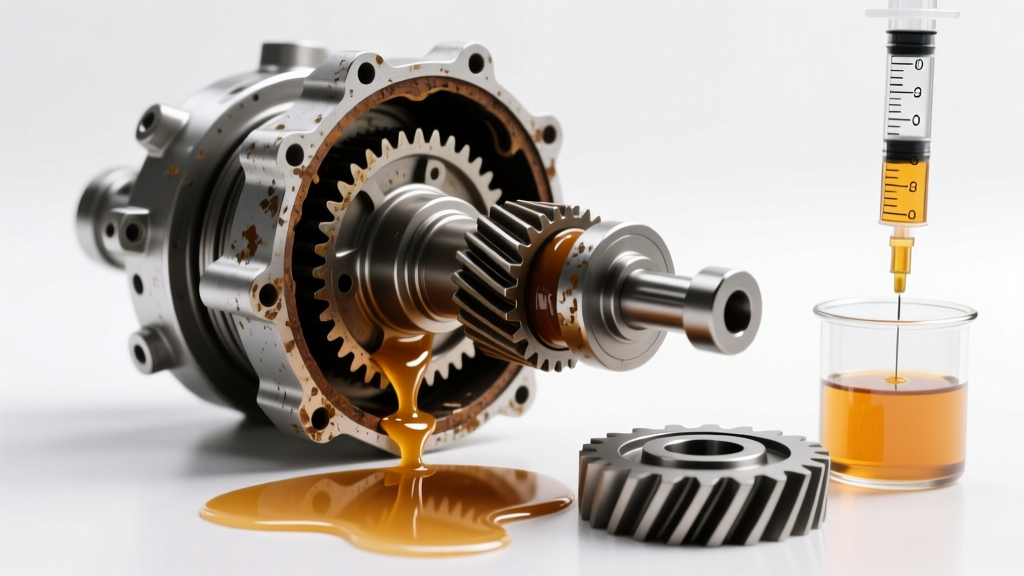
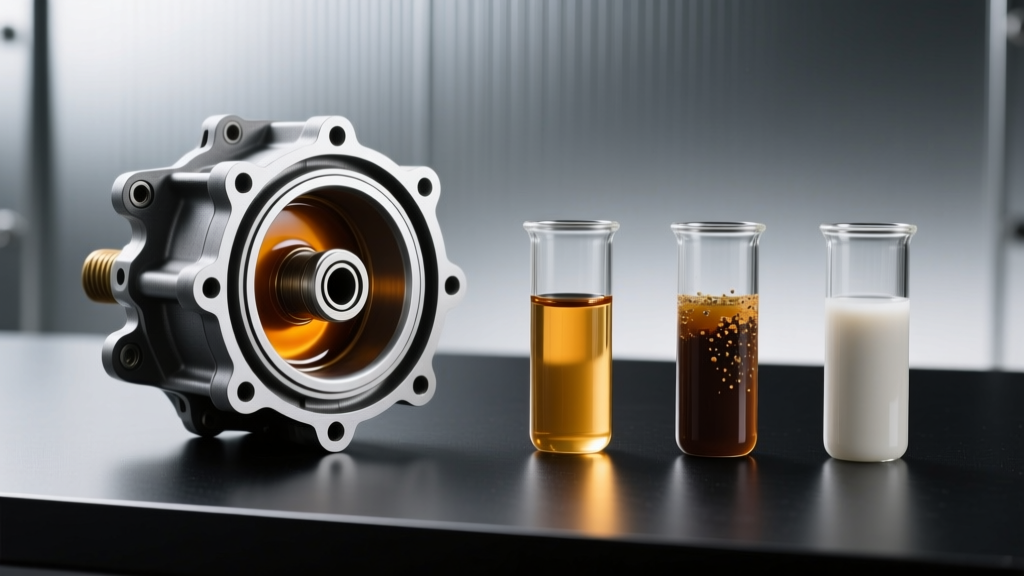
- Chemical Flushing: If the drained fluid smells severely burnt (indicating clutch overheating) or contains excessive moisture (milky appearance), flush the housing with one quart of cheap GL-4 manual transmission fluid before filling with final synthetic oil.
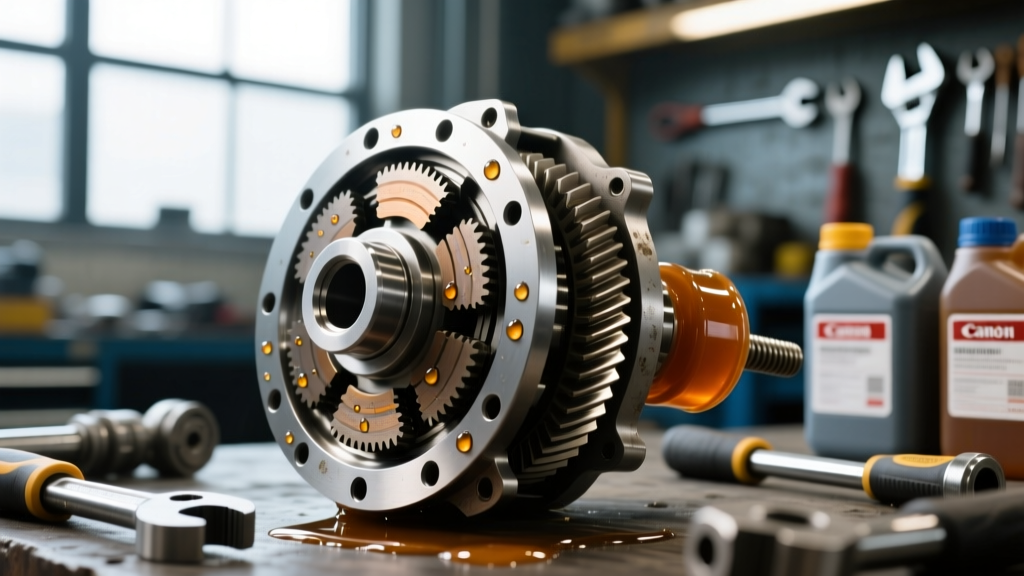
- Precision Filling: Pump the new synthetic gear oil (sourced from reputable manufacturers like Red Line Synthetic Oil or Motul) until it reaches the bottom edge of the fill hole. For clutch-type LSDs, inject the friction modifier first or mix it thoroughly into the fill pump bottle to ensure it enters the carrier.
- Sealing: Apply a continuous 3mm bead of RTV silicone (e.g., Permatex Ultra Black) to stamped covers, or reuse the OEM rubber gasket on aluminum differential pans. Torque fasteners in a crisscross pattern to the specifications listed above.
Economic Analysis: Rebuild vs. Replace
If your diagnostic tests confirm internal mechanical failure, you must weigh the economics of a rebuild versus a crate replacement. In 2026, with specialized drivetrain labor rates averaging $160 to $210 per hour, the cost structure is as follows:
- Master Rebuild Kit: A high-quality kit (e.g., from Spicer Drivetrain Products or Yukon Gear) including Timken bearings, races, shims, and clutch packs costs between $250 and $450.
- Labor (Rebuild & Setup): Setting ring gear backlash (typically 0.006" to 0.010") and pinion bearing preload (measured in inch-pounds of rotational drag) requires 4 to 6 hours of skilled labor ($640 - $1,260).
- Crate LSD Assembly: Purchasing a pre-assembled, drop-in third member or complete carrier assembly (such as an Eaton Truetrac loaded into a new OEM housing) ranges from $1,800 to $2,800, but cuts installation time down to 2 hours.
Ultimately, accurate diagnosis separates a simple $150 fluid and modifier service from a $2,000 axle rebuild. By understanding the unique operational traits of your front LSD, you can confidently interpret drivetrain feedback and execute precision maintenance that ensures optimal traction and component survival.