The Anatomy of a Differential Gear Whine
A differential gear whine is the universal warning siren of a failing drivetrain. Whether you are driving a daily-driven commuter SUV or a heavy-duty truck towing near its Gross Combined Weight Rating (GCWR), that distinct, pitch-shifting howl from the rear axle demands immediate attention. However, before you order a rebuild kit or tear into the differential housing, the most critical diagnostic step happens at the fill plug. As an automotive drivetrain specialist, I cannot stress this enough: the color, smell, and particulate content of your differential fluid will tell the exact story of your gearset's health long before catastrophic failure occurs.
In this 2026 preventive maintenance guide, we will decode differential fluid condition, explain the tribology behind hypoid gear wear, and provide exact torque specifications and fluid capacities to help you silence a differential gear whine before it destroys your ring and pinion.
The Physics of the Whine: Why Hypoid Gears Demand Extreme Pressure
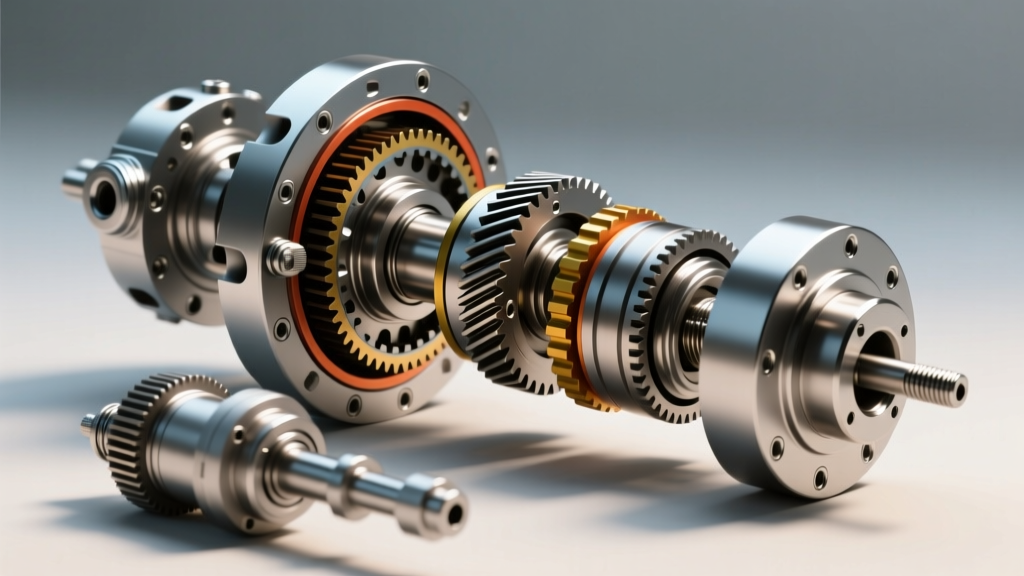
Unlike the straight-cut or helical gears found in manual transmissions, the ring and pinion gears in a standard automotive axle are hypoid gears. The pinion gear intersects the ring gear below the centerline, creating a massive amount of sliding friction alongside the rolling motion. This sliding action generates intense localized heat and shearing forces.
To survive, hypoid gears rely on the Extreme Pressure (EP) additives found in 75W-90 or 75W-140 gear oils—typically Zinc and Phosphorus compounds (ZDDP). When differential fluid degrades, loses its viscosity index, or becomes contaminated, boundary lubrication fails. The metal-to-metal contact causes micro-pitting and spalling on the gear teeth. This microscopic surface degradation alters the Noise, Vibration, and Harshness (NVH) profile of the gearset, manifesting as the dreaded differential gear whine. If the whine occurs under acceleration (drive side), it often points to pinion bearing preload loss or drive-side tooth wear. If it howls on deceleration (coast side), ring gear backlash and side bearing wear are the usual culprits.
Decoding Differential Fluid Color and Condition
Pulling the fill plug or dropping the differential cover provides an immediate, unfiltered look into the axle's internal environment. Use the following diagnostic matrix to interpret your fluid's condition and determine your next mechanical move.
| Fluid Appearance | Odor Profile | Particulates | Drivetrain Diagnosis | Required Action |
|---|---|---|---|---|
| Clear to Light Amber | Mild, Earthy | None | New, healthy fluid. Optimal EP additive retention. | Continue standard OEM maintenance interval. |
| Dark Brown / Opaque | Burnt Toast | Fine Metallic Glitter | Thermal breakdown. Clutch pack wear (if LSD equipped). | Immediate fluid and friction modifier change. |
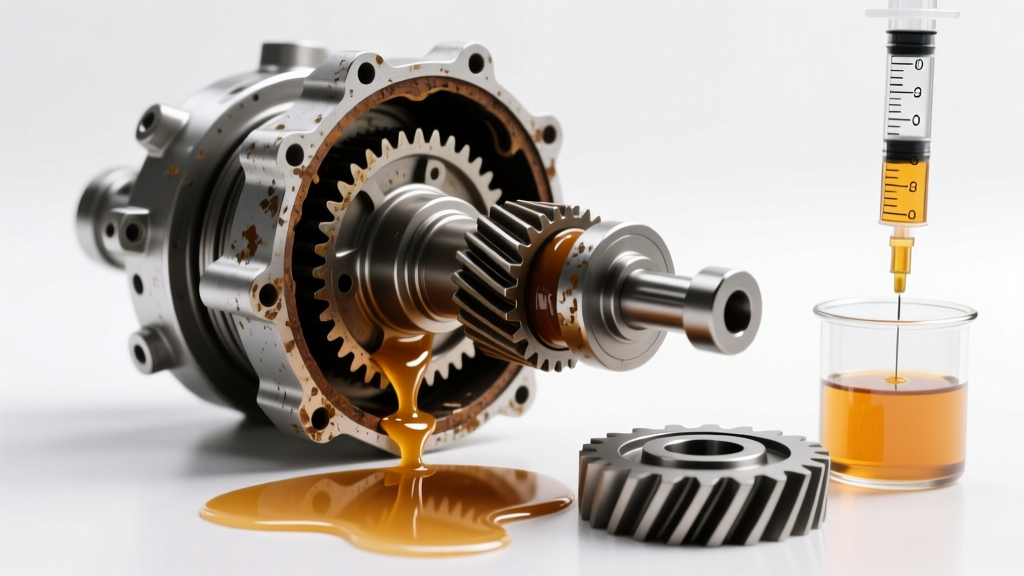
| Milky / Chocolate Milk | Rancid Sulfur | Rust Powder | Water ingress via bad axle seal or clogged breather tube. | Replace seals, clear breather, flush housing. |
| Black / Sludge | Acrid Chemical | Chunky Metal Shavings | Catastrophic bearing cage or gear tooth failure. | Complete teardown and rebuild required. |
The 'Milky' Emulsion: Water Ingress and Rust
If your fluid looks like a melted chocolate milkshake, water has breached the axle housing. This is incredibly common in off-road vehicles and trucks that traverse deep water or experience severe temperature cycling. When a hot axle is submerged in cold water, the rapid contraction of the internal air creates a vacuum, sucking moisture past aging axle tube seals or a clogged, submerged differential breather tube. Water destroys the EP additives in gear oil and promotes rapid flash-rusting on the bearing races. This rust creates a gritty paste that accelerates bearing wear, directly leading to a high-pitched differential gear whine as the pinion depth shifts.
Metallic Glitter vs. Chunky Shavings
Fine, silver glitter suspended in dark brown oil is somewhat normal for a limited-slip differential (LSD) with 80,000+ miles, as the clutch discs naturally wear. However, if you find chunky, jagged metal shavings or brass-colored flakes on the magnetic fill plug, your pinion or carrier bearings are disintegrating. According to rebuild data from Yukon Gear & Axle, brass flakes specifically indicate catastrophic wear on the spider gear thrust washers or the carrier bearing cages, requiring an immediate teardown to salvage the ring and pinion.
Preventive Maintenance: Specs, Torques, and Procedures
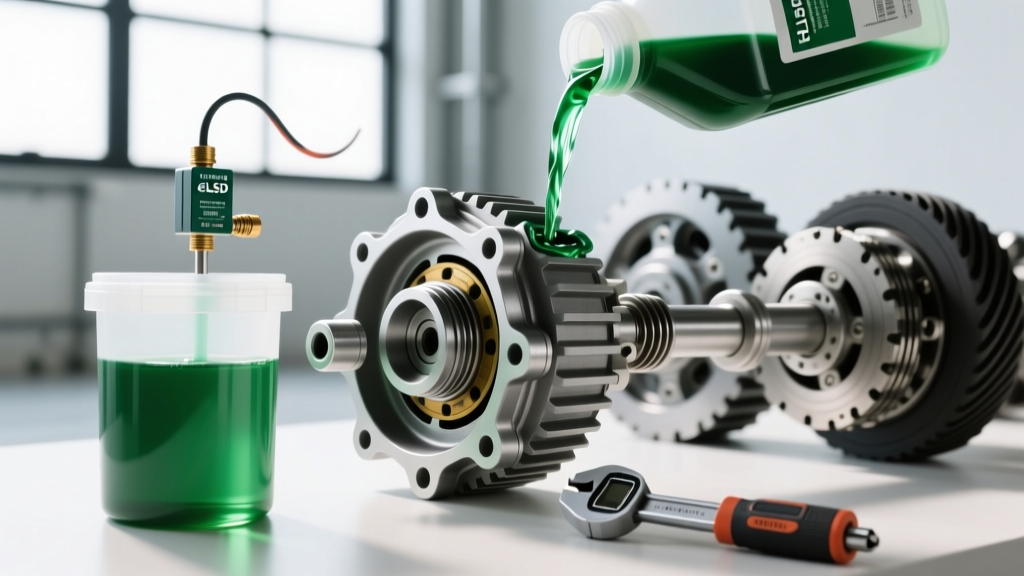
Preventing a differential gear whine requires strict adherence to fluid capacities, torque specifications, and the correct use of friction modifiers. Over-tightening cover bolts can warp the housing and alter bearing preload, while under-filling the axle starves the pinion bearings of oil splash. Here are the exact specifications for three of the most common axles on the road today:
- Ford 8.8-Inch (Mustang / F-150):
- Capacity: 2.0 to 2.2 Quarts
- Fluid Spec: 75W-140 Synthetic (Severe Duty/Towing) or 75W-90
- Fill Plug Torque: 22 lb-ft
- Expert Note: Always add 4 oz of XL-3 Friction Modifier if equipped with a Traction-Lok LSD to prevent clutch chatter, which is often misdiagnosed as a gear whine.
- GM 8.5 / 8.6-Inch 10-Bolt (Silverado / Tahoe):
- Capacity: 2.1 Quarts
- Fluid Spec: 75W-90 Synthetic (e.g., ACDelco Dexron Gear Oil)
- Cover Bolt Torque: 22 to 25 lb-ft (Use a crisscross pattern)
- Expert Note: The GM 10-bolt cover is prone to warping. Use a high-quality RTV silicone (like Permatex Black or Ultra Grey) rather than a cheap cork gasket to prevent slow weeping and subsequent fluid starvation.
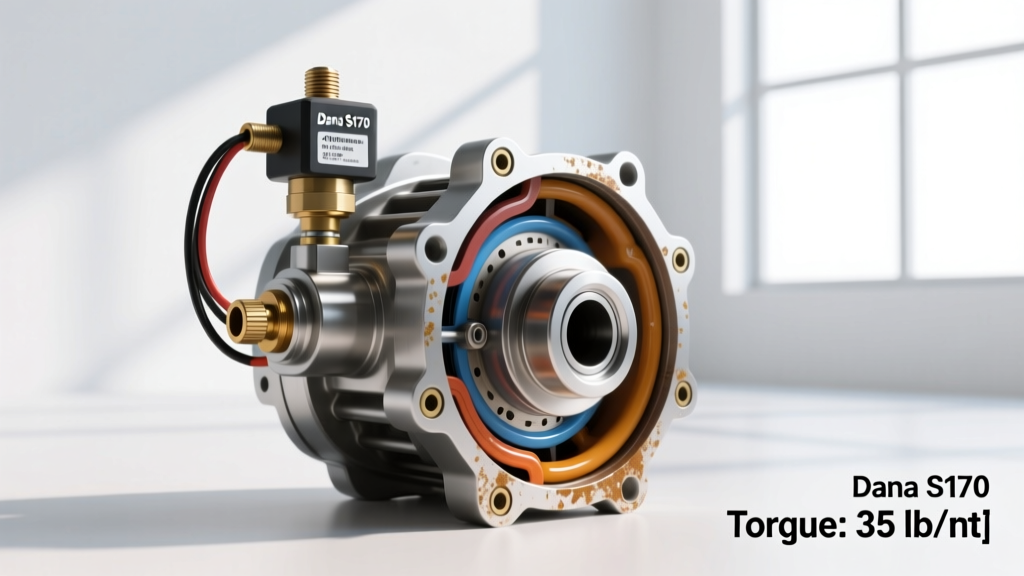
- Dana 44 (Jeep Wrangler JK/JL):
- Capacity: 2.0 Quarts
- Fluid Spec: 80W-90 Conventional or 75W-140 Synthetic
- Cover Bolt Torque: 30 to 35 lb-ft
- Expert Note: The Dana 44 runs hot under load. As noted in the AMSOIL Gear Lube Technical Guide, upgrading to a high-viscosity synthetic 75W-140 maintains a thicker fluid film at extreme temperatures, drastically reducing the chance of drive-side gear whine during heavy off-road crawling.
Limited-Slip Chatter vs. True Gear Whine
Before blaming the ring and pinion for every noise your axle makes, you must differentiate between a differential gear whine and LSD clutch chatter. A true gear whine is a continuous, pitch-dependent howl that rises and falls perfectly with vehicle speed, regardless of engine RPM. It is caused by gear tooth geometry changes or bearing preload loss.
Conversely, clutch chatter occurs only during low-speed, tight-radius turns. It sounds like a rhythmic thumping or grinding from the rear corners as the clutches bind and release. If your fluid is dark but free of large metal chunks, and the noise only happens when pulling into a parking space, you do not have a failing gearset. You have depleted friction modifiers. Draining the fluid, cleaning the clutch packs, and refilling with fresh 75W-90 and the correct OEM friction modifier will usually resolve the issue for under $100.
The Financial Reality: Maintenance vs. Rebuild
Ignoring the early warning signs found in your differential fluid is a costly mistake. A preventive fluid service using premium synthetic gear oil and OEM sealants costs between $80 and $150 if performed at an independent drivetrain shop, or roughly $50 in parts if done in your driveway. High-end synthetics from suppliers like Ring-Pinion.com or local auto parts stores offer immense protection for the hypoid sliding action.
Compare that to the cost of ignoring a fluid analysis that shows black sludge and chunky shavings. Once the pinion bearing fails and alters the gear depth, the ring and pinion must be replaced. A complete axle rebuild—including a master install kit with Timken bearings, new ring and pinion, crush sleeve, and labor—routinely costs between $1,800 and $3,200 depending on the axle model and local labor rates. Furthermore, if the pinion gear shatters under load, it can punch through the cast-iron or aluminum differential housing, turning a $2,000 rebuild into a $4,500 complete axle replacement.
Final Diagnostics: Trust the Fluid
Your differential fluid is the lifeblood of your axle. By routinely inspecting the fluid's color, smelling for thermal breakdown, and checking the magnetic plug for abnormal particulates, you can predict and prevent a differential gear whine before it strands you. Adhere strictly to torque specs, use the correct EP-rated synthetics, and never ignore the breather tube. In the world of drivetrain mechanics, a $15 bottle of gear oil is the cheapest insurance policy you will ever buy.