The Acoustic Signature of Fluid Degradation
When drivers report a whine, howl, or clunk from the front axle, the immediate assumption is often a failing pinion bearing or chipped ring gear. However, as a preventive measure, evaluating the gear oil is the critical first step. A persistent noise from front differential assemblies is frequently the acoustic byproduct of fluid degradation, oxidation, or contamination. Front differentials, particularly Independent Front Suspension (IFS) units found on modern 4x4 trucks and SUVs, operate under severe thermal and mechanical stress. The hypoid gear sets require a robust hydrodynamic lubricating film to prevent metal-on-metal contact. When this film breaks down due to aged or contaminated fluid, the resulting friction generates distinct acoustic frequencies that mimic catastrophic mechanical failure. Understanding how to read differential fluid color and condition is the cornerstone of advanced drivetrain preventive maintenance.
Decoding Differential Fluid Color and Condition
The visual and tactile inspection of gear oil provides a direct window into the internal health of your front axle. Before condemning a differential based on noise alone, extract a fluid sample via the fill or drain plug and evaluate it against the following diagnostic matrix.
1. Translucent Amber to Honey (Optimal Condition)
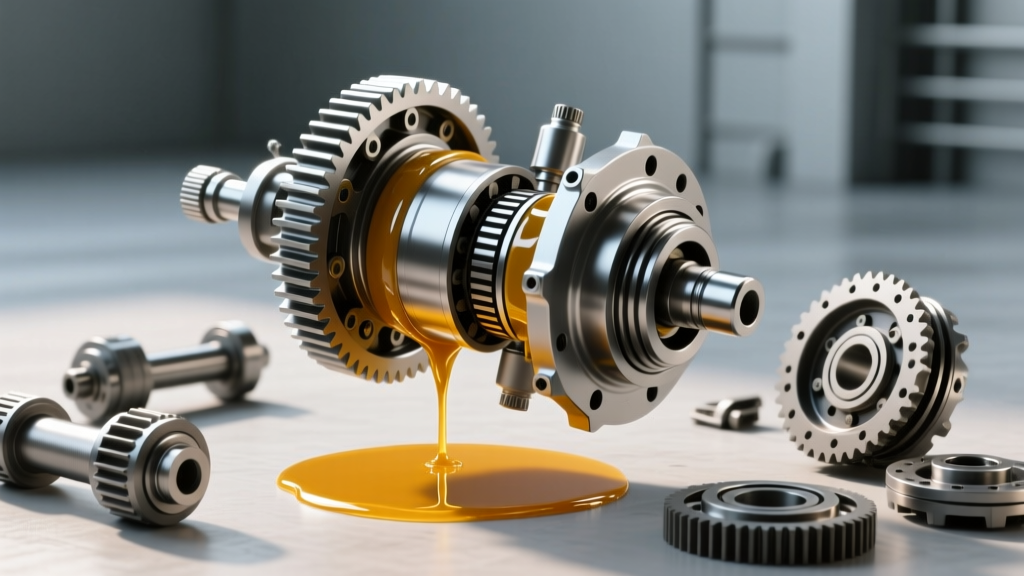
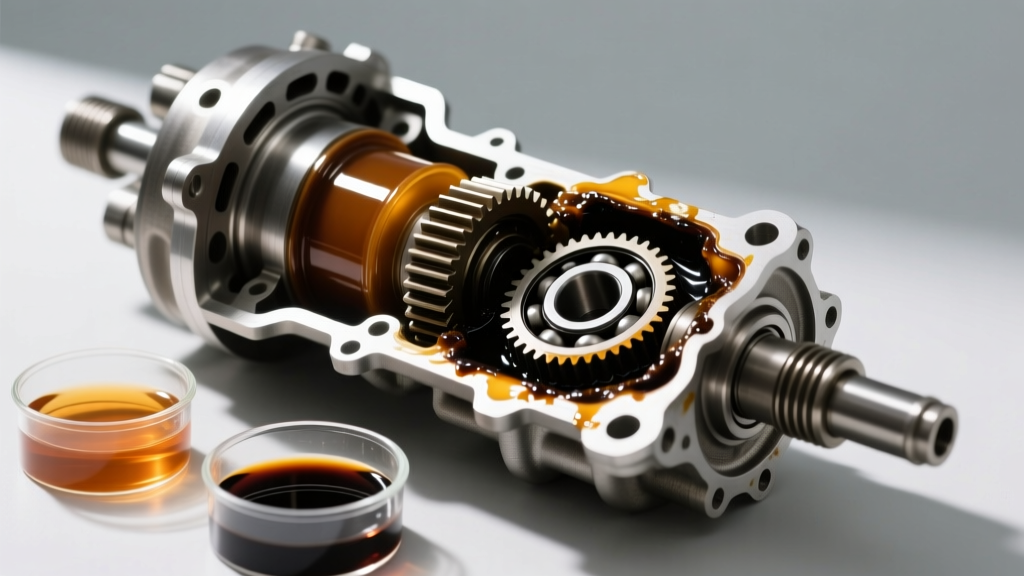
Fresh API GL-5 75W-90 or 75W-140 synthetic gear oil typically presents as a clear, translucent amber or honey color. In this state, the Extreme Pressure (EP) sulfur-phosphorus additives are fully active, and the base oil viscosity is intact. If you are hearing a noise from front differential components but the fluid is pristine and at the correct level, the issue is likely mechanical (e.g., improper gear backlash, worn pinion shims, or a failing CV axle joint) rather than lubrication-related.
2. Opaque Black and Sludgy (Thermal Oxidation)
Gear oil that has turned opaque black, smells sharply of burnt sulfur, and feels unusually thin has suffered severe thermal breakdown. This occurs when the differential operates consistently above 250°F (121°C), often due to heavy towing, aggressive off-roading, or inadequate cooling fins on the differential housing. Oxidized oil loses its shear stability. As the viscosity drops, the oil can no longer maintain the critical wedge between the hypoid ring and pinion gears, resulting in a high-pitched whine that increases with vehicle speed.
3. Milky, Frothy, or Chocolate Brown (Water Intrusion)
If the fluid resembles a chocolate milkshake or mayonnaise, water has emulsified with the gear oil. This is a common failure point in IFS front differentials where the axle breather tube becomes clogged, cracked, or submerged during water fording. When the hot differential cools rapidly in water, it creates a vacuum that sucks moisture past the axle seals or through a compromised breather. Water contamination destroys the anti-wear additives and promotes rapid rusting of the pinion and carrier bearings, leading to a low-frequency growl or rumble during acceleration and deceleration.
4. Metallic Paint or Heavy Glitter (Catastrophic Wear)
A slight bronze or gray hue on the magnetic drain plug is normal for the first 15,000 miles of break-in. However, if the fluid itself sparkles like metallic paint in the sunlight, or if you can feel distinct grit between your fingers, the differential is actively destroying itself. This 'glitter' consists of microscopic ferrous and non-ferrous shavings from spalling bearings or wearing thrust washers. Immediate teardown and rebuild are required; a fluid change will not silence the resulting noise from front differential assemblies at this stage.
Magnetic Plug Analysis: Reading the Fuzz
Most OEM front differentials utilize a magnetic drain or fill plug to capture ferrous debris. The type of material clinging to the magnet is a critical diagnostic tool:
- Fine, fuzzy gray paste: Normal wear from the break-in period or standard high-mileage operation. No immediate action required beyond standard service intervals.
- Sharp, metallic splinters or chunks: Indicates chipped gear teeth or shattered bearing cages. Requires immediate differential disassembly.
- Brass or copper flakes: Points to the wear of internal thrust washers or the pilot bearing located inside the ring gear.
Viscosity Shearing and Hypoid Gear Protection
Hypoid gears in front differentials feature a sliding, wiping action rather than a pure rolling action. This sliding motion subjects the gear oil to extreme mechanical shearing. According to AMSOIL's technical documentation on gear lubricants, inferior conventional gear oils can shear out of grade rapidly, effectively turning a 75W-90 fluid into a 75W-70 fluid in as little as 20,000 miles under heavy loads. This loss of viscosity collapses the hydrodynamic boundary layer, leading to micro-welding of the gear surfaces and the characteristic 'howl' associated with worn ring and pinion sets. Utilizing high-quality synthetic fluids with robust shear-stable viscosity index improvers is mandatory for modern front axles.
Preventive Maintenance Service Intervals
Severe duty cycles drastically reduce the lifespan of front differential fluid. Adhere to the following preventive maintenance schedule to preempt noise and mechanical failure:
| Duty Cycle Profile | Service Interval (Miles) | Recommended Fluid Spec |
|---|---|---|
| Highway / Commuter (Light 4WD use) | 50,000 - 60,000 | API GL-5 75W-90 Synthetic |
| Mixed Towing / Light Off-Road | 30,000 - 40,000 | API GL-5 75W-90 Synthetic |
| Severe Off-Road / Deep Water Fording | 15,000 or Post-Submersion | API GL-5 75W-140 Synthetic |
| High-Speed Desert / Competition | 5,000 - 10,000 | API GL-5 75W-140 w/ Zinc Additives |
OEM Torque Specifications and Capacities
Proper service requires adherence to exact torque specifications to prevent housing distortion or plug blowout under pressure. Below are standard specifications for common modern IFS front differentials (always verify with the specific factory service manual):
- GM 9.25-inch AAM IFS (Silverado/Sierra 1500): Fill plug is typically 33mm or 3/8-inch square drive. Torque to 24-30 lb-ft. Total capacity is approximately 1.75 quarts.
- Ford 8.8-inch IFS (F-150): Fill plug is often Torx 55 or 3/8-inch square drive. Torque to 28 lb-ft. Total capacity is approximately 1.5 quarts.
- Ram 9.25-inch AAM IFS (Ram 1500): Fill plug is 15mm hex or 3/8-inch square drive. Torque to 25 lb-ft. Total capacity is approximately 1.7 quarts.
Note: Always remove the fill plug BEFORE removing the drain plug. If the fill plug is seized or stripped, you do not want to drain a differential you cannot easily refill.
Limited-Slip Additives and Chatter Diagnosis
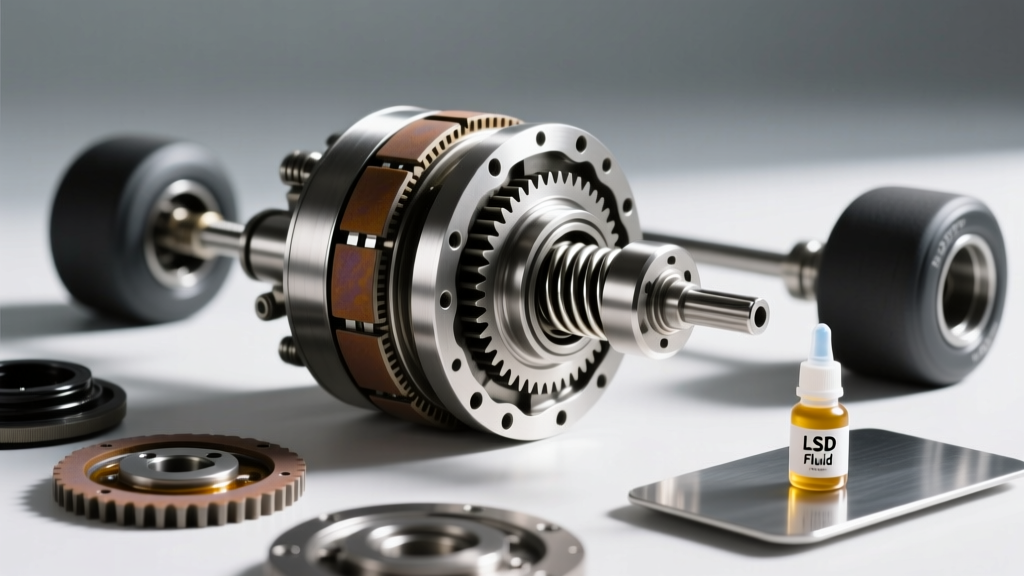
If your front differential is equipped with a Limited-Slip Differential (LSD) or an electronic locking mechanism that operates in a limited-slip mode prior to full engagement, fluid condition directly impacts clutch pack performance. A shuddering or chattering sensation during tight, low-speed turns is often misdiagnosed as a noise from front differential gear failure. In reality, this is usually caused by depleted friction modifiers. As outlined in Dana Spicer's lubrication recommendations, clutch-type LSDs require specific friction modifier additives (such as GM part #88900333 or Ford XL-3) to ensure smooth clutch pack engagement. If the fluid is dark and the chatter is present, a complete fluid flush with fresh modifier is the required first step before authorizing a clutch pack replacement.
Final Diagnostic Takeaways
Ignoring the visual and tactile clues provided by differential fluid is a costly mistake. By systematically evaluating fluid color, viscosity, and magnetic debris, technicians and DIY enthusiasts can accurately separate lubrication-induced acoustic symptoms from genuine mechanical failures. Maintaining the correct API GL-5 synthetic gear oil, adhering to severe-duty service intervals, and utilizing precise torque specs will ensure your front axle operates quietly and reliably for the life of the vehicle.