The Physics of Dirt: Why an LSD Transforms Your Go Kart
While traditional 50cc sprint karts rely on a solid rear axle to induce rotation and oversteer on high-traction asphalt, high-horsepower off-road racing karts, shifter karts, and custom tube-chassis buggies face an entirely different set of physical laws. When navigating loose dirt, mud, or mixed-surface tracks, a solid axle creates severe binding, while an open differential wastes kinetic energy by spinning the unloaded inside wheel. This is where a properly tuned limited-slip go kart rear differential becomes the ultimate mechanical advantage. By biasing torque to the wheel with the most traction, a limited-slip differential (LSD) maximizes forward drive without sacrificing the kart's ability to yaw through tight apexes.
In this technical deep-dive, we explore the internal mechanics of clutch-type limited-slip differentials adapted for 1-inch and 1.18-inch live kart axles, the precise fluid chemistry required to keep them operating smoothly, and the exact maintenance protocols required to rebuild and shim the clutch packs for optimal track performance.
Open vs. Limited-Slip Go Kart Rear Differential Dynamics
An open differential in an off-road kart is a liability. When the inside rear tire unloads during corner entry or encounters a patch of slick mud, the open carrier sends 100% of the available torque to the path of least resistance. The inside wheel spins violently, the outside wheel receives zero drive, and the kart effectively coasts. A clutch-type LSD introduces a predefined amount of static torque (preload) and dynamic torque biasing. When the inside wheel attempts to spin, the friction generated between the clutch plates locks the side gears to the carrier, forcing the outside wheel to drive the kart forward. This mechanical grip is what separates podium-finishers from mid-pack runners in 250cc to 1000cc off-road kart racing.
Inside the Mini-Housing: Clutch-Pack and Helical Gear Operation
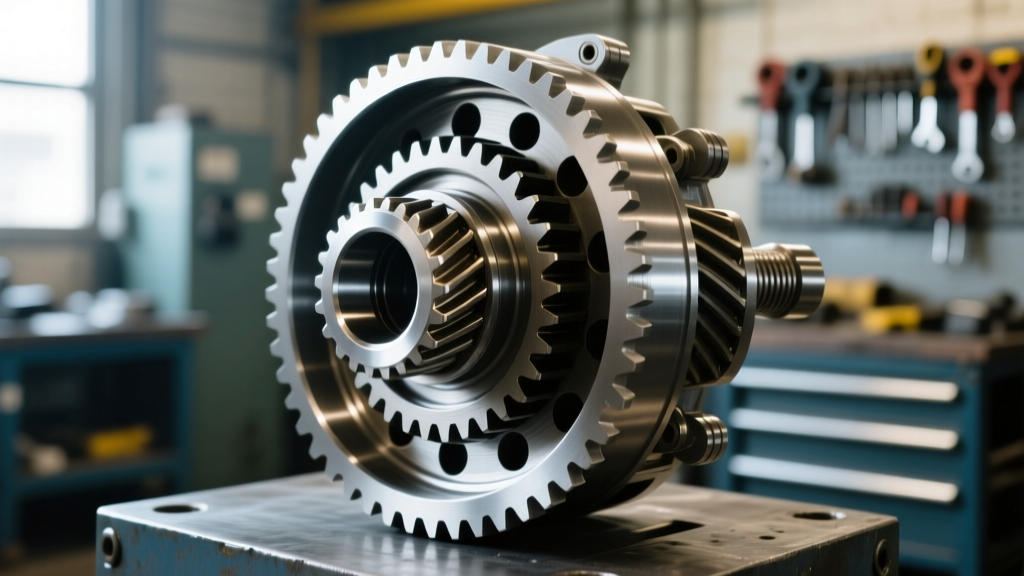
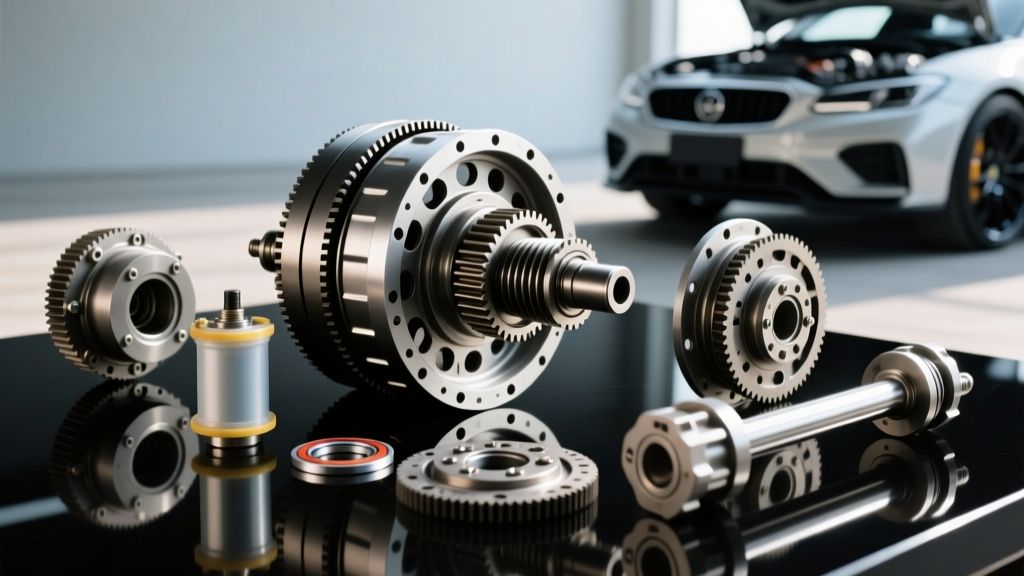
Most high-performance kart LSDs are miniaturized versions of automotive clutch-type differentials, scaled down to fit billet 6061-T6 aluminum housings and accommodate 1-inch (25.4mm) or 1.18-inch (30mm) axles. The core assembly consists of a forged steel carrier, a hypoid ring and pinion gear set (typically ranging from 4.11:1 to 5.14:1 for off-road applications), spider gears, side gears, and the critical clutch packs.
Expert Insight: The preload spring (often a Belleville washer or a set of coil springs) applies constant lateral pressure against the clutch packs. As the spider gears rotate during a turn, they generate axial thrust, which further clamps the clutch packs together. This dual-action—static preload and dynamic thrust—is what gives the LSD its torque-sensing capabilities.
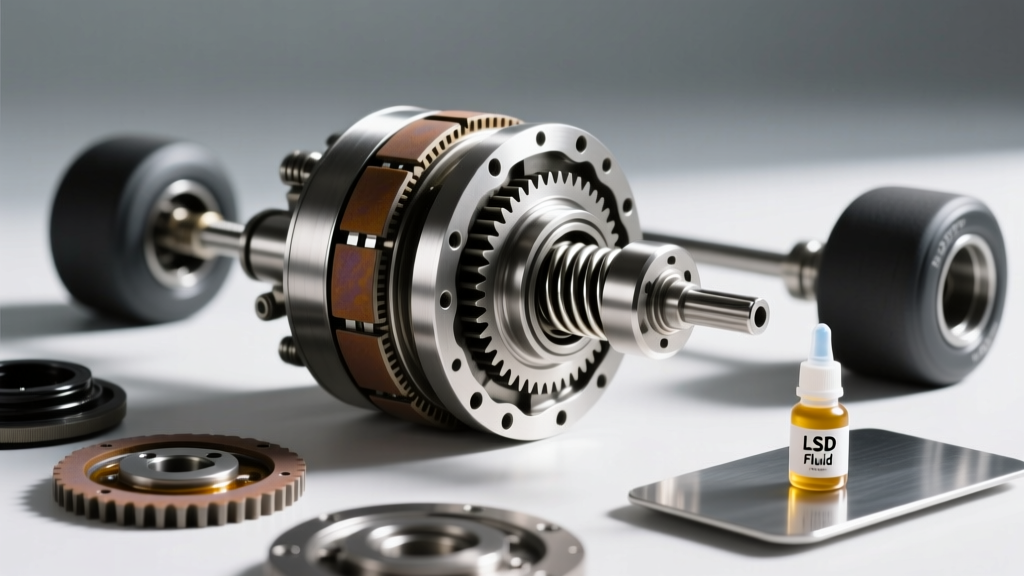
The friction materials used in these mini-differentials are usually sintered bronze or high-temperature paper-based composites. Sintered bronze offers superior heat dissipation and longevity in the high-shear environment of a kart differential, where pinion speeds can easily exceed 8,000 RPM on long straights.
Fluid Dynamics: Gear Oil and Friction Modifiers
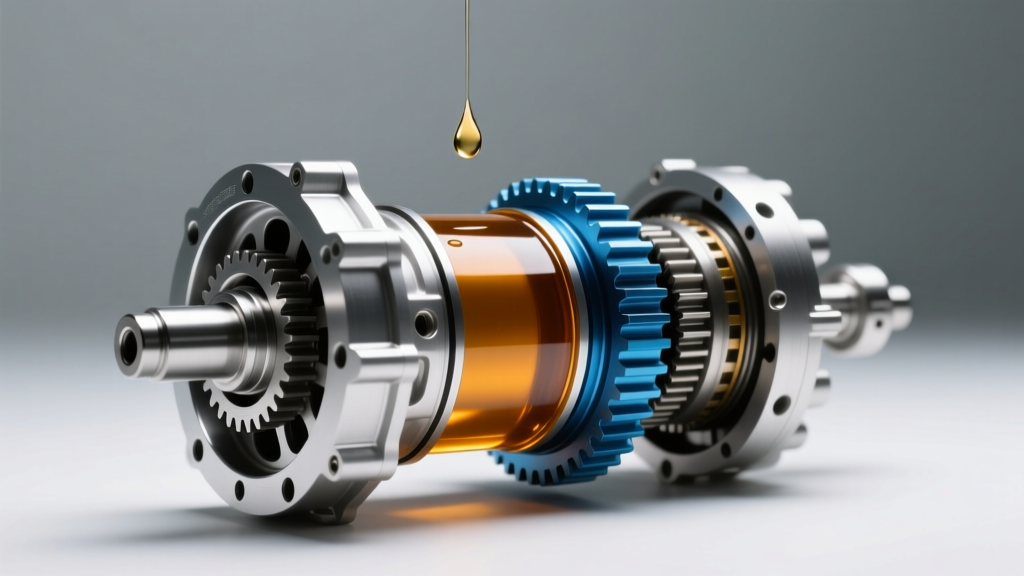
The lifeblood of any go kart rear differential equipped with an LSD is the gear oil. You cannot use standard motor oil or generic hydraulic fluid. The hypoid ring and pinion gears require Extreme Pressure (EP) additives—specifically Zinc Dialkyldithiophosphate (ZDDP) and Phosphorus—to prevent the wiping of the gear teeth under heavy shock loads. This necessitates an API GL-5 rated 75W-90 synthetic gear oil.
However, GL-5 oil alone is not enough for a clutch-type LSD. Without a specialized friction modifier, the clutch plates will grab and release erratically, causing severe chatter, binding, and premature wear. The friction modifier alters the coefficient of friction between the plates, ensuring a smooth, progressive lock-up rather than a violent, binary engagement.
Fluid Specification & Additive Matrix
| Fluid Component | Specification / Part Number | Function & Chemistry | Volume / Ratio |
|---|---|---|---|
| Base Gear Oil | Red Line 75W90 (#50104) | Synthetic Ester base, high ZDDP for hypoid gear shear protection. | 12 to 18 oz (Housing dependent) |
| Friction Modifier | GM EOS (#1052358) or Red Line (#70102) | Long-chain polymers that prevent stick-slip friction chatter on clutch plates. | 1/2 oz to 1 oz per fill |
| Assembly Lube | Red Line Assembly Lube | Molybdenum-based grease for initial startup protection on spider gears. | Thin coat on gear teeth |
Overfilling the differential is a common novice mistake. Most 1-inch axle kart differentials hold between 12 and 18 ounces of fluid. Overfilling leads to aeration and foaming at high RPMs, which starves the carrier bearings of lubrication and causes catastrophic overheating. Always fill to the bottom of the fill-plug threads while the kart is on a level surface.
Step-by-Step LSD Maintenance and Rebuild Protocol
Maintaining a limited-slip kart differential requires precision measurement and strict adherence to torque specifications. If you are experiencing inside-wheel spin or aggressive corner-entry binding, a rebuild is required.
1. Drain, Inspect, and Measure
- Drain the Fluid: Remove the drain plug and inspect the fluid. A slight metallic sheen is normal for the first 5 hours of break-in. However, if you find chunks of sintered bronze or steel shavings, the clutch packs or spider gears have failed.
- Inspect the Magnet: Most billet kart housings feature an internal neodymium drain plug magnet. Clean it and evaluate the debris. Fine dust indicates normal wear; sharp splinters indicate gear tooth spalling.
- Extract the Carrier: Remove the carrier bearing cap bolts. Crucial: These caps are line-bored with the housing. They must be reinstalled in their exact original orientation and location, or the ring gear will run out of true, destroying the hypoid pattern.
2. Clutch Pack Shimming and Torque Specs
The clutch pack clearance dictates the breakaway torque of the LSD. Too tight, and the kart will push (understeer) on corner entry. Too loose, and it behaves like an open diff.
- Disassemble the side gear and clutch pack. Clean all friction and steel separator plates with brake cleaner.
- Inspect the friction plates. If the sintered bronze material is worn down to the steel backing plate, discard the pack.
- Reassemble the clutch pack into the carrier bore. Using a precision feeler gauge, measure the gap between the pressure ring and the snap ring.
- Target Clearance: 0.004 to 0.008 inches (0.10mm - 0.20mm). If the clearance exceeds 0.010 inches, install selective thrust washers behind the side gear to tighten the pack.
- Reinstall the carrier into the housing. Torque the billet aluminum carrier bearing cap bolts to exactly 35 lb-ft using a drop of blue Loctite 242 to prevent backing out under high-frequency vibration.
3. Refill and Bedding Procedure
Once reassembled and filled with the correct 75W-90 GL-5 and friction modifier cocktail, the new clutch packs must be bedded. Skipping this step will glaze the friction material, ruining the clutch pack permanently.
To bed the LSD, take the kart to a paved or hard-packed dirt lot. Perform 15 to 20 slow, tight figure-eight maneuvers, alternating lock-to-lock steering. This forces the clutch plates to slip against one another under load, generating the mild heat necessary to mate the microscopic imperfections in the friction material to the steel separator plates. After the bedding procedure, allow the differential to cool completely, and re-check the fluid level, as the oil will have worked its way deep into the porous sintered bronze plates.
Troubleshooting Common LSD Chatter and Binding
Even with perfect assembly, tuning the go kart rear differential requires on-track validation. If the kart exhibits a violent shuddering or 'chatter' through the seat during low-speed cornering, the friction modifier has broken down or was under-dosed. Drain 4 ounces of the gear oil and inject an additional 1/2 ounce of friction modifier. Conversely, if the kart refuses to rotate on corner entry and feels like it has a solid axle (pushing severely), you have either over-dosed the friction modifier or the clutch pack preload spring has fatigued. In the latter case, a complete teardown and replacement of the Belleville preload washer is mandatory.
For further engineering data on hypoid gear lubrication and friction coefficients in racing differentials, refer to the SAE International Technical Papers archive on drivetrain tribology. Additionally, racers should consult the International Kart Federation (IKF) rulebooks for class-specific limitations on differential modifications and fluid additives. For detailed chemical breakdowns of synthetic ester gear oils, the Red Line Oil Gear Lubricants technical data sheets provide invaluable insights into shear stability at extreme operating temperatures.