The Role of the Front Differential Assembly in 4WD and AWD Systems
The front differential assembly is a critical drivetrain component responsible for transferring engine torque to the front wheels while allowing them to rotate at different speeds during cornering. Whether housed within an Independent Front Suspension (IFS) dropout or a solid front axle housing like the legendary Dana 30 or Dana 44, the internal gear configuration dictates your vehicle's traction limits. When replacing or upgrading your drivetrain, choosing between an open differential and a limited slip differential (LSD) for the front axle fundamentally alters off-road capability, on-road handling, and maintenance requirements.
As of 2026, the aftermarket for front differential assemblies has expanded significantly. Remanufactured open units from suppliers like Jasper and Detroit Axle offer reliable baselines, while specialized performance units from Eaton, Auburn, and Quaife dominate the off-road, overlanding, and rally sectors. This buyer's guide breaks down the mechanical differences, real-world costs, and exact installation specifications you need to make an informed decision.
Open Front Differentials: The Baseline Standard
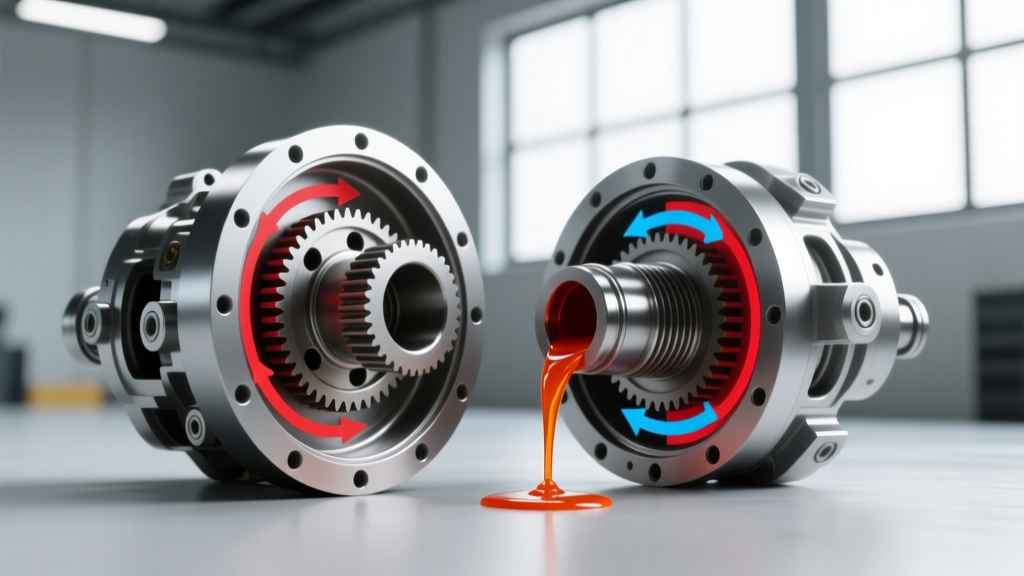
An open front differential assembly utilizes a simple spider gear set that routes torque along the path of least resistance. If your left front wheel loses traction on ice or mud, the differential will send 100% of the available torque to that slipping wheel, leaving the wheel with grip completely stationary.
Pros, Cons, and Ideal Use Cases
- Cost-Effective: Remanufactured open front differential assemblies typically range from $450 to $850, making them the most budget-friendly replacement option.
- Predictable On-Road Handling: Open front diffs do not induce binding or understeer during tight, low-speed turns, which is why they remain the OEM standard for most part-time 4WD trucks and SUVs.
- Low Maintenance: Standard 75W-90 GL-5 gear oil is all that is required. No friction modifiers or specialized clutch-pack break-in procedures are necessary.
- The Traction Drawback: In off-road scenarios, an open front diff is a severe liability. Modern vehicles attempt to compensate using Brake-Locking Differential (BLD) systems, which apply brake caliper pressure to the spinning wheel to force torque across the spider gears. While effective, BLD generates immense heat and accelerates brake pad wear on long trails.
Limited Slip Front Differentials (LSD): Traction on Demand
A front LSD assembly mitigates the open differential's flaws by mechanically linking the axle shafts when a speed differential is detected. However, placing an LSD in the *front* axle introduces unique steering dynamics that buyers must understand before purchasing.
Clutch-Type vs. Helical Gear (Torsen) Front LSDs
Clutch-Type LSDs (e.g., Auburn, Eaton Posi): These utilize internal clutch packs that engage under load. While they provide excellent straight-line traction in mud and snow, clutch-type front LSDs can cause severe chassis binding and steering wheel fight during tight, locked-4WD turns on high-traction surfaces. They also require strict adherence to friction modifier protocols during fluid changes.
Helical Gear LSDs (e.g., Torsen T-2, Quaife ATB): These operate on a torque-biasing gear principle rather than friction clutches. A helical front differential assembly is vastly superior for front-axle applications because it provides seamless torque transfer without the low-speed binding associated with clutch packs. Rally drivers and hardcore rock crawlers heavily favor helical front LSDs for their smooth, predictable engagement that does not disrupt steering geometry.
Head-to-Head Comparison: Open vs. Front LSD Assembly
| Feature | Open Front Assembly | Clutch-Type Front LSD | Helical (Torsen) Front LSD |
|---|---|---|---|
| 2026 Avg. Cost (Reman/Assembled) | $450 - $850 | $1,200 - $1,800 | $1,500 - $2,400 |
| Off-Road Traction | Poor (Relies on BLD/Lockers) | Good | Excellent |
| On-Road Steering Feel | Neutral / Predictable | Prone to Understeer/Binding | Smooth / Slight Feedback |
| Fluid Requirement | Standard 75W-90 GL-5 | 75W-90 + Friction Modifier | Standard 75W-90 GL-5 |
| Maintenance Interval | 30,000 - 50,000 Miles | 15,000 - 30,000 Miles (Clutch Wear) | 30,000 - 50,000 Miles |
Buyer's Guide: Upgrading Your Front Differential Assembly
When sourcing a replacement or performance front differential assembly, verifying the gear ratio, spline count, and housing type is mandatory. For example, a Jeep Wrangler JK Dana 30 front assembly requires a 27-spline inner axle shaft mating surface, whereas a Ford F-150 IFS dropout utilizes a completely different CV-style interface. Always cross-reference OEM part numbers with aftermarket catalogs like Ring-Pinion.com to ensure exact fitment.
Critical Installation Specs & Torque Settings
Installing a bare differential carrier into an existing housing, or bolting in a complete third-member assembly, requires precision. Improper torque leads to catastrophic ring and pinion failure. Below are standard baseline specifications for common solid front axles (e.g., Dana 30/44). Always consult the specific Dana Spicer service manual for your exact model year.
- Ring Gear Bolts: 70-85 lb-ft. Must be coated with medium-strength threadlocker (Blue Loctite 242) and torqued in a star pattern.
- Pinion Bearing Preload: Measured via rotating torque (in-lbs), not static torque. A new pinion bearing setup typically requires 15-25 in-lbs of rotating resistance, achieved by tightening the crush sleeve or pinion shims. The pinion nut itself often requires 160-250 lb-ft to crush the sleeve adequately.
- Carrier Bearing Cap Bolts: 60-75 lb-ft. These must be kept in their original left/right orientations to maintain factory bore alignment.
- Differential Cover Bolts: 25-30 lb-ft. Over-torquing will warp the stamped steel cover or strip the aluminum housing threads on IFS dropouts.
Fluid Selection & Friction Modifier Protocols
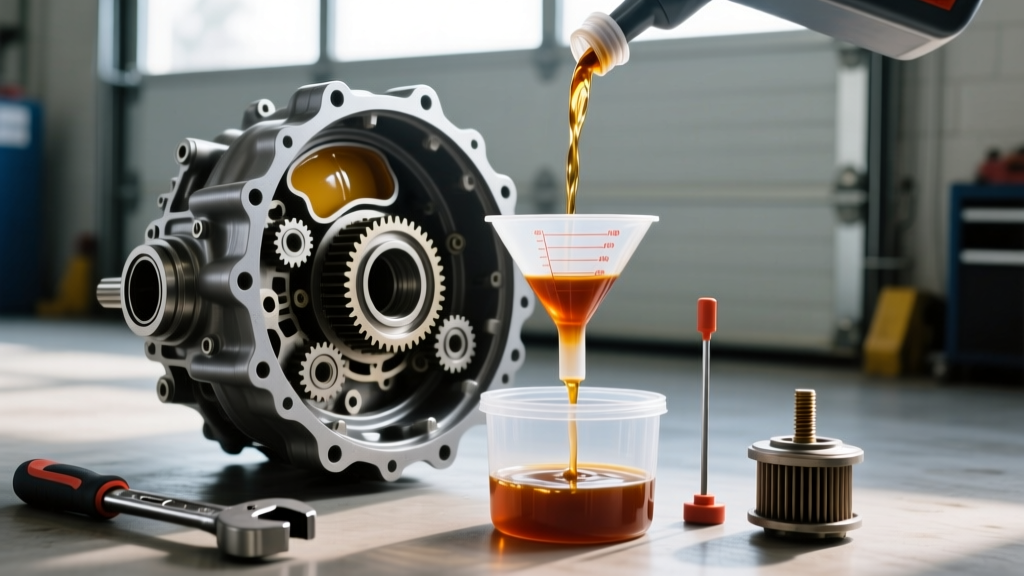
The longevity of your front differential assembly is directly tied to fluid selection. Standard open diffs and helical gear LSDs operate perfectly on high-quality synthetic 75W-90 GL-5 gear oils, such as Amsoil Severe Gear or Mobil 1 Synthetic Gear Lube. Fluid capacities vary: a Dana 30 holds approximately 2.5 pints (1.2L), while a Dana 44 holds 3.5 pints (1.65L).
If you opt for a clutch-type front LSD, the addition of a limited slip friction modifier is non-negotiable. Without it, the clutch packs will chatter violently during low-speed turns, destroying the assembly from the inside out. Typically, 4 oz of modifier (such as Motorcraft XL-3 or Red Line Limited Slip Friction Modifier) is added before topping off with the base 75W-90 oil. Perform a series of figure-eight turns in a parking lot after the initial fill to work the modifier into the clutch discs.
Final Verdict: Which Assembly Should You Buy?
If your vehicle is a daily driver that only sees light snow or graded dirt roads, an open front differential assembly remains the most cost-effective and low-maintenance choice, especially when paired with modern electronic traction control. However, if you are building a dedicated overlander, rock crawler, or rally car where front-end pull is essential for obstacle clearance, investing in a helical gear (Torsen-style) front LSD assembly is the ultimate upgrade. It provides the necessary traction bias without sacrificing the steering predictability required to navigate technical terrain safely.