The Economics of Modern 4WD Drivetrain Maintenance
As we navigate the 2026 automotive landscape, the complexity of all-wheel-drive (AWD) and four-wheel-drive (4WD) systems has reached unprecedented levels. Modern platforms feature active torque-vectoring, electronic front-axle disconnects, and integrated transfer case assemblies. Yet, despite these technological leaps, the fundamental requirement for proper gear lubrication remains unchanged. For automotive technicians and DIY enthusiasts alike, understanding the financial and mechanical delta between routine maintenance and catastrophic failure is critical. In this comprehensive cost analysis, we will break down the exact pricing of front differential fluid services and contrast it directly with the staggering cost to replace rear differential assemblies when preventative care is ignored.
Front Differential Fluid Service: 2026 Cost Breakdown
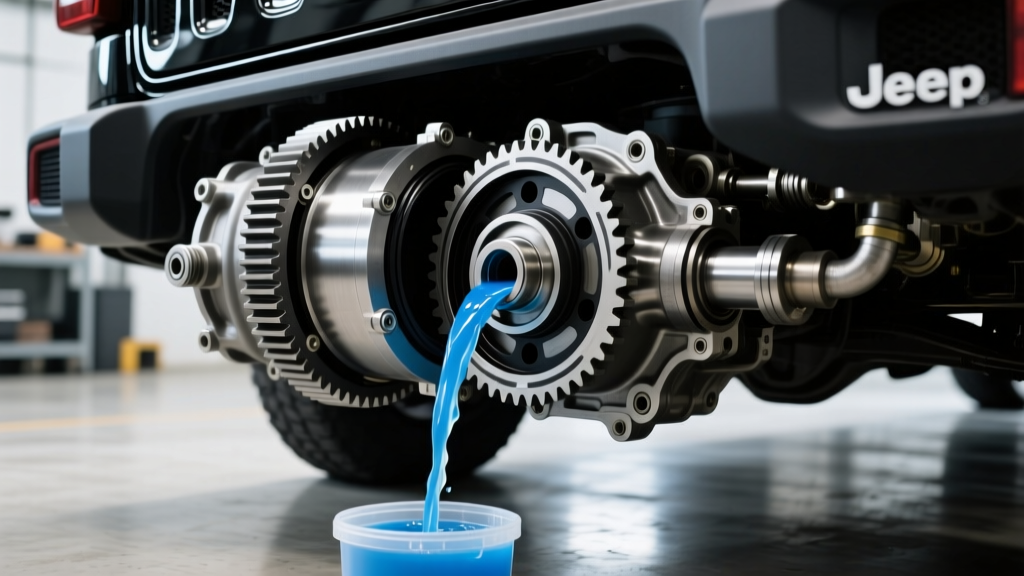
The front differential on modern 4WD vehicles—such as the Jeep Wrangler JL with its Dana 30/44 reverse-cut axles or the Ford F-150 Tremor package—operates under unique thermal and mechanical stresses. Unlike the rear axle, the front differential must manage steering geometry loads, CV joint articulation, and, in many modern applications, the engagement forces of electronic locking hubs and axle disconnect systems.
Shop Rates and Labor Pricing
In 2026, the average independent drivetrain specialist charges between $140 and $175 per hour, while dealership rates frequently exceed $195 per hour. A standard front differential fluid service is typically billed at 0.8 to 1.2 hours of labor. Therefore, you can expect the labor portion of your invoice to range from $115 to $210, depending on your region and shop type. If the front differential features a sealed, non-serviceable design (common in some modern transverse AWD crossovers), the labor time increases significantly, as it may require dropping the entire subframe or removing the CV axles to extract the fluid via a siphon pump.
Fluid Specifications, Capacities, and Part Numbers
The cost of the fluid itself is a minor fraction of the total service, but using the exact OEM specification is non-negotiable. Using an incorrect viscosity or omitting limited-slip friction modifiers will result in immediate clutch-pack chatter and premature wear.
- Subaru WRX / STI (Front R180 Diff): Requires approximately 1.3 quarts of 75W-90 GL-5 gear oil. OEM Part #SOA635040. Aftermarket equivalent: Amsoil Severe Gear 75W-90. Fluid cost: $18 - $24.
- Jeep Wrangler JL (Dana 30 Front): Requires 1.5 quarts of 75W-85 or 80W-90 GL-5. If equipped with a Trac-Lok or electronic locker, Mopar Limited Slip Friction Modifier (Part #68218655AA) is mandatory. Fluid cost: $20 - $30.
- Ford F-150 (9.75-inch Front IFS): Requires 1.8 quarts of 75W-140 Synthetic (Motorcraft XY-75W140-QL). Fluid cost: $35 - $45.
When combining parts and labor, a professional front differential fluid service typically costs between $150 and $280. This is a remarkably accessible price point for preserving a component that is integral to vehicle mobility.
Precision Torque Specs and Sealing Procedures
A proper front differential service goes beyond simply draining and filling. The integrity of the sealing surface dictates the long-term health of the gear set. At Autogear Nexus, we emphasize strict adherence to torque specifications to prevent housing distortion and fluid weeping.
Expert Tip: Never use an impact wrench on differential cover bolts or drain plugs. The cast aluminum and nodular iron housings used in modern front differentials are highly susceptible to thread stripping and micro-cracking under pneumatic force.
For traditional cover-plate differentials like the Dana 44, the 3/8-inch cover bolts must be torqued to exactly 250 in-lbs (21 lb-ft) in a crisscross pattern. For cartridge-style front differentials (common in GM and Ford IFS setups), the pinion seal and axle tube seals must be inspected. If resealing is required, Permatex Ultra Black RTV (Part #81878) is the industry standard for high-torque, high-flex applications, requiring a 24-hour cure time before submersion or heavy load-bearing use. Drain and fill plugs on Japanese applications, such as the Subaru front diff, require a crush washer replacement and a torque setting of 33 lb-ft (45 Nm).
The Benchmark: Cost to Replace Rear Differential Assemblies
To truly appreciate the value of a $200 front differential fluid service, we must look at the other end of the drivetrain. When owners neglect fluid intervals, push their vehicles beyond thermal limits while towing, or subject their axles to extreme shock loads, the rear axle is almost always the first to suffer catastrophic failure. When comparing routine maintenance to major repairs, the cost to replace rear differential assemblies serves as a stark warning against deferred maintenance.
Why Rear Differentials Fail First
Rear differentials handle the brunt of the drivetrain's torque multiplication. Under heavy towing or aggressive acceleration, the ring and pinion gears generate immense localized heat. If the 75W-90 or 75W-140 gear oil degrades, the protective hydrodynamic film collapses. This leads to spalling on the pinion bearings, galling on the ring gear teeth, and eventual seizure of the carrier assembly. Furthermore, modern rear axles equipped with electronic locking differentials (e.g., Ford Tremor, Chevrolet ZR2) feature complex internal wiring harnesses and actuator motors that frequently fail if submerged in degraded, metallic-laden fluid.
Rear Differential Replacement Data Table (2026 Pricing)
The table below outlines the current market pricing for complete rear differential replacements (including remanufactured carrier assemblies, ring and pinion sets, bearings, seals, and labor) for popular 4WD platforms.
| Vehicle Platform | Rear Axle Type | Parts Cost (Reman/OEM) | Labor (Shop Hours) | Total Replacement Cost |
|---|---|---|---|---|
| Ford F-150 (2018-2025) | 9.75-inch 12-Bolt | $1,800 - $2,400 | 6.5 - 8.0 hrs | $2,900 - $4,100 |
| Jeep Wrangler JL | Dana 44 M220 | $1,500 - $2,100 | 5.0 - 6.5 hrs | $2,400 - $3,400 |
| Toyota Tacoma | 8.0-inch (V6) | $1,400 - $1,900 | 5.5 - 7.0 hrs | $2,300 - $3,200 |
| Subaru Outback / Ascent | R190 Rear Diff | $1,200 - $1,600 | 3.5 - 4.5 hrs | $1,800 - $2,500 |
| RAM 2500 (Heavy Duty) | AAM 11.5-inch | $2,500 - $3,200 | 8.0 - 10.0 hrs | $3,900 - $5,200 |
As the data illustrates, the cost to replace rear differential components can easily exceed $4,000 on light-duty trucks and surpass $5,000 on heavy-duty applications. This astronomical expense includes not just the hardware, but the specialized labor required to set pinion depth, measure backlash to the thousandth of an inch, and preload the carrier bearings.
Comparative Analysis: Preventative Service vs. Catastrophic Failure
Let us synthesize the financial data into a practical decision framework for fleet managers and private owners.
- Upfront Investment: Servicing both the front and rear differentials on a standard 4WD truck costs approximately $350 to $500 every 30,000 to 50,000 miles.
- Reactive Risk: Ignoring the rear axle fluid can lead to a $3,500+ repair bill, requiring specialized alignment equipment and potentially leaving the vehicle stranded.
- Thermal Degradation: According to lubrication engineers at Amsoil, gear oil operating at 250°F loses its shear stability rapidly if not formulated with high-quality synthetic base stocks. Towing a 7,000 lb trailer pushes rear diff temperatures well past 275°F, accelerating the need for fluid extraction.
- Resale Value Impact: A documented drivetrain maintenance log increases the resale value of a used 4WD vehicle by 4% to 7%, easily covering the cost of multiple fluid services.
Expert Verdict: Maximizing Drivetrain ROI
The contrast between the front differential fluid service cost and the cost to replace rear differential hardware is the ultimate case study in automotive ROI. The front differential, while critical for steering and 4WD engagement, is generally a lighter-duty component that requires precise, low-cost maintenance to keep its internal bearings and disconnect mechanisms functioning smoothly. The rear differential, however, is the heavy lifter of the drivetrain. It demands strict adherence to fluid intervals, correct friction modifier ratios, and immediate attention to any whining or howling noises that indicate pinion bearing wear.
For 2026, our recommendation at Autogear Nexus is clear: Invest the $200 annually to service your front and rear axles using top-tier synthetic 75W-90 or 75W-140 fluids from trusted brands like Mobil 1 or OEM suppliers. Utilize a torque wrench for all cover bolts and drain plugs, and always inspect the magnetic drain plugs for excessive ferrous metal shavings. By treating your differentials as precision instruments rather than sealed, forgotten boxes, you will entirely avoid the catastrophic financial burden of a complete axle replacement.
For further diagnostic insights on gear whine, bearing chatter, and limited-slip clutch degradation, consult the RepairPal drivetrain estimator or your vehicle-specific factory service manual for exact fluid capacities and backlash tolerances.