The Mechanical Leap: From Toy to Tarmac
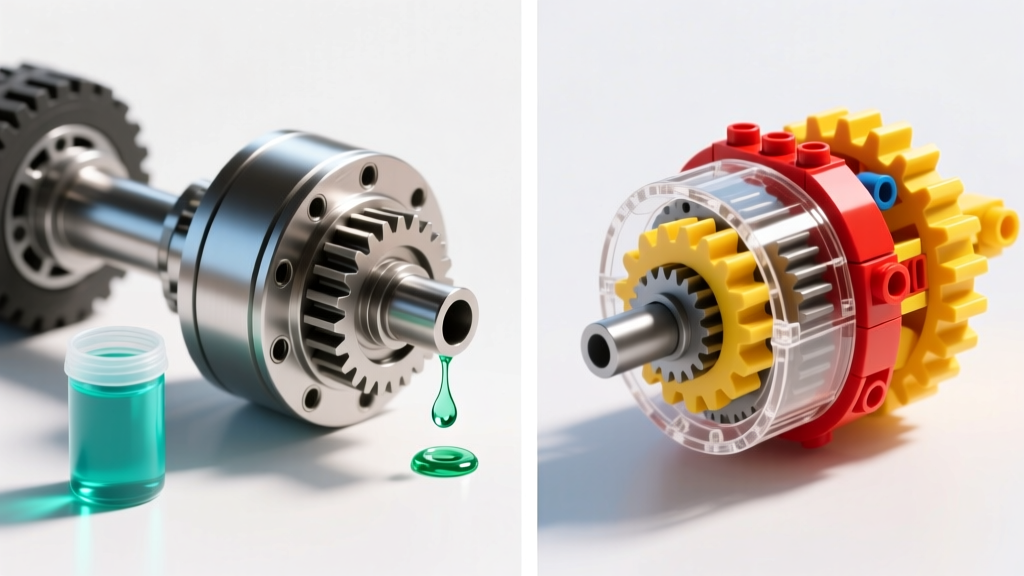
For many automotive engineers and master technicians, the fascination with drivetrain dynamics begins not in a shop bay, but on a living room floor with a Lego Technic differential gear set. Snapping together the classic bevel gears, spider gears, and cross pins provides a flawless, tactile introduction to torque vectoring and wheel-speed differentiation. When you turn one wheel on a Lego Technic axle, the spider gears allow the opposite wheel to spin at a different rate, perfectly simulating the kinematics required to navigate a corner without binding the chassis.
However, there is a massive engineering chasm between the dry, rolling friction of molded ABS plastic and the extreme-pressure, sliding friction of a real-world hypoid ring and pinion. A Lego Technic differential gear requires zero lubrication to function. In stark contrast, the front differential of a modern 4WD truck or AWD crossover relies on a highly specialized chemical bath to prevent catastrophic metal-on-metal welding. As we move through 2026, with vehicles producing higher low-end torque than ever before, understanding the cost analysis and service requirements of your front differential fluid is critical for long-term drivetrain survival.
The Chemistry of Lubrication vs. Plastic Friction
Why can't we just run real differentials dry like the toy models? The answer lies in the gear geometry. Most automotive front differentials utilize hypoid gears, where the pinion gear sits below the centerline of the ring gear. This design lowers the driveshaft, reducing cabin intrusion, but it introduces severe sliding friction alongside rolling friction. Under the immense torque loads of a 4WD system, this sliding action generates localized heat spikes that exceed 300°F (149°C) at the gear tooth contact patch.
To combat this, front differential fluids rely on API GL-5 specifications. According to the American Petroleum Institute (API), GL-5 gear oils are fortified with extreme pressure (EP) additives—typically sulfur-phosphorus compounds. Under high heat and shear, these additives chemically react with the steel surface to form a sacrificial, microscopic glass-like layer that prevents the gear teeth from microwelding together. This chemical sacrifice is what necessitates regular front differential fluid service, a concept entirely absent in the plastic world of Lego Technic.
2026 Front Differential Service Cost Matrix
The cost of servicing a front differential varies wildly based on the vehicle's suspension architecture (Independent Front Suspension vs. Solid Axle) and regional labor rates. In 2026, average independent shop labor rates hover between $135 and $165 per hour, while dealerships frequently exceed $185 per hour. Below is a comprehensive cost breakdown for popular 4WD and AWD platforms.
| Vehicle Platform | Front Diff Architecture | Fluid Capacity | DIY Cost (Parts) | Indie Shop (2026) | Dealership (2026) |
|---|---|---|---|---|---|
| Ford F-150 (4WD) | IFS (9.75" or 8.8") | 1.5 - 1.8 Quarts | $35 - $55 | $180 - $240 | $280 - $350 |
| Toyota Tacoma (4WD) | IFS (8" Clamshell) | 1.3 Quarts | $25 - $40 | $150 - $190 | $220 - $275 |
| Jeep Wrangler (Dana 30) | Solid Front Axle | 1.4 Quarts | $30 - $45 | $120 - $160 | $190 - $240 |
| Chevy Silverado 1500 | IFS (9.25") | 1.6 Quarts | $40 - $60 | $190 - $250 | $290 - $380 |
Note: DIY costs include premium synthetic 75W-90 GL-5 fluid and new crush washers. Shop prices include fluid, shop supplies, and 0.5 to 1.0 hours of billed labor.
The 'Sealed' IFS Differential: Hidden Cost Traps
When budgeting for a front differential service, the biggest variable is the presence of a drain plug. Solid axles, like the Dana 30 or Dana 44, feature a removable differential cover and a bottom drain plug, making fluid evacuation a simple gravity-fed process. However, modern Independent Front Suspension (IFS) differentials—found on the F-150, Silverado, and Tacoma—are often designed as 'sealed' clamshell units without a dedicated drain plug.
If your IFS front differential lacks a drain plug, the service cost and complexity increase significantly. You have two options:
- Fluid Extraction (The Smart DIY Route): You must purchase a manual fluid transfer pump (such as the Mityvac 7300, costing roughly $35-$45). You insert the extraction tube down the fill hole, suck the old, degraded GL-5 fluid out, and then pump the new fluid in. This saves hundreds in labor but requires patience, as cold 75W-90 gear oil flows like molasses.
- Cover Removal (The Dealer Route): If extraction isn't possible due to sludge buildup, the technician must unbolt the front diff cover, drain the fluid, scrape off the old RTV silicone gasket, apply a fresh bead of high-temp RTV (like Permatex 81173), and wait for it to cure before refilling. This easily adds 1.5 hours of labor to the invoice, pushing dealership costs well past the $350 mark.
OEM vs. Aftermarket Fluid Pricing & Part Numbers
Not all GL-5 fluids are created equal. While the SAE International sets the viscosity standards (e.g., 75W-90), the additive packages vary. Here is a pricing and part-number breakdown for 2026 front differential service:
- Toyota Genuine Hypoid Gear Oil (75W-85 GL-5): Part #08885-81016. Priced around $12-$15 per quart. Excellent for fuel economy and cold-weather engagement in modern Toyota IFS units.
- Motorcraft Synthetic Rear/Front Axle Lubricant (75W-140): Part #XYZ-12. Priced around $18-$22 per quart. Often specified for heavy-duty Ford applications or modified trucks running larger tires.
- Amsoil Severe Gear Synthetic (75W-90): Part #SVGQT. Priced around $24-$28 per quart. A premium aftermarket choice featuring robust sulfur-phosphorus EP additives, ideal for vehicles subjected to high towing loads or off-road shock loading. See Amsoil's technical data for specific shear stability metrics.
Precision Torque Specifications & Service Protocol
One of the most common mistakes DIYers make when transitioning from snapping together Lego Technic parts to wrenching on real axles is ignoring torque specifications. Overtightening a tapered pipe plug or an aluminum fill bolt will strip the threads, turning a $40 fluid change into a $1,200 differential housing replacement. Always use a calibrated inch-pound or foot-pound torque wrench.
- Toyota Tacoma (8" IFS): Fill plug torque is exactly 29 lb-ft. Always replace the aluminum crush washer (Part #90430-24003) to prevent weeping.
- Ford F-150 (9.75" IFS): Fill plug torque is 24 lb-ft. If equipped with a rubber plug, inspect for dry rot and replace if necessary.
- Chevy Silverado (9.25" IFS): If removing the differential cover, the 10mm cover bolts should be torqued to 25 lb-ft in a crisscross pattern to ensure even RTV compression.
- Jeep Wrangler (Dana 30): Cover bolts torque to 25-30 lb-ft. Drain plug (if retrofitted) to 25 lb-ft.
Conclusion: The ROI of Front Differential Maintenance
While a Lego Technic differential gear will survive decades of dry operation on a shelf, your vehicle's front hypoid gears are fighting a microscopic war against friction, heat, and shear every time you engage 4WD. The 2026 cost analysis clearly shows that a proactive DIY front differential fluid service costs less than a single tank of gas, yet it prevents thousands of dollars in ring-and-pinion replacements. By understanding the hidden costs of sealed IFS units, selecting the correct API GL-5 fluid, and adhering strictly to OEM torque specs, you ensure your front axle operates as smoothly and reliably as the day it left the factory.