The True Cost of Front Differential Service in 2026
Maintaining the drivetrain of a 4WD truck like the GM K2XX platform requires meticulous attention to multiple gearboxes. While enthusiasts and fleet managers often obsess over the rear axle, the front independent front suspension (IFS) differential is equally critical and significantly more expensive to repair if neglected. In this 2026 cost analysis, we break down front differential service pricing, DIY savings, and contrast it with the widely searched 2015 Silverado rear differential fluid capacity to give you a complete, accurate picture of your drivetrain maintenance budget.
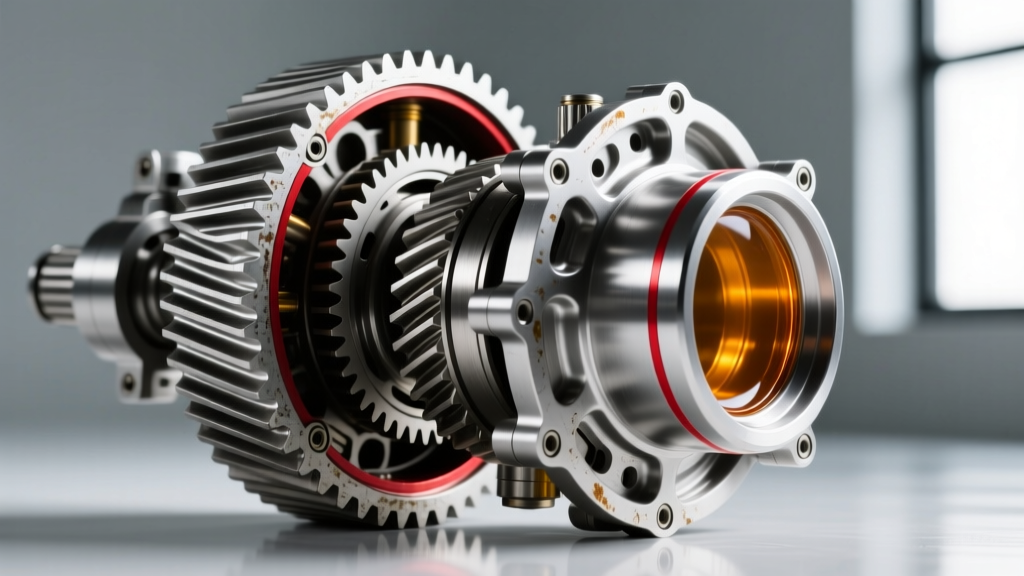
The front differential on a 2014-2018 GM 1500 series truck operates under immense stress. It features a ring and pinion gear set, an internal disconnect mechanism for 2WD/4WD operation, and two axle shaft output seals. Because it sits lower than the transfer case and is exposed to water crossings, debris, and extreme temperature fluctuations, fluid degradation is a real threat. In 2026, with synthetic lubricant prices stabilizing but dealership labor rates averaging $140 to $185 per hour, understanding the financial breakdown of this service is essential for truck owners.
Front Differential Service: Cost Breakdown & DIY Savings
When evaluating where to have your front differential serviced, you have three primary avenues. The front IFS differential typically requires a simple drain and fill procedure, unlike some older solid-axle designs that require removing a bolted carrier cover. Below is the 2026 pricing matrix for a standard front differential fluid exchange on a GM K2XX 4WD truck.
| Service Provider | Estimated Labor Cost | Fluid & Parts Cost | Total Estimated Cost |
|---|---|---|---|
| OEM Dealership | $110 - $160 | $25 - $35 | $135 - $195 |
| Independent Drivetrain Shop | $75 - $110 | $20 - $30 | $95 - $140 |
| DIY (Do-It-Yourself) | $0 | $18 - $28 | $18 - $28 |
As the table illustrates, performing the service in your own garage yields an immediate return on investment of over $100. The front differential features a 3/8-inch or 1/2-inch square drive drain plug and a matching fill plug, making the physical labor minimal if the truck is properly elevated and the skid plate (if equipped) is removed.
Fluid Selection: OEM vs. Premium Synthetics
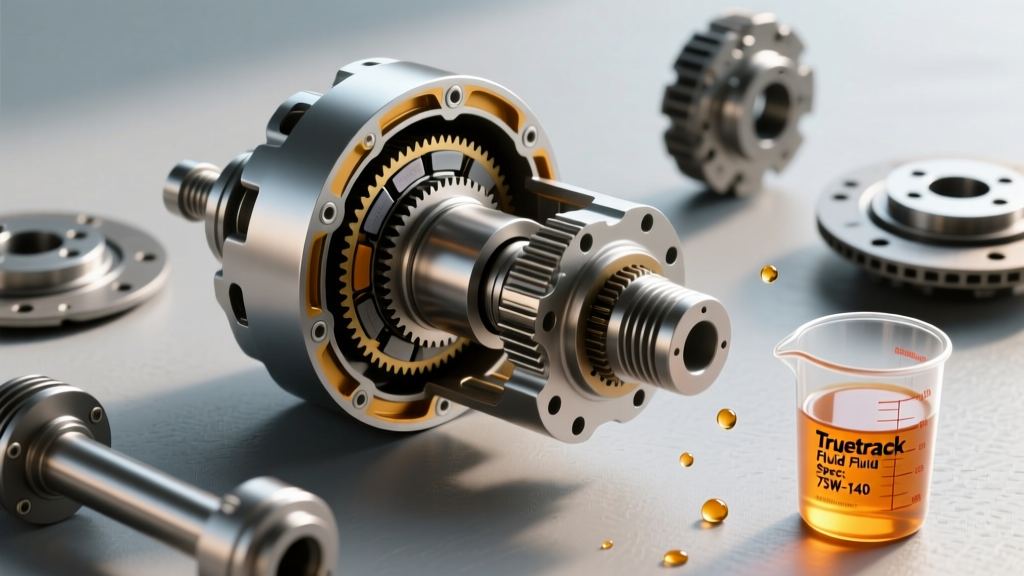
The GM K2XX front differential requires a 75W-90 Synthetic Gear Oil that meets API GL-5 specifications. One of the most common mistakes DIYers make is using conventional 80W-90 mineral oil, which suffers from severe shear breakdown and poor cold-weather flow characteristics, leading to premature wear on the IFS disconnect collar and ring gear teeth.
- ACDelco Dexron 75W-90 Synthetic (Part # 88862624 / 10-9394): Priced around $14-$18 per quart in 2026. This is the factory fill and provides excellent baseline protection for standard commuting and light towing.
- AMSOIL Severe Gear 75W-90: Priced at $22-$26 per quart. Formulated with proprietary friction modifiers and high-shear stable base oils, this is the preferred choice for trucks that see heavy towing, off-road use, or frequent 4WD engagement. According to the AMSOIL Technical Guides, this fluid resists thermal runaway in hypoid gear sets far better than standard OEM blends.
- Red Line 75W90 Synthetic: Priced at $24-$28 per quart. Features high ester content for superior film strength on the hypoid ring and pinion gears under extreme shock loading.
Expert Note: The GM front IFS differential does not contain a clutch-type limited-slip mechanism. Therefore, you do not need to add a friction modifier (LSA) to the front differential. Adding a friction modifier to an open front diff can actually reduce the coefficient of friction on the gear teeth, accelerating wear.
Front vs. Rear: Analyzing the 2015 Silverado Rear Differential Fluid Capacity
When mapping out your annual drivetrain maintenance budget, comparing the front IFS unit to the rear axle is essential for purchasing the correct volume of lubricant. To accurately budget for a complete drivetrain overhaul, you must cross-reference your front axle needs with the 2015 Silverado rear differential fluid capacity, as the rear axle demands significantly more volume and, in some cases, specialized friction modifiers.
The front differential on a 2015 Silverado 1500 4WD holds approximately 1.0 to 1.1 quarts (0.95L to 1.05L) of 75W-90 gear oil. However, the rear axle is a much larger, heavier-duty assembly. Depending on your specific trim and towing package, the 2015 Silverado rear differential fluid capacity varies:
- 8.6-Inch Semi-Floating Rear Axle (Standard V8 / 5.3L Models): Requires approximately 2.1 quarts (1.98L) of 75W-90.
- 9.5-Inch Semi-Floating Rear Axle (Max Trailering / 6.2L Models): Requires approximately 2.4 quarts (2.27L) of 75W-90.
If your 2015 Silverado is equipped with the legendary G80 Eaton automatic locking rear differential, GM officially states that no friction modifier is required, as the G80 utilizes a mechanical flyweight and locking pawl design rather than clutch packs. However, many drivetrain specialists on the GM Trucks Forum Archives recommend a very small dose (2-3 oz) of limited-slip additive to quiet down the clunking noise during low-speed engagement, though this remains a subject of debate among purists.
Total Drivetrain Fluid Budget: To service both the front and rear differentials on a standard 5.3L 4WD Silverado, you will need to purchase exactly 4 quarts of 75W-90 synthetic gear oil (1.1 for the front, 2.1 for the rear, leaving 0.8 quarts for top-offs or the transfer case if applicable). Expect to spend roughly $60-$80 on premium fluids for the complete axle service.
Hidden Costs: Leaks, Seals, and Axle Shaft Removal
While a standard drain-and-fill is cheap, the front differential on the GM IFS platform is notorious for specific failure modes that can turn a $20 DIY job into a $600+ repair. When inspecting your front differential, look for these common leak points:
- Front Axle Shaft Tube Seals: The seals where the CV axle shafts enter the differential housing degrade over time due to heat and suspension articulation. If you see gear oil coating the inside of your front wheels or dripping down the axle tubes, these seals must be replaced. The part costs only $15-$25 per side, but the labor requires unbolting the CV axle, draining the fluid, and using a specialized seal puller. Shop labor for this pushes the cost to $250-$350 per side.
- The Disconnect Housing / Actuator Seal: The passenger side of the front differential houses the electronic actuator that engages the right-hand axle shaft. The O-ring and housing gasket here are prone to weeping. Replacing the actuator assembly costs roughly $140 for the OEM part, plus 1.5 hours of labor.
- Pinion Seal: Located where the front driveshaft connects to the differential. A leaking pinion seal will sling 75W-90 gear oil all over the undercarriage and exhaust components. Replacement requires draining the diff, removing the driveshaft, and carefully torquing the pinion nut to preserve the gear bearing preload.
Catching these leaks early during a routine fluid change is the primary financial benefit of doing the service yourself, as you will be physically under the truck inspecting the housing.
DIY Service Guide: Torque Specs and Procedures
If you opt to tackle the front differential service yourself, precision and cleanliness are paramount. The IFS differential is highly sensitive to contamination. Always consult the Chevrolet Owner Center Manuals for your specific VIN, but the following torque specifications and procedures apply to the vast majority of 2014-2018 K2XX front axles.
Step-by-Step Front Diff Service
- Preparation: Level the truck on jack stands or a lift. Remove the front skid plate (usually secured by 10mm or 13mm bolts). Allow the differential to cool to ambient temperature so you can accurately check the fluid level without thermal expansion.
- Open the Fill Plug First: Crucial Step. Always remove the upper fill plug before the lower drain plug. If the drain plug comes out but the fill plug is seized or stripped, you will be stranded with an empty differential and no way to refill it.
- Drain and Inspect: Remove the lower drain plug (typically a 3/8-inch square drive). Allow the fluid to drain completely into a catch pan. Inspect the drain plug for metallic fuzz. A light, fine metallic paste on the magnetic plug is normal for hypoid gears; however, large metal flakes or chunks indicate ring and pinion or bearing failure.
- Refill: Reinstall the drain plug. Using a fluid pump, inject 75W-90 synthetic gear oil into the fill hole until it begins to weep out of the opening. This indicates the fluid is exactly at the centerline of the ring gear.
- Torque Specifications: Clean the threads of both the fill and drain plugs. Apply a small amount of thread sealant (PTFE tape or liquid thread sealant) if the threads do not have a pre-applied nylon patch. Torque both the front differential fill and drain plugs to 25 lb-ft (34 Nm). Do not overtighten, as the aluminum or cast-iron housing threads can easily strip, leading to a catastrophic fluid loss on the trail.
By understanding the nuances of the front IFS differential, the specific fluid requirements, and how it contrasts with the 2015 Silverado rear differential fluid capacity, you can confidently maintain your truck's drivetrain. In 2026, proactive maintenance remains the single most effective way to avoid the $2,500+ cost of a complete front differential replacement or rebuild.