The Traction Deficit in Heavy-Duty Hauling
When operating Class 8 or severe-duty medium-duty trucks, open differentials are a massive liability. Whether you are navigating a snow-covered logging road in the Pacific Northwest or pulling heavy machinery out of a muddy construction site, an open differential will send power to the wheel with the least resistance, leaving you stranded. As we move through 2026, the shift toward higher torque outputs in modern diesel powertrains means that upgrading your axle hardware is no longer just for off-road enthusiasts; it is a critical operational necessity for commercial fleets and heavy-duty owner-operators.
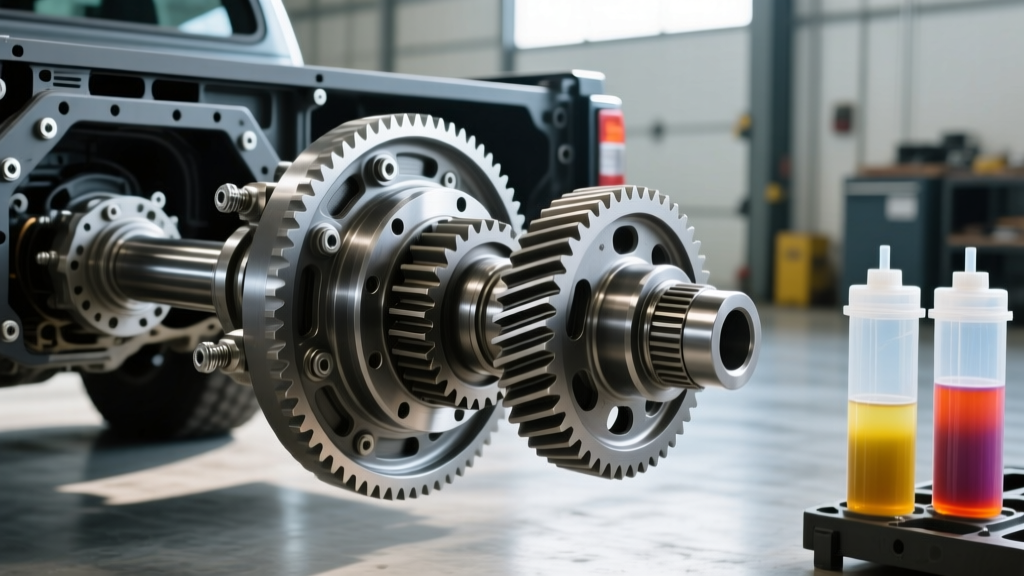
However, installing a heavy-duty locker is only half the battle. The extreme shear forces generated by a locking differential under load demand precise lubrication. Matching your new hardware with the correct Freightliner differential oil type is non-negotiable to prevent premature wear on the locker clutches, spider gears, and ring-and-pinion sets. This guide breaks down the best locking differential options for popular heavy-duty axles and the exact fluid specifications required to keep them running flawlessly.
Evaluating Locking Differential Types for Commercial Axles
Selecting the right locker depends entirely on your operational environment. Automatic lockers provide constant traction but can induce harsh driveline binding on high-traction surfaces, while selectable lockers offer on-demand traction with open-differential manners on the highway.
| Locker Type | Actuation Method | Best Application | Estimated Cost (2026) | Highway Manners |
|---|---|---|---|---|
| Detroit Locker (Automatic) | Mechanical / Torque-Sensing | Severe off-highway, logging, mining | $950 - $1,300 | Poor (Driveline bind, tire chirp) |
| Eaton ELocker (Selectable) | Electromagnetic | Mixed-use, towing, winter hauling | $1,100 - $1,450 | Excellent (Functions as open diff) |
| ARB Air Locker (Selectable) | Pneumatic (On-Board Air) | Extreme rock crawling, deep mud | $1,200 - $1,600 | Excellent (Requires air compressor) |
Application Spotlight: The Eaton Detroit Locker
For pure, unadulterated traction in Class 8 applications, the Eaton Detroit Locker remains the gold standard. Utilizing a mechanical ratcheting mechanism, it locks both axleshafts together when torque is applied and unlocks during cornering. For the ubiquitous Dana 80 axle (often found in Freightliner M2 severe-duty configurations), the 35-spline Detroit Locker (Part # 225SL194D) provides immense shear strength. However, because it relies on mechanical dog clutches rather than friction clutches, it requires a very specific approach to lubrication.
Matching the Hardware: Meritor and Dana Axle Compatibility
Before ordering a locker, you must verify your axle housing, spline count, and spline diameter. The two most common heavy-duty axles found in Freightliner platforms are the Meritor MT-40-14X and the Dana 80 / Dana S160 series.
- Meritor MT-40-14X: Standard in many Cascadia models. Features a 34-spline, 2.5-inch diameter axleshaft. The Eaton ELocker (Part # 19818-010) is a direct drop-in for this housing, providing selectable locking without requiring an air compressor.
- Dana 80: Common in medium-duty and severe-duty vocational trucks. Features a 35-spline, 2.25-inch or 2.5-inch axleshaft depending on the year. Verify your specific spline diameter before ordering.
- Dana S160 / S190: Found in heavy-haul and multi-axle configurations. These require specialized heavy-duty lockers and often utilize proprietary carrier bearings that must be sourced directly from Meritor or Dana Spicer parts catalogs.
The Critical Pairing: Choosing the Correct Freightliner Differential Oil Type
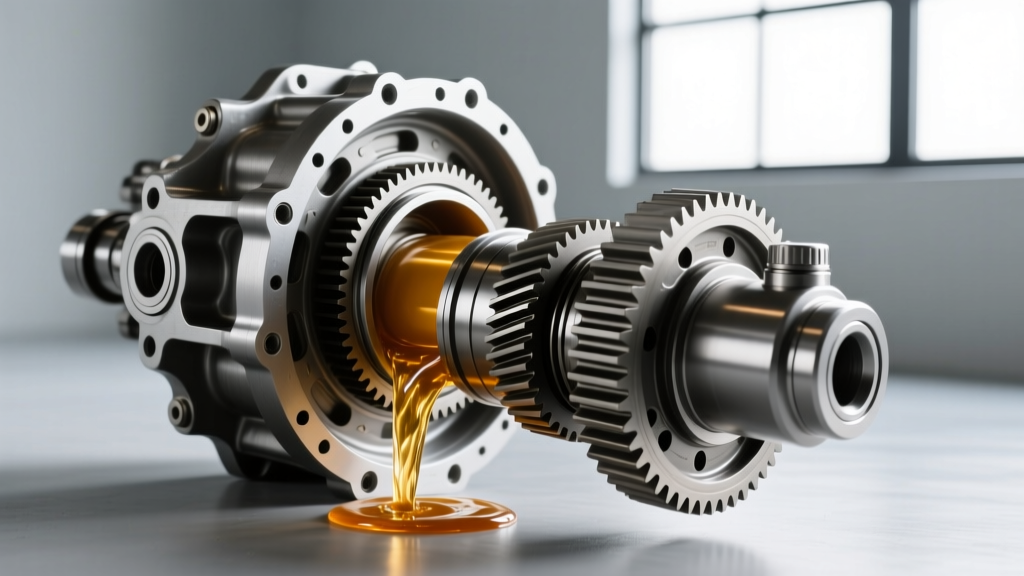
This is where most heavy-duty upgrades fail prematurely. The factory fill in a standard open differential is designed for smooth operation and fuel economy, not for the extreme localized pressures of a locking differential's engagement mechanisms. When researching the ideal Freightliner differential oil type for a locked axle, you must prioritize shear stability and extreme pressure (EP) additives over friction modifiers.
The Friction Modifier Trap
If you are installing a Detroit Locker or any full mechanical locker, do not use gear oils containing limited-slip friction modifiers. Friction modifiers are designed to allow clutch packs to slip smoothly in positraction units. In a mechanical locker, these modifiers can prevent the dog clutches from fully engaging or cause them to slip under high torque, leading to catastrophic rounding of the engagement teeth. You need a straight API GL-5 gear oil without limited-slip additives.
Viscosity Grades: 75W-90 vs. 80W-140
For standard highway cruising, Freightliner often recommends a synthetic 75W-90 to maximize fuel efficiency and extend drain intervals. However, once you introduce a locking differential and heavy towing loads, the internal temperatures of the differential housing can easily exceed 250°F (121°C). Under these conditions, standard 80W-90 fluids can shear down, losing their protective hydrodynamic film.
For locked heavy-duty axles, stepping up to a full synthetic 80W-140 is highly recommended. Mobil Delvac Synthetic Gear Oil 80W-140 is a top-tier choice, meeting API GL-5 and MIL-PRF-2105E specifications. Its high viscosity index ensures that the fluid maintains a thick protective film across the ring and pinion gears even when the locker is transferring 100% of the engine's torque to a single axle shaft in deep mud.
Pro-Tip for 2026 Fleet Upgrades: If your truck is equipped with a factory extended-drain axle system (often 500,000 miles), installing a mechanical locker voids the extended-drain interval. The metal-on-metal engagement of the locker generates microscopic ferrous particulates that will saturate the fluid. You must revert to a standard 100,000-mile or 2-year drain interval when using a Detroit Locker in a Class 8 application.
Heavy-Duty Fluid Capacities
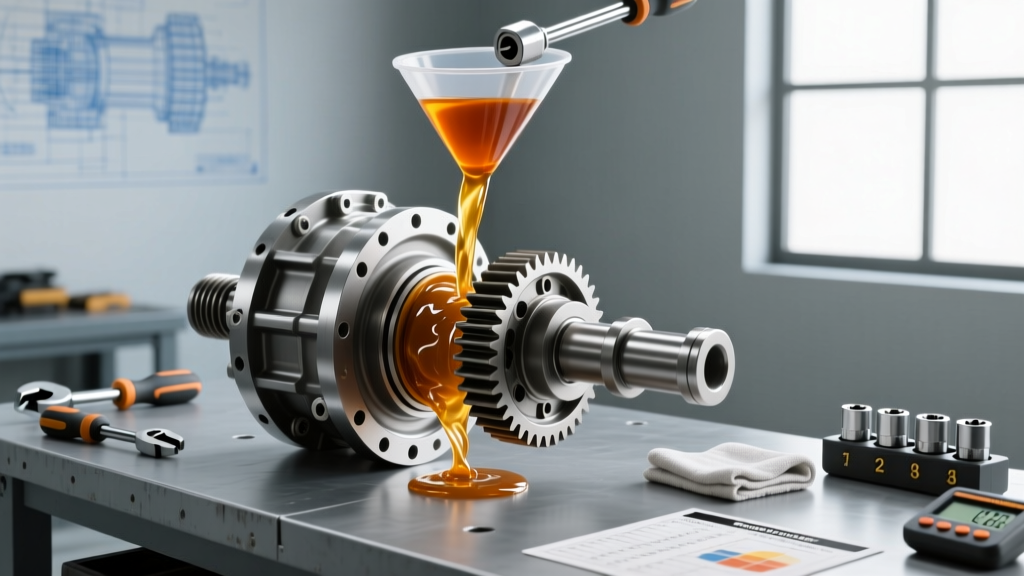
When performing the upgrade, ensure you have enough fluid on hand. Heavy-duty housings require significantly more volume than light-duty pickups:
- Meritor MT-40-14X: 16.5 to 18.5 Pints (approx. 8.5 - 9.25 Quarts)
- Dana 80: 14 to 16 Pints (approx. 7 - 8 Quarts)
- Dana S160: 22 to 26 Pints (approx. 11 - 13 Quarts)
Installation Torque Specs & Break-In Procedures
A locking differential is only as strong as its installation. Improper torque on the ring gear bolts or differential bearing caps will result in gear whine, backlash drift, and eventual tooth shearing. When installing a locker into a Meritor or Dana heavy-duty housing, adhere strictly to the following specifications:
Crucial Torque Specifications
- Ring Gear to Case Bolts (Meritor MT-40-14X): 400 - 450 lb-ft. Must be coated with Loctite 271 (Red) or equivalent high-strength threadlocker. Torque in a crisscross pattern in three progressive steps.
- Ring Gear to Case Bolts (Dana 80): 250 - 290 lb-ft. Apply Loctite 263.
- Differential Bearing Cap Bolts: 250 - 300 lb-ft (Verify specific housing casting markings, as some aftermarket reinforced caps require up to 350 lb-ft).
- Drain and Fill Plugs: 45 - 60 lb-ft. Always use a new crush washer or magnetic plug to capture locker engagement debris.
The 500-Mile Break-In Protocol
Unlike an open differential, a new locker requires a specific break-in procedure to seat the engagement clutches and burnish the dog teeth. 1. Fill the axle with your chosen synthetic 80W-140 GL-5 gear oil. 2. Drive the truck for the first 500 miles under normal, unloaded highway conditions. Avoid engaging the locker (if selectable) or performing hard low-speed turns (if automatic) during this period. 3. At the 500-mile mark, drain the fluid. You will notice a metallic sheen or fine glitter in the oil; this is normal break-in material from the locker's internal clutches and the new ring-and-pinion gear set. 4. Flush the housing with one quart of cheap, non-synthetic 80W-90, drain it, and refill with your premium synthetic 80W-140. 5. Inspect the magnetic drain plug. If you find chunks of metal larger than a grain of rice, tear down the differential immediately to inspect the bearing caps and ring gear alignment.
Final Thoughts on Heavy-Duty Traction
Upgrading to a locking differential transforms a vulnerable heavy-duty truck into an unstoppable vocational asset. By carefully selecting the right locker for your specific Meritor or Dana axle, avoiding the friction modifier trap, and strictly adhering to heavy-duty torque and break-in protocols, you ensure your drivetrain can handle the immense torque of modern diesel engines. Always cross-reference your specific VIN and axle tag with the manufacturer's technical bulletins to guarantee fluid and hardware compatibility before turning the first wrench.