Why the Trailblazer Front Differential Demands Attention
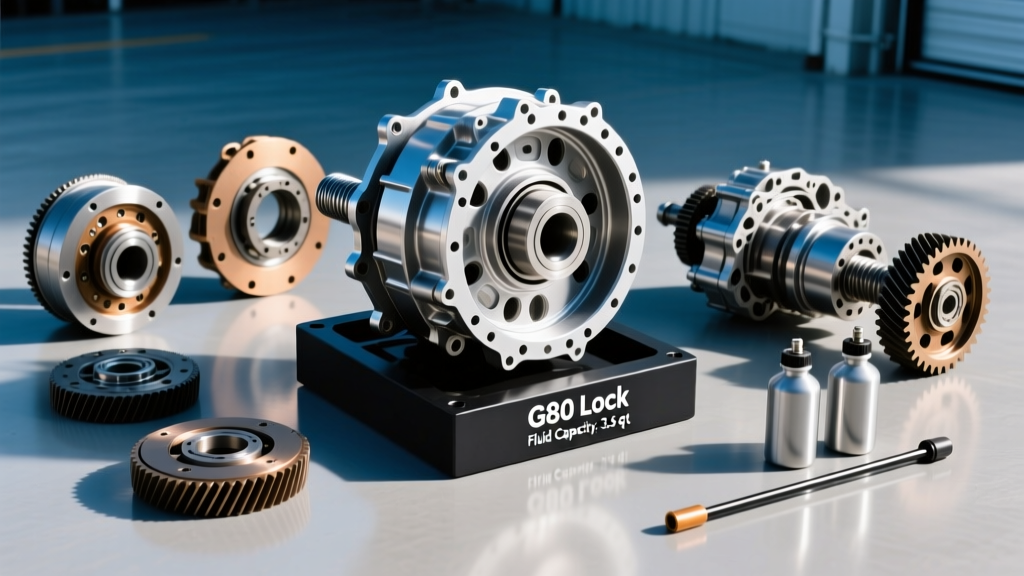
When maintaining the iconic GMT360 platform (2002-2009 Chevy Trailblazer, GMC Envoy, and Isuzu Ascender), the rear differential and engine oil often get all the attention. However, the Trailblazer front differential is a critical, frequently neglected component of the Independent Front Suspension (IFS) 4WD system. Housed in a lightweight aluminum casing and mounted directly to the oil pan and crossmember, this 8.0-inch ring-and-pinion assembly operates under intense stress when the BorgWarner transfer case engages the front axle.
Unlike solid front axles found in heavy-duty trucks, the Trailblazer's IFS front differential utilizes a complex internal disconnect mechanism and relies on a precise fluid level to lubricate the ring gear, pinion bearings, and the internal shift fork. Neglecting this fluid leads to premature bearing failure, ring gear scoring, and catastrophic failure of the front axle actuator motor. In this 2026 comprehensive guide, we break down the exact procedure, fluid specifications, and real-world maintenance intervals to keep your IFS 4WD system bulletproof.
Tools, Parts, and Fluid Specifications
Before crawling under the vehicle, gather the correct OEM-equivalent fluids and tools. Using the wrong gear oil viscosity can cause the internal shift collar to bind, resulting in 4WD engagement failure.
| Item | Specification / Part Number | Quantity | Est. Cost (2026) |
|---|---|---|---|
| Gear Oil | ACDelco Dexron 75W-90 Synthetic (GM 12378261) or AMSOIL Severe Gear 75W-90 | 2 Quarts | $25 - $38 |
| Drain/Fill Plug Tool | 3/8-inch Drive Square Socket or 10mm Hex (Varies by Model Year) | 1 | $5 |
| Fluid Transfer Pump | Manual Siphon Pump (Fits standard quart bottles) | 1 | $12 |
| Cleaning Supplies | Brake Parts Cleaner, Shop Towels, Wire Brush | 1 Can | $8 |
| Torque Wrench | 1/4-inch or 3/8-inch drive (capable of 24 lb-ft) | 1 | N/A |
Note: Always verify your specific fill plug type. Early GMT360 models often used a 3/8-inch square drive, while later models transitioned to a 10mm hex or 15mm hex bolt. Source your parts from trusted suppliers like RockAuto's Drivetrain Catalog to ensure OEM fitment.
Preparation and Safety Protocols
Working on the front differential requires accessing the underside of the engine bay. Safety and cleanliness are paramount.
- Level the Vehicle: Park on a flat, level concrete surface. If the vehicle is on an incline, the fluid level reading will be inaccurate, leading to under-filling.
- Lift and Support: Raise the front of the Trailblazer using a floor jack and support it securely on jack stands placed on the factory frame rails. Never rely solely on a hydraulic jack.
- Remove the Skid Plate: If equipped with the Z71 or off-road package, remove the front differential skid plate using a 10mm or 13mm socket. This provides unobstructed access to the drain and fill plugs.
- Clean the Housing: The front diff sits directly behind the radiator and lower bumper, making it a magnet for road grime, mud, and salt. Use a wire brush and brake cleaner to thoroughly clean the area around both the fill and drain plugs. Introducing dirt into the IFS differential is the fastest way to destroy the pinion bearing.
Step-by-Step Trailblazer Front Differential Fluid Change
Step 1: Open the Fill Plug First
This is the golden rule of differential service. Always remove the fill plug (located on the passenger side, roughly halfway up the aluminum housing) before removing the drain plug. If the drain plug comes out easily but the fill plug is seized or stripped, you will be left with an empty differential and no way to refill it, requiring a tow to a shop. Use your 3/8-inch square socket or 10mm hex bit with a breaker bar if necessary.
Step 2: Drain the Old Gear Oil
Place a shallow drain pan directly beneath the differential. Remove the drain plug located at the very bottom of the housing. Allow the 75W-90 gear oil to drain completely. Expect the fluid to be dark brown or black. If the vehicle has over 100,000 miles and the fluid has never been changed, it may have a burnt, sulfurous odor.
Expert Diagnostic Tip: Inspect the drain plug carefully. Most GM IFS drain plugs are magnetic. A fine, glitter-like metallic paste is completely normal wear from the ring and pinion gears. However, if you find large metal chunks, needle bearing fragments, or pieces of the brass shift fork, the differential requires a teardown and rebuild.
Step 3: Reinstall and Torque the Drain Plug
Wipe the drain plug clean with a lint-free shop towel. Ensure the magnetic tip is free of large debris. If your plug utilizes a nylon crush washer or O-ring, inspect it for flat spots or tears and replace if necessary. Reinstall the drain plug and torque it to 24 lb-ft (32 Nm). Do not overtighten, as the aluminum housing threads are prone to stripping.
Step 4: Fill with Fresh 75W-90 Synthetic
Attach your manual fluid transfer pump to the bottle of 75W-90 Synthetic Gear Oil. Feed the hose into the fill hole. Pump the fluid into the differential until it begins to weep out of the fill hole. The total capacity for the GMT360 8.0-inch IFS front differential is approximately 1.1 quarts (1.04 Liters). Allow the vehicle to sit for 5 minutes after the fluid weeps out to ensure the oil has settled into the internal shift collar cavities, then top off if necessary.
Step 5: Verify Fluid Level and Reinstall Fill Plug
Once the fluid is level with the bottom of the fill hole threads, wipe the area clean. Reinstall the fill plug and torque it to 24 lb-ft (32 Nm). Reinstall the skid plate, torquing the bolts to 37 lb-ft (50 Nm), and lower the vehicle.
Maintenance Intervals: Sealed vs. Real-World Reality
General Motors originally marketed the GMT360 front differential as "sealed for life" under normal driving conditions. However, modern tribology and real-world drivetrain data from 2026 prove that gear oil degrades due to thermal cycling, condensation, and shear stress. Refer to the table below for accurate service intervals.
| Driving Profile | Service Interval | Conditions |
|---|---|---|
| GM "Normal" (Outdated) | 100,000 Miles | Pure highway, 4WD never engaged. |
| Real-World Normal | 50,000 - 60,000 Miles | Mixed driving, occasional rain/snow 4WD use. |
| Severe Duty / Off-Road | 15,000 - 25,000 Miles | Trail riding, deep mud, water crossings, towing. |
| Post-Water Ingestion | Immediately | Differential submerged past the axle seals. |
For severe duty applications, upgrading to a high-performance synthetic like AMSOIL Severe Gear 75W-90 provides superior film strength and resistance to thermal breakdown compared to conventional mineral-based oils.
Diagnosing Common IFS Differential Issues
While performing your fluid change, take the time to inspect the surrounding components. The Trailblazer front differential is integrated with several failure-prone systems:
- Front Axle Disconnect Actuator: Located on the passenger side axle tube, this electric motor shifts the internal collar to engage the front driveshaft. If the differential seal around the actuator leaks, gear oil will migrate into the actuator motor, causing it to short out and throw a DTC C0327 (Front Axle Actuator Circuit). If you see oil on the actuator, the internal diff seal must be replaced.
- Vent Tube Routing: The front differential has a breather vent tube. From the factory, this tube is often routed too low, making it susceptible to sucking in water during puddle crossings. Trace the vent tube from the top of the differential and ensure it is zip-tied high up into the engine bay, near the master cylinder, to prevent hydro-locking the differential with water.
- CV Axle Seals: Inspect the driver and passenger side CV axle seals where they mate to the differential housing. Leaks here are common on high-mileage GMT360 trucks and will rapidly deplete the differential fluid level, leading to pinion bearing starvation.
A Note on Modern Trailblazer Models (2021-Present)
If you are servicing a modern, unibody Chevrolet Trailblazer (2021+ 1.3L Turbo AWD), the drivetrain architecture is entirely different. These vehicles do not use a standalone front differential. Instead, they utilize a Power Transfer Unit (PTU) bolted directly to the transaxle. The PTU shares a complex thermal relationship with the transmission and requires specialized, low-viscosity PTU fluid. Servicing the modern PTU is vastly more labor-intensive, often requiring subframe manipulation or wheel-well access. Always consult the specific 2026 GM Service Information portal for modern AWD crossover procedures before attempting maintenance.
Conclusion
Performing a Trailblazer front differential fluid change is a straightforward, high-impact DIY maintenance task that takes less than an hour. By abandoning the outdated "sealed for life" myth and adhering to a 50,000-mile synthetic fluid interval, you protect the 8.0-inch IFS ring and pinion from premature wear. Keep your tools clean, torque your plugs to spec, and your Trailblazer's 4WD system will remain reliable for hundreds of thousands of miles.