If you are driving or shopping for a midsize crossover in 2026, you have likely encountered discussions surrounding the 2019 Ford Edge torque converter recall and related transmission shudder issues. While the internet is flooded with forum rumors and worst-case scenarios, understanding the actual mechanical failures requires a closer look at the vehicle's onboard diagnostics. Specifically, the Diagnostic Trouble Codes (DTCs) your Edge throws when its torque converter clutch (TCC) begins to fail are the key to unlocking the mystery.
As a beginner-friendly guide, this article will demystify the diagnostic trouble codes associated with the Ford 8F35 transmission, explain how the torque converter operates, and provide actionable steps to diagnose and address these issues before they lead to catastrophic drivetrain failure.
The Truth Behind the 2019 Ford Edge Torque Converter Recall
First, it is vital to clarify the terminology. When consumers search for the '2019 Ford Edge torque converter recall,' they are often referring to a series of Technical Service Bulletins (TSBs) and Customer Satisfaction Programs rather than a federally mandated safety recall. According to the Ford Official Recall Portal, safety recalls are reserved for defects that pose an immediate risk to life or limb. Torque converter shudder, while incredibly frustrating and expensive, is generally classified as a powertrain durability issue.
The 2019 Ford Edge equipped with the 2.0L EcoBoost engine utilizes the 8F35 8-speed automatic transmission. Early production models of this transverse transmission suffered from torque converter lockup clutch degradation. This degradation causes a phenomenon known as 'shudder'—a rhythmic vibration felt through the chassis, typically occurring between 30 and 65 mph under light throttle application.
Torque Converter Basics for Beginners
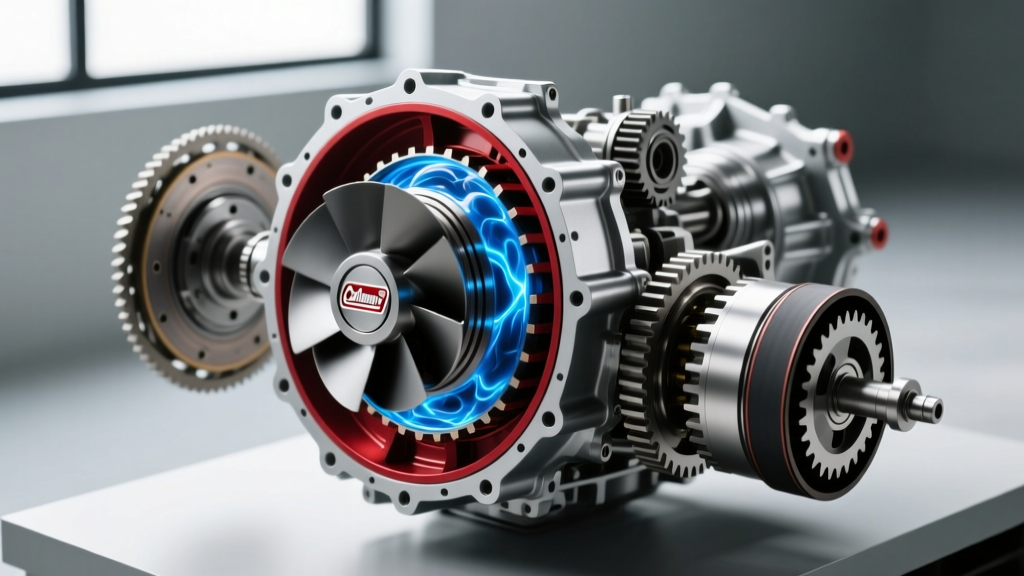
To understand the diagnostic codes, you must first understand the component. A torque converter is a fluid coupling that connects your engine to the transmission. It uses hydraulic fluid to multiply torque and allow the vehicle to come to a stop without stalling the engine.
However, fluid coupling is inherently inefficient due to 'slippage.' To improve fuel economy, modern torque converters feature a Torque Converter Clutch (TCC). Once you reach cruising speeds, the TCC physically locks the engine and transmission together, creating a 1:1 mechanical connection. When the friction material on this clutch degrades, or when the transmission fluid loses its shear stability, the clutch slips and grabs rapidly. This is the exact mechanism that causes the dreaded Edge shudder and triggers the vehicle's computer to log a diagnostic trouble code.
Why the 8F35 Transmission Triggers Codes
The 8F35 transmission relies on a highly specialized fluid called Motorcraft MERCON ULV (Ultra Low Viscosity), part number XT-12-QULV. This fluid is engineered to reduce parasitic drag and improve shift times. Unfortunately, if the torque converter clutch material begins to flake off due to aggressive lockup programming or thermal stress, it contaminates the ULV fluid. The degraded fluid loses its frictional modifiers, accelerating clutch wear and confusing the transmission control module (TCM).
Decoding Torque Converter Diagnostic Trouble Codes (DTCs)
When the TCM detects that the actual speed of the transmission input shaft does not match the expected speed based on the engine RPM and TCC duty cycle, it sets a code. Below is a structured breakdown of the most common torque converter DTCs associated with the 2019 Ford Edge.
| DTC Code | Definition | Common Symptom | Severity Level |
|---|---|---|---|
| P0741 | TCC Circuit Performance or Stuck Off | Harsh shifts, shudder, poor fuel economy | High |
| P0742 | TCC Circuit Stuck On | Engine stalling when coming to a stop | Critical |
| P0743 | TCC Electrical Circuit Malfunction | Limp mode, check engine light | High |
| P0744 | TCC Circuit Intermittent | Random shudder, unpredictable lockup | Moderate |
| P2769 | TCC Clutch Performance or Stuck Off | Highway RPM fluctuations, shudder | High |
What P0741 Really Means for Your Edge
According to the OBD-Codes P0741 Reference, this is the most prevalent code seen in failing 8F35 units. P0741 indicates that the TCM commanded the torque converter clutch to lock, but the input shaft speed sensor detected excessive slip (usually greater than 100 RPM difference). In the context of the 2019 Ford Edge, P0741 is almost always a mechanical failure of the clutch lining or a severely contaminated valve body, rather than a simple electrical glitch.
Step-by-Step Beginner Diagnostic Guide
Before authorizing a $2,500 transmission replacement, follow these beginner-friendly diagnostic steps to confirm the root cause of your torque converter issues.
Step 1: Verify the Fluid Condition
Pull the transmission dipstick (if equipped) or crack the inspection plug. Healthy MERCON ULV fluid is clear to light red. If the fluid is dark brown, smells like burnt toast, or contains glitter-like metallic particles, the torque converter friction material has failed. No software update or flush will fix mechanical debris embedded in the valve body.
Step 2: Perform a TCC Solenoid Resistance Test
Electrical failures are rare but possible. Using a digital multimeter, you can test the TCC solenoid. Access the transmission harness connector and locate the TCC solenoid pins (refer to the 8F35 wiring diagram). At room temperature (68°F / 20°C), the resistance should read between 2.0 and 4.5 ohms. If your multimeter reads 'OL' (Open Loop) or near zero, the solenoid is electrically dead and requires replacement.
Step 3: Monitor Live Data via OBD2 Scanner
Use an advanced OBD2 scanner capable of reading Ford-specific TCM live data. Monitor the 'TCC Slip Speed' parameter while driving at a steady 50 mph. A healthy locked converter will show slip speeds between -10 and +10 RPM. If you see slip speeds bouncing between 50 and 150 RPM while the TCC duty cycle is commanded to 90% or higher, your clutch is mechanically slipping.
Real-World Repair Costs and Next Steps
If your diagnostic steps confirm a mechanical torque converter failure, you must act quickly. Continuing to drive with a slipping TCC will send clutch debris into the transmission cooler and the intricate 8F35 valve body, turning a localized repair into a complete transmission rebuild.
- Transmission Fluid Drain and Fill: $150 - $250. (Requires approx. 4.5 quarts of XT-12-QULV. Note: Ford does not recommend a high-pressure flush for the 8F35).
- TCC Solenoid Replacement: $400 - $700. (Requires dropping the transmission pan; pan bolts must be torqued to exactly 8 Nm / 71 lb-in).
- Complete Torque Converter Replacement: $1,800 - $2,800. (Requires transmission removal. The torque converter-to-flexplate bolts must be torqued to 35 lb-ft / 47 Nm).
- Full 8F35 Transmission Assembly: $4,500 - $6,500. (Necessary if debris has destroyed the clutch packs).
Expert Tip: Always check the NHTSA Recall Database and contact your local Ford dealer with your VIN. Even if a federal safety recall was not issued, Ford frequently extends powertrain warranties or issues 'Customer Satisfaction Programs' for known 8F35 torque converter shudder issues, which could cover your diagnostic and repair costs entirely.
Final Thoughts
The narrative surrounding the 2019 Ford Edge torque converter recall can be alarming for new owners. However, by understanding how the TCC operates and learning to interpret diagnostic trouble codes like P0741, you transition from a passive vehicle owner to an informed consumer. Regular maintenance using the exact MERCON ULV specification and prompt attention to early shudder symptoms are your best defenses against the high costs of 8-speed automatic transmission repairs in 2026 and beyond.