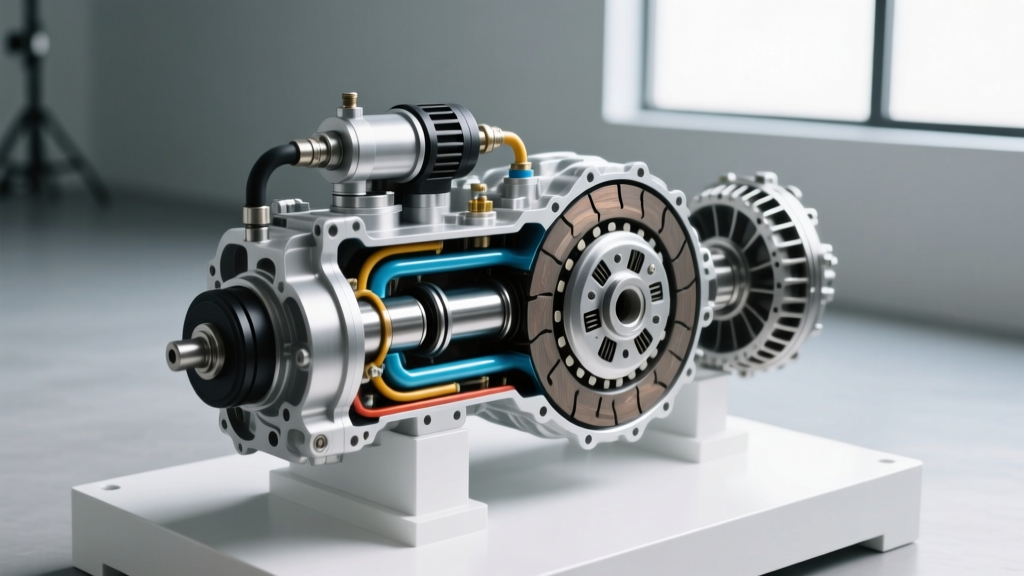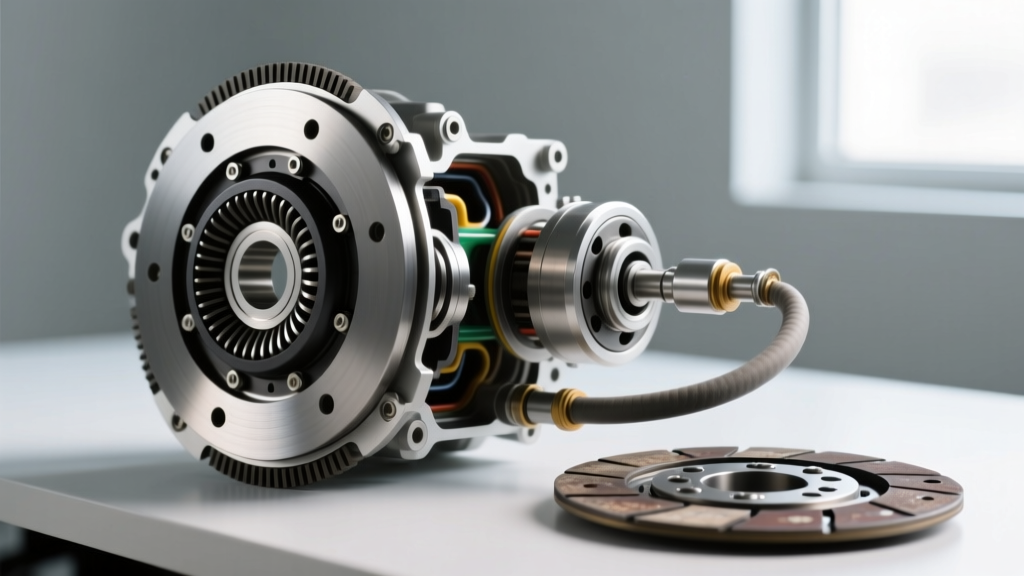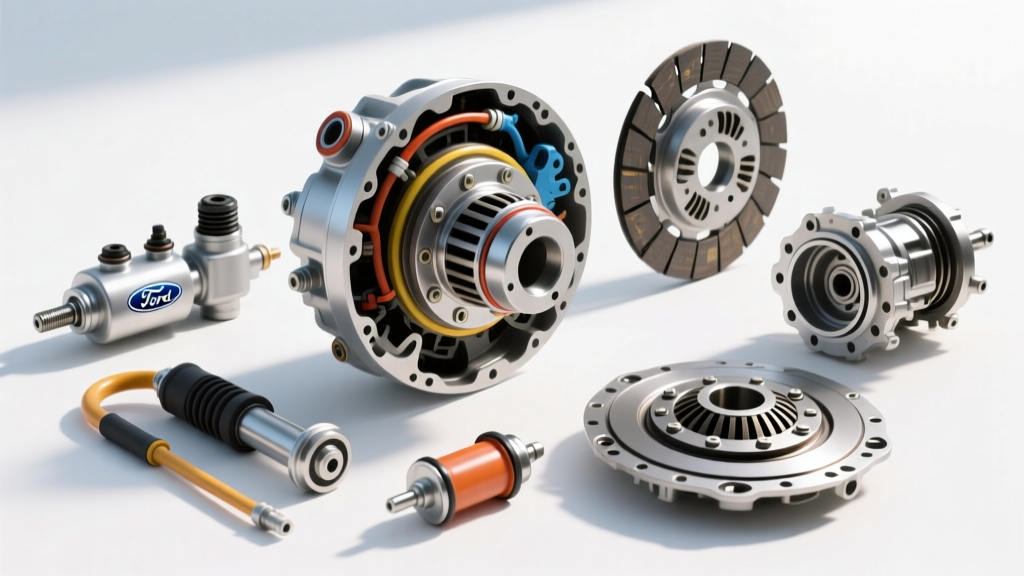
When owners and independent mechanics research Ford Focus clutch actuator symptoms, they are frequently caught in a crossfire of misinformation. The internet is saturated with horror stories regarding the infamous DPS6 PowerShift dual-clutch automatic transmission and its failing electric actuators. However, if you are driving a manual transmission Ford Focus (equipped with the IB5 or MTX-75 gearbox), your vehicle does not use an electric actuator. Instead, it relies on a sealed hydraulic clutch actuation system consisting of a master cylinder, hard lines, quick-connect fittings, and a Concentric Slave Cylinder (CSC) housed inside the bellhousing.
Diagnosing hydraulic clutch issues requires a completely different methodology than testing electronic servos. As a preventive maintenance guide, this article will dissect the exact failure modes of the Ford Focus manual hydraulic clutch system, provide actionable diagnostic protocols, and outline a strict maintenance schedule to prevent catastrophic clutch disengagement failures.
Expert Insight: The hydraulic clutch actuator in a manual Focus is technically the Concentric Slave Cylinder (CSC). Unlike older external slave cylinders with visible pushrods, the CSC wraps directly around the transmission input shaft. Because it is hidden inside the bellhousing, early symptom recognition and fluid analysis are your only preventive diagnostic tools before a transmission drop becomes mandatory.
Core Ford Focus Clutch Actuator Symptoms (Hydraulic Models)
Hydraulic fluid is hygroscopic, meaning it absorbs moisture from the atmosphere over time. In the Ford Focus, this moisture degrades the internal EPDM seals of both the master cylinder and the CSC. When searching for Ford Focus clutch actuator symptoms in manual variants, look for these specific hydraulic failure indicators:
- Pedal Sponginess and 'Pumping' Requirement: If the clutch pedal feels soft or requires you to 'pump' it twice to engage first gear without grinding, the master cylinder's internal cup seals are bypassing fluid internally. The fluid is slipping past the piston rather than pushing it.
- Incomplete Disengagement (Gear Rattle):strong> When stopped at a light with the clutch depressed, a loud transmission rattle or difficulty shifting into reverse indicates the CSC is not extending to its full stroke. This is often caused by a micro-leak at the firewall quick-connect fitting or air ingestion in the hard line.
- Pedal Sticking to the Floorboard: A catastrophic failure of the CSC's internal return spring or a massive fluid blowout past the CSC piston seal. This leaves the throw-out bearing constantly engaged against the pressure plate fingers, causing premature wear.
- Visible Fluid Weeping at the Inspection Cover: The MTX-75 and IB5 transmissions feature a small rubber inspection plug on the lower front of the bellhousing. If DOT 4 fluid drips from this hole, the CSC has failed and contaminated the clutch friction disc.
Step-by-Step Hydraulic Clutch System Diagnosis
Before condemning the CSC and committing to an 8-hour transmission removal job, you must systematically isolate the hydraulic circuit. Follow this diagnostic sequence to pinpoint the exact failure point.
1. Master Cylinder Pushrod and Firewall Inspection
Begin in the cabin. Remove the lower steering column trim to expose the clutch pedal assembly and the master cylinder pushrod. Check for fluid pooling on the carpet or along the firewall. Ford's clutch master cylinder is prone to leaking past the rear seal, dripping directly onto the pedal pivot. If the pedal pivot is wet, replace the master cylinder (Motorcraft part number CM-7A548-A or equivalent FTE unit) before touching the transmission.
2. Quick-Connect and Hard Line Pressure Testing
The Ford Focus utilizes a plastic hard line that transitions to a flexible rubber hose, terminating in a push-to-connect quick-clip fitting near the transmission bellhousing. These plastic retaining clips become highly brittle due to engine bay heat cycling.
To test: Attach a hydraulic line pressure gauge to the bleeder valve on the CSC. Have an assistant depress the clutch pedal. A healthy system should generate between 150 to 250 PSI of peak line pressure depending on pedal effort. If pressure spikes and immediately drops while the pedal is held to the floor, you have an internal bypass in the master cylinder or a failing quick-connect O-ring.
3. Concentric Slave Cylinder (CSC) Leak-Down Test
If line pressure holds steady but clutch disengagement is poor, the CSC is the culprit. Remove the lower bellhousing inspection plug. Use a borescope to inspect the CSC piston. If you see a crusty residue of glycol and brake dust, or active weeping, the CSC seal has failed. Because the CSC operates in a high-heat environment directly adjacent to the dual-mass flywheel (DMF) or single-mass flywheel, heat soak accelerates seal degradation.
Preventive Maintenance Matrix & Fluid Specifications
The single most effective way to prevent Ford Focus clutch actuator symptoms is rigorous fluid maintenance. Ford specifies DOT 4 LV (Low Viscosity) fluid for the clutch circuit. Standard DOT 3 or standard DOT 4 is too viscous for the narrow orifices in the Focus hydraulic block, leading to sluggish pedal return in sub-zero temperatures and accelerated seal wear.
| Maintenance Parameter | Specification / Interval | Tool / Part Requirement |
|---|---|---|
| Clutch Fluid Type | DOT 4 LV (ISO 4925 Class 6) | Motorcraft PM-20 or ATE SL.6 |
| Flush Interval | Every 24 Months / 30,000 Miles | Motive Pressure Bleeder |
| System Capacity | Approx. 0.45 Liters | Fluid Catch Bottle |
| CSC Mounting Bolts | 10 Nm (89 lb-in) | 8mm Socket, Torque Wrench |
| Bleeder Screw Torque | 8 Nm (71 lb-in) | 8mm Flare Nut Wrench |
| Hard Line Flare Nut | 15 Nm (11 lb-ft) | 11mm Flare Nut Wrench |
Note: Never use a power bleeder set above 20 PSI on the Ford Focus clutch master cylinder reservoir. The plastic reservoir cap threads and the internal diaphragm can rupture under excessive pressure, forcing fluid into the brake booster vacuum lines.
The Gravity Bleed vs. Pressure Bleed Debate
Due to the routing of the Ford Focus hydraulic line—which dips down to the transmission and then loops back up to the CSC—gravity bleeding is highly ineffective and often traps a 2cc air bubble in the high-point of the flexible hose. This trapped air causes the infamous 'spongy morning pedal' that firms up after a few pumps. Always use a low-pressure (15 PSI) pneumatic or manual pressure bleeder, and tap the flexible hose with a rubber mallet during the bleed to dislodge micro-bubbles clinging to the inner hose wall.
Cost Breakdown: Repair vs. Preventive Care
Ignoring early hydraulic symptoms inevitably leads to secondary damage. If a failing CSC leaks DOT 4 fluid onto the clutch friction disc, the fluid acts as a solvent, dissolving the organic binding resins in the friction material. What could have been a simple hydraulic flush turns into a full clutch kit and flywheel replacement.
| Service Scenario | Estimated Parts Cost | Estimated Labor Cost | Total Outlay |
|---|---|---|---|
| Preventive Fluid Flush (Bi-Annual) | $15 - $25 | $0 (DIY) / $80 (Shop) | $15 - $105 |
| Master Cylinder Replacement | $60 - $110 | $150 - $200 | $210 - $310 |
| CSC Replacement (Trans Out) | $90 - $160 (LUK / FTE) | $500 - $750 | $590 - $910 |
| Full Clutch, DMF, & CSC Kit | $450 - $800 | $600 - $900 | $1,050 - $1,700 |
Sourcing OEM vs. Aftermarket Hydraulic Components
When replacing the hydraulic actuator components on your Focus, component origin matters immensely. The clutch hydraulic market is flooded with cheap, unbranded master cylinders that utilize inferior Buna-N rubber seals instead of the required EPDM (Ethylene Propylene Diene Monomer) seals. EPDM is mandatory for compatibility with the glycol-ether base of DOT 4 LV fluid; Buna-N seals will swell, distort, and fail within 5,000 miles.
For the Concentric Slave Cylinder, RockAuto and other major distributors stock the LUK and FTE brands. LUK (part number 510 0085 10 for many MTX-75 applications) is the original equipment manufacturer for Ford's clutch kits. Sourcing a genuine LUK CSC ensures the internal bearing surface matches the exact profile of the Ford transmission input shaft retainer collar, preventing the catastrophic bearing binding that causes clutch fork snap.
For the master cylinder and fluid, sourcing directly from Ford Parts or utilizing ATE SL.6 fluid (available via ATE Brakes) guarantees the low-viscosity characteristics required for the Focus's rapid-engagement hydraulic geometry.
Final Diagnostic Verdict
While the automatic Focus models dominate forum discussions regarding electric actuator failures, the manual Focus hydraulic system demands equal respect and rigorous preventive maintenance. By monitoring pedal stroke consistency, adhering strictly to a 24-month DOT 4 LV flush interval, and utilizing EPDM-compatible OEM components, you can easily push the factory Concentric Slave Cylinder past 120,000 miles. Treat the hydraulic fluid not as a lifetime fill, but as a critical wear item, and your MTX-75 or IB5 transmission will reward you with razor-sharp, predictable gear engagement for the life of the vehicle.