The Evolution of Hydraulic Clutch Actuation
In the modern automotive landscape of 2026, the term 'hydraulic clutch system' encompasses two vastly different engineering paradigms. On one end of the spectrum, we have the traditional manual transmission master and slave cylinder setups found in performance vehicles and heavy-duty trucks. On the other end, we have the highly complex electro-hydraulic control units (HCUs) that actuate the wet clutches in advanced Dual Clutch Transmissions (DCTs). While the fundamental physics of using incompressible fluid to transfer force remain the same, the diagnostic approaches, fluid requirements, and failure modes are worlds apart. Understanding these distinctions is critical for accurate troubleshooting and preventing catastrophic drivetrain failures.
Traditional Master/Slave vs. Electro-Hydraulic DCTs
A conventional hydraulic clutch system, such as those paired with the Tremec TR-6060 or T56 Magnum manual transmissions, relies on a direct mechanical-to-hydraulic link. Depressing the pedal pushes a master cylinder piston, generating hydraulic pressure (typically 400 to 800 psi) that travels through hard lines and flexible hoses to a slave cylinder, which actuates the clutch fork. These systems are relatively simple, utilizing standard DOT 3 or DOT 4 brake fluid.
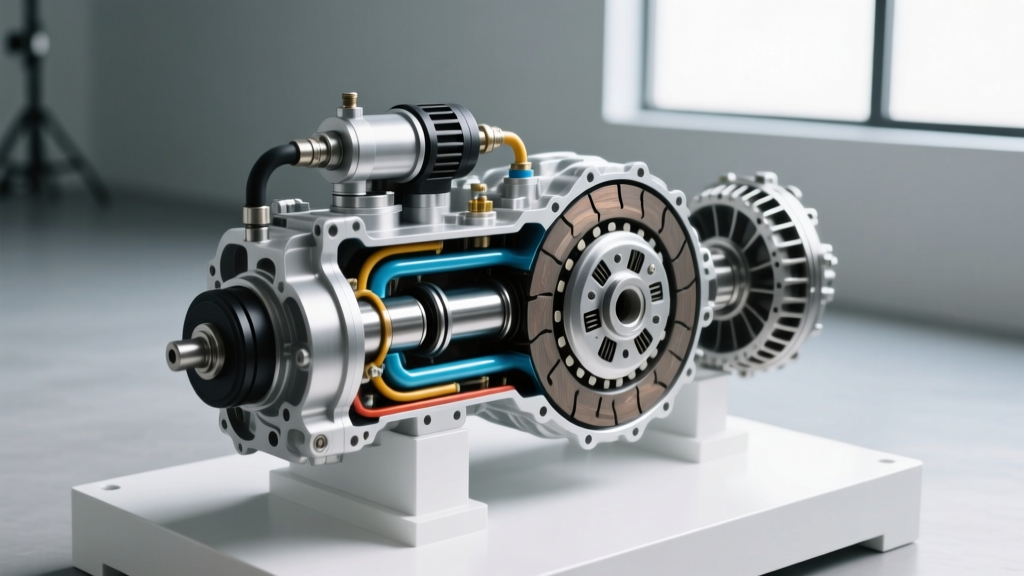
Conversely, modern DCTs like the Getrag 6DCT450 (MPS6) utilized in various Ford and Volvo applications rely on an electro-hydraulic control unit. Here, an electric motor drives a high-pressure hydraulic pump, charging an accumulator to pressures exceeding 60 bar (870 psi). Solenoid valves then route this specialized transmission fluid to actuate the dual clutch packs and engage the gear selector forks. The fluid in these systems must simultaneously lubricate the gears, cool the wet clutch friction materials, and serve as the hydraulic medium for the HCU. This is where fluid specification becomes a matter of absolute precision.
Core Symptoms of Hydraulic Clutch Failure
Diagnosing hydraulic issues requires a systematic evaluation of symptoms, which manifest differently depending on the system architecture. In traditional manual setups, the most common complaint is a 'spongy' or sinking clutch pedal, often accompanied by gear grinds during shifts. This usually indicates air ingress, a failing master cylinder internal seal, or a blown slave cylinder boot. Another critical but overlooked symptom is clutch drag, which occurs when the master cylinder pushrod lacks proper free play, preventing the fluid from returning to the reservoir and keeping the clutch partially disengaged.
In DCT applications, hydraulic failures rarely present as a physical pedal feel issue, as the clutch is controlled by wire. Instead, symptoms manifest as erratic shift quality, harsh engagements, or complete transmission limp modes. Common OBD-II diagnostic trouble codes (DTCs) associated with DCT hydraulic faults include:
- P0776: Pressure Control Solenoid B Performance/Stuck Off (indicating a blocked hydraulic circuit or failed solenoid).
- P2783: Dual Clutch Transmission Clutch 1/2 Actuation (pointing to insufficient hydraulic pressure reaching the clutch pack).
- P0801: Reverse Inhibit Control Circuit (often tied to low accumulator pressure preventing reverse gear engagement).
Expert Insight: 'Technicians often misdiagnose a failing DCT clutch pack when the root cause is actually a degraded hydraulic accumulator or a micro-leak in the HCU solenoid seals. Always verify baseline hydraulic pressure via the scan tool live data before condemning the mechanical clutch assembly.'
Motorcraft Dual Clutch Transmission Fluid XT-11-QDC: The DCT Lifeline
When servicing or diagnosing Ford-engineered DCT systems, fluid selection is non-negotiable. The Motorcraft Dual Clutch Transmission Fluid XT-11-QDC is engineered specifically to handle the extreme shear forces and thermal loads of wet dual-clutch environments. Unlike conventional Automatic Transmission Fluids (ATFs) like MERCON LV, the XT-11-QDC formulation contains proprietary friction modifiers designed to maintain the precise coefficient of friction required for the wet clutch papers during micro-slip engagements.
Using an incorrect fluid, or allowing the XT-11-QDC to degrade past its service interval, leads to a breakdown in the fluid's anti-wear additives. This degradation causes the HCU solenoid spool valves to stick due to varnish buildup, resulting in delayed shift times and clutch chatter. Furthermore, the wrong fluid can cause the wet clutch friction material to glaze or swell, leading to irreversible clutch pack damage. As of 2026, Motorcraft XT-11-QDC typically retails between $18.50 and $24.00 per quart. While this represents a premium over generic DCT fluids, the cost is negligible compared to a $2,500 DCT rebuild or a $1,400 HCU replacement.
Diagnostic Framework: Testing Hydraulic Circuits
Proper diagnosis requires moving beyond visual inspections and utilizing pressure testing protocols. For manual transmissions, the focus is on mechanical clearance and hydraulic integrity. For DCTs, the focus shifts to electronic command and hydraulic accumulation.
Manual System Pushrod and Pressure Testing
Before replacing a master cylinder on a manual vehicle, verify the pushrod clearance. There must be a 0.020' to 0.040' gap between the master cylinder piston and the pushrod when the pedal is at rest. If this gap is absent, thermal expansion of the brake fluid will cause unintended clutch disengagement. To test hydraulic integrity, clamp the soft line near the slave cylinder and have an assistant press the pedal. If the pedal remains firm, the master cylinder is healthy, and the leak is downstream. If it sinks, the master cylinder bypass seals are compromised.
DCT Accumulator Bleed-Down Test
For Ford DCTs requiring the XT-11-QDC fluid, the HCU accumulator bleed-down test is the gold standard for diagnosing internal hydraulic leaks. Using a bi-directional OBD-II scan tool, command the HCU electric pump to build pressure to the upper threshold (typically 60 bar). Once the target pressure is reached, command the pump off and monitor the pressure drop over a 10-minute period. An acceptable pressure drop is less than 2 bar. A rapid drop indicates a leaking accumulator diaphragm, a faulty internal check valve, or leaking clutch actuator seals inside the transmission bell housing.
| System Type | Primary Symptom | Pressure Spec / Tolerance | Required Fluid / Spec | Common Failure Point |
|---|---|---|---|---|
| Manual (Tremec T56) | Spongy Pedal / Gear Grind | 400 - 800 psi (Pedal applied) | DOT 4 Brake Fluid (FMVSS 116) | Slave Cylinder O-ring / Master Bypass Seal |
| Manual (GM Heavy Duty) | Clutch Drag / Creep | 0.020' - 0.040' Pushrod Free Play | DOT 3 / DOT 4 Brake Fluid | Adjustable Pushrod Maladjustment |
| Wet DCT (6DCT450 / MPS6) | Harsh Shifts / DTC P2783 | 40 - 60 bar (580 - 870 psi) | Motorcraft XT-11-QDC | HCU Accumulator / Solenoid Varnish |
| Dry DCT (DPS6) | Shudder / Actuator Fault | Electromechanical (No Fluid) | N/A (Gear oil only for gearbox) | Electric Actuator Motors / TCM |
Preventive Maintenance: Flushing and Bleeding Protocols
Preventive maintenance is the most effective way to avoid hydraulic clutch system failures. For traditional manual systems, brake fluid is highly hygroscopic, meaning it absorbs moisture from the atmosphere over time. This moisture lowers the fluid's boiling point and promotes internal corrosion in the steel slave cylinder bores. Flushing the hydraulic clutch circuit with fresh DOT 4 fluid every 30,000 miles or 3 years is mandatory. When bleeding the system, always use a pressure bleeder set to 15-20 psi to prevent aerating the fluid, and ensure the master cylinder reservoir never runs dry during the process.
DCT Fluid Service Intervals and HCU Care
For wet dual-clutch transmissions utilizing the Motorcraft Dual Clutch Transmission Fluid XT-11-QDC, the fluid serves a grueling multi-purpose role. The clutch friction material sheds microscopic particles during normal operation, which become suspended in the fluid. If the fluid and external inline filter are not replaced at the manufacturer's specified intervals (typically every 37,500 to 60,000 miles, depending on the specific 2026 model year maintenance schedule), these particulates will score the precision-machined spool valves inside the HCU. According to Ford Motorcraft Maintenance Guidelines, adhering strictly to the severe duty service interval is recommended for vehicles subjected to stop-and-go traffic or track use.
When performing a DCT fluid drain and fill, it is crucial to follow the exact temperature-dependent level check procedure. The fluid expands significantly as it heats up. Checking the level at an ambient temperature of 70°F when the transmission is at operating temperature (140°F) will result in severe under-filling, leading to HCU pump cavitation and immediate clutch actuation failures. As noted in Car and Driver's technical analysis of DCT architectures, the hydraulic margin for error in these transmissions is virtually zero. For deeper engineering insights into electro-hydraulic clutch actuation, technicians can refer to SAE International Technical Papers on DCT hydraulic control strategies.
Final Torque Specs and Reassembly Best Practices
Whether you are reinstalling a manual slave cylinder or bolting a new HCU to a DCT case, torque specifications must be strictly followed. HCU-to-case mounting bolts (typically M8) should be torqued to 23 Nm (17 lb-ft) in a star pattern to prevent warping the aluminum valve body mating surface. Manual transmission slave cylinder mounting nuts (often M10) generally require 35 Nm (26 lb-ft). Always use a calibrated torque wrench; overtightening can crack the cast aluminum housings, leading to slow hydraulic weeps that are notoriously difficult to diagnose until the transmission is removed. By combining meticulous diagnostic testing with strict adherence to fluid specifications like the XT-11-QDC, technicians and enthusiasts can ensure the longevity and performance of modern hydraulic clutch systems.