The Rheology of Torque Biasing: Why Fluid is the Ultimate Clutch
When diagnosing torque distribution anomalies in all-wheel-drive (AWD) platforms, mechanical failure is rarely the primary culprit. In both full-size automotive applications and high-performance 1/8 scale models, the center differential relies heavily on fluid dynamics to manage slip, bias torque, and prevent drivetrain binding. Whether you are troubleshooting a Haldex Gen 5 coupling in a Volkswagen Golf R or diagnosing a high-viscosity silicone-filled RC truck differential in a Traxxas X-Maxx, the fundamental physics of fluid shear remain identical.
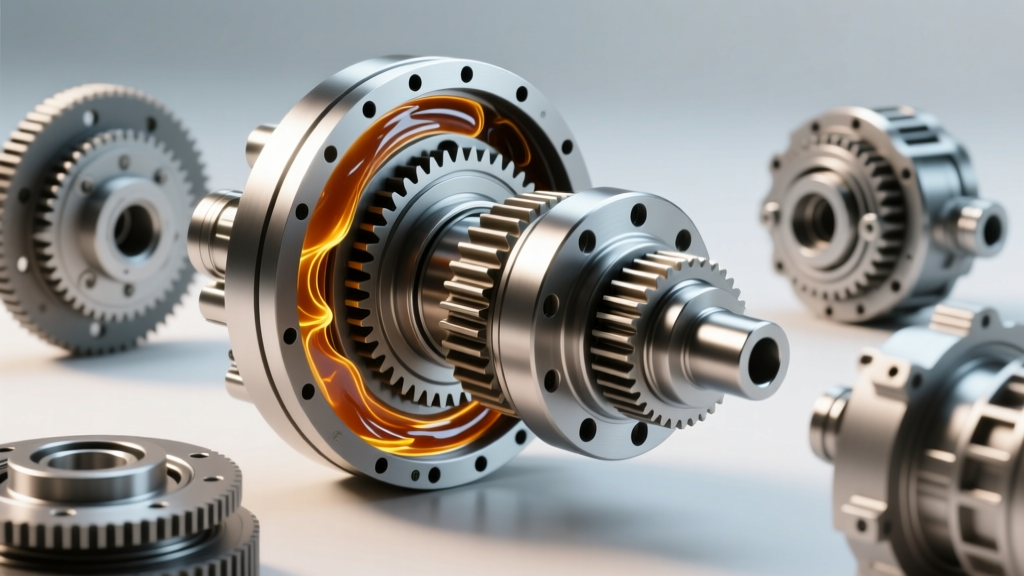
Fluid-coupled center differentials operate on the principle of rheological shear resistance. When a speed delta occurs between the front and rear axles, the internal planetary gearsets or clutch packs agitate the fluid. In full-size viscous couplings, this agitation causes dilatant (shear-thickening) fluids to lock the axles together. In high-end RC applications, extremely high centistoke (CST) silicone fluids act as a virtual limited-slip mechanism, preventing the front and rear wheels from spinning independently under heavy throttle. When these systems fail, the symptoms—binding, hopping, or catastrophic slip—are almost always rooted in fluid degradation, cavitation, or incorrect viscosity selection.
Symptom Matrix: Full-Size AWD vs. RC Truck Differential
Diagnosing center differential issues requires mapping physical symptoms to fluid states. The table below cross-references the most common drivetrain complaints across full-size AWD vehicles and 1/8 scale RC trucks, isolating the fluid-related root causes.
| Symptom | Full-Size AWD Root Cause | RC Truck Differential Root Cause | Fluid Diagnostic Fix |
|---|---|---|---|
| Low-Speed Binding / Hopping | Viscous fluid permanently sheared into solid state; Haldex clutch pack contaminated. | Silicone fluid CST too high for surface (e.g., using 500k CST on high-bite carpet). | Flush and replace with OEM-spec shear-stable fluid or drop CST rating by 50%. |
| High-Speed Slip / Understeer | Fluid cavitation due to overheating; Haldex pump micro-screen clogged with molybdenum. | Silicone fluid aerated or sheared down from thermal breakdown during long bashing sessions. | Inspect for glitter; replace fluid and clean pump pickup or diff seals. |
| Whining / Gear Noise | Spider gear scoring due to low fluid level or wrong GL-5 friction modifier additive. | Diff fluid leaked past O-rings, running the planetary gears dry. | Rebuild with new O-rings, shims, and exact volume fill (e.g., 0.65L or 14ml). |
Full-Size AWD: Haldex and Viscous Coupling Diagnostics
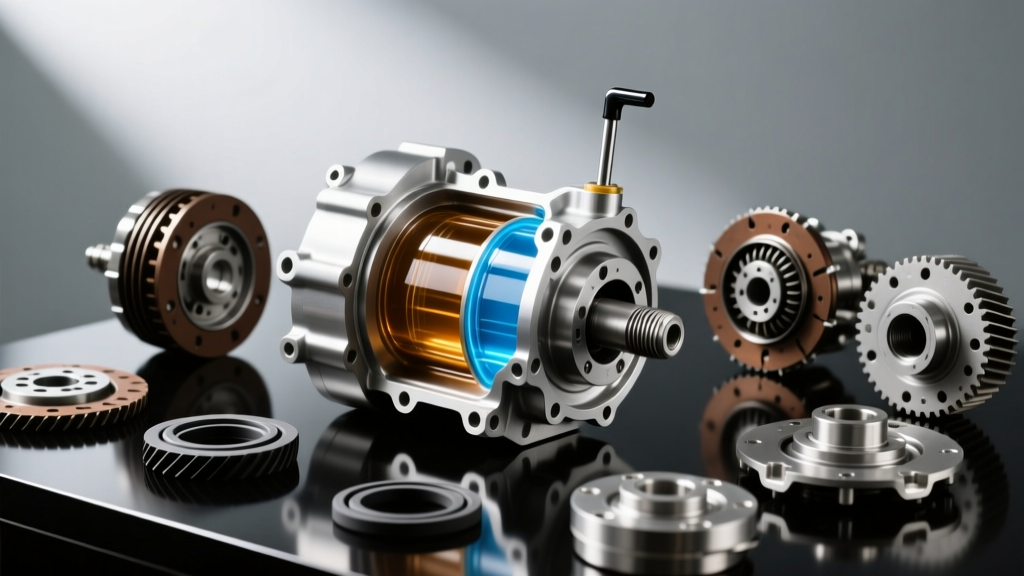
In modern full-size AWD systems, the center differential is often a computer-controlled, fluid-actuated clutch pack rather than a traditional open gearset. The Haldex Gen 5 system, widely used across the VW Group (Audi Quattro Ultra, VW 4Motion) and Volvo platforms, is a prime example of how fluid maintenance dictates drivetrain health.
Haldex Gen 5 Pump and Fluid Shear Analysis
The Haldex Gen 5 system relies on an electric pump to pressurize fluid into a clutch pack, coupling the rear driveshaft to the transmission. The factory fluid (often Volvo P/N 31325136 or VW G 055 175 A2) contains specific friction modifiers and molybdenum disulfide coatings for the clutch plates. Over time, the clutch material sheds microscopic metallic and friction particles. Unlike older generations, the Gen 5 lacks a traditional inline filter, relying instead on a delicate micro-screen on the pump pickup.
Diagnostic Protocol: If the vehicle exhibits FWD-only behavior or rear-axle slip under hard acceleration, the fluid is likely contaminated, clogging the pump screen and starving the clutch pack. The drain plug torque specification for the Haldex unit is typically 35 Nm (25 lb-ft). When draining, inspect the fluid for a burnt odor or excessive metallic paste. A healthy Haldex fluid should be translucent yellow; degraded fluid appears dark brown or black. In 2026, aftermarket solutions like the AMSOIL Severe Gear line offer advanced synthetic alternatives for traditional gear-driven center diffs, but Haldex units strictly require their dedicated hydraulic/clutch fluids to prevent pack glazing.
The 1/8 Scale RC Truck Differential: High-CST Troubleshooting
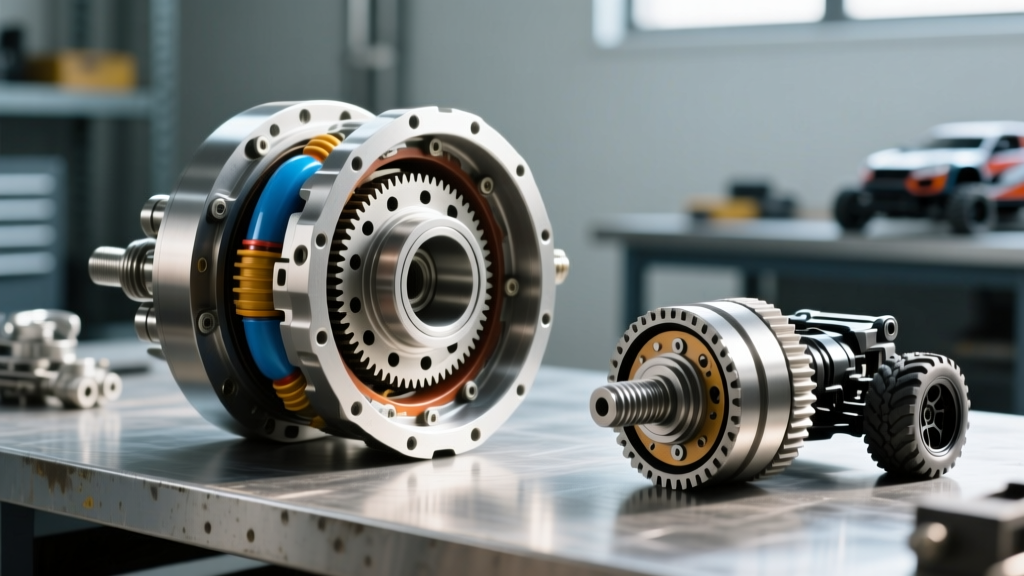
While full-size trucks use complex electro-hydraulic systems, the RC truck differential achieves torque biasing through pure fluid viscosity. High-performance 1/8 scale monster trucks and buggies (such as the Arrma Kraton 8S or Traxxas X-Maxx) utilize sealed, gear-driven center differentials filled with high-viscosity silicone fluid. These fluids range from 15,000 CST to over 500,000 CST.
Thermal Breakdown in Silicone Fluids
Silicone differential fluid does not lubricate gears in the traditional sense; it acts as a viscous coupling. When the front and rear axles rotate at different speeds (such as in a corner), the internal spider gears shear the silicone. If the CST rating is too low for the vehicle's power output, the fluid will shear excessively, generating massive heat. This thermal energy causes the silicone to aerate (foam) and lose its shear resistance, resulting in a "one-tire" fire or complete loss of forward traction.
Conversely, if an RC builder installs 500,000 CST fluid in a center differential for low-bite dirt driving, the fluid will resist shear so aggressively that it acts as a locked spool. This causes severe drivetrain binding, leading to stripped spur gears, twisted driveshafts, or shattered outdrive cups. Diagnosing an RC center diff requires matching the fluid CST to the track surface and ambient temperature, a concept that directly mirrors tuning a Subaru DCCD (Driver Controlled Center Differential) for rally stages.
Universal Diagnostic Protocol: Drain, Inspect, Refill
Whether you are servicing a Porsche 911 AWD viscous center diff or rebuilding a Traxxas 7782X center differential, the diagnostic teardown follows a strict methodology:
- Step 1: Thermal Equilibrium Check. Operate the vehicle until the differential reaches normal operating temperature (approx. 140°F / 60°C for full-size; warm to the touch for RC). Cold fluid will not drain completely, leaving degraded sludge in the housing.
- Step 2: Volumetric Measurement. Measure the exact volume of drained fluid. A Haldex Gen 5 takes approximately 0.65L. An X-Maxx center diff takes roughly 14-16ml. If the output volume is significantly lower, you have a seal leak, meaning the remaining fluid is likely concentrated with wear metals.
- Step 3: The "Glitter" Test. Spread the drained fluid on a white paper towel. Fine, gold-colored glitter indicates normal friction material wear (common in Haldex). Chunky, silver, or magnetic particles indicate catastrophic spider gear or bearing failure requiring a full mechanical rebuild.
- Step 4: Precision Refill. Use a calibrated syringe for RC diffs or a pneumatic pump for automotive axles. Overfilling an RC truck differential will cause hydraulic lock, blowing the O-rings out of the diff case under load. Underfilling a full-size center diff will cause immediate gear cavitation and whining.
2026 Fluid Specifications and Procurement Guide
Selecting the correct fluid is the final step in resolving center differential binding and slip. Below are the current benchmark specifications for both automotive and scaled applications.
- Automotive Gear-Driven Center Diffs (Subaru 5MT/6MT, Porsche 964): Require high-quality 75W-90 GL-5 synthetic gear oil. Products like Red Line ShockProof are heavily favored in the performance community for their unique solid-film lubricant properties that protect spider gears during high-shock torque loads. Expect to pay between $22 and $28 per quart in 2026.
- Haldex / Electro-Hydraulic Couplings: Must use OEM-specified hydraulic/clutch fluids (e.g., VW G 055 175 A2). Using standard gear oil will destroy the friction linings and clog the pump. Dealer pricing averages $35-$45 per liter.
- RC Truck Differentials (1/8 Scale): Require high-purity silicone diff fluid. For general bash setups, 100,000 CST to 200,000 CST is the standard baseline. Associated Electrics and Team Losi Racing (TLR) produce premium, batch-tested silicone fluids that resist thermal thinning better than budget alternatives. A 100ml bottle of premium 200k CST fluid typically costs $12-$15. For detailed OEM support and exploded diagrams, refer to the Traxxas Support Portal.
By understanding the shared fluid dynamics between full-size automotive AWD systems and scaled RC truck differentials, technicians and hobbyists can accurately diagnose torque bind, eliminate slip, and extend the lifespan of complex planetary gearsets through precise fluid management.