Understanding the Ford F-250 Traction-Lok Limited Slip Differential
For Super Duty owners, the rear axle is the unsung hero of towing, hauling, and off-road traction. At the heart of this system is the Limited Slip Differential (LSD), branded by Ford as the Traction-Lok. Unlike an open differential that routes power to the wheel with the least resistance, the Traction-Lok utilizes a series of alternating friction clutches and steel reaction plates to lock the axle shafts together when slip is detected. However, this mechanical brilliance introduces strict maintenance requirements. If you ignore the specialized lubrication needs of the clutch packs, you will quickly experience the infamous 'stick-slip' chatter during low-speed cornering, eventually leading to catastrophic clutch glazing and total LSD failure.
In this technical deep-dive, we will dissect the mechanical operation of the F-250's LSD, outline the precise Ford F250 rear differential fluid capacity across different axle generations, and provide a master-class maintenance protocol complete with OEM part numbers, torque specifications, and friction modifier dosing strategies for the 2026 service landscape.
The Mechanics of Clutch-Pack Engagement
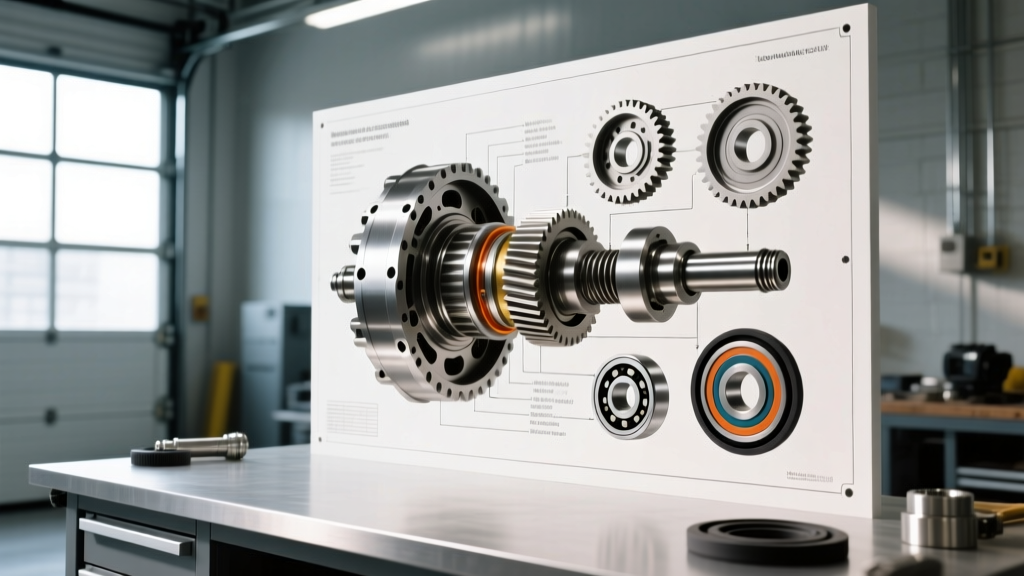
The Ford Traction-Lok is a clutch-type, torque-sensing limited slip differential. Inside the differential case, you will find two side gears connected to the axle shafts, a set of spider gears, and a heavy-duty S-spring (preload spring) situated between the side gears. The side gears feature splined hubs that mate with the alternating clutch and steel friction plates.
How Torque Biasing Works
- Preload Phase: The S-spring pushes the side gears outward against the clutch packs, creating a baseline clamping force. This provides initial torque bias even before significant wheel slip occurs.
- Slip Detection: When one rear tire loses traction (e.g., on ice or mud), the differential case continues to rotate via the ring gear, but the slipping side gear stalls.
- Clamping Force Multiplication: The internal ramping geometry of the side gears and pinion shafts forces the S-spring to compress further, aggressively wedging the clutch packs against the differential case housing. This mechanical clamping transfers torque to the wheel that still has grip.
Because this system relies entirely on the friction coefficient between the clutch plates and the steel reaction rings, the chemical makeup of your gear oil is not just a lubricant—it is an active hydraulic and frictional component.
Ford F250 Rear Differential Fluid Capacity & Specifications
Determining the exact Ford F250 rear differential fluid capacity depends heavily on your specific axle housing, model year, and whether your truck is equipped with a standard or deep-sump differential cover. Below is the definitive capacity chart for the most common F-250 rear axles.
| Axle Model | Production Years | Fluid Capacity (Quarts) | OEM Fluid Specification | Friction Modifier Required? |
|---|---|---|---|---|
| Sterling 10.5 | 1999 - 2016 | 3.5 - 3.7 qts | Motorcraft SAE 75W-140 Synthetic | Yes (4 oz minimum) |
| Dana Super 10.5 | 2017 - 2023 | 3.7 - 4.0 qts | Motorcraft SAE 75W-140 Synthetic | Yes (4 oz minimum) |
| Dana M275 (Dually) | 2017 - 2026 | 4.0 - 4.5 qts | Motorcraft SAE 75W-140 Synthetic | Yes (4 oz minimum) |
Note: Capacities are approximate. Always fill to the bottom edge of the fill plug hole. For trucks equipped with aftermarket deep-pan covers (such as those from Mag-Hytec or PPE), expect to add an additional 1.5 to 2.5 quarts.
Why 75W-140?
While older manuals sometimes referenced 75W-90 for standard-duty applications, the shift to 75W-140 synthetic across the Super Duty lineup addresses the extreme thermal loads generated during heavy towing and high-speed highway driving. The thicker 140-weight oil maintains its hydrodynamic film strength at temperatures exceeding 250°F (121°C), protecting the hypoid ring and pinion gears from micro-welding and spalling.
Step-by-Step LSD Maintenance Protocol
Changing the fluid in a Traction-Lok axle requires meticulous attention to cleanliness and sealing. Unlike front axles or transfer cases, most Ford rear differentials do not feature a dedicated drain plug; the entire stamped steel or cast aluminum cover must be removed.
1. Preparation and Draining
Jack the rear of the F-250 and support it securely on jack stands placed under the leaf spring perches or designated frame lift points. Place a high-capacity drain pan (minimum 5-quart capacity) beneath the differential cover. Using a 13mm or 1/2-inch socket (depending on the specific cover hardware), break loose all cover bolts. Leave the top two bolts threaded in loosely to act as a hinge, allowing the fluid to drain controllably from the bottom without dropping the heavy steel cover into your drain pan.
2. Cleaning and Magnetic Inspection
Once drained, remove the cover completely. Spray the interior of the axle housing with aerosol brake cleaner and wipe it down with lint-free shop towels. Never use standard paper towels or cotton rags, as stray fibers can clog the tight tolerances between the Traction-Lok clutch plates.
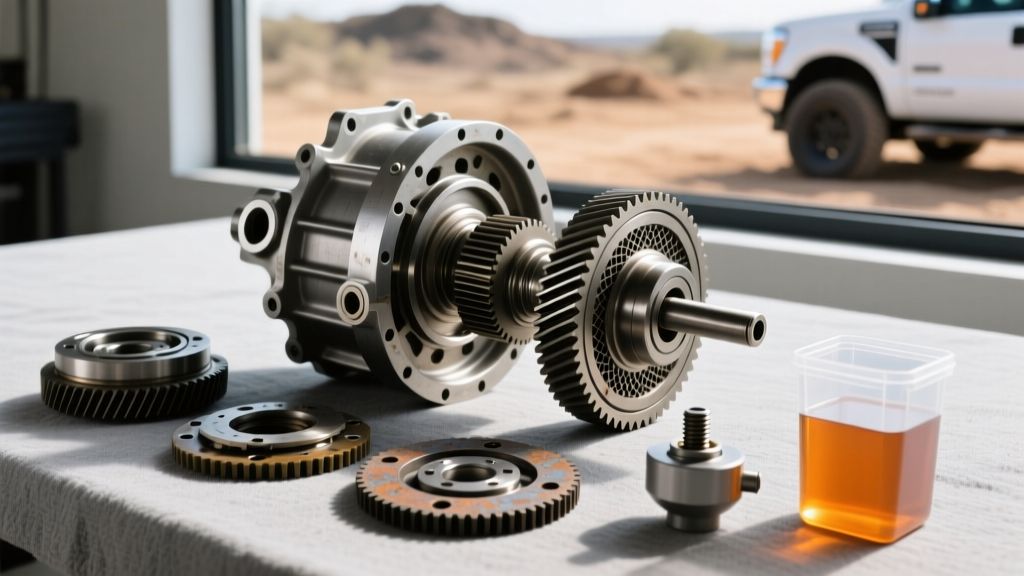
Expert Diagnostic Tip: Inspect the magnetic fill plug on the differential cover. A fine, dark grey metallic paste is normal wear from the clutch packs and hypoid gear break-in. However, if you find chunky metal shards or brass-colored flakes, your Traction-Lok clutch retainers or spider gear thrust washers are failing, necessitating a full differential teardown.
3. Sealing: RTV vs. Gasket
Ford factory service manuals heavily favor the use of RTV silicone over pre-cut gaskets for stamped steel covers to prevent micro-leaks caused by cover flex. Clean both mating surfaces with acetone or isopropyl alcohol. Apply a continuous 3mm bead of Motorcraft TA-357 (Grey Silicone) or Permatex Ultra Grey. Crucially, you must allow the RTV to skin over for 45 to 60 minutes before torquing the cover down, and wait a full 12 hours before filling with fluid to prevent the silicone from extruding into the gear oil and blocking internal lubrication galleries.
4. Torque Specifications
Proper torque is critical to prevent warping the differential cover, which leads to chronic seepage.
- Sterling 10.5 / Dana Super 10.5 Cover Bolts: 30 lb-ft (40 Nm). Use a star-pattern tightening sequence.
- Differential Fill Plug: 41 lb-ft (55 Nm).
The Friction Modifier Dilemma: Dosage and Diagnostics
The most common mistake DIYers make when servicing a Ford F-250 LSD is skipping the friction modifier or using an 'all-in-one' synthetic gear oil that claims to have the modifier pre-blended. In our experience testing various formulations through the 2026 service cycle, pre-blended oils rarely contain the precise concentration of long-chain friction modifiers required for the aggressive bite of Ford's OEM clutch packs.
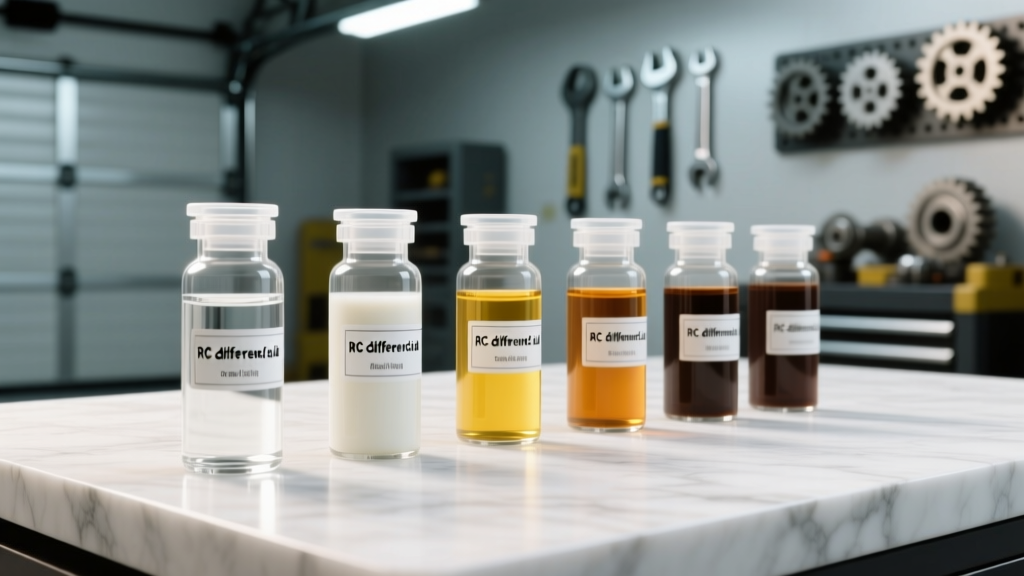
You must use a dedicated additive like Motorcraft XL-3 Friction Modifier (approx. $11 per 4 oz bottle). The XL-3 additive alters the static and dynamic coefficients of friction, ensuring the clutch plates slip microscopically before they grab completely.
The 'Figure-8' Calibration Test
After refilling the axle with 75W-140 gear oil and the initial 4 oz dose of XL-3, you must perform the Figure-8 test. Drive to a damp, empty parking lot and perform 10 to 12 tight, full-lock figure-8 maneuvers at 5 MPH.
- No Chatter: The friction modifier balance is perfect.
- Audible Clunking/Chatter: The clutches are sticking. Drain exactly 4 ounces of fluid from the fill plug and inject an additional 2 ounces of XL-3 modifier. Repeat the test.
- Excessive Wheel Spin (Single Tire): You have over-dosed the friction modifier, effectively turning your LSD into an open differential. You will need to drain the axle and refill with fresh 75W-140 without additional modifier, starting the dosing process over.
Advanced Clutch Pack Shimming (Rebuild Scenarios)
If fluid changes and friction modifier adjustments fail to eliminate chatter, the Traction-Lok clutch packs are likely glazed or worn beyond their service limit. During a differential rebuild, measuring the clutch pack clearance is mandatory. Using a dial indicator and a specialized clutch pack shim tool, measure the gap between the side gear and the differential case. Ford specifies a maximum clearance of 0.030 inches. If your measurement exceeds this, you must install thicker selective thrust shims (available in 0.005-inch increments from Spicer Parts Drivetrain Catalog) behind the clutch pack to restore the necessary S-spring preload. Failing to shim worn packs will result in an LSD that operates identically to an open differential, regardless of how much friction modifier you add to the fluid.
Cost Analysis: DIY vs. Dealership Service
Maintaining your F-250's rear axle is highly cost-effective when performed in your own garage. A complete DIY fluid service utilizing premium Motorcraft 75W-140 synthetic (approx. $28 per quart), a bottle of XL-3 modifier ($11), and a tube of TA-357 RTV ($9) will cost between $95 and $115. Conversely, taking a 2017+ Super Duty to a Ford dealership for a rear differential service typically yields an invoice ranging from $280 to $375, largely due to the 1.5 hours of shop labor billed for the cover removal, cleaning, and RTV curing time. By mastering the Ford F250 rear differential fluid capacity and LSD maintenance procedures outlined above, you not only save capital but also guarantee that the critical friction modifiers are dosed and calibrated perfectly to your specific driving habits.
For official service intervals and chemical specifications, always cross-reference your work with the Ford Official Maintenance Schedules and the Motorcraft Chemicals & Lubricants database to ensure compliance with the latest warranty requirements.