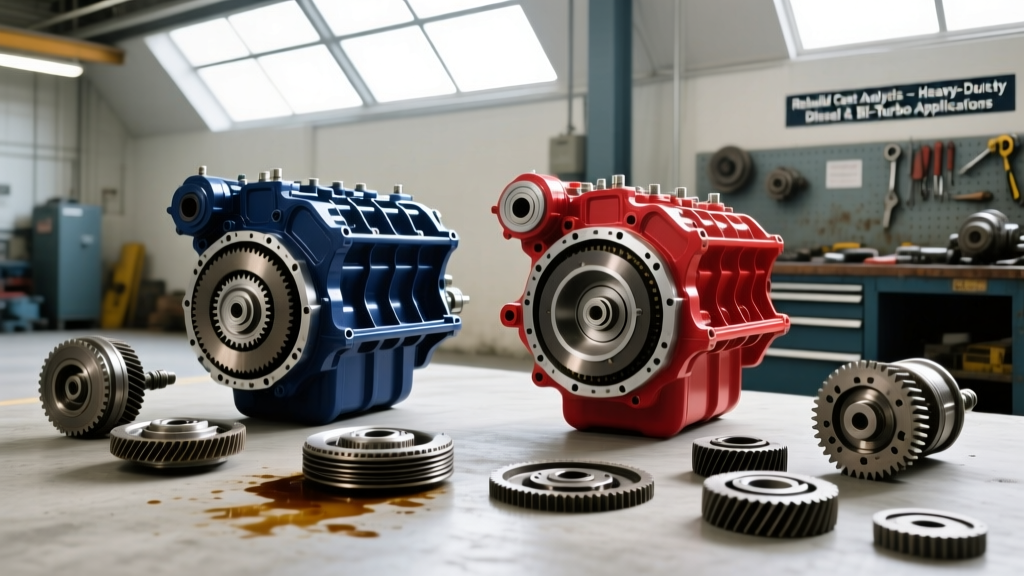
The F-150 Transmission Dilemma: Spot Repair vs. Full Rebuild
When your Ford F-150 starts exhibiting harsh shifts, torque converter shudder, or sudden neutral-outs, you are immediately faced with a critical financial decision. Do you pursue a targeted component repair, or do you commit to a complete ford f150 transmission rebuild? As we navigate the 2026 automotive repair landscape, labor rates and parts availability have shifted, making this decision more nuanced than ever. The F-150 lineup primarily relies on two heavy-duty automatic platforms: the ZF-derived 6R80 (2011-2017) and the Ford-GM joint-venture 10R80 (2017-2026). Both are engineering marvels capable of handling immense towing loads, but they possess distinctly different failure modes. Understanding whether your truck requires a simple valve body swap or a complete tear-down is the difference between a $1,200 invoice and a $5,500 one.
Understanding Your F-150's Transmission Architecture
Before authorizing any teardowns, it is vital to understand the mechanical lineage of your specific truck. The 6R80 is based on the ZF 6HP26 architecture. It utilizes traditional one-way sprag clutches and a robust planetary gearset. Its most notorious failure point is not mechanical wear, but rather an electrical fault within the molded plastic leadframe that houses the output speed sensors. Conversely, the 10R80 represents a paradigm shift. It utilizes a clutch-to-clutch shifting architecture, eliminating one-way sprags entirely to save weight and accommodate ten forward gears. This design relies on hyper-precise hydraulic line pressure managed by a complex, electronically controlled valve body. Because there are no sprags to hold the drivetrain during shifts, if a clutch pack fails or hydraulic pressure drops, the transmission instantly goes into limp mode to prevent catastrophic hard-part damage.
When to Choose a Targeted Transmission Repair
A targeted repair is the most cost-effective route when the hard parts (gears, drums, shafts) and clutch friction materials are intact, but a specific control or hydraulic component has failed. In 2026, advanced diagnostics via FORScan Official Documentation allow technicians to isolate these issues without dropping the transmission pan.
Scenario 1: The 6R80 Molded Leadframe Failure
If your 2011-2017 F-150 experiences sudden downshifts, harsh engagements, or triggers gear ratio codes like P0731 or P0732, the molded leadframe is the primary suspect. The plastic housing warps under high transmission fluid temperatures (TFT), causing the embedded speed sensors to lose contact with the tone ring. The Fix: Dropping the transmission pan, replacing the leadframe assembly (Part # BL3Z-7H101-B or newer revision), and performing a solenoid body recalibration. This is a pan-drop repair that does not require removing the transmission from the vehicle.
Scenario 2: The 10R80 Valve Body and Torque Converter Shudder
The 10R80 is infamous for low-speed shudder, often felt as driving over rumble strips between 30-50 mph. This is frequently caused by micro-wear inside the valve body's pressure regulator circuits, leading to inadequate apply pressure at the torque converter clutch (TCC). The Fix: Replacing the valve body assembly (Part # JL3Z-7H101 series), flushing the system, and refilling with strict adherence to MERCON ULV fluid specifications. If the shudder has been ignored for thousands of miles, the torque converter friction lining may be ruined, requiring a converter swap alongside the valve body.
When a Full Ford F150 Transmission Rebuild is Mandatory
A full rebuild involves removing the transmission, disassembling it on a bench, replacing all friction clutches, sealing rings, bushings, and gaskets, and machining or replacing worn hard parts. You must opt for a rebuild when diagnostic data or physical evidence points to internal mechanical degradation.
- Burnt Fluid and Clutch Pack Burnout: If your MERCON LV or MERCON ULV fluid smells like burnt toast and contains heavy friction material particulate, the clutch packs (specifically the 'A' and 'B' clutches in the 10R80) are physically destroyed. No valve body swap will fix this.
- Planetary Gear Shaving: Finding metallic 'glitter' or chunky ferrous debris on the magnetic drain plug indicates hard-part failure. The planetary carriers in the 6R80 can fail under extreme towing loads, requiring a complete teardown.
- Catastrophic Pump Failure: A loss of prime or severe whining from the bellhousing area usually points to the internal hydraulic pump. Debris from a failing pump will circulate through the entire unit, contaminating the cooler and valve body, necessitating a full rebuild and cooler flush.
Expert Insight: Never attempt a 'flush' on an F-150 transmission that already has slipping clutches or heavy metallic debris. The high pressure of a flush machine can dislodge debris into the narrow hydraulic circuits of the 10R80 valve body, turning a $4,000 rebuild scenario into an immediate $6,000 remanufactured replacement necessity.
2026 Cost Breakdown: F-150 Repair vs. Rebuild vs. Reman
Pricing varies based on your region, shop labor rates, and whether you choose OEM Motorcraft parts or high-performance aftermarket alternatives like Sonnax or Circle D. Below is the national average pricing matrix for 2026.
| Service Type | 6R80 (2011-2017) | 10R80 (2017-2026) | Typical Warranty |
|---|---|---|---|
| Targeted Valve Body / Leadframe Repair | $850 - $1,400 | $1,200 - $1,800 | 1-Year / 12,000 Miles |
| Torque Converter Replacement (Pan Drop) | $1,100 - $1,600 | $1,400 - $1,900 | 2-Year / 24,000 Miles |
| Full Ford F150 Transmission Rebuild | $3,200 - $4,500 | $4,100 - $5,800 | 3-Year / 100,000 Miles |
| Remanufactured Unit (Installed) | $3,800 - $4,800 | $4,500 - $6,200 | 3-Year / 100,000 Miles |
Real-World Diagnostics: The FORScan Protocol
Before spending a dime, connect an OBD-II adapter compatible with FORScan to access the Powertrain Control Module (PCM) deep-level data. Standard code readers will only show generic P07xx codes. You need to monitor specific Parameter IDs (PIDs) in real-time while driving:
- TFP (Transmission Fluid Pressure): Monitor line pressure during the 1-2 and 2-3 shifts. If commanded pressure is 180 PSI but actual TFP drops to 90 PSI, you have an internal hydraulic leak (blown seal or cracked drum), mandating a rebuild.
- TFT (Transmission Fluid Temperature): Consistent readings above 220°F (104°C) while towing indicate cooler blockage or severe torque converter slip, which accelerates clutch glazing.
- CMDSS (Commanded Shift Solenoid): Verify that the PCM's electrical commands match the physical shift events. If the solenoid is commanded 'ON' but the shift does not occur, the fault lies in the valve body spool valves or the clutch pack itself.
Essential Fluid and Torque Specifications
For the DIY enthusiast or the informed buyer verifying a shop's work, adhering to exact specifications is non-negotiable. The 10R80's tight tolerances make fluid viscosity critical. Always reference the Ford Motorcraft Maintenance Guides for the latest bulletins.
| Specification | 6R80 (2011-2017) | 10R80 (2017-2026) |
|---|---|---|
| Required Fluid Type | MERCON LV | MERCON ULV (Ultra Low Viscosity) |
| Dry Fill Capacity | 13.1 Quarts (12.4L) | 13.1 Quarts (12.4L) |
| Pan Drop Refill Capacity | ~5.5 Quarts (5.2L) | ~9.5 Quarts (9.0L) |
| Transmission Pan Bolt Torque | 106 lb-in (12 Nm) | 106 lb-in (12 Nm) |
| Bellhousing to Engine Block | 35 lb-ft (47 Nm) | 35 lb-ft (47 Nm) |
| Torque Converter to Flexplate | 37 lb-ft (50 Nm) | 37 lb-ft (50 Nm) |
The Final Verdict: Which Path Should You Take?
If your F-150 has under 120,000 miles, exhibits no metallic debris in the pan, and suffers only from electronic or localized hydraulic faults (like the 6R80 leadframe or 10R80 valve body shudder), a targeted repair is the smartest financial move. However, if the truck has been subjected to heavy, unmaintained towing, exhibits delayed engagements in both Drive and Reverse, or shows heavy clutch material in the fluid, do not waste money on band-aid fixes. A complete ford f150 transmission rebuild utilizing upgraded Sonnax valves and a heavy-duty Circle D torque converter will restore the truck to factory reliability and protect your investment for the next 150,000 miles.