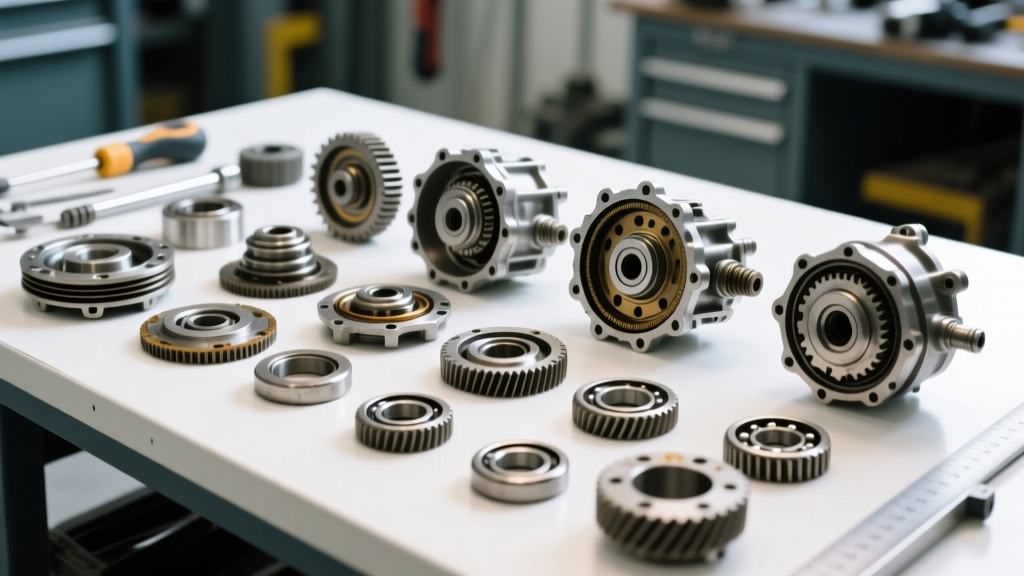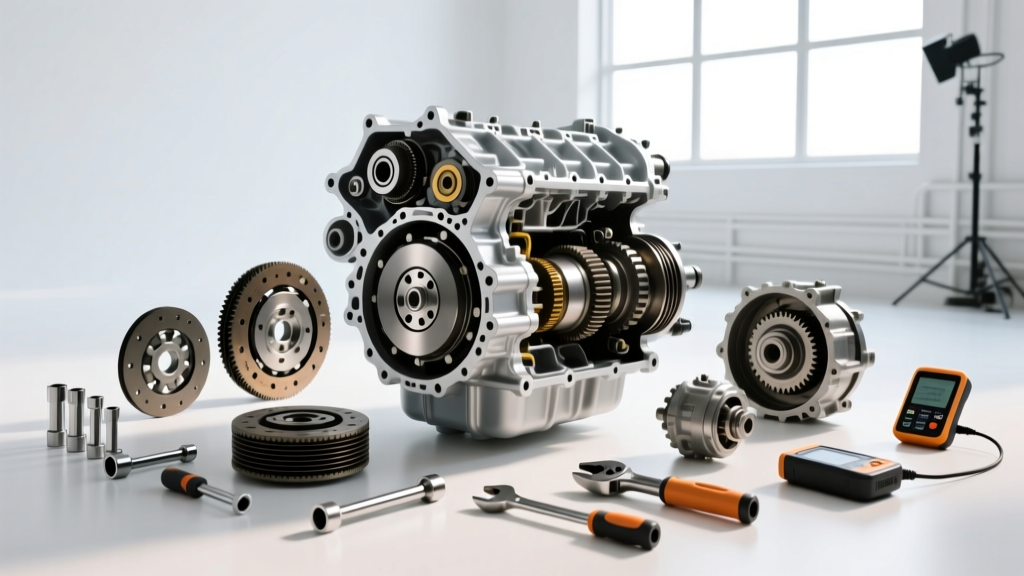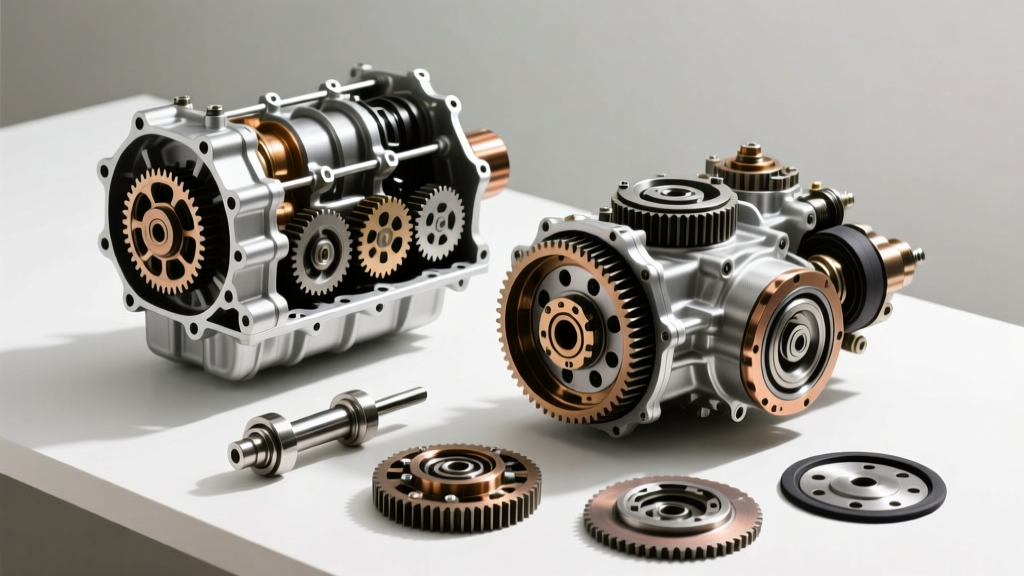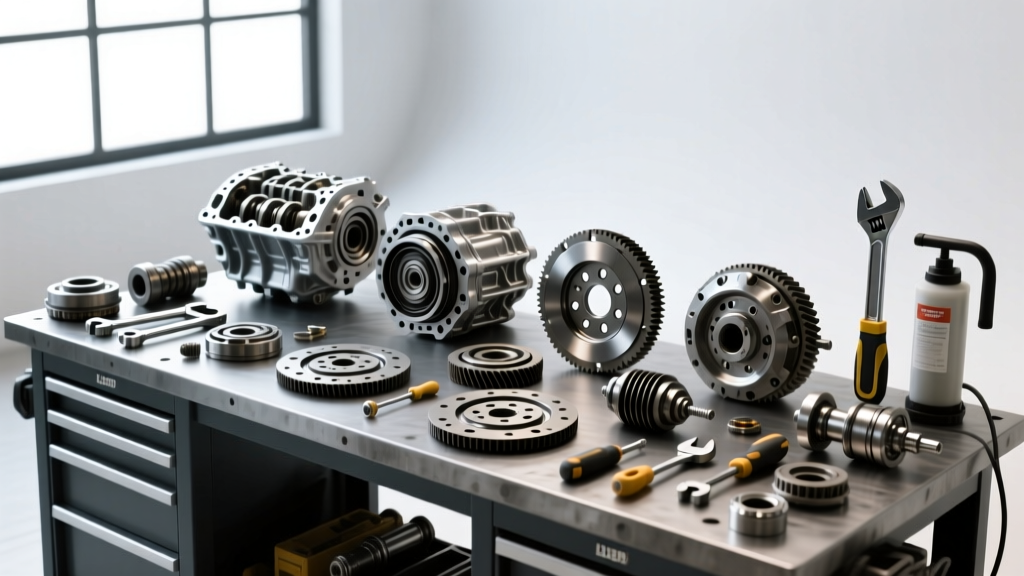
The True Cost of DIY: Is It Cheaper to Rebuild a Transmission?
When a late-model automatic transmission fails, the sticker shock from a professional repair shop often drives enthusiasts and independent mechanics to ask a fundamental question: is it cheaper to rebuild a transmission in your own garage? In 2026, with average specialized drivetrain shop labor rates hovering between $150 and $225 per hour, a professional remanufactured unit or custom master rebuild can easily eclipse $3,500 to $5,500. On paper, purchasing an aftermarket master rebuild kit for $350 and a new torque converter for $450 seems like a massive financial victory.
However, this surface-level calculation ignores the hidden barrier to entry: the specialized tooling required to safely and accurately reassemble complex planetary gearsets, clutch packs, and valve bodies. Unlike a standard engine rebuild where a basic metric socket set and a torque wrench might suffice, automatic transmissions demand precision measuring instruments, heavy-duty retaining ring tools, and model-specific spring compressors. In this technical deep-dive, we will break down the exact tools required, their real-world costs, and whether the DIY route actually saves you money.
The Financial Baseline: Professional vs. DIY Parts
Before evaluating tools, we must establish the baseline costs. Let us use the ubiquitous GM 6L80 6-speed automatic as our benchmark.
- Professional Shop Quote: $3,200 - $4,500 (Includes removal, R&R, master kit, hard parts, torque converter, fluid, and dyno testing).
- DIY Parts Cost: $750 - $1,100 (Master overhaul kit, upgraded 3-5-R wave plate, billet stator torque converter, 11.2 quarts of Dexron VI fluid, filter).
- The Apparent Savings: $2,100 - $3,400.
That $2,100+ gap is your budget for tools, equipment, and the value of your own time. If you can complete the rebuild for under $600 in tooling, the DIY route is undeniably cheaper. But automatic transmissions are unforgiving; a single dropped C-clip or improperly seated lip seal will result in immediate catastrophic failure upon first start-up.
Essential Specialty Tools for Automatic Transmission Rebuilds
To answer the question of cost, we must look at the mandatory tooling required to tear down and reassemble a modern multi-speed automatic. Below is a breakdown of the essential tools, featuring industry-standard part numbers and current 2026 pricing estimates.
| Tool Category | Specific Application | Recommended Brand / Part Number | Est. Cost |
|---|---|---|---|
| Heavy-Duty Snap Ring Pliers | Internal/External retaining rings on clutch hubs | Knipex 49 21 J41 (Internal) / 49 11 A41 (External) | $95.00 |
| Universal Spring Compressor | Clutch pack return springs and pressure plates | OTC 4528 Universal Clutch Spring Compressor | $185.00 |
| Dial Indicator & Mag Base | Output shaft endplay and clutch clearance checks | Fowler 52-585-015 (0.001' Resolution) | $68.00 |
| Inch-Pound Torque Wrench | Valve body and accumulator plate fasteners | CDI 1002MFRMH (20-100 in-lbs) | $215.00 |
| Seal Installer Set | Lip seals on pistons and servo bores | OTC 7448 Universal Seal Installer Kit | $140.00 |
| Telescoping Magnetic Pickup | Retrieving dropped check balls and C-clips | General Tools 85088 | $12.00 |
Total Baseline Tool Investment: ~$715.00
The Danger of Improper Tooling
Attempting to compress a 6L80 return spring assembly with a makeshift C-clamp and a block of wood is a recipe for disaster. The spring tension on modern clutch packs can exceed 400 lbs of pressure. If the pressure plate tilts during compression, the return springs will buckle, or worse, the retaining ring groove can be gouged, destroying a $300 aluminum clutch drum. Investing in the OTC 4528 compressor ensures perfectly even distribution of force, protecting both the technician and the hard parts.
Case Study 1: GM 6L80 / 6L90 Rebuild Specifics
The GM 6L80 is a staple of the RWD truck and performance car world. While it is relatively DIY-friendly compared to modern transverse 9-speeds, it has specific tool requirements that impact the bottom line.
- The 3-5-R Clutch Hub: A known failure point is the cracking of the 3-5-R clutch hub and the fragmentation of the wave plate. Removing the snap ring securing this hub requires high-leverage internal pliers (like the Knipex listed above) because the factory ring is exceptionally thick and seated tightly.
- Valve Body Torque Specs: The 6L80 valve body utilizes M6 bolts of varying lengths. Over-torquing these will warp the aluminum valve body casting, causing cross-leaks and immediate shift solenoid codes. The factory specification is strictly 8 Nm (71 lb-in). A standard 3/8-inch drive torque wrench cannot accurately measure this low of a threshold; the inch-pound CDI wrench is mandatory.
- Endplay Measurement: Before bolting the bellhousing to the case, you must measure output shaft endplay using a dial indicator. The acceptable clearance is typically 0.010' to 0.025'. If your endplay is out of spec due to worn thrust bearings or incorrect selective shims, the transmission will suffer from premature planetary gear wear.
Case Study 2: The ZF 8HP Complexity Barrier
If you are asking if it is cheaper to rebuild a transmission like the ZF 8HP (found in Ram trucks, BMWs, and Jaguars), the answer shifts dramatically. The ZF 8HP45/70/90 series is an engineering marvel but a DIY nightmare regarding tooling.
According to ZF Aftermarket technical documentation, the 8HP utilizes a highly integrated mechatronic unit. Removing the mechatronic sleeve without the proprietary ZF locking tool almost guarantees tearing the fragile plastic sealing lips, leading to a 'Mechatronic Adapter Leak' code. Furthermore, the ZF 8HP requires specialized alignment pins to hold the parking pawl and specific clutch pack adapters to measure the clearances of the A, B, C, D, and E brake packs. Sourcing these OEM-equivalent tools from suppliers like Baum Tools or Kent Moore equivalents can add an additional $400 to $800 to your tooling budget, pushing the total investment well over $1,200.
Consumables and Cleanliness Protocols
Tools are only half the battle. A professional transmission rebuild environment requires surgical cleanliness. A single human hair or a speck of shop towel lint trapped in a valve body check ball orifice will cause a harsh 2-3 shift or a burnt clutch pack.
- Lint-Free Wipes: Standard blue shop towels shed micro-fibers. You must use Kimtech Science Kimwipes (approx. $35 per case).
- Assembly Lubricant: Never use petroleum jelly on O-rings or lip seals, as it can clog the transmission cooler and filter upon initial startup. Use a dedicated assembly lube like Sonnax Slip Plate or the specific OEM assembly fluid provided in master kits.
- TransKleen / Brake Clean: You will need a minimum of 4-6 cans of non-chlorinated brake cleaner to flush the valve body, torque converter cooler lines, and case galleries prior to assembly (approx. $40).
The Final Verdict: When Does DIY Make Financial Sense?
So, is it cheaper to rebuild a transmission yourself? The mathematical reality depends entirely on your long-term intentions and the specific transmission model you are tackling.
Scenario A: The One-Time Repair (Standard FWD 6-Speed or GM 6L80)
If you are rebuilding a single 6L80 for your daily driver, your total DIY cost will be roughly $950 in parts and fluid, plus $715 in baseline tools, totaling $1,665. Compared to a $3,500 shop quote, you save approximately $1,835. Even factoring in 20 hours of your own labor at a hypothetical $50/hr, you are still in the green. The DIY route is undeniably cheaper here.
Scenario B: The Complex Modern Unit (ZF 8HP, GM 10L80, Ford 10R80)
For highly complex 8- and 10-speed units, the proprietary tooling requirements, the necessity of specialized reprogramming software (for adaptive shift learning post-rebuild), and the high cost of proprietary hard parts erode the financial advantage. If you spend $1,200 on tools, $1,800 on parts, and $300 on dealership software flashing, your savings drop to under $800. At this point, the risk of a $2,000 mistake outweighs the marginal financial benefit unless you plan to rebuild multiple units.
Summary Checklist for the DIY Rebuilder
- Do invest in a high-quality inch-pound torque wrench; valve body warping is the #1 cause of DIY rebuild failure.
- Do buy OEM or premium aftermarket snap ring pliers; cheap pliers will slip and scar the clutch drum grooves.
- Do Not attempt a rebuild without a dial indicator; guessing endplay will destroy the planetary gearset within 500 miles.
- Do Not reuse the torque converter. Always install a fresh, dyno-tested unit to prevent immediate contamination of your new clutches.
Ultimately, the decision hinges on whether you view the $700+ tool investment as a sunk cost for a single repair, or an investment into a permanent, money-saving skillset for your garage. For the dedicated gearhead, the tools pay for themselves on the very first successful rebuild.