The Evolution of Limited Slip Differentials in Modern Drivetrains
The limited slip differential (LSD) remains a cornerstone of high-performance and off-road drivetrains, bridging the critical gap between open differentials and full locking lockers. As of 2026, advancements in metallurgy and synthetic tribology have extended the service life of these units, but they remain wear items that demand precise maintenance. Whether you are diagnosing a chattering Ford 8.8 Trac-Lok or rebuilding a classic GM 12-bolt Eaton Posi, understanding the internal mechanics and executing rigorous differential testing is mandatory for optimal torque biasing and longevity.
This technical deep-dive explores the operational differences between clutch-type and helical gear LSDs, outlines exact on-vehicle testing protocols, and provides the specific torque specs and fluid capacities required for professional-grade axle maintenance.
Clutch-Type vs. Helical Gear: Operational Mechanics
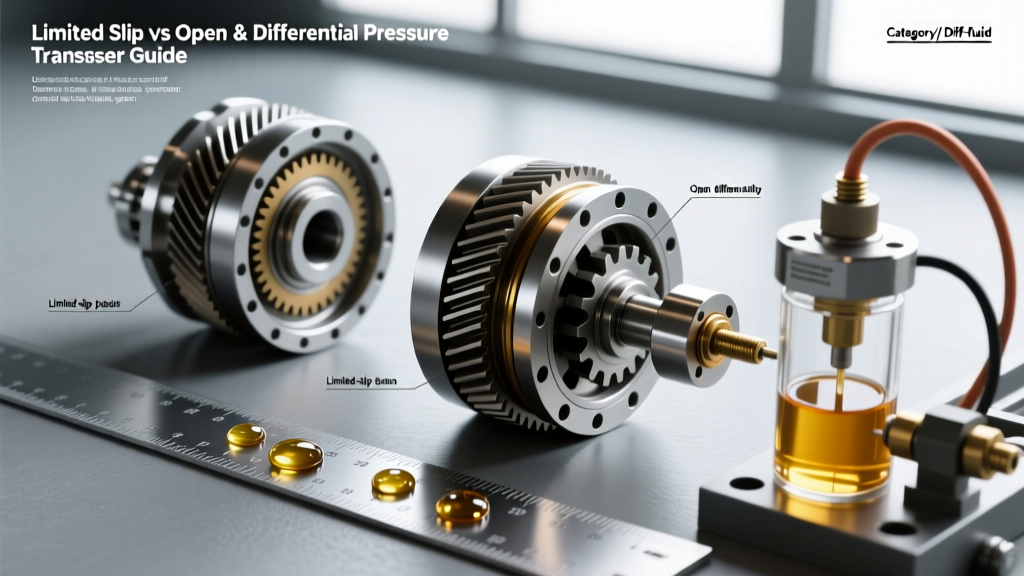
Before tearing into an axle housing, it is vital to distinguish between the two primary LSD architectures, as their maintenance and testing methodologies are fundamentally different.
Clutch-Type LSDs (e.g., Auburn, Eaton Posi, Ford Trac-Lok)
These units rely on alternating stacks of steel and friction-lined clutch discs, compressed by S-shaped or Belleville preload springs. When torque is applied, the side gears push outward against the clutch packs, locking the axles together. Over time, the friction material degrades, the preload springs fatigue, and the differential loses its torque biasing capability, resulting in a "one-wheel peel" or severe chatter during low-speed cornering.
Helical Gear LSDs (e.g., Eaton Truetrac, Torsen)
Helical units operate entirely on gear geometry. They utilize worm gears and pinion matrices to create binding resistance under load. Because there are no friction clutches, they do not require specialized friction modifiers, and they rarely wear out under normal operating conditions. For a comprehensive look at helical gear engineering, refer to the Eaton Truetrac technical documentation.
On-Vehicle Differential Testing Protocols
Proper differential testing begins before the differential cover is ever removed. Diagnostics must isolate whether the issue stems from worn clutch packs, degraded fluid, or internal gear failure.
The Figure-8 Chatter Test
Clutch-type LSDs are notorious for low-speed binding. To test for friction modifier depletion or glazed clutch discs:
- Locate a clean, dry, paved surface with ample clearance.
- Drive the vehicle in a tight, continuous figure-8 pattern at 5–10 mph.
- Listen and feel for a rhythmic "chatter," "hop," or binding sensation from the rear axle.
- Diagnosis: If chatter is present, the friction modifier is either depleted, contaminated, or the clutch discs are permanently glazed. A fluid and additive flush is the first corrective step.
Breakaway Torque Measurement
To quantify the health of the clutch packs, you must measure the breakaway torque. This requires a calibrated torque wrench capable of measuring up to 100 lb-ft.
- Safely elevate the vehicle so both drive wheels are off the ground.
- Place the transmission in Park (or in gear for manuals) to lock the driveshaft.
- Secure one rear wheel completely to prevent rotation (using a strap or an assistant).
- Attach the torque wrench to the lug nuts or axle flange of the opposite wheel.
- Apply force slowly and record the peak torque required to initiate rotation.
Expert Benchmark: A healthy, factory-spec clutch-type LSD should exhibit a breakaway torque between 40 and 80 lb-ft. Readings below 30 lb-ft indicate severely worn clutch packs or collapsed preload springs, necessitating a complete teardown and rebuild.
Fluid Dynamics: Gear Oils and Friction Modifiers
The lifeblood of any clutch-type LSD is its gear oil and the accompanying friction modifier (FM). The FM alters the static and kinetic friction coefficients of the gear oil, allowing the clutch discs to slip smoothly before locking, which eliminates chatter.
Selecting the Right Lubricant
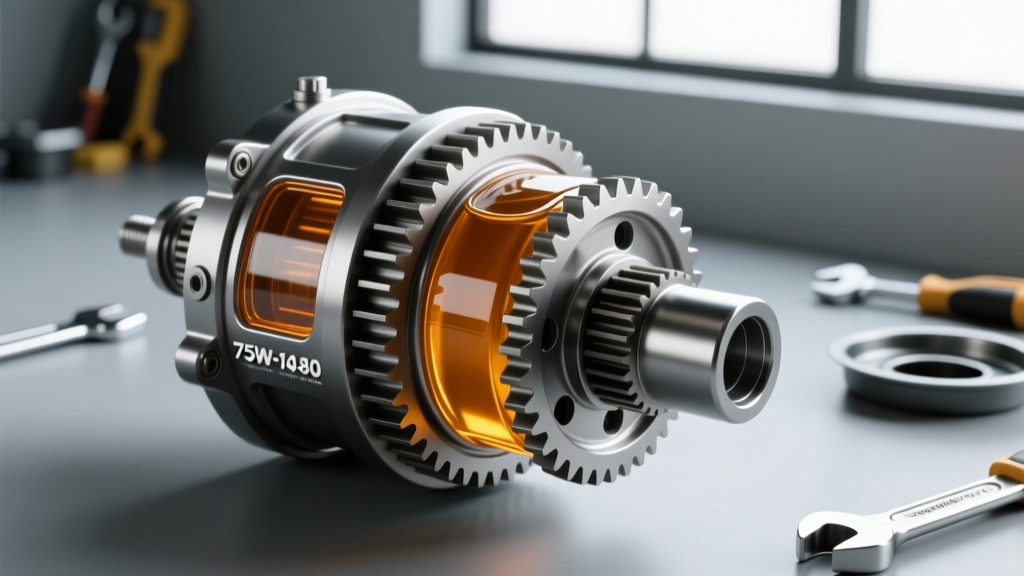
For most street and light-duty truck applications, a high-quality synthetic 75W-90 GL-5 gear oil is the standard. However, for heavy towing or extreme off-road use (like in a Dana 60 or GM 14-bolt), stepping up to a 75W-140 provides a thicker protective film under high shear loads.
When selecting additives, OEM formulations are often the safest bet. For example, Ford specifies their XL-3 Friction Modifier, while GM utilizes P/N 1052358. If you are running a dedicated synthetic like Red Line, you may use their proprietary Limited Slip Friction Modifier, or opt for a pre-blended fluid like Motul Gear 300 LS, which already contains the necessary additive package.
The Danger of Overdosing Friction Modifier
A common novice mistake is adding too much FM to cure a chattering axle. While insufficient FM causes chatter, excessive FM reduces the friction coefficient too much, causing the clutch packs to slip continuously under heavy throttle. This leads to rapid clutch wear and a complete loss of torque biasing. Always start with the manufacturer's recommended volume (typically 2 to 4 oz per axle), and only add more in 0.5 oz increments after a 50-mile test drive if chatter persists.
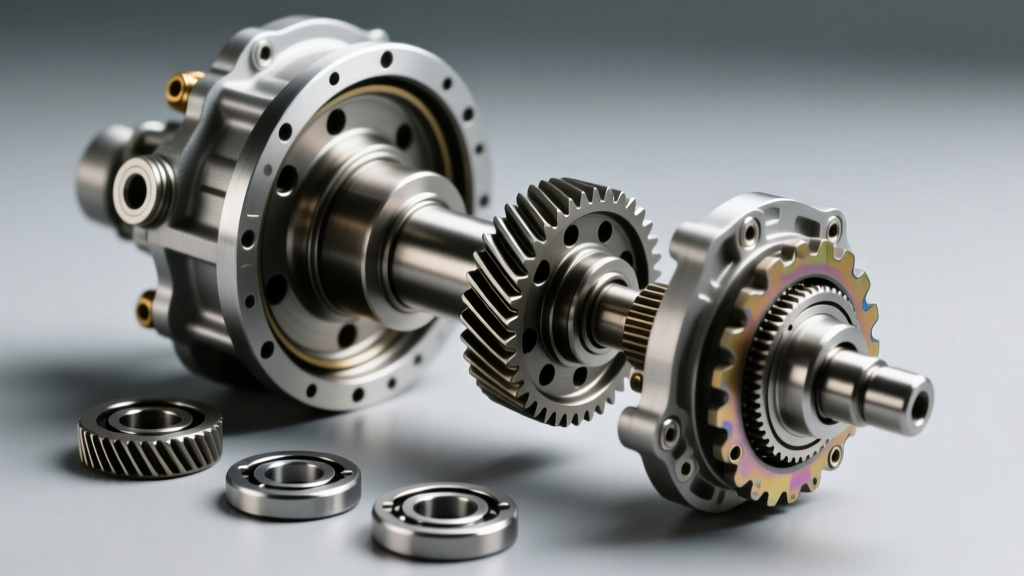
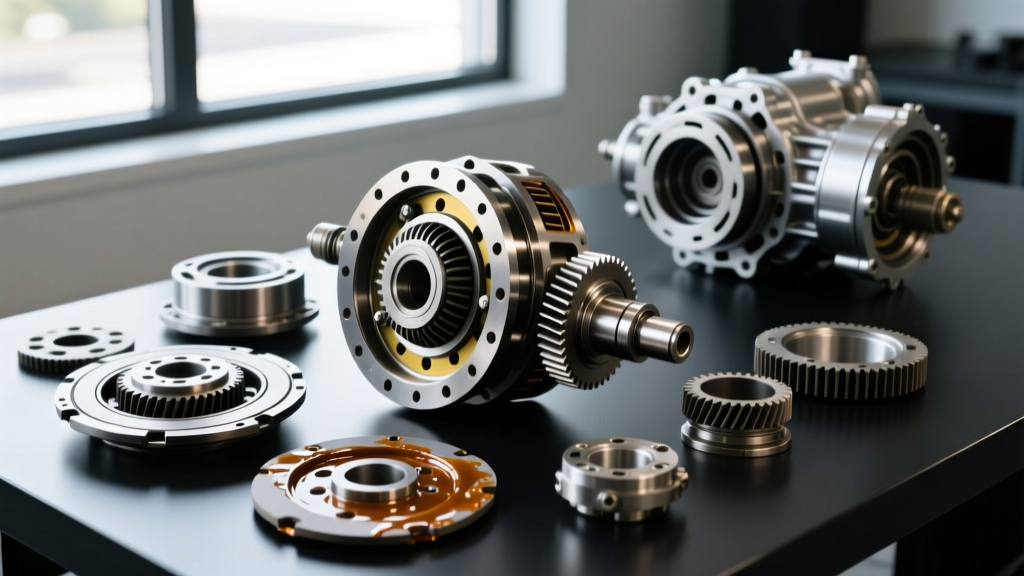
Bench Teardown: Inspecting and Rebuilding Clutch Packs
When differential testing confirms internal wear, the carrier must be removed from the housing. Rebuilding a clutch-type LSD requires meticulous measurement and strict adherence to torque specifications.
Clutch Pack Clearance Measurement
Once the carrier is disassembled, inspect the steel and friction discs. If the friction material is worn down to the steel backing, or if the steels show blue heat-spotting, the entire pack must be replaced. When reassembling, you must measure the clutch pack clearance. Using a dial indicator or precision feeler gauges, measure the gap between the pressure ring and the snap ring.
- Target Clearance: 0.010" to 0.015" per friction disc.
- Adjustment: Clearance is adjusted by swapping the thickness of the steel "step plates" or shims located behind the clutch pack. If the clearance is too wide, the preload spring cannot apply adequate clamping force.
Ring Gear Bolt Torque Specifications
When reinstalling the ring gear onto the LSD carrier, the fasteners must be torqued precisely to prevent shearing under high-torque loads. Always clean the threads with brake cleaner and apply a high-strength threadlocker (such as Loctite 272 Red).
Axle Breakaway Torque & Fluid Capacity Matrix
The following table provides critical baseline data for the most common light-duty and heavy-duty LSD axles found in trucks, SUVs, and performance cars.
| Axle Model | LSD Type | Fluid Capacity | Breakaway Torque Spec | Ring Gear Bolt Torque |
|---|---|---|---|---|
| Ford 8.8" | Trac-Lok (Clutch) | 2.5 Pints | 40 - 60 lb-ft | 70 - 85 lb-ft (7/16"-20) |
| Dana 44 | Auburn / Spicer | 2.0 - 2.5 Pints | 50 - 80 lb-ft | 55 - 65 lb-ft (7/16"-20) |
| GM 10-Bolt (8.5") | Eaton Posi | 2.1 Pints | 45 - 75 lb-ft | 60 - 70 lb-ft (7/16"-20) |
| GM 14-Bolt (10.5") | Eaton Gov-Lock* | 3.5 Pints | N/A (Locking) | 110 - 120 lb-ft (5/8"-18) |
| Dana 60 | Truetrac (Helical) | 3.0 - 4.0 Pints | N/A (Helical) | 110 - 130 lb-ft (5/8"-18) |
*Note: The GM Gov-Lock is an automatic locking differential, not a traditional clutch-type LSD. It requires standard GL-5 gear oil with NO friction modifier. Adding FM to a Gov-Lock will cause it to malfunction and fail to lock.
Post-Rebuild Validation and Break-In Procedures
Rebuilding the differential is only half the battle. A proper break-in procedure is required to mate the new clutch discs and set the preload springs. Failure to perform this step will result in premature glazing and a return of axle chatter.
The Break-In Protocol
- Initial Fill: Fill the axle housing with the specified synthetic gear oil and the exact OEM-recommended dose of friction modifier.
- The Figure-8 Mating Sequence: Immediately after reassembly, drive the vehicle to a large, empty parking lot. Perform 15 to 20 tight, continuous figure-8 turns at idle speed. This forces the clutch packs to slip and mate against one another, distributing the friction modifier evenly across the disc surfaces.
- Thermal Cycling: Drive the vehicle on the highway for 30–50 miles to bring the gear oil up to full operating temperature (typically 160°F - 190°F). This allows the oil to fully penetrate the porous friction material.
- Re-Check: After 500 miles, re-evaluate the axle. If slight chatter returns, add friction modifier in 0.5 oz increments. If the axle is completely silent and exhibits proper breakaway torque, the rebuild is a success.
Final Thoughts on Axle Longevity
Mastering differential testing and LSD maintenance requires a departure from guesswork. By relying on quantifiable breakaway torque measurements, precise clutch pack clearances, and strict adherence to fluid chemistry, you can ensure that your vehicle's drivetrain delivers maximum traction and reliability. Whether you are prepping a track car or a heavy-duty tow rig, the differential is the final link in the drivetrain—treat it with the precision it demands.