Decoding the CD6 Platform: RWD System Operation and Architecture
When evaluating the 2025 Ford Explorer drivetrain options official literature, buyers and fleet managers often focus heavily on the sticker price difference between all-wheel drive and rear-wheel drive configurations. However, the true cost of ownership extends far beyond the initial dealership transaction. The sixth-generation Explorer rides on Ford’s modular CD6 architecture, a platform that fundamentally shifted the nameplate from a transverse front-wheel-drive bias to a longitudinal rear-wheel-drive (RWD) bias. This engineering pivot drastically altered the vehicle's weight distribution, towing dynamics, and long-term drivetrain maintenance costs.
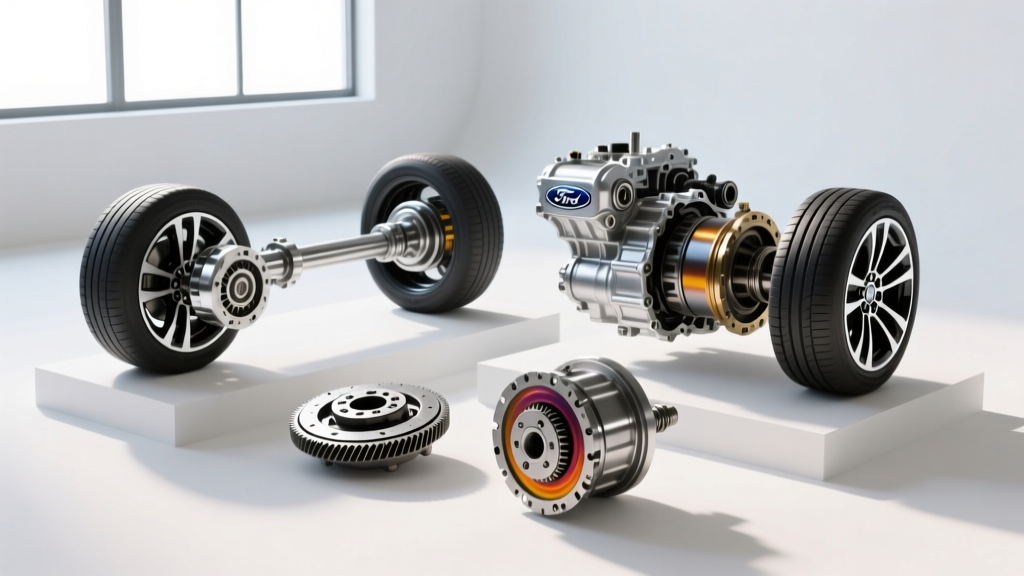
In its purest RWD configuration, the Explorer’s powertrain operates via a north-south engine mounting. Power flows from the crankshaft into the torque converter, through the 10R80 10-speed automatic transmission, and out the tail shaft housing. Unlike transverse setups that rely on short, equal-length half-shafts, the RWD Explorer utilizes a two-piece aluminum driveshaft connected to a rear-mounted independent differential. This layout provides superior launch traction and towing stability, but it introduces unique mechanical friction points and specific maintenance requirements that owners must budget for.
Factory Pricing vs. Long-Term Operational Costs
Historically, Ford has positioned RWD as the standard entry-point for the Explorer lineup, with Intelligent AWD acting as a premium upgrade. While the 2025 model year has made AWD standard on most mid-to-high trims, the base RWD architecture remains the mechanical foundation of the vehicle. Understanding the cost delta between operating the base RWD system versus the AWD system is critical for total cost of ownership (TCO) analysis.
| Cost Category | RWD Configuration | AWD Configuration (Delta) |
|---|---|---|
| Initial Factory Option Cost | $0 (Base Architecture) | +$2,000 (Historical Option Price) |
| Drivetrain Fluid Service (100k Miles) | $380 - $450 | $650 - $780 (Adds PTU & Transfer Case) |
| Tire Replacement (Set of 4) | $900 - $1,200 (Staggered or Square) | $1,100 - $1,500 (Strict Square Matching) |
| Fuel Economy Penalty (Combined) | Baseline (21-24 MPG) | -1 to -2 MPG (Approx. $350/yr extra) |
| Out-of-Warranty Repair Risk | Moderate (Diff, Driveshaft) | High (Adds PTU, Front Axles, Transfer Case) |
As the table illustrates, while the RWD system lacks the off-road and inclement-weather traction of the AWD setup, it completely eliminates the failure-prone Power Transfer Unit (PTU) and the front axle disconnect mechanisms. For fleet operators in southern or coastal climates, the RWD configuration offers a measurable 15-20% reduction in long-term drivetrain maintenance expenditures.
The 10R80 Transmission: Maintenance and Fluid Economics
The heart of the Explorer’s RWD operation is the 10R80 transmission, a 10-speed automatic co-developed with General Motors. While it offers exceptional gear spread for highway cruising and towing, its internal complexity demands strict adherence to fluid specifications. The 10R80 requires MERCON® ULV (Ultra Low Viscosity) transmission fluid. Using standard MERCON LV or generic ATF will cause immediate clutch pack degradation and valve body solenoid failures.
Fluid Capacity and Service Costs
- Dry Fill Capacity: 13.1 quarts (12.4 liters)
- Service Fill (Pan Drop): 5.0 to 6.5 quarts (depending on torque converter drain)
- Fluid Cost: ~$11.50 to $14.00 per quart for OEM Motorcraft MERCON ULV
- Filter: The 10R80 utilizes a lifetime internal filter screen. It is not serviceable without a complete transmission teardown.
A standard drain-and-fill service at an independent shop will typically cost between $140 and $180. However, because the 10R80 lacks a traditional dipstick, checking the fluid level requires a lift and a temperature-specific check via the transmission fluid level plug on the side of the case, which adds to the labor time.
Critical Torque Specifications
For DIY enthusiasts and independent mechanics, adhering to Ford’s exact torque specs is vital to prevent casing warpage or fluid leaks:
- Transmission Pan Bolts (M6): 10 Nm (89 lb-in) — Do not overtighten; the aluminum case strips easily.
- Fluid Level Check Plug: 18 Nm (13 lb-ft)
- Driveshaft to Transmission Flange Bolts: 25 Nm (18 lb-ft)
Rear Independent Drivetrain: Axle and Driveshaft Maintenance
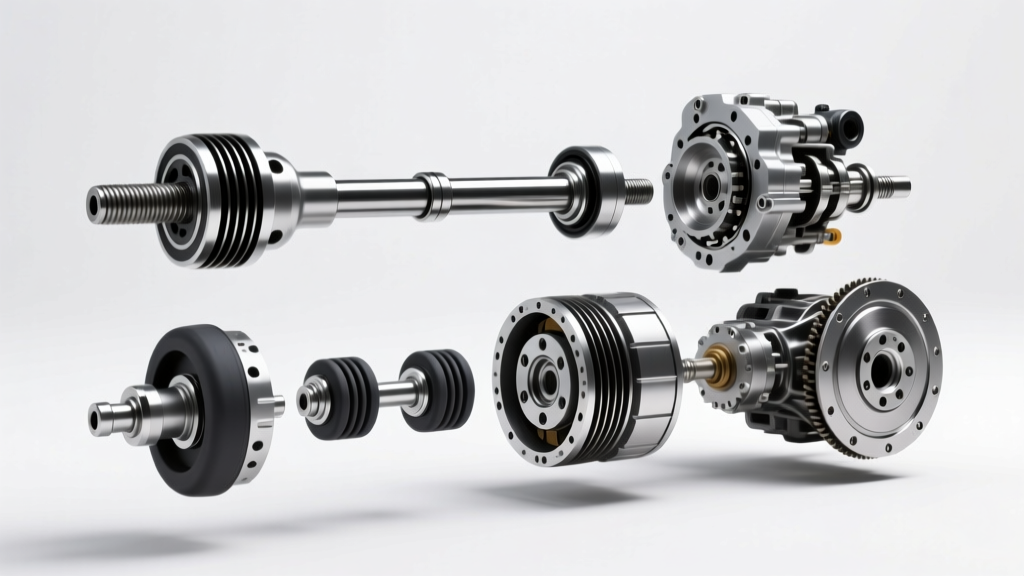
Power exits the 10R80 and travels through a two-piece driveshaft. To manage the long wheelbase of the Explorer, Ford utilizes a center support bearing bolted to the chassis crossmember. This bearing absorbs harmonic vibrations and maintains the driveline angle. At the rear, the driveshaft mates to an aluminum-housed Independent Rear Suspension (IRS) differential.
Rear Differential Fluid Service
The rear differential requires Motorcraft SAE 75W-85 Premium Rear Axle Lubricant (Specification WSS-M2C942-A). If your Explorer is equipped with the factory towing package and a limited-slip differential, you must also add the appropriate Motorcraft XL-3 Friction Modifier.
- Capacity: Approximately 1.8 to 2.1 quarts (1.7 - 2.0 liters)
- Drain Plug Torque: 35 Nm (26 lb-ft)
- Fill Plug Torque: 35 Nm (26 lb-ft)
Unlike older solid-axle trucks, the Explorer’s IRS differential is mounted via rubber bushings to the subframe. While this isolates cabin noise, it means the driveline angles change dynamically under heavy acceleration or towing. This dynamic movement puts extra stress on the rear CV joints and the pinion seal.
Common RWD Failure Modes and Out-of-Warranty Repair Costs
While the RWD layout is inherently simpler than AWD, it is not immune to mechanical failure. Based on historical data from the NHTSA vehicle database and long-term fleet telemetry, here are the most common RWD-specific failure points and their associated repair costs for out-of-warranty Explorers.
1. Driveshaft Center Support Bearing Degradation
Symptoms: A distinct clunk when shifting from Park to Reverse, or a high-frequency vibration at 45-55 mph that feels like driving over rumble strips.
The Fix: Ford often sells the center bearing as part of the entire front driveshaft assembly, which can push the part cost over $600. However, aftermarket solutions and specialized driveline shops can press in a new SKF or Timken bearing for a fraction of the cost.
- OEM Driveshaft Assembly: $650 - $850 (Parts) + $250 (Labor) = $900 - $1,100
- Aftermarket Bearing Rebuild: $80 - $120 (Parts) + $300 (Labor) = $380 - $420
2. 10R80 CDF Drum and Valve Body Issues
Early iterations of the 10R80 (2020-2022) suffered from CDF (Clutch Drive Friction) drum wear and valve body solenoid failures, leading to harsh 4-3 or 7-6 downshifts. While Ford has updated the calibration and internal metallurgy for the 2025 model year, out-of-warranty repairs on older CD6 models remain a severe financial risk.
- Valve Body Replacement: $800 (Part) + $450 (Labor) = $1,250
- Complete 10R80 Remanufactured Replacement: $3,800 - $4,500 (Including core charge and programming)
3. Rear Differential Pinion Seal Leaks
Due to the dynamic articulation of the IRS setup, the front pinion seal on the rear differential can wear prematurely, especially on vehicles that frequently tow near the 5,600-lb limit. A leaking pinion seal will quickly drain the 75W-85 fluid, leading to catastrophic ring-and-pinion gear failure if ignored.
- Pinion Seal Replacement: $45 (Part) + $180 (Labor) = $225
- Complete Rear Differential Rebuild: $1,400 - $1,900
Expert Verdict: Maximizing the RWD Investment
The 2025 Ford Explorer drivetrain options official literature highlights the vehicle's versatility, but it is the underlying RWD-biased CD6 architecture that gives it true heavy-duty credibility. For buyers who do not require the snow-belt traction of the AWD system, the RWD configuration offers a compelling financial advantage. By eliminating the PTU and front axle components, owners save upwards of $1,500 over a 100,000-mile lifecycle in avoided maintenance and repair risks.
To protect this investment, strict adherence to the MERCON ULV fluid specification and timely 75W-85 differential services are non-negotiable. Furthermore, paying attention to early driveline vibrations can save thousands in secondary transmission and differential damage. For more detailed OEM maintenance schedules and chemical specifications, owners should regularly consult the Ford Motor Company Support Portal and reference their specific VIN build sheet.