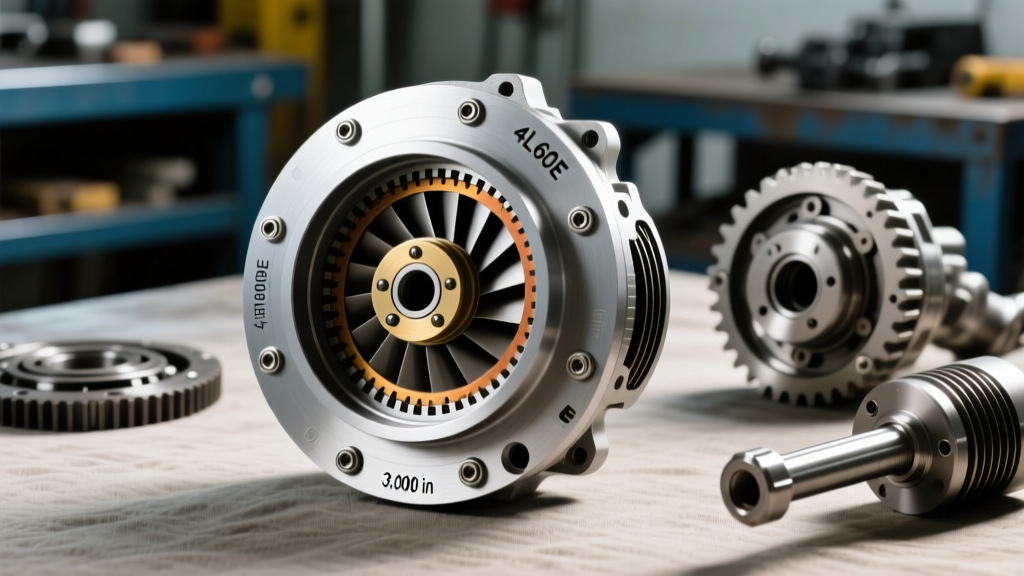
When diagnosing drivetrain shudder, harsh engagement, or low-speed whining in a Ford Escape Hybrid, owners and technicians alike frequently search for the Ford Escape torque converter replacement cost. However, addressing this issue in a hybrid vehicle requires a fundamental paradigm shift. Unlike conventional automatic transmissions that rely on a fluid-coupled torque converter to multiply engine torque and isolate engine vibrations, modern Ford Escape Hybrids utilize a radically different power-split eCVT architecture.
As of 2026, the automotive repair industry has seen a massive influx of aging Gen 3 and Gen 4 Escape Hybrids (2013–Present) exhibiting drivetrain shudder. To provide an accurate cost estimate and diagnostic pathway, we must first clarify what is actually failing inside the transaxle, as the term 'torque converter' is often misapplied to hybrid damper and launch clutch assemblies.
The Hybrid Drivetrain Paradigm: Does the Escape Have a Torque Converter?
To accurately estimate your repair bill, you must identify which generation of Ford Escape Hybrid you are driving. The internal architecture changed drastically between generations, completely eliminating the traditional fluid torque converter in newer models.
Aisin eCVT (2005–2012) vs. HF35 eCVT (2013–Present)
- First & Second Generation (2005–2012): These models utilized an Aisin-designed eCVT (based on the HD-10/TF-80SC architecture). This transaxle does contain a traditional fluid-coupled torque converter with a lockup clutch to manage the transition between the electric motors and the internal combustion engine (ICE).
- Third & Fourth Generation (2013–Present): Ford introduced the in-house HF35 eCVT. To maximize packaging efficiency and reduce parasitic drag, Ford eliminated the fluid torque converter entirely. Instead, the engine connects to the planetary gearset via a torsional damper and launch clutch assembly. When modern owners experience 'torque converter shudder,' they are actually experiencing torsional damper spring fatigue or launch clutch friction material degradation.
Symptoms of Torque Converter and Damper Failure in the Escape Hybrid
Because the HF35 transaxle integrates two motor-generators (MG1 and MG2) directly into the power-split device, damper failure symptoms often mimic electric motor bearing failure or engine misfires. According to data from the NHTSA Vehicle Safety Database, the most common consumer complaints regarding the Escape Hybrid drivetrain include:
- The 30-45 MPH Shudder: A rhythmic, low-frequency vibration felt through the floorboards and steering wheel during light-throttle cruising. This occurs when the HF35 torsional damper springs fail to absorb the ICE torsional vibrations, transferring them directly to the chassis.
- Harsh EV-to-ICE Transition Clunk: When the battery depletes and the engine fires up via MG1, a failing launch clutch or degraded damper will result in a violent mechanical 'clunk' rather than a seamless engagement.
- High-Pitch Whining: While often mistaken for a failing torque converter stator, a whining noise that scales with vehicle speed in an HF35 is typically the MG2 rotor bearing or the differential carrier bearings, not the damper.
- Diagnostic Trouble Codes (DTCs): Look for P0741 (Torque Converter Clutch Circuit Performance/Stuck Off) on older Aisin models, or hybrid-specific PCM codes indicating engine speed (RPM) discrepancies with MG1/MG2 RPMs during clutch lockup phases.
Ford Escape Torque Converter Replacement Cost Breakdown (2026 Data)
The cost to resolve these drivetrain issues varies wildly depending on the transaxle generation and whether you are replacing just the damper/clutch assembly or opting for a remanufactured unit. Below is the 2026 national average pricing matrix for Ford Escape Hybrid drivetrain repairs.
| Vehicle Generation | Component Replaced | Parts Cost (OEM/Reman) | Labor Time & Cost | Estimated Total (2026) |
|---|---|---|---|---|
| 2005–2012 (Aisin eCVT) | Traditional Torque Converter | $450 – $750 | 8.5 Hours ($1,200 - $1,500) | $1,650 – $2,250 |
| 2013–Present (HF35 eCVT) | Torsional Damper & Launch Clutch | $600 – $950 | 12.0 Hours ($1,800 - $2,400)* | $2,400 – $3,350 |
| 2013–Present (HF35 eCVT) | Complete Remanufactured Transaxle | $3,800 – $5,200 | 9.0 Hours ($1,350 - $1,800) | $5,150 – $7,000 |
*Note: HF35 damper replacement requires extensive High-Voltage (HV) safety protocols, transaxle disassembly, and motor-generator handling, which significantly increases labor time compared to a standard transaxle R&R.
Step-by-Step Diagnosis: Isolating the Damper from Motor-Generator Issues
Before authorizing a $3,000+ transaxle teardown, master technicians utilize advanced OBD-II scan tools (like FORScan or the Ford IDS/FDRS) to isolate the mechanical damper from electrical anomalies. Resources from Sonnax Industries Drivetrain Resources emphasize the importance of monitoring slip RPMs in lockup clutch assemblies.
Scan Tool Data PIDs to Monitor
Connect your scan tool and log the following Parameter IDs (PIDs) during a road test where the shudder occurs:
- TCC_SLIP_ACT (Actual TCC Slip): On older Aisin models, if this value fluctuates wildly (e.g., bouncing between -50 and +150 RPM) while the commanded slip is steady at 0-20 RPM, the torque converter clutch lining is degraded or the apply valve is stuck.
- MG1_RPM & MG2_RPM vs. ICE_RPM: During the engine start/stop event, the ICE RPM should match the planetary gearset math derived from MG1 and MG2. If the ICE RPM shows a 'lag' or 'spike' upon engagement, the torsional damper springs are broken or the launch clutch is slipping excessively.
- TRANS_CMD_GEAR & ICE_TRQ_REQ: Monitor engine torque requests. If the PCM is rapidly pulling timing (reducing torque) to compensate for a mechanical bind, you will see erratic torque request graphs.
Labor, Fluid, and Torque Specifications for the HF35 Transaxle
If you are a DIY hybrid enthusiast or an independent shop tackling the HF35 damper replacement, strict adherence to Ford's engineering specifications is mandatory. The integration of high-voltage components leaves zero margin for error.
Critical Safety and Fastener Torques
WARNING: Before unbolting the HF35 transaxle from the 2.0L or 2.5L Atkinson-cycle engine, you MUST pull the High-Voltage Manual Service Disconnect (MSD) located in the rear cargo area and wait a minimum of 10 minutes. Verify 0V at the inverter terminals using a CAT III-rated digital multimeter before touching any orange cabling.
When reassembling the power-split device and damper assembly, utilize the following torque specifications (always verify against the latest Ford Motor Company Service Content TSBs for your specific VIN):
- Damper-to-Flexplate Bolts: 75 Nm (55 lb-ft) + an additional 90-degree turn. (Use new OEM stretch bolts; never reuse).
- Transaxle-to-Engine Block Bolts (M12): 48 Nm (35 lb-ft).
- Transaxle-to-Engine Block Bolts (M10): 35 Nm (26 lb-ft).
- Motor-Generator Stator Retaining Bolts: 10 Nm (89 lb-in) in a star pattern. (Over-torquing these will warp the stator housing and cause MG1/MG2 grounding faults).
Fluid Specifications and Capacity
The HF35 eCVT does not use standard MERCON LV. It requires the ultra-low viscosity fluid specifically engineered for the hybrid power-split device and electric motor cooling.
- Fluid Type: Motorcraft MERCON ULV (Part No. XT-12-QLV).
- Total System Capacity: 4.7 Liters (5.0 Quarts).
- Service Fill (Dry Pan): Typically requires 3.2 to 3.5 Liters. Always check the fluid level with the transaxle fluid temperature between 85°C and 93°C (185°F - 199°F) as monitored via the scan tool PID TFT.
Expert Verdict: Rebuild vs. Replace
When calculating the true Ford Escape torque converter replacement cost for a modern hybrid, the labor-intensive nature of the HF35 teardown often pushes the repair into the realm of diminishing returns. If the vehicle has over 120,000 miles and the torsional damper has failed, there is a high probability that the MG2 rotor bearings and the internal chain drive are also exhibiting wear.
For daily drivers intended to be kept for another 5+ years, sourcing a low-mileage remanufactured HF35 transaxle (which includes a refreshed damper, new bearings, and tested motor-generators) is often the most economically sound decision, despite the higher upfront parts cost. For older Aisin eCVT models, a traditional torque converter swap remains a straightforward, cost-effective repair that can easily extend the vehicle's life by another 80,000 miles.