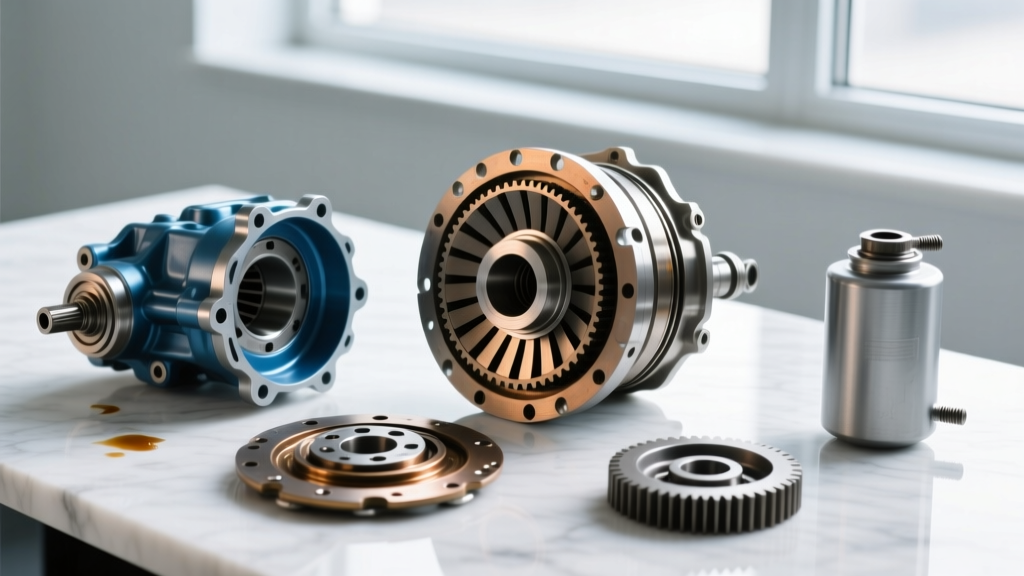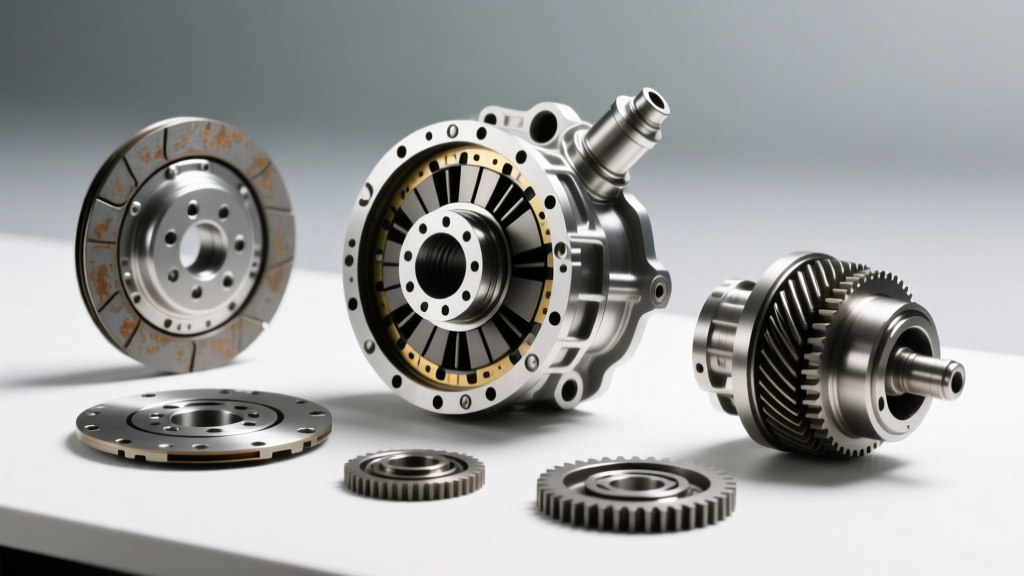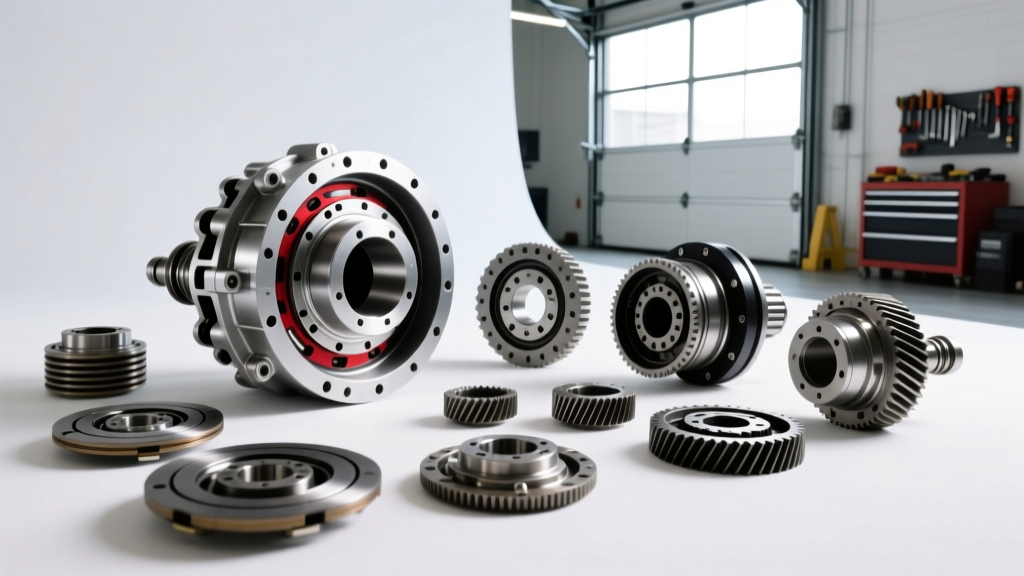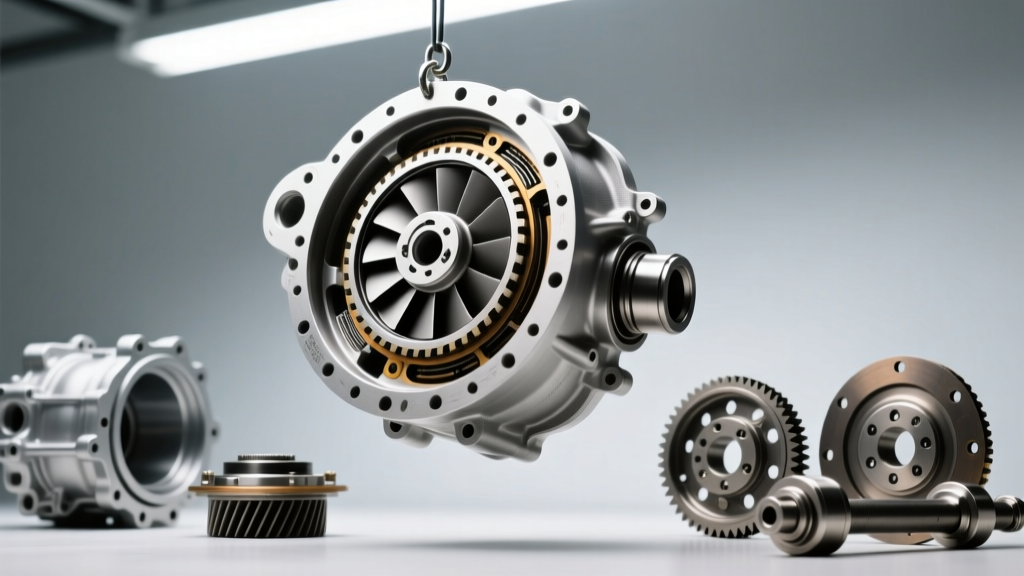
The Anatomy of 4L60E Torque Converter Shudder
The GM 4L60E transmission is a legendary workhorse, but it is equally infamous for one specific drivability complaint: torque converter shudder. This vibration, often felt between 35 and 55 mph under light throttle, feels like driving over rumble strips. From a preventive maintenance perspective, understanding the root cause of this shudder is critical to saving your drivetrain from catastrophic failure.
Shudder occurs during the Torque Converter Clutch (TCC) apply phase. The 4L60E uses a Pulse Width Modulation (PWM) solenoid to gradually apply the TCC, transitioning the transmission from fluid coupling to a direct mechanical lockup. If the friction material inside the torque converter is degraded, or if the hydraulic apply pressure is oscillating due to valve body wear, the clutch rapidly slips and grabs. This high-frequency slip-grab cycle translates directly into the chassis as shudder.
Preventive Maintenance: Stopping Shudder Before It Starts
The most effective way to address 4L60 torque converter shudder is to prevent the friction lining from degrading in the first place. Heat and fluid degradation are the primary enemies of the TCC friction material.
The Dexron VI Upgrade
Older 4L60E models were factory-filled with Dexron III, a fluid prone to rapid shear and oxidation under high thermal loads. GM later superseded this with Dexron VI, a synthetic-based fluid with vastly superior kinematic viscosity and friction modifier stability. Upgrading to a high-quality Dexron VI fluid (such as ACDelco Part # 10-9395) during routine pan drops is the single best preventive measure against TCC shudder. The advanced friction modifiers maintain a consistent coefficient of friction, allowing the PWM solenoid to modulate apply pressure smoothly without slip-grab oscillation.
Cooling System Optimization
The 4L60E routes TCC apply fluid through the transmission cooler. If the OEM radiator-integrated cooler is restricted, or if the auxiliary cooler is undersized, fluid temperatures can exceed 220°F (104°C) during towing. At these temperatures, the TCC friction lining glazes, leading to immediate shudder. Installing a dedicated external transmission cooler (e.g., Derale or Hayden) and bypassing the radiator cooler loop is a mandatory preventive upgrade for any 4L60E used in heavy-duty applications.
Diagnostic Protocol: Isolating the Shudder
Before replacing parts, you must isolate whether the shudder is caused by hydraulic control issues, electrical faults, or mechanical torque converter failure. Relying on a 'flush and pray' approach often results in wasted money and a destroyed converter.
Step 1: Bi-Directional Scan Tool Analysis
Connect a bi-directional OBD2 scanner capable of reading live transmission data. Monitor the TCC Slip Speed (RPM) and TCC Solenoid Duty Cycle while driving at 45 mph in 4th gear with the TCC commanded ON.
- Normal Operation: TCC slip should stabilize between 0 and 20 RPM once fully applied.
- Impending Failure: Slip oscillates rapidly between 20 and 60 RPM, correlating exactly with the physical shudder felt in the cabin.
- Catastrophic Failure: Slip exceeds 100+ RPM, indicating the friction lining is completely worn away.
Step 2: Command and Release Test
Using the scanner, manually command the TCC solenoid OFF while maintaining steady throttle. If the shudder instantly disappears, the issue is isolated to the TCC circuit or the converter clutch itself. If the vibration persists, you are likely diagnosing an engine misfire, a failing harmonic balancer, or a damaged driveshaft U-joint, not a torque converter issue.
Data Table: TCC Slip Rates and Diagnostics
| Vehicle Speed | Throttle Position | Normal TCC Slip (RPM) | Failing TCC Slip (RPM) | Probable Cause of High Slip |
|---|---|---|---|---|
| 40 mph (4th Gear) | 12% - 18% | 10 - 20 RPM | 45 - 80 RPM (Oscillating) | Valve body bore wear / PWM solenoid fatigue |
| 55 mph (4th Gear) | 15% - 22% | 0 - 15 RPM | 100+ RPM (Steady) | Glazed or missing TCC friction lining |
| 65 mph (4th Gear) | 20% - 30% | 0 - 10 RPM | Intermittent 50 RPM | Leaking TCC apply valve or worn turbine shaft O-rings |
Proven Fixes and Component Upgrades
Once you have confirmed the 4L60 torque converter shudder is isolated to the TCC system, apply the following repair matrix based on your diagnostic findings.
Scenario A: Oscillating Slip (Hydraulic Control Issue)
If your scanner shows the slip RPM rapidly bouncing (e.g., 15 to 55 RPM) and the shudder is mild, the torque converter friction material is likely intact, but the hydraulic pressure is unstable. The aluminum valve body in the 4L60E suffers from severe bore wear at the TCC Regulator and Apply valves, causing fluid leaks and pressure oscillation.
- The Fix: Install the Sonnax TCC Regulator Valve Kit (Part # 77754-04K) and the TCC Apply Valve Kit (Part # 77754-03K). These kits feature hardened steel sleeves and anodized aluminum valves that permanently eliminate bore wear and stabilize apply pressure.
- Estimated Cost: $75 - $110 for parts; 3-4 hours labor to drop the pan and remove the valve body.
Scenario B: PWM Solenoid Fatigue
The PWM solenoid (ACDelco Part # 214-1893) operates at a high frequency to modulate fluid. Over time, the internal spool valve wears, leading to erratic duty cycle responses. If the valve body bores are tight but the solenoid duty cycle on your scanner looks erratic, replace the solenoid.
Scenario C: Steady High Slip (Mechanical Failure)
If TCC slip is consistently high and does not oscillate, the friction lining inside the torque converter is gone. No fluid additive or valve body kit will fix this. The transmission must be removed.
- The Fix: Replace the torque converter. For daily drivers, an OEM-spec ACDelco remanufactured unit is sufficient. For modified or towing vehicles, upgrade to a billet-front, multi-clutch converter from manufacturers like Circle D or Yank Performance to handle increased torque loads without slipping.
- Estimated Cost: $350 - $650 for the converter; $800 - $1,200 for R&R labor. Note: Always replace the rear main seal and flexplate bolts while the transmission is out.
Reassembly Torque Specs and Best Practices
When reinstalling the 4L60E transmission and torque converter, adhering to exact torque specifications is vital to prevent flexplate warping, which can mimic TCC shudder by causing runout against the transmission oil pump seal.
| Component | Fastener Size | Torque Specification | Notes |
|---|---|---|---|
| Torque Converter to Flexplate | M10 x 1.5 or 3/8-16 | 46 lb-ft (62 Nm) | Apply medium-strength threadlocker. Ensure converter is fully seated in the oil pump before tightening. |
| Flexplate to Crankshaft | M10 x 1.5 (Typical V8) | 65 lb-ft (88 Nm) | Use red high-strength threadlocker. Replace bolts if stretched. |
| Bellhousing to Engine Block | M10 / M12 | 37 lb-ft (M10) / 50 lb-ft (M12) | Tighten in a star pattern to prevent case distortion. |
| Transmission Crossmember | M10 / M12 | 37 lb-ft / 66 lb-ft | Load the mount slightly with a jack before final tightening to prevent rubber tearing. |
Final Maintenance Directives
To maximize the lifespan of your 4L60E and prevent torque converter shudder from returning, implement a strict 30,000-mile fluid and filter change interval using Dexron VI. Avoid high-pressure 'power flushes' on high-mileage transmissions, as these can dislodge debris into the delicate TCC apply valves. Instead, perform a thermal-aware pan drop, clean the magnet, and refill with precision-measured fluid. For further diagnostic procedures and advanced hydraulic schematics, consult resources from the Automatic Transmission Rebuilders Association (ATRA) or official GM service documentation via ACDelco. By treating the TCC system as a precision hydraulic circuit rather than a simple on/off clutch, you can keep your 4L60E shifting seamlessly for hundreds of thousands of miles.