The Magic of the Fluid Coupling: An Introduction
If you have ever wondered how an automatic transmission vehicle can come to a complete stop at a red light while the engine is still running and spinning, you have the torque converter to thank. For millions of General Motors vehicles equipped with the legendary 4L60E transmission, this donut-shaped component is the unsung hero of drivability. Whether you are rebuilding a 1998 Chevrolet Silverado or tuning a 2002 Camaro Z28, understanding the mechanics behind a 4L60E stall torque converter is essential for both diagnosis and performance tuning.
Unlike a manual transmission that uses a mechanical friction clutch to connect and disconnect the engine from the gearbox, an automatic transmission relies on hydrokinetics. It uses automatic transmission fluid (ATF) as a liquid medium to transfer power. In this beginner-friendly explainer, we will dissect the internal anatomy of the torque converter, demystify the concept of "stall speed," and explore the common symptoms that indicate your 4L60E converter is on its last legs.
Expert Insight: The 4L60E (and its predecessor, the 700R4) relies heavily on proper torque converter hub depth and fluid dynamics. A failure to understand stall speed and Torque Converter Clutch (TCC) lockup is the number one reason DIYers misdiagnose transmission "slipping" when the issue is actually a hydraulic circuit failure in the valve body.
Inside the Shell: Core Components of a Torque Converter
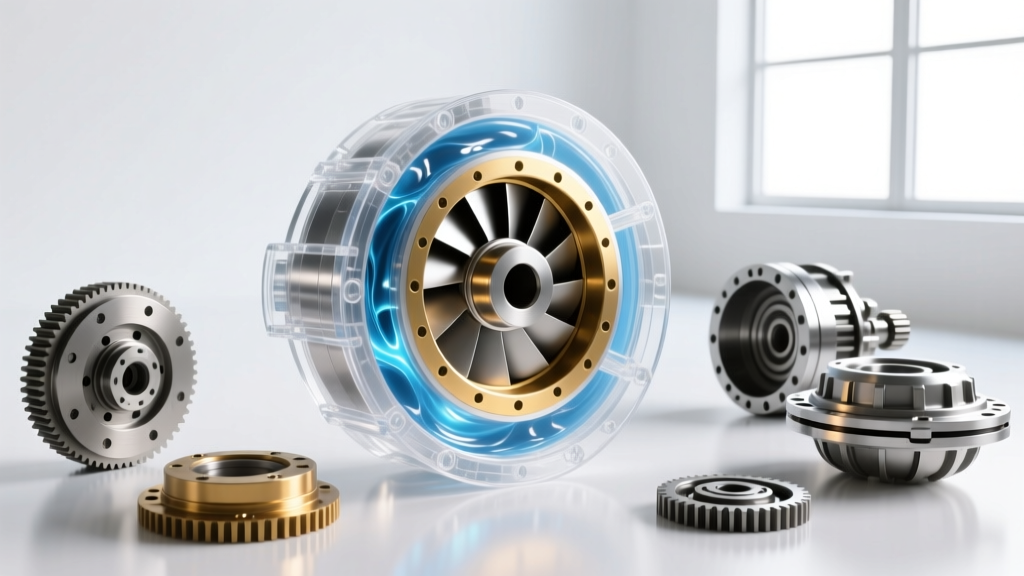
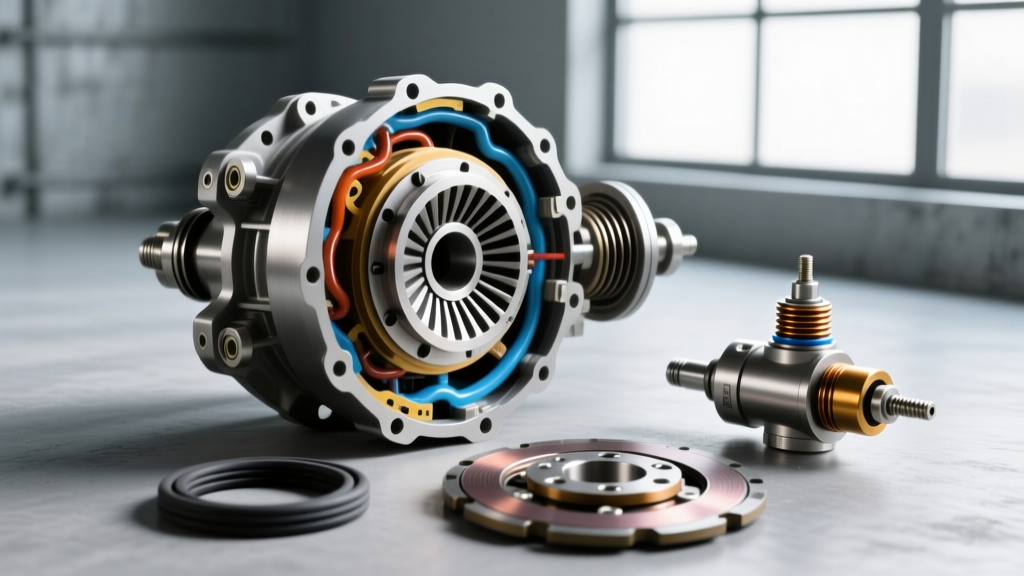
To understand how a 4L60E stall torque converter operates, you must first look inside the welded steel housing. There are four primary components that work in a continuous hydraulic loop:
1. The Impeller (The Pump)
The impeller is bolted directly to the converter housing, which is in turn bolted to the engine's flexplate. Because it is tied to the engine, the impeller spins whenever the engine is running. The inside of the impeller is lined with curved vanes. As it spins, centrifugal force pushes ATF outward, creating a powerful vortex that shoots fluid toward the turbine.
2. The Turbine
The turbine sits directly across from the impeller and is connected to the transmission's input shaft. When the high-velocity fluid from the impeller strikes the curved blades of the turbine, it forces the turbine to spin, thereby turning the input shaft and moving the vehicle. After striking the turbine, the fluid is redirected back toward the center and exits toward the stator.
3. The Stator (The Torque Multiplier)
The stator is the "magic" component that gives the torque converter its name. Sitting on a one-way clutch in the center of the assembly, the stator catches the fluid returning from the turbine and redirects it back into the impeller in the direction of rotation. This redirection multiplies engine torque by up to 2.5 times during initial acceleration. Once the turbine speed catches up to roughly 90% of the impeller speed, the stator's one-way clutch freewheels, preventing it from creating parasitic drag.
4. The Torque Converter Clutch (TCC)
Fluid coupling is great for smooth takeoffs, but it creates heat and parasitic power loss at highway speeds. To solve this, GM introduced the TCC. When engaged, a friction-lined piston inside the converter locks the turbine directly to the impeller housing, creating a 1:1 mechanical connection just like a manual clutch.
Demystifying the 4L60E Stall Torque Converter
When enthusiasts and mechanics discuss a "stall torque converter," they are referring to the stall speed. Stall speed is defined as the maximum RPM the engine can achieve when the transmission is in gear and the output shaft is held completely stationary (such as standing on the brakes while power-braking).
A stock 4L60E torque converter typically has a stall speed between 1,800 and 2,200 RPM. However, when modifying a vehicle for higher horsepower, the engine's powerband often shifts higher. If your camshaft doesn't make peak torque until 3,500 RPM, a stock 2,000 RPM converter will result in a sluggish, bogging launch. By installing a high-stall aftermarket converter, you allow the engine to rev higher into its powerband before the fluid coupling fully transfers the load to the wheels.
True Stall vs. Flash Stall
It is vital to differentiate between these two terms when shopping for 4L60E upgrades:
- Foot-Brake Stall (Flash Stall): The RPM achieved by holding the foot brake and matting the throttle. This is heavily dependent on the vehicle's braking capacity and engine torque.
- True Stall: The RPM achieved when the output shaft is mechanically locked (e.g., against a trans-brake or a wall). This is the actual rating of the converter.
Stall Speed Comparison Chart for the 4L60E
| Converter Type | Stall Speed Range | Torque Multiplication | Best Application | Avg. Cost (2026) |
|---|---|---|---|---|
| OEM Replacement (Stock) | 1,800 - 2,200 RPM | Up to 2.0:1 | Daily driving, towing, fuel economy | $250 - $350 |
| Mild Performance (Stage 1) | 2,400 - 2,800 RPM | Up to 2.2:1 | Street/Strip, mild camshafts, nitrous | $450 - $600 |
| High-Stall (Race Spec) | 3,000 - 4,000+ RPM | Up to 2.5:1 | Dedicated drag racing, large turbo setups | $650 - $900+ |
TCC Operation and Pulse Width Modulation (PWM)
In 1995, GM updated the 4L60E to feature Pulse Width Modulation (PWM) for the Torque Converter Clutch. Unlike older on/off solenoids that slammed the clutch on and caused harsh shifts, the PWM solenoid modulates fluid pressure to gradually apply the TCC piston. This allows for a smooth, imperceptible lockup transition.
However, this system is highly sensitive to fluid degradation and valve body wear. The 4L60E requires Dexron VI ATF, which offers superior shear stability compared to the original Dexron III. Total system capacity with a new torque converter is roughly 11.2 quarts, while a standard pan-and-filter service only yields about 5 to 6 quarts.
Recognizing 4L60E Torque Converter Symptoms
Because the torque converter is sealed, internal failures manifest as distinct drivability symptoms. According to diagnostic frameworks outlined by the Automatic Transmission Rebuilders Association (ATRA), watch for these critical warning signs:
1. TCC Shudder at Highway Speeds
If you feel a rhythmic, washboard-like vibration between 45 and 55 MPH while cruising, your TCC is likely slipping. While degraded ATF is the first culprit, the root cause in high-mileage 4L60E units is often wear in the valve body's TCC apply circuit. Upgrading to a Sonnax Zip Valve kit (Part# 77754-04K) restores proper hydraulic pressure to the TCC piston, eliminating the shudder without replacing the entire converter.
2. Overheating and Discolored Fluid
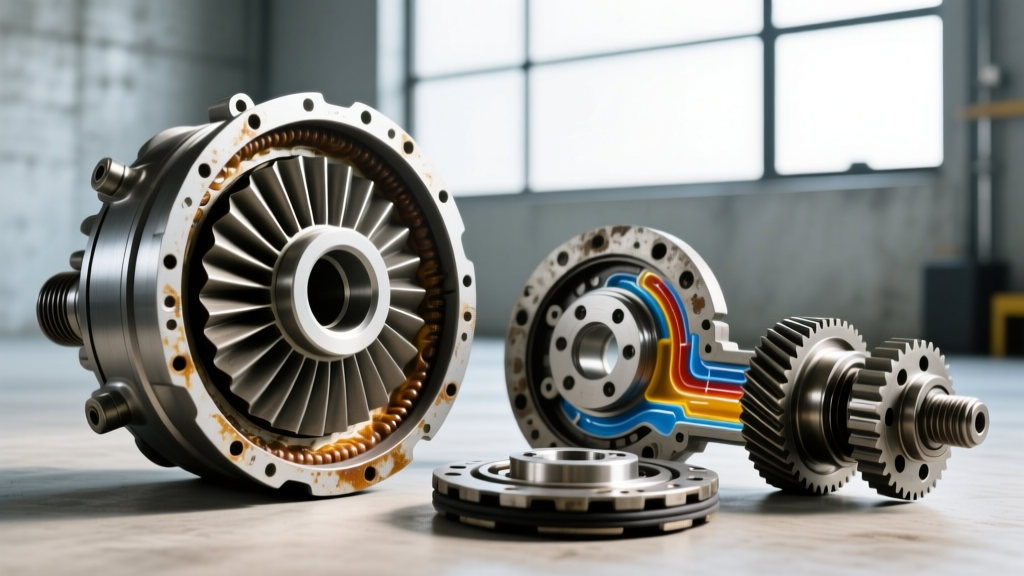
A failing stator one-way clutch can become locked in the wrong direction. When this happens, the stator fights the fluid flow at highway speeds, generating massive amounts of friction and heat. If your 4L60E transmission fluid smells burnt and looks dark brown or black shortly after a fluid change, a locked stator is highly probable. The only fix is converter replacement.
3. Complete Loss of Drive (Stripped Hub)
The torque converter hub features splines that mate with the transmission's oil pump. If the converter was not fully seated during installation—failing to achieve the required 1/8-inch to 1/4-inch gap past the bellhousing mating surface—the hub will strip the pump gears. The engine will run, fluid pressure will be zero, and the vehicle will not move an inch.
Installation Specifications and Best Practices
When replacing a 4L60E torque converter, precision is non-negotiable. Always adhere to the following specifications to prevent catastrophic failure:
- Flexplate to Converter Bolts: Torque to 35 lb-ft (for standard M10x1.5 bolts). Use a high-quality threadlocker (e.g., Loctite 243) to prevent backing out.
- Hub Lubrication: Coat the converter hub with a generous layer of assembly lube or petroleum jelly before sliding it into the transmission oil pump to prevent dry-start scoring.
- Pre-Filling: Always pour 1 to 2 quarts of Dexron VI directly into the converter before installation to ensure immediate hydraulic pressure upon first startup.
Summary
Understanding how a 4L60E stall torque converter works bridges the gap between basic maintenance and advanced performance tuning. By mastering the fluid dynamics of the impeller, turbine, and stator, and respecting the intricacies of the PWM-controlled TCC, you can accurately diagnose shudder, overheating, and slipping issues. Whether you are dropping in a stock $300 replacement or upgrading to an $800 high-stall unit for the drag strip, treating the torque converter as a precision hydraulic component—rather than just a heavy metal donut—will ensure the longevity and performance of your GM drivetrain.