Navigating the Ford Edge Drivetrain Warranty Landscape in 2026
As we move through 2026, a massive wave of 2019–2021 Ford Edge crossovers equipped with the 8-speed automatic transmissions are crossing out of their standard 5-year/60,000-mile powertrain warranty windows. For owners of the AWD models, this transition is critical. The Ford Edge drivetrain is a complex, transversely mounted AWD architecture that relies heavily on the Power Transfer Unit (PTU) and Rear Drive Unit (RDU). When these components fail, out-of-pocket replacement costs can easily exceed $3,500.
However, internal drivetrain defects, premature bearing wear, and specific Technical Service Bulletins (TSBs) can still provide avenues for warranty coverage or manufacturer goodwill extensions. This step-by-step guide will teach you how to properly diagnose, document, and claim Ford Edge drivetrain warranty coverage, ensuring you do not get stuck with a massive repair bill for a factory defect.
Understanding the Ford Edge AWD Drivetrain Architecture
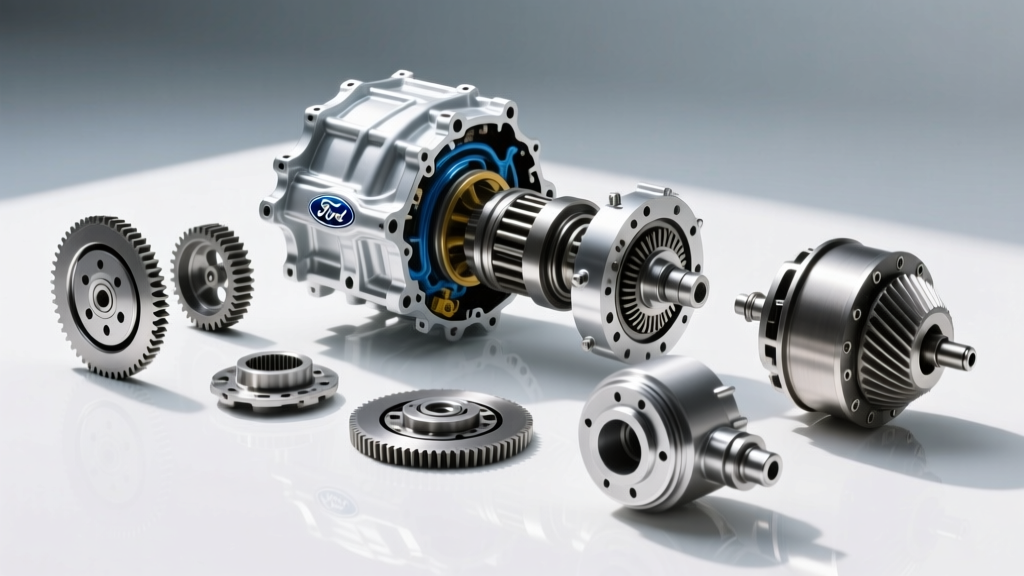
Before approaching a dealership, you must understand the exact nomenclature and mechanical layout of your vehicle. The Ford Edge AWD system does not use a traditional longitudinal transfer case. Instead, it utilizes a transaxle setup:
- The Transaxle: Older models (2007–2014) use the 6F50 or 6F55 6-speed automatic. Newer CD539 platform models (2015–2024) use the updated 6F55 or the 8F35/8F57 8-speed automatics.
- Power Transfer Unit (PTU): Bolted directly to the transaxle, the PTU splits torque 90 degrees to the rear wheels. It operates in an incredibly high-heat environment near the catalytic converter.
- Rear Drive Unit (RDU): Located on the rear subframe, the RDU houses an electro-hydraulic clutch pack that engages the rear axles when slip is detected.
Under Ford’s standard warranty guidelines, the internal gears, shafts, and bearings of the PTU and RDU are classified as powertrain components. However, external seals, gaskets, and fluid leaks are often categorized as wear-and-tear or bumper-to-bumper items, which expire at 3 years/36,000 miles. Knowing this distinction is the key to a successful claim.
Step 1: Verify Your Powertrain Warranty Status & TSBs
Your first step is to confirm your baseline coverage and research active TSBs. You can verify your exact warranty status by entering your VIN on the official Ford Owner Support portal.
Identifying Goodwill and TSB Coverage
Ford has historically issued Customer Satisfaction Programs (CSPs) and TSBs regarding PTU fluid degradation and seal leaks that lead to internal bearing failure. If your vehicle is out of the 5/60k window, but you can prove that a known factory defect (such as a flawed PTU vent tube design causing fluid expulsion) led to the internal failure, dealerships can sometimes request a "goodwill adjustment" from Ford Corporate to cover the internal hard parts.
Step 2: Diagnose and Document the Drivetrain Failure
Dealership service advisors are trained to look for reasons to deny claims, often citing "lack of maintenance" or "external fluid leaks" as an excuse to void internal gear coverage. You must gather empirical evidence before handing over your keys.
Inspecting the PTU Fluid
The PTU on the Ford Edge holds a very small volume of fluid—typically between 12 to 14 ounces (approx. 0.35L to 0.41L) of Motorcraft XL-1 or SAE 75W-85 Premium Synthetic Hypoid Gear Lubricant, depending on the model year. Because of the low volume and high heat, the fluid degrades rapidly.
- Extract a Sample: Since many Edge PTUs lack a traditional drain plug, use a fluid extraction pump via the fill plug to pull a 2 oz sample.
- Check for Metallic Debris: If the fluid resembles glitter or contains metallic flakes, you have internal bearing or gear failure. Take high-resolution, well-lit photos of this fluid.
- Listen for Whining: A failing PTU bearing typically emits a high-pitched whine from the front passenger side that scales with vehicle speed, not engine RPM.
Inspecting the RDU and Driveshaft
If your dashboard displays an "AWD Off" warning, the issue may lie in the RDU clutch pack or the center support bearing on the two-piece driveshaft. Check the RDU for external leaks around the axle seals. If the RDU is dry but the clutch pack is slipping, this is an internal electro-hydraulic failure, which is fully covered under the powertrain warranty if within the 5/60k window.
Step 3: Navigating the Dealership Claim Process
When you arrive at the Ford dealership, the language you use on the repair order (RO) dictates how the warranty administrator processes the claim.
Pro Tip: Never allow the service advisor to write "Customer states fluid leaking from PTU" as the primary concern if you want internal hard-part coverage. Instead, dictate: "Customer states drivetrain whining noise from front axle. Suspect internal PTU bearing failure or gear degradation. Request internal inspection and powertrain warranty evaluation."
If the technician tears down the PTU and finds the internal bearings shattered (a common issue on part number DG9Z-7A246-A assemblies), the warranty administrator will authorize the replacement. However, if they find the PTU is completely dry due to a failed output shaft seal, they may deny the internal damage claim, arguing that running the unit dry is "owner negligence." This is why documenting TSBs related to faulty vent tubes or seal materials is vital.
Ford Edge Drivetrain Component Cost & Coverage Matrix
Understanding the financial stakes will help you decide how aggressively to pursue your claim. Below is a breakdown of common Ford Edge AWD drivetrain components, their warranty classifications, and current 2026 market replacement costs.
| Component | Warranty Classification | Out-of-Pocket Cost (Parts + Labor) | Common Failure Mode |
|---|---|---|---|
| Power Transfer Unit (PTU) Assembly | Powertrain (5yr/60k) | $1,800 – $2,600 | Internal bearing disintegration due to heat/low fluid volume. |
| PTU Output Shaft Seal | Bumper-to-Bumper (3yr/36k) | $450 – $700 | Seal hardening, leading to fluid loss and subsequent PTU death. |
| Rear Drive Unit (RDU) Assembly | Powertrain (5yr/60k) | $1,500 – $2,900 | Electro-hydraulic clutch pack burnout; internal gear whine. |
| Driveshaft Center Support Bearing | Powertrain (5yr/60k) | $600 – $950 | Rubber isolator tearing, causing severe driveline vibration at 45+ MPH. |
| Rear Axle Half-Shafts / CV Joints | Powertrain (5yr/60k) | $400 – $750 (per side) | CV boot tearing, leading to joint clicking and binding. |
*Note: Torque specifications for reassembly are critical. When replacing the PTU, the transaxle-to-PTU M10 mounting bolts must be torqued to exactly 35 lb-ft (48 Nm). The driveshaft-to-PTU flange bolts require 76 lb-ft (103 Nm). Improper torque leads to immediate harmonic vibrations and voids any subsequent warranty claims.
Step 4: Escalating a Denied Drivetrain Warranty Claim
If the dealership’s warranty administrator denies your claim—perhaps arguing that the PTU failure was caused by an external seal leak that occurred outside the bumper-to-bumper window—you have legal and corporate avenues for escalation.
Contact Ford Customer Relationship Center
Call Ford Corporate directly at 1-800-392-3673. Provide your VIN, the dealership’s RO number, and your photographic evidence of the internal metallic debris. Request a Goodwill Assistance Package. Ford representatives have the authority to authorize a 50% to 100% split on the parts cost if the vehicle has a documented history of regular maintenance and the failure aligns with known manufacturing defects.
Leverage the Magnuson-Moss Warranty Act
According to the Federal Trade Commission’s guidelines on auto warranties, a manufacturer cannot legally void your internal powertrain warranty simply because an independent mechanic performed a fluid extraction or because a minor external seal failed, unless they can prove that specific seal failure directly and solely caused the internal damage. If you suspect bad faith denial, referencing the Magnuson-Moss Warranty Act to the dealership’s general manager often results in a sudden "re-evaluation" of your claim.
File an NHTSA Complaint
If your Ford Edge is experiencing a widespread drivetrain failure that Ford is refusing to acknowledge, file a safety complaint with the National Highway Traffic Safety Administration (NHTSA). A high volume of complaints regarding sudden AWD lock-up or PTU catastrophic seizure can force Ford to open a formal defect investigation, which often results in retroactive warranty extensions for affected owners.
Final Thoughts on Drivetrain Maintenance
The best way to avoid a warranty battle is preventative maintenance. Ford officially labels the PTU and RDU fluids as "filled for life," but independent transmission experts universally agree that "life" ends around 60,000 miles. To protect your drivetrain and maintain a bulletproof maintenance log for warranty claims, extract and refill the PTU fluid every 30,000 miles using the correct Motorcraft specification, and service the RDU with 1.1L of the appropriate hypoid gear oil. By treating your Ford Edge drivetrain as a serviceable system rather than a sealed unit, you ensure it survives the harsh realities of the road long after the factory warranty expires.