The Financial Reality of Mercedes-Benz Rear-Wheel Drive Systems
Rear-wheel drive (RWD) is the historical and engineering soul of Mercedes-Benz. From the C-Class (W206) to the S-Class (W223), the longitudinal engine layout and rear-biased torque delivery define the brand's driving dynamics. However, the mechanical complexity required to route power from a high-output turbocharged engine through a 9-speed automatic transmission and down to the rear wheels introduces significant financial exposure for owners once factory coverage expires. Understanding the intersection of Mercedes Benz drivetrain warranty coverage and real-world out-of-pocket repair costs is critical for any owner or prospective buyer navigating the 2026 automotive landscape.
In this comprehensive cost analysis, we dissect the operational anatomy of modern Mercedes RWD architectures, map out exact failure points with current part numbers and torque specifications, and evaluate what is genuinely protected under factory and extended warranty contracts.
Anatomy of Modern Mercedes RWD Operation
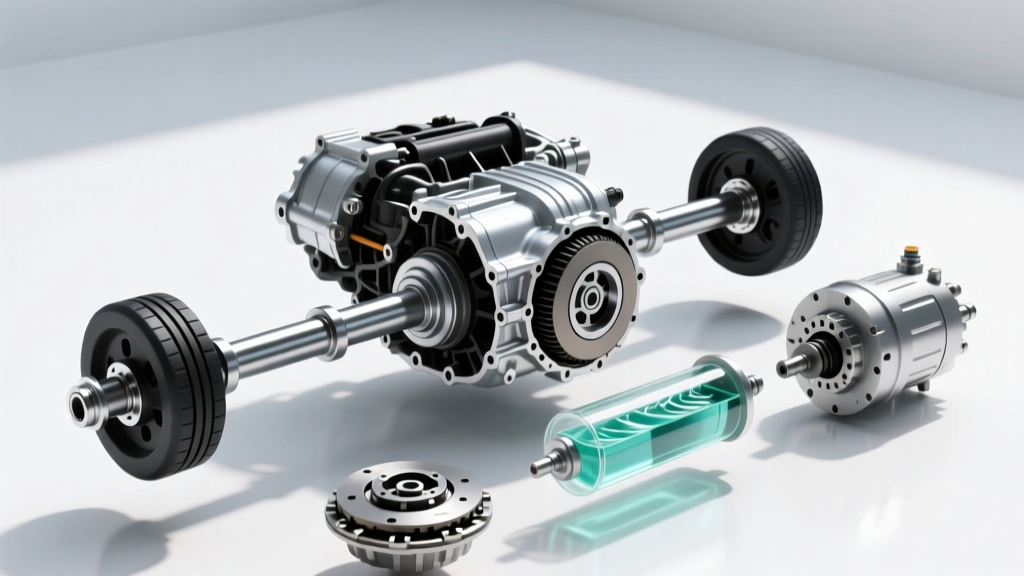
Unlike transverse front-wheel-drive platforms, a Mercedes RWD system utilizes a longitudinal powertrain layout. This configuration optimizes weight distribution and steering geometry but requires a complex driveline to transfer torque to the rear axle. The primary operational sequence includes:
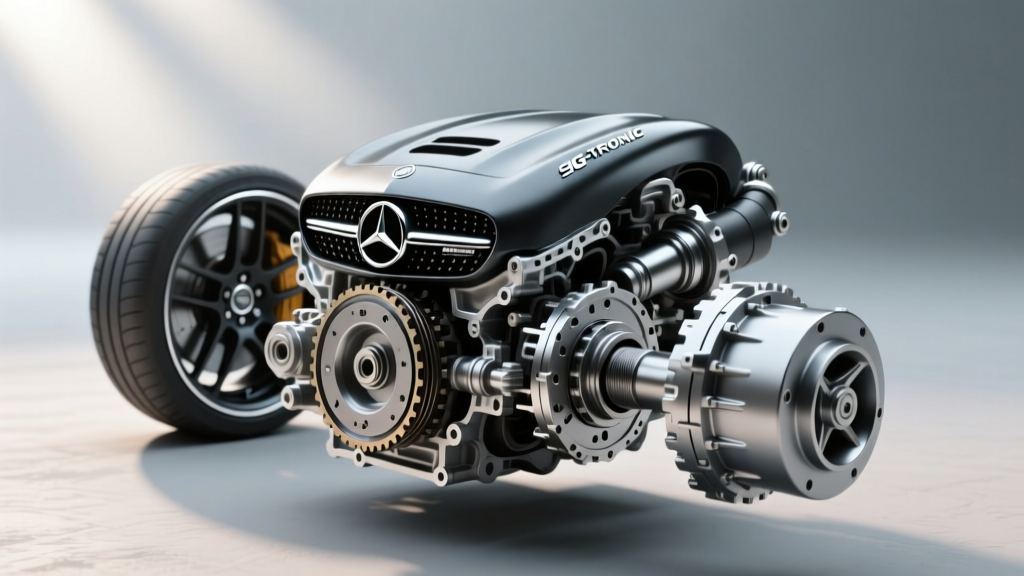
- The Power Source & Transmission: Power exits the engine's flywheel into the torque converter and through the planetary gearsets of the 9G-TRONIC (NAG3 / 725.0) 9-speed automatic transmission.
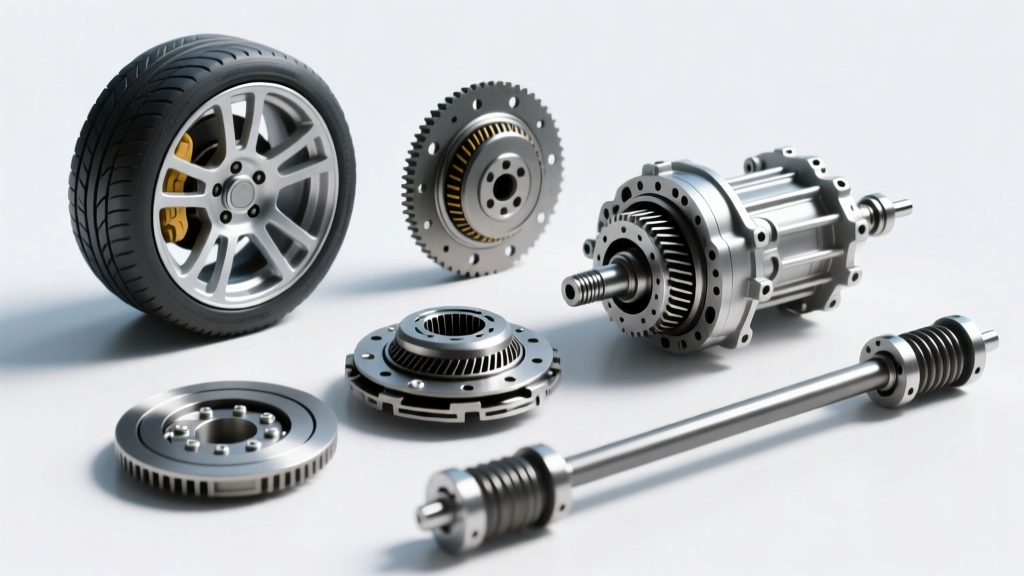
- The Flex Disc (Guibo):strong> Bolted directly to the transmission's output shaft, this rubber-and-fabric reinforced coupling absorbs high-frequency torsional vibrations and accommodates minor axial misalignments between the transmission and the driveshaft.
- The Driveshaft Assembly: Modern Mercedes models often utilize a multi-piece driveshaft. High-performance AMG variants may use a lightweight carbon-fiber tube, while standard models use a steel two-piece shaft supported by a center support bearing bolted to the chassis subframe.
- The Rear Differential: The driveshaft mates to the differential's pinion gear. Inside the rear axle housing, the hypoid ring and pinion gearset reduces rotational speed while multiplying torque, distributing it to the left and right rear half-shafts via a mechanical limited-slip clutch pack or an open differential.
Out-of-Pocket RWD Repair Cost Breakdown (2026 Data)
When driveline components fail outside of warranty coverage, the financial impact is heavily influenced by dealership labor rates (averaging $180–$240 per hour in 2026) and the requirement for OEM-specific calibration tools. Below is a detailed cost matrix for common Mercedes RWD system failures.
| Component | OEM Part Number (Example) | Part Cost | Estimated Labor | Total Cost Range |
|---|---|---|---|---|
| Flex Disc (Guibo) | A205 410 09 15 | $85 - $130 | 1.5 Hours ($270) | $355 - $400 |
| Driveshaft Center Support Bearing | A222 410 03 81 | $120 - $180 | 3.0 Hours ($540) | $660 - $720 |
| 9G-TRONIC Conductor Plate (VGS) | A725 270 12 00 | $850 - $1,100 | 4.0 Hours + SCN Coding | $1,600 - $2,200 |
| Rear Differential Assembly (Reman) | A213 350 04 00 | $2,200 - $3,500 | 5.0 Hours ($900) | $3,100 - $4,400 |
| Rear Axle Half-Shaft (CV Axle) | A222 350 07 00 | $450 - $650 | 2.0 Hours ($360) | $810 - $1,010 |
*Note: Prices reflect OEM Mercedes-Benz parts and average independent specialist labor rates. Main dealership costs will skew 20-30% higher.
Decoding the Mercedes Benz Drivetrain Warranty
A common point of confusion among owners is the exact scope of the Mercedes Benz drivetrain warranty. Mercedes-Benz USA does not sell a standalone 'drivetrain' warranty for new vehicles. Instead, drivetrain components are fully covered under the New Vehicle Limited Warranty, which provides comprehensive bumper-to-bumper coverage for 4 years or 50,000 miles. This includes the transmission, driveshaft, flex disc, rear differential, and axles.
The Extended Warranty Trap: Powertrain vs. Comprehensive
The financial danger arises when the 4-year/50,000-mile factory warranty expires and owners purchase an Extended Limited Warranty (ELW). According to automotive consumer protection data tracked by Consumer Reports, third-party and manufacturer-backed 'Powertrain' extended plans frequently exclude critical RWD driveline components.
While a Powertrain plan will cover the internal lubricated parts of the 9G-TRONIC transmission and the engine block, it often classifies the flex disc, driveshaft, center support bearing, and CV axles as 'wear-and-tear' or 'suspension/chassis' components, thereby denying coverage. To maintain true RWD drivetrain protection post-50,000 miles, owners must specifically purchase the highest-tier Comprehensive ELW, which costs between $3,500 and $5,500 depending on the vehicle's MSRP and mileage at the time of enrollment.
Technical Deep Dive: Flex Disc Failure and Replacement Specs
The flex disc is arguably the most common mechanical failure point in the Mercedes RWD driveline. Over time, the vulcanized rubber degrades due to heat soak from the adjacent exhaust system and the sheer torsional load of high-torque turbocharged engines (such as the M256 inline-six or M264 inline-four).
Diagnosing Flex Disc Degradation
Symptoms of a failing Guibo include a distinct 'clunk' when shifting from Park to Reverse, a low-frequency vibration that resonates through the center armrest at highway speeds (65-80 mph), and visible cracking or separation of the rubber from the metal sleeve inserts. If left unaddressed, catastrophic flex disc failure will cause the driveshaft to whip violently, potentially destroying the transmission output shaft seal, the exhaust system, and the aluminum chassis tunnel.
Precision Replacement and Torque Specifications
Replacing the flex disc requires strict adherence to Mercedes-Benz Workshop Information System (WIS) torque specifications to prevent premature failure or driveline binding. When reinstalling the driveshaft to the new flex disc (Part # A205 410 09 15 for W205 chassis applications):
- Fastener Spec: M10 x 1.5 self-locking hex bolts.
- Torque Sequence: Tighten to 40 Nm, followed by an additional 90 degrees of rotation using a calibrated angle gauge.
- Alignment: The centering sleeve on the transmission output shaft must be inspected for scoring. If the sleeve is grooved, it must be replaced to ensure the driveshaft spins perfectly true, preventing premature wear on the new rubber coupling.
The 9G-TRONIC Conductor Plate: A Modern Drivetrain Vulnerability
While not a mechanical rotating component like a driveshaft, the Conductor Plate (Valve Body Control Module) is the electronic brain of the 725.0 9G-TRONIC transmission. It houses the speed sensors (RPM sensors Y3/8n1 and Y3/8n2) and the solenoid valves that dictate hydraulic line pressure to the clutch packs.
A frequent failure mode involves the internal speed sensors dropping their signal, causing the transmission to enter 'limp home' mode (locking in 5th or 7th gear) and throwing a P0717 or P0722 diagnostic trouble code. Because the conductor plate is located inside the transmission fluid pan, replacement requires dropping the pan, replacing the integrated filter, and installing a new conductor plate.
Crucial 2026 Programming Note: The new conductor plate cannot simply be bolted in and driven. It requires SCN (Software Calibration Number) coding via an authorized Mercedes-Benz XENTRY diagnostic laptop to marry the component's unique security ID to the vehicle's EZS (Electronic Ignition Switch) and transmission control module. This digital DRM (Digital Rights Management) prevents the use of cheap, unprogrammed aftermarket units and forces owners to rely on OEM parts and specialized technicians, keeping repair costs firmly in the $1,600+ range.
Preventative Maintenance: Fluid Specifications and Intervals
The most effective way to avoid catastrophic RWD drivetrain costs and ensure warranty claims are not denied due to 'neglect' is strict adherence to fluid maintenance. Mercedes-Benz officially labels many of its fluids as 'lifetime,' but independent transmission specialists universally recommend abbreviated service intervals for vehicles driven in severe conditions (stop-and-go traffic, track use, or extreme climates).
Critical Driveline Fluid Specifications
- 9G-TRONIC (725.0) Transmission: Requires MB-Approval 236.15 or 236.17 synthetic ATF. The 9G-TRONIC features a complex thermal management system and a plastic oil pan with an integrated filter. Total dry fill capacity is approximately 10.5 Liters, but a standard drain-and-fill yields about 6.5 to 7.0 Liters. Service interval: Every 60,000 miles or 5 years.
- Rear Differential (Standard & AMG LSD): Requires MB-Approval 235.7 Hypoid Gear Oil (typically SAE 75W-85 or 75W-90). The rear differential holds roughly 1.1 to 1.3 Liters. Drain and fill plugs must be torqued to 30 Nm. Service interval: Every 50,000 miles to prevent clutch-pack chatter in LSD-equipped AMG models.
Final Verdict: Protecting Your RWD Investment
The operational elegance of a Mercedes-Benz rear-wheel-drive system is undeniable, delivering superior handling balance and torque management. However, the precision engineering that enables this performance comes with a premium price tag for out-of-warranty repairs. A single failure involving the rear differential or the 9G-TRONIC conductor plate can easily exceed $3,000.
For owners approaching the 50,000-mile mark, auditing your current Mercedes Benz drivetrain warranty status is paramount. If you intend to keep the vehicle long-term, investing in a top-tier Comprehensive Extended Limited Warranty is a mathematically sound decision that hedges against the steep labor rates and proprietary SCN coding requirements that define modern Mercedes-Benz RWD servicing. Pair this financial protection with rigorous, independent specialist fluid maintenance, and your drivetrain will deliver decades of flawless, rear-biased performance.