Diagnosing manual transmission hydraulic failures requires a systematic understanding of component architecture and fluid dynamics. In Ford applications—ranging from the Mustang's MT82 to the Super Duty's ZF S6-650—fluid loss and pedal drop are frequently misattributed to internal seal failures when the actual culprit is a compromised external fitting. To accurately isolate these issues, technicians must first differentiate between clutch slave cylinder types and then inspect the ubiquitous quick-connect fittings, specifically focusing on the notorious Ford clutch line retaining clip.
The Architecture of Clutch Slave Cylinder Types
Ford has utilized two primary slave cylinder configurations over the last three decades. Understanding which type is installed dictates your diagnostic path, as the location of the failure and the required repair procedures differ drastically.
1. External Push-Type Slave Cylinders
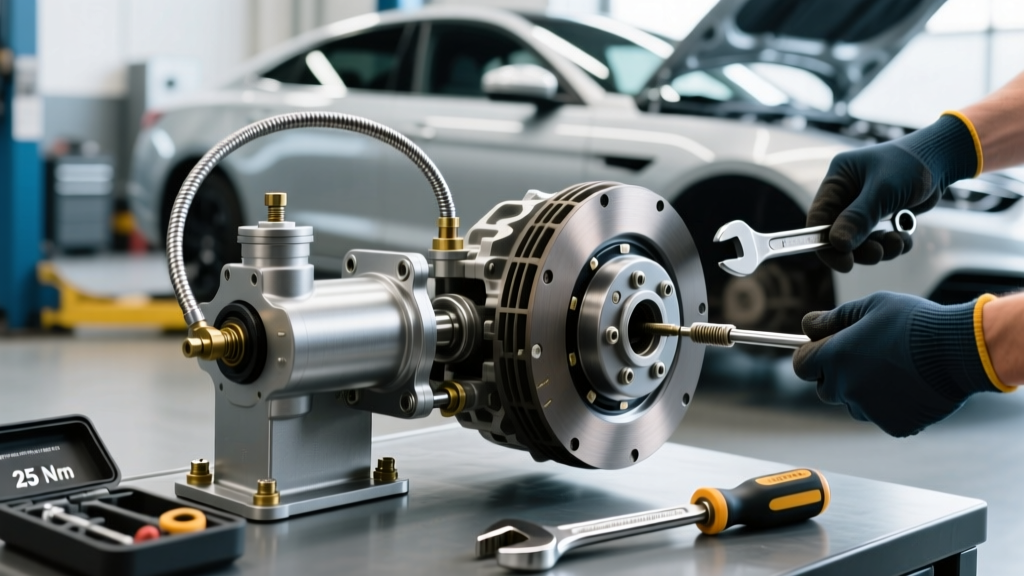
Found on older F-150s, Rangers, and heavy-duty models equipped with the ZF S6-650 or S6-750 transmissions, the external slave cylinder mounts directly to the bellhousing. It utilizes a push-rod that actuates the clutch release fork.
- Diagnostic Advantage: Leaks are immediately visible on the exterior of the bellhousing.
- Common Failure Mode: Bore scoring due to contaminated fluid, or push-rod bushing wear causing a 'spongy' pedal feel.
- Part Example: Motorcraft BRSF-23 or LuK LSC103.
2. Concentric Slave Cylinders (CSC)
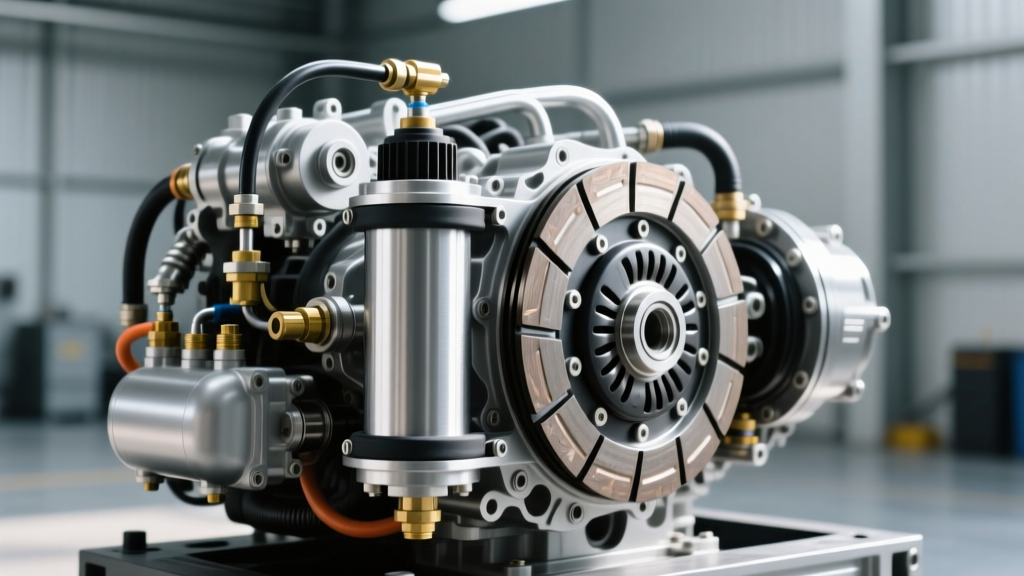
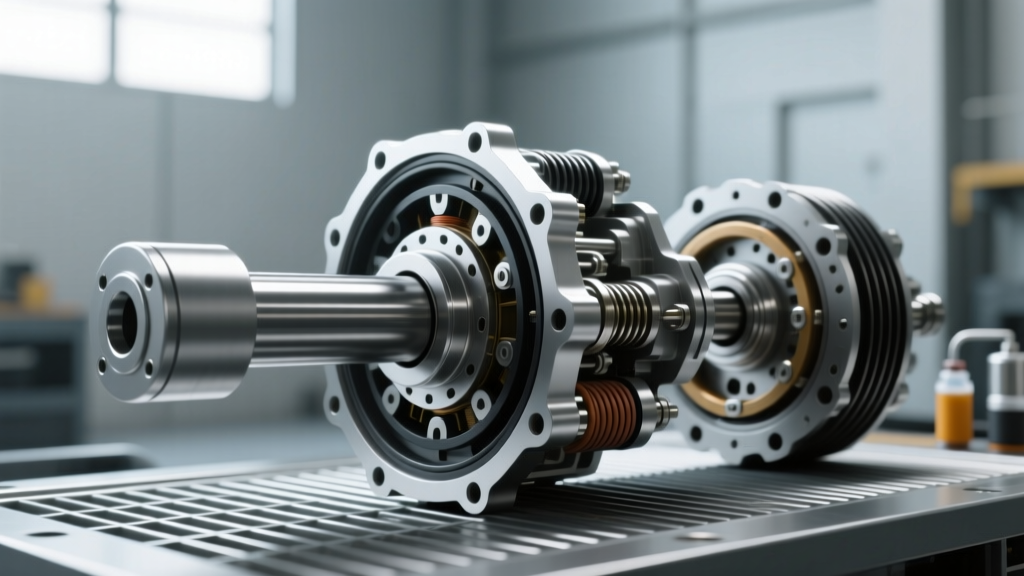
Modern performance and light-duty trucks (including the MT82-equipped Mustangs and Tremec T56 Magnum applications) use a Concentric Slave Cylinder. The CSC wraps around the transmission input shaft and acts directly on the diaphragm spring fingers, eliminating the release fork.
- Diagnostic Challenge: The CSC is housed entirely inside the bellhousing. A fluid leak here requires transmission removal to verify, making it a high-labor diagnostic risk.
- Common Failure Mode: Internal PTFE seal degradation under high thermal loads, or catastrophic failure of the plastic hydraulic line quick-connect fitting before it even reaches the CSC.
- Part Example: Sachs / Schaeffler CSC units (e.g., LuK 510 0097 10).
The Ford Clutch Line Retaining Clip: A Critical Failure Point
Regardless of whether your vehicle utilizes an external or concentric slave cylinder, the hydraulic fluid must travel from the master cylinder to the slave via a pressurized line. Ford heavily relies on plastic quick-connect fittings for these lines to speed up assembly line production. These fittings are secured by a small, often white or black, horseshoe-shaped wire or plastic retainer.
The Ford clutch line retaining clip is subjected to immense hydraulic shock. During an aggressive clutch dump, line pressure can spike from a nominal 400 PSI to over 800 PSI. If the quick-connect fitting is not fully seated, or if the retaining clip suffers from fatigue-induced spring tension loss, the clip will 'walk' out of its groove. When this happens, the hydraulic line blows off the slave cylinder or master cylinder port, resulting in instantaneous and total pedal failure.
Expert Insight: Many technicians mistakenly replace a perfectly good Concentric Slave Cylinder because they found fluid inside the bellhousing, only to realize the leak originated from the quick-connect fitting at the bellhousing pass-through, where the retaining clip had vibrated loose. Always pressure-test the line fitting before dropping the transmission.
Symptom Diagnosis Matrix: Slave Cylinder vs. Line Fitting
Use the following diagnostic matrix to differentiate between internal slave cylinder failures and external retaining clip / quick-connect failures.
| Symptom | Probable Cause (Slave Type) | Probable Cause (Line / Retaining Clip) | Verification Protocol |
|---|---|---|---|
| Sudden pedal drop to the floor, massive fluid loss | CSC internal seal blowout (rarely happens instantly) | Ford clutch line retaining clip ejection; line disconnected. | Inspect line connections at master cylinder and bellhousing entry point. |
| Slow fluid drop over weeks, dampness inside bellhousing | CSC weep hole leaking; internal bore wear. | Quick-connect O-ring degradation; clip partially unseated. | Remove inspection cover; clean area; apply UV dye and use a motive bleeder at 40 PSI. |
| Pedal sinks slowly while holding at stoplights | Master cylinder internal bypass (cup seal failure). | Micro-leak at retaining clip groove due to debris ingestion. | Clamp off the flexible line segment. If pedal holds, fault is downstream (line/clip/slave). |
| Hard pedal, poor disengagement, no fluid loss | CSC mechanical binding on input shaft sleeve. | N/A (Hydraulic flow is unrestricted). | Check clutch fork travel (external) or measure CSC stroke via access plug. |
Step-by-Step Hydraulic Troubleshooting Protocol
When a customer presents a Ford manual vehicle with a compromised clutch pedal, follow this exact sequence to avoid unnecessary transmission removal.
- Visual Inspection of the Retaining Clip: Locate the hydraulic line connection at the slave cylinder (or the bellhousing bulkhead for CSCs). Check for the presence of the retaining clip. If you are using an aftermarket replacement line, ensure you use a high-quality retainer. The Dorman 645-902 or equivalent heavy-duty steel retaining clips are vastly superior to the OEM plastic horseshoe clips which tend to snap during removal.
- The 'Pull' Test: With the system unpressurized, attempt to gently pull the hydraulic line away from the quick-connect fitting. If it separates without depressing the release collar, the internal grab-rings are worn, or the retaining clip was never fully seated. A properly seated Ford quick-connect requires a firm push until you hear and feel a distinct 'click', followed by inserting the retaining clip.
- Motive Pressure Testing: Connect a motive power bleeder to the master cylinder reservoir. Pressurize the system to exactly 35-40 PSI. Do not exceed 50 PSI on older plastic lines, as you risk rupturing the nylon tubing. Crawl under the vehicle and inspect the quick-connect fitting with a mirror and flashlight. Look for micro-bubbles or fluid weeping around the retaining clip groove.
- Isolate the CSC: If the line and retaining clip hold pressure, but fluid is pooling at the bottom of the bellhousing inspection cover, the leak is definitively the Concentric Slave Cylinder. At this point, transmission removal is mandatory.
Repair Protocols, Torque Specs, and Fluid Specifications
Once the faulty component—whether it is a failed CSC, a scored external slave, or a blown retaining clip—is identified, proper reassembly is critical to prevent a comeback.
Fluid Selection
Ford manual transmissions specify specific brake fluids for the hydraulic clutch system due to the rubber compounds used in the CSC seals and master cylinder cups.
- OEM Standard: Motorcraft DOT 4 LV (Low Viscosity) High Performance Brake Fluid (Part # PM-40 / WSS-M6C65-A2).
- Alternative: Castrol SRF or Motul RBF 660 for high-heat track applications (Mustang MT82/Tremec).
- Warning: Never use DOT 5 (Silicone-based). It will swell the Ford-specific EPDM seals and cause catastrophic master cylinder failure within 500 miles.
Torque Specifications & Reassembly
When replacing the slave cylinder or routing new lines, adhere to these specifications:
- CSC to Bellhousing Bolts (M8x1.25): 18 lb-ft (24 Nm). Use blue Loctite 243, as vibration is the primary enemy of the hydraulic line routing.
- External Slave Cylinder Mounting Nuts: 15 lb-ft (20 Nm).
- Hydraulic Line Bracket Bolts: 89 lb-in (10 Nm). Ensure the line is not under torsional stress, which will pull the quick-connect fitting out of alignment and cause the Ford clutch line retaining clip to fatigue prematurely.
Gravity vs. Pressure Bleeding
Concentric Slave Cylinders are notoriously difficult to bleed due to their inverted mounting position, which traps air in the CSC bore.
- Use a Schaeffler/LuK recommended reverse-bleeding method if possible, pushing fluid from the slave cylinder port up to the master cylinder reservoir to force air upward.
- If using a standard pressure bleeder, cycle the clutch pedal 50 times with the bleeder screw open, then close the screw and perform 20 full-stroke pedal pumps to seat the CSC internal seals.
Final Diagnostic Takeaways
Troubleshooting clutch hydraulic systems in Ford vehicles requires looking past the obvious. While a failed Concentric Slave Cylinder is a common and labor-intensive reality of modern manual transmissions, a significant percentage of 'internal leaks' are actually external quick-connect failures. By understanding the distinct characteristics of clutch slave cylinder types and rigorously inspecting the Ford clutch line retaining clip and its mating fitting, you can save hours of diagnostic time and avoid unnecessary transmission removals. Always prioritize pressure testing the external lines before authorizing a bellhousing teardown.