The Evolution of the 8.8 IRS Platform
As of 2026, the Ford 8.8-inch Independent Rear Suspension (IRS) differential remains the cornerstone of rear-wheel-drive performance for the S550 and S650 Mustang lineups, as well as the Explorer SUV family. Transitioning from the legacy solid-axle 8.8 to an IRS configuration drastically reduced unsprung mass and improved cornering dynamics. However, this aluminum-housed, independent setup places unique thermal and mechanical stress vectors on the internal Traction-Lok limited-slip differential (LSD). Understanding the precise operation, failure modes, and maintenance protocols of this specific LSD is critical for preserving drivetrain longevity and optimal torque biasing.
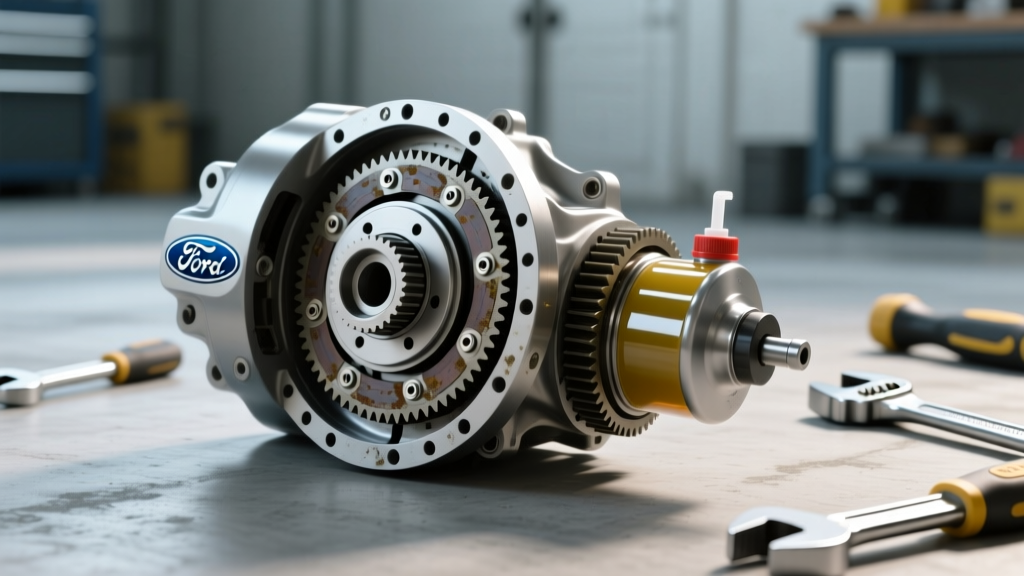
Unlike the older iron-housed solid axles, the IRS 8.8 utilizes an aluminum casing with a removable rear cover (often referred to as the 'pumpkin' drop-out or rear access panel, depending on the exact model year and subframe generation). This design aids in weight reduction but requires meticulous attention to thermal management and fluid shear stability, especially when equipped with the factory clutch-based Traction-Lok LSD.
Traction-Lok Mechanics: How the 8.8 IRS Clutch Pack Operates
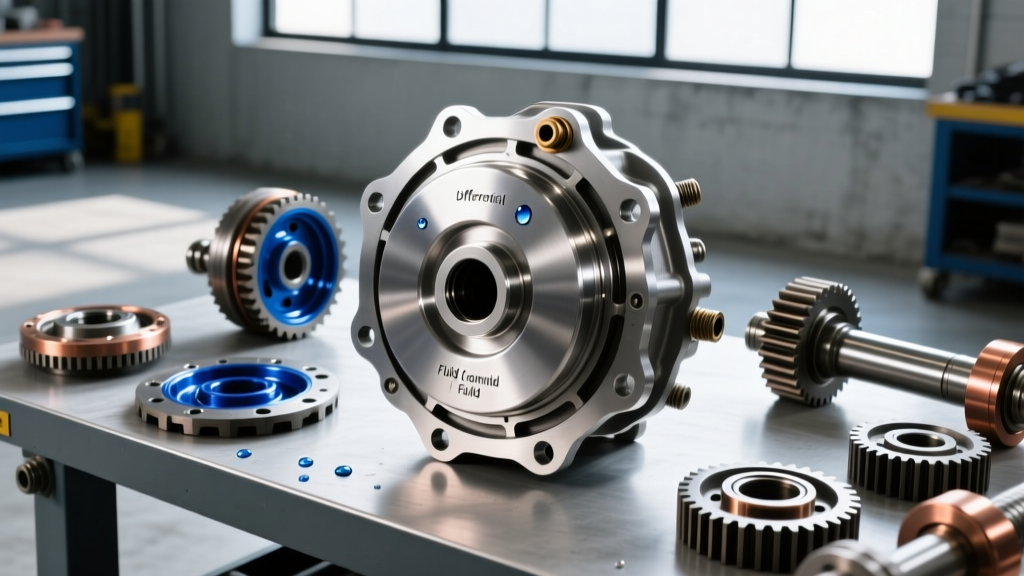
The Ford 8.8 IRS Traction-Lok is a clutch-type, torque-sensing limited-slip differential. Inside the differential carrier, you will find two side gears connected to the independent CV half-shafts, four spider gears mounted on a cross-pin shaft, and two multi-disc clutch packs. The clutch packs are situated between the side gears and the inner walls of the carrier.
At the heart of the assembly is the 'S-spring' (or preload spring), which applies a baseline mechanical clamping force to the clutch packs. When driving in a straight line, both rear wheels rotate at the same speed, and the differential acts essentially as an open unit. However, when one wheel loses traction (e.g., during hard cornering or on split-friction surfaces), the spider gears begin to rotate on the cross-pin. This rotation forces the side gears outward against the clutch packs. The friction generated by the clutch discs locks the side gears to the carrier, transferring torque to the wheel with grip.
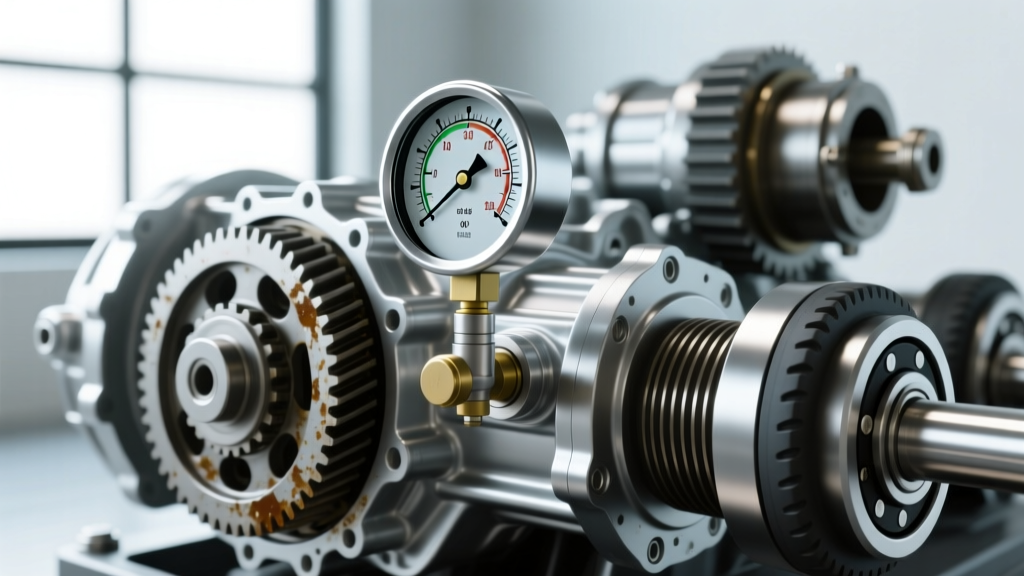
Because the 8.8 IRS relies heavily on the friction coefficient of these composite clutch discs, the chemical properties of the gear oil and the friction modifier additive are not just recommendations—they are mechanical requirements. Without the correct long-chain polymer friction modifiers, the clutch packs will experience 'stick-slip' engagement, resulting in the notorious low-speed chatter and premature disc glazing.
Diagnostic Matrix: Chatter vs. Gear Lash
Before draining the fluid, it is vital to accurately diagnose the health of the Ford 8.8 IRS differential. Misdiagnosing clutch chatter as ring-and-pinion failure can lead to unnecessary and expensive rebuilds. Use the following diagnostic framework:
- The Figure-8 Test: Drive the vehicle in tight, continuous figure-8 patterns in an empty parking lot at 5-10 mph. If you feel a rhythmic binding, hopping, or hear a groaning noise from the rear subframe, the LSD clutch packs are experiencing stick-slip. This is the primary indicator of degraded friction modifier or contaminated fluid.
- Load Reversal Clunk: If you hear a distinct metallic 'clunk' when shifting from Drive to Reverse, or when abruptly lifting off the throttle, the issue is likely excessive ring-and-pinion backlash or a worn S-spring, rather than the clutch packs themselves.
- Coast vs. Drive Whine: A whining noise that changes pitch depending on whether you are accelerating (drive side of the gear tooth) or coasting (coast side) indicates ring and pinion wear or improper gear setup, entirely separate from the LSD mechanism.
Fluid Specifications and Friction Modifier Chemistry
The chemical makeup of the fluid dictates the lifespan of the Traction-Lok clutch packs. Standard GL-5 gear oils contain high levels of sulfur-phosphorus extreme pressure (EP) additives. While these protect the ring and pinion gears, they can cause the composite friction material on the LSD clutches to grab aggressively. The friction modifier (typically containing organic friction-reducing agents) coats the clutch surfaces to ensure smooth, progressive engagement.
| Parameter | OEM Ford Specification | Track / Heavy-Duty Alternative |
|---|---|---|
| Base Viscosity | 75W-85 Synthetic (Motorcraft XY-75W85-QFS) | 75W-90 Synthetic (Amsoil Severe Gear / Red Line 75W90) |
| Friction Modifier | 4 oz Motorcraft XL-3 Additive | 4-6 oz Limited Slip Additive (Brand matched to oil) |
| Total Capacity | 1.5 Quarts (Approx. 1.42 Liters) | 1.5 Quarts (Fill to bottom of fill plug) |
| Service Interval | 150,000 Miles (Normal) / 50,000 Miles (Severe) | 15,000 - 30,000 Miles (Track / Drag Use) |
According to Ford Owner Support documentation, sticking to the exact 75W-85 viscosity ensures optimal lubrication of the pinion bearings during cold starts, while the XL-3 modifier preserves the Traction-Lok clutches. For heavily modified S550/S650 Mustangs pushing over 500 wheel-horsepower, stepping up to a 75W-90 synthetic provides a thicker protective film on the ring and pinion gears under extreme shock loads, provided the correct ratio of friction modifier is added.
Step-by-Step Ford 8.8 IRS Differential Service Protocol
Servicing the 8.8 IRS differential requires specific attention to the aluminum casing and fastener torque limits. Stripping a cover bolt in the aluminum IRS housing is a costly mistake that often requires helicoil repairs or casing replacement.
Required Tools and OEM Part Numbers
- Motorcraft 75W-85 Gear Oil (Part # XY-75W85-QFS) - 2 Bottles
- Motorcraft XL-3 Friction Modifier (Part # XL-3) - 1 Bottle
- 10mm and 13mm Sockets (1/4" and 3/8" drive)
- Torque Wrench (Inch-pounds and Foot-pounds)
- Brake Parts Cleaner and Brass Wire Brush
- RTV Silicone (Permatex Black or Ford Motorcraft TA-1-B) OR Replacement Gasket
- Fluid Transfer Pump
Execution Steps
1. Vehicle Support: Safely elevate the vehicle using a lift or jack stands. Critical Note: Support the vehicle by the designated chassis pinch welds or subframe points. Do not let the IRS suspension hang at full droop while draining, as the extreme CV joint angles can cause internal binding and prevent complete fluid evacuation. Support the differential housing with a secondary jack to relieve tension on the subframe bushings.
2. Cover Removal: The OEM 8.8 IRS rear cover is secured by perimeter bolts. Loosen them in a crisscross pattern. Once removed, immediately drain the fluid into a catch pan. Inspect the magnetic ring (if equipped on the cover or internally) for metal shavings. Fine, paste-like gray sludge is normal clutch and gear wear; large, jagged metal chunks indicate catastrophic bearing or gear failure.
3. Surface Preparation: Clean the mating surface of the aluminum differential housing and the stamped steel cover using brake cleaner and a brass brush. Never use a steel scraper or sanding disc, as scoring the aluminum surface will guarantee a permanent fluid leak. Allow the surface to dry completely.
4. Sealing: If your model year uses a reusable rubber gasket, inspect it for tears and reuse it. If it requires RTV, apply a continuous 3mm bead of Permatex Black RTV to the cover, ensuring a complete circle around every bolt hole. Let the RTV tack up for 10 minutes before mating.
5. Reinstallation and Torque: Hand-thread all cover bolts to prevent cross-threading. Torque the cover bolts to exactly 25 lb-ft (34 Nm) in a star pattern. Overtorquing will warp the stamped steel cover or strip the aluminum threads.
6. Refilling: Pump the 4 oz of XL-3 friction modifier into the differential first. Follow with the 75W-85 gear oil until the fluid level reaches the absolute bottom of the fill plug opening (approx. 1.5 quarts total). Reinstall and tighten the fill plug.
Pro-Tip Upgrade: The OEM 8.8 IRS cover lacks a dedicated drain plug, making future fluid changes messy. Upgrading to the Ford Performance Aluminum Differential Cover (Part # M-4033-S550) adds a magnetic drain plug and heavy-duty cooling fins, transforming a 2-hour messy job into a 20-minute clean drain-and-fill procedure for all future services.
Cost Analysis: OEM Dealership vs. Enthusiast DIY
Maintaining the Ford 8.8 IRS differential is highly cost-effective when performed at home, but dealership labor rates can inflate the price significantly.
- DIY Cost: $45 - $65 (Includes 2 qts of 75W-85, 1 bottle of XL-3, and basic RTV/cleaner). Time investment: 1.5 hours.
- Dealership / Shop Cost: $180 - $280. Shops typically charge 1.0 to 1.5 hours of labor at $150+/hr, plus a markup on OEM fluids. Note that many quick-lube shops refuse to service the IRS 8.8 due to the lack of a factory drain plug and the requirement for a suction gun or cover removal.
For enthusiasts tracking their S550 or S650 Mustangs, integrating the differential fluid service into your annual brake-fluid flush and hub-bearing inspection is a mandatory practice. The independent rear suspension geometry relies entirely on the predictable torque-biasing of a healthy Traction-Lok LSD to maximize exit speeds out of corners. Neglecting the friction modifier chemistry or ignoring early chatter will rapidly glaze the clutch packs, necessitating a $600+ carrier teardown and clutch pack replacement. By adhering to the precise fluid specifications and torque values outlined above, the 8.8 IRS differential will reliably handle both daily driving and extreme track abuse well past the 100,000-mile mark.