As we navigate the 2026 maintenance landscape, a vast majority of 2018 Ram 1500 4x4 trucks are pushing well past the 100,000-mile threshold. At this mileage, the health of your front drivetrain is entirely dependent on two critical factors: adherence to strict 2018 Ram 1500 front differential fluid service intervals, and a deep understanding of how your specific gear ratio multiplies mechanical stress. The 2018 model year represents a benchmark in half-ton engineering, pairing the legendary ZF 8HP automatic transmission with the robust American Axle Manufacturing (AAM) 9.25-inch Independent Front Suspension (IFS) axle.
Whether you are crawling through low-range or towing a 7,000-pound camper on the highway, this model-specific repair guide will walk you through the exact fluid specifications, torque values, and gear ratio dynamics required to keep your front axle operating flawlessly.
The Architecture of the AAM 9.25" IFS Front Axle
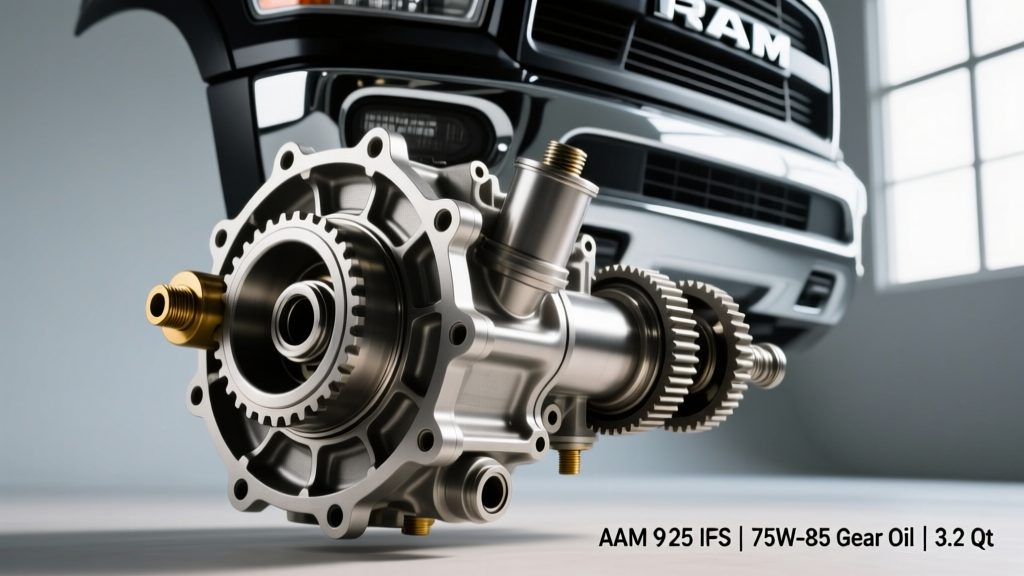
Unlike the solid Dana 44 or Dana 60 axles found in heavy-duty applications, the 2018 Ram 1500 utilizes an AAM 9.25" IFS front axle. This design reduces unsprung weight and vastly improves on-road ride quality. However, it introduces a complex internal mechanism known as the Front Axle Disconnect (FAD).
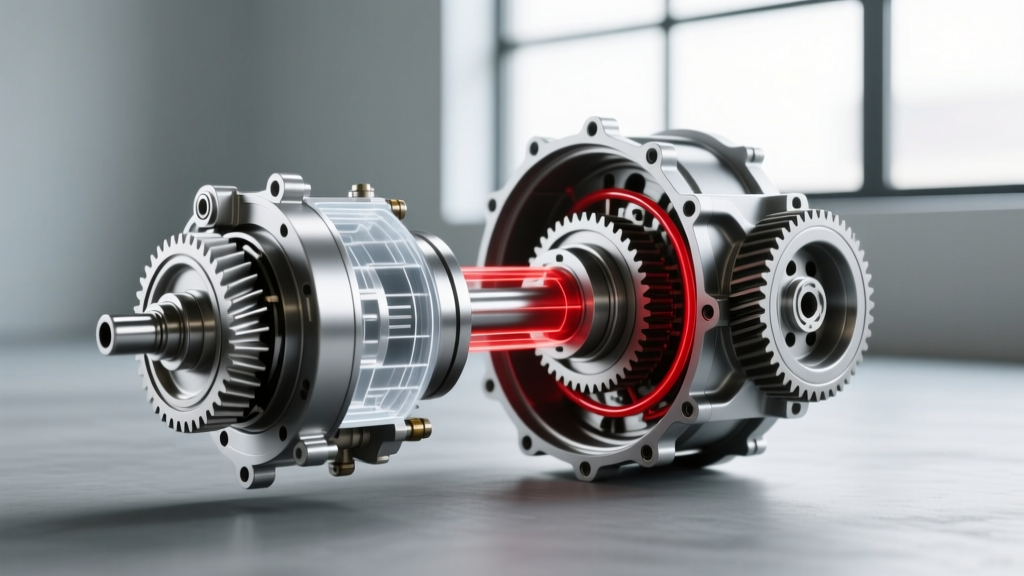
The FAD mechanism, located on the passenger-side axle tube, allows the front driveshaft and ring-and-pinion gears to remain stationary during 2WD operation to reduce parasitic drivetrain loss and improve fuel economy. Critical E-E-A-T Note: The internal shift collar and bearings of the FAD system are lubricated exclusively by the front differential gear oil. If your 2018 Ram 1500 front differential fluid degrades or drops below the minimum fill line, the FAD shift collar will bind, resulting in delayed 4WD engagement or a violent grinding noise upon actuation.
The ZF 8HP Synergy: How Gear Ratios Multiply Stress
To understand why gear oil shear stability is paramount, we must look at the transmission. The 2018 Ram 1500 is equipped with the ZF 8HP70 (or 8HP75 in HEMI V8 models). This transmission features an aggressive 4.71:1 first-gear ratio. When you engage the BorgWarner transfer case into 4WD Low (which typically carries a 2.64:1 reduction), the torque multiplication hitting the front ring and pinion is astronomical.
If your truck is equipped with a 3.92 rear and front axle ratio, the final crawl ratio exceeds 32:1. This means the physical teeth of your front pinion gear are subjected to immense shearing forces, rapidly breaking down the polymer chains in inferior or aged gear oils. Understanding your specific gear ratio is vital for predicting thermal loads and determining if a severe-duty synthetic fluid upgrade is necessary.
Decoding Your 2018 Ram 1500 Gear Ratio
You can identify your factory gear ratio by checking the build sheet in your glovebox or decoding the sales codes on the door jamb sticker:
- DS1 (3.21 Ratio): Optimized for highway fuel economy and light loads. Low thermal stress on the pinion bearing.
- DS7 (3.55 Ratio): The factory compromise. Offers adequate towing capability without sacrificing daily drivability.
- DS9 (3.92 Ratio): The heavy-duty towing and off-road package. Generates the highest thermal loads and requires strict adherence to fluid change intervals.
Performance Matrix: Gear Ratios vs. Drivetrain Stress
The table below illustrates how your specific gear ratio impacts real-world performance, drivetrain stress, and fluid degradation rates in the AAM 9.25 IFS axle.
| Gear Ratio | Primary Use Case | Highway RPM (at 70 MPH) | Pinion Bearing Thermal Load | Recommended Fluid Interval |
|---|---|---|---|---|
| 3.21:1 | Highway / Commuting | ~1,650 RPM | Low | Every 60,000 miles |
| 3.55:1 | Mixed / Light Towing | ~1,850 RPM | Moderate | Every 50,000 miles |
| 3.92:1 | Heavy Towing / Off-Road | ~2,050 RPM | High | Every 30,000 - 40,000 miles |
2018 Ram 1500 Front Differential Fluid Specifications
When servicing the 2018 Ram 1500 front differential fluid, using the correct viscosity is non-negotiable. While many enthusiasts mistakenly pour 75W-90 or 75W-140 into the front IFS, this is a critical error. The AAM 9.25 IFS operates with tighter bearing clearances and a smaller pinion shaft than a solid axle. Thicker fluids cause viscous drag, leading to overheating and sluggish FAD shift collar engagement.
Factory Specifications & Capacities
- Viscosity Requirement: SAE 75W-85 Synthetic Gear Lubricant
- API Specification: GL-5
- OEM Part Number: Mopar 68218655AB (or equivalent high-quality synthetic)
- Exact Fluid Capacity: 2.4 Pints (1.14 Liters)
- Friction Modifier: NOT required (The AAM 9.25 front does not use a limited-slip clutch pack; it relies on the TCS/ABS system for brake-locking traction control).
Expert Insight: According to the American Petroleum Institute (API), GL-5 gear oils contain high levels of sulfur-phosphorus extreme pressure (EP) additives. Never substitute GL-4, as it lacks the shear protection required for the hypoid gear sliding action in the AAM 9.25 ring and pinion set.
Step-by-Step Front Differential Fluid Service Guide
Performing this service requires basic hand tools and a safe lifting environment. Because the IFS axle is compact, access to the plugs can be tight due to the front skid plate and crossmembers.
Tools and Materials Required
- 3 Quarts of SAE 75W-85 Synthetic GL-5 Gear Oil
- 3/8" Square Drive Breaker Bar (for Fill Plug)
- 8mm Hex Bit Socket (for Drain Plug)
- Torque Wrench (inch-pounds or foot-pounds capable)
- Fluid Transfer Pump
- Brake Cleaner and Shop Towels
The Service Procedure
- Vehicle Preparation: Safely lift and support the front of the Ram 1500 on jack stands. Ensure the vehicle is perfectly level; an unlevel truck will result in an inaccurate fluid fill.
- Remove the Fill Plug FIRST: Locate the fill plug on the rear-facing side of the differential housing. Use your 3/8" square drive to break it loose. Never drain the axle before confirming you can remove the fill plug.
- Drain the Old Fluid: Position your catch pan and remove the drain plug located at the bottom of the housing using the 8mm hex bit. Allow the fluid to drain completely. Inspect the magnetic drain plug for excessive metallic fuzz (a fine paste is normal; large shards indicate bearing failure).
- Clean and Reinstall Drain Plug: Wipe the magnet clean, apply a small amount of thread sealant if the threads are damaged (though they are typically tapered NPT), and reinstall the drain plug. Torque to 25 lb-ft (34 Nm).
- Pump in New 75W-85 Fluid: Using your transfer pump, fill the differential with exactly 2.4 pints (1.14L) of 75W-85 synthetic gear oil. The correct fluid level is achieved when the oil is perfectly flush with the bottom edge of the fill hole threads.
- Reinstall Fill Plug: Clean the fill plug threads and reinstall. Torque to 25 lb-ft (34 Nm).
For more detailed engineering schematics regarding the AAM light-duty axle platforms, you can reference the American Axle Manufacturing (AAM) Light Vehicle Systems documentation.
Diagnosing Gear Ratio & Fluid-Related Noise
Even with fresh 2018 Ram 1500 front differential fluid, high-mileage IFS axles can develop distinct acoustic signatures. Understanding these noises is the first step in diagnosing internal hard-part failures versus simple fluid cavitation.
The Diagnostic Noise Tree
- Coast-Down Whine (Deceleration): Typically indicates pinion bearing wear. As the bearings wear, the pinion gear depth shifts, altering the ring-and-pinion contact pattern. This is highly common on 3.92 ratio trucks that have seen heavy towing.
- Drive Whine (Acceleration): Points to ring gear wear or improper backlash. If the fluid was previously overfilled with 75W-140, the viscous churning can cause localized overheating on the gear teeth, accelerating micro-pitting.
- FAD Engagement Clunk/Grind: If you hear a violent grind when shifting into 4WD, the internal shift collar is likely starved of lubrication or the actuator motor is failing. Verify your fluid level immediately; if the level is correct, the electronic/vacuum actuator on the passenger axle tube requires replacement.
- Highway RPM Drone: Often mistaken for differential noise, a steady drone at 65-75 MPH might actually be the front driveshaft CV joints or the transfer case output bearing, especially if the front axle is slightly low on fluid and the FAD collar is vibrating against the housing.
Final Thoughts on Drivetrain Longevity
The 2018 Ram 1500 is a highly capable machine, but its independent front suspension requires a more nuanced maintenance approach than older solid-axle trucks. By respecting the 75W-85 viscosity requirement, adhering to the 25 lb-ft torque specifications, and understanding how your specific gear ratio influences thermal loads, you can easily push your AAM 9.25 IFS axle well past 200,000 miles without a major rebuild. Keep your fluid fresh, monitor your magnetic drain plug, and let the ZF 8-speed transmission do the heavy lifting.