The Paradigm Shift: Mechanical Cables vs. Electronic Actuators
As we navigate the automotive repair landscape in 2026, clutch system diagnostics require a dual-lens approach. On one hand, technicians and DIY enthusiasts still frequently address traditional clutch cable problems and adjustment on older manual platforms, lightweight compacts, and off-road motorcycles. On the other hand, the industry is still dealing with the long-tail fallout of early dry dual-clutch transmissions, most notably the 2013 Ford Focus clutch actuator failures within the infamous DPS6 PowerShift transmission. Understanding the cost analysis, diagnostic procedures, and mechanical differences between a frayed mechanical cable and a failing brushless DC actuator motor is critical for accurate repair estimating and symptom resolution.
Traditional Clutch Cable Problems and Symptoms
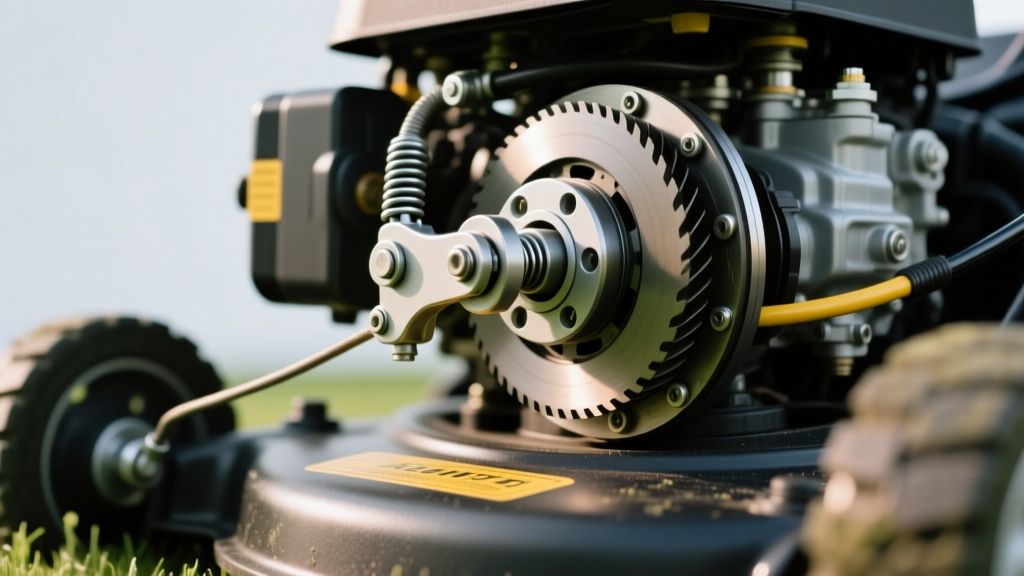
Before the widespread adoption of hydraulic slave cylinders and electronic fly-by-wire actuators, the mechanical clutch cable was the industry standard. Even today, cable-actuated systems are prized for their simplicity, but they are highly susceptible to environmental degradation and mechanical fatigue.
Common Cable Failure Modes
- Inner Wire Fraying: Often occurs at the clutch pedal lever or the transmission clutch fork. Symptoms include a 'notchy' pedal feel, sudden loss of tension, and eventual complete disengagement failure.
- Outer Housing Binding: Dirt, moisture, and corrosion infiltrate the PTFE-lined sheath. This causes a stiff pedal, uneven clutch engagement (chatter), and accelerated wear on the pedal return spring.
- Cable Stretching: Over years of high-load cycling, the steel braided wire elongates. This alters the clutch fork resting position, causing the throw-out bearing to ride the pressure plate fingers, leading to premature bearing failure and clutch slip.
Clutch Cable Adjustment Specifications
Proper clutch cable adjustment is paramount. An over-tightened cable eliminates free-play, causing slip and heat damage. A loose cable prevents full disengagement, resulting in gear grinding. The universal baseline for mechanical cable adjustment is 10mm to 15mm of free-play measured at the clutch fork lever on the transmission bellhousing. At the pedal, this usually translates to 1 to 1.5 inches of free travel before resistance is felt. Adjustment is performed via the threaded turnbuckle or locknut located near the transmission bracket. The locknut should be torqued to approximately 15 Nm (11 lb-ft) to prevent vibration-induced loosening.
Deep Dive: 2013 Ford Focus Clutch Actuator (DPS6 PowerShift)
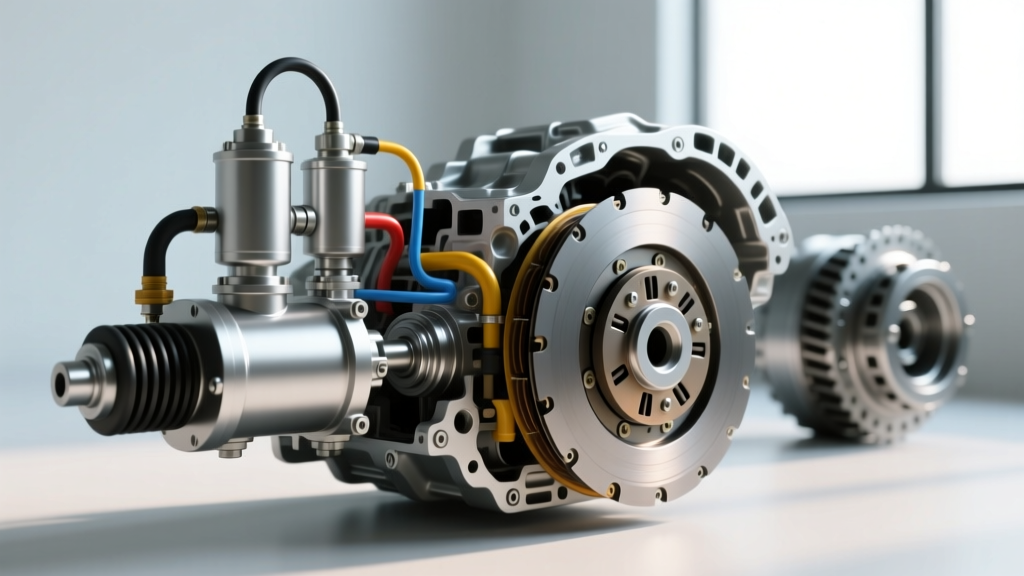
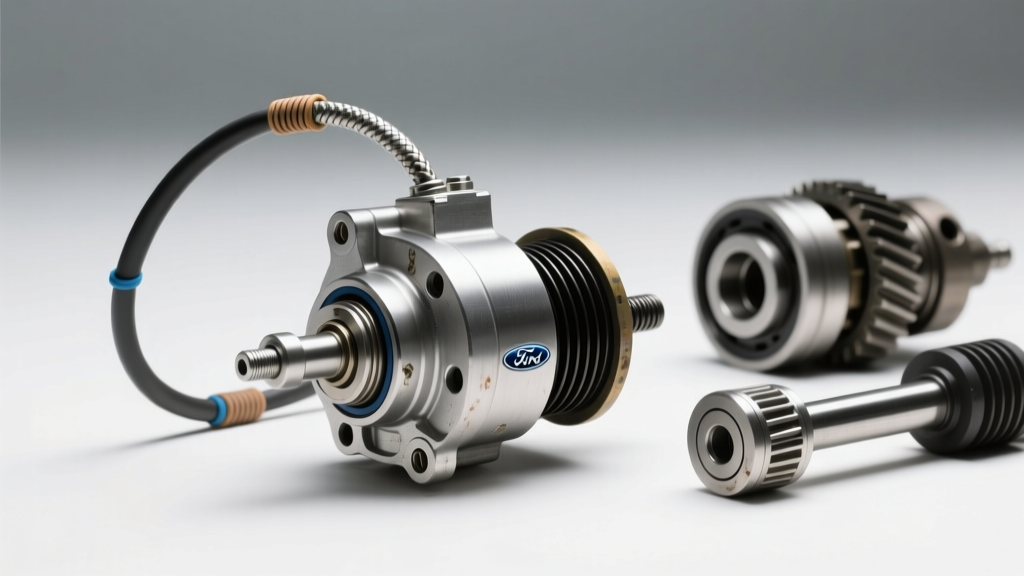
Unlike a traditional manual transmission that relies on a cable or hydraulic fluid, the 2013 Ford Focus equipped with the DPS6 6-speed dry dual-clutch automatic utilizes two independent electronic clutch actuator motors. These brushless DC motors physically push the clutch levers to engage the odd and even gear shafts. Because the DPS6 uses dry friction clutches (similar to a manual) rather than wet bath clutches, it requires precise, micro-calibrated actuator movements to manage slip during takeoff.
Symptoms of a Failing Focus Clutch Actuator
When the 2013 Ford Focus clutch actuator begins to fail, the symptoms often mimic a badly adjusted mechanical cable or a worn friction disc, but the root cause is electrical or internal motor gear failure:
- Low-Speed Shudder: Violent shaking during 1st or 2nd gear takeoff, often mistaken for engine misfires or warped rotors.
- Delayed Engagement: A distinct 'pause' when shifting from Park to Drive or Reverse, followed by a harsh clunk.
- Wrench Light & Limp Mode: The TCM (Transmission Control Module) detects actuator position discrepancies, triggering codes like P090C (Clutch Actuator Circuit Low) or P287A (Clutch Actuator Position Sensor Circuit).
Expert Insight: Many owners mistakenly believe their 2013 Focus needs a 'cable adjustment' due to the jerky, hesitant acceleration. The DPS6 has no cables. The shudder is typically caused by clutch dust contamination, warped dry clutch plates, or a failing actuator motor gear train that can no longer achieve the precise 'touch-point' required for smooth friction engagement.
2026 Cost Analysis & Price Breakdown
Below is a comparative cost analysis for addressing clutch actuation issues in 2026, contrasting traditional mechanical cable repairs with the electronic actuator replacement on the 2013 Ford Focus.
| Repair / Service Type | Part Cost (2026 Est.) | Labor Time | Labor Cost (@ $130/hr) | Total Estimated Cost |
|---|---|---|---|---|
| Clutch Cable Replacement (Manual) | $25 - $65 | 0.8 - 1.2 Hours | $104 - $156 | $129 - $221 |
| Clutch Cable Adjustment Only | $0 | 0.2 Hours | $26 | $26 (or Free DIY) |
| 2013 Focus Single Actuator Motor | $140 - $220 | 2.5 - 3.5 Hours | $325 - $455 | $465 - $675 |
| 2013 Focus Dual Actuator + TCM Cal | $300 - $450 | 4.0 - 5.0 Hours | $520 - $650 | $820 - $1,100 |
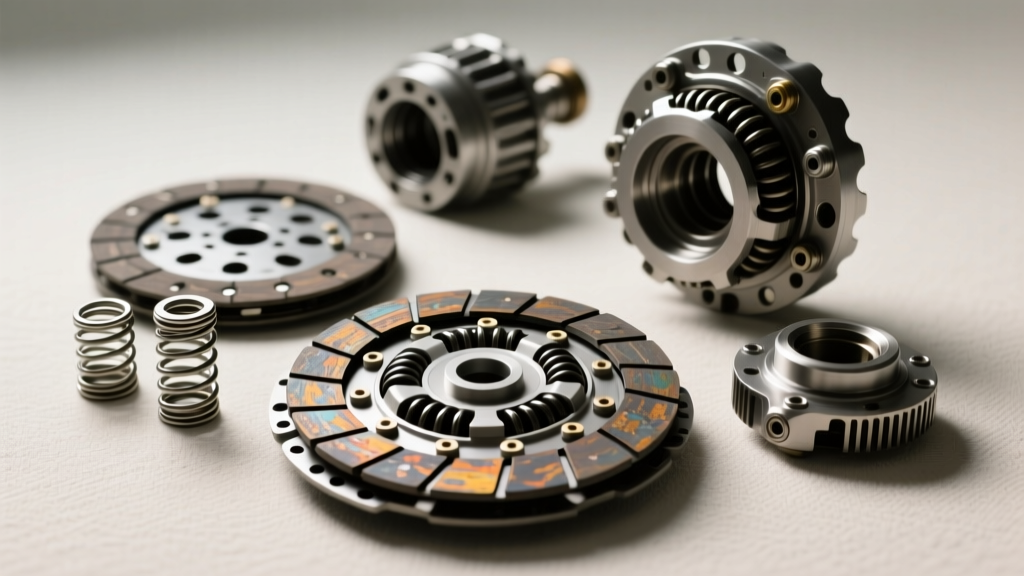
| Full DPS6 Clutch Pack & Actuator Kit | $600 - $950 | 8.0 - 10.0 Hours | $1,040 - $1,300 | $1,640 - $2,250 |
Step-by-Step: Adjusting a Mechanical Clutch Cable
- Locate the Adjustment Point: Follow the cable from the firewall to the transmission bellhousing. Locate the threaded rod and dual locknuts at the clutch fork.
- Measure Free-Play: Use a steel ruler to measure the distance the clutch fork moves before the cable becomes taut. Target 10-15mm.
- Loosen the Locknut: Use a 12mm or 14mm wrench to hold the adjusting nut while loosening the secondary locknut.
- Adjust Tension: Turn the adjusting nut clockwise to increase free-play (loosen clutch) or counter-clockwise to decrease free-play (tighten clutch).
- Secure and Test: Tighten the locknut to 15 Nm. Depress the pedal 5 times and re-measure to ensure the cable has not stretched under initial load.
Calibrating the 2013 Ford Focus Clutch Actuator
You cannot physically 'adjust' the 2013 Ford Focus clutch actuator with a wrench. If you replace an actuator motor (Motorcraft part CM5Z-7B546-A or equivalent), or if you are experiencing shudder due to clutch wear, you must perform a Touch-Point Learning Calibration. This requires a bi-directional OBD2 scanner capable of Ford IDS or FORScan protocols.
- Connect the FORScan laptop interface to the OBD2 port under the dashboard.
- Navigate to the TCM (Transmission Control Module) service functions.
- Select 'Clutch Touchpoint Learning' and 'Shift Drum Learning'.
- Follow the on-screen prompts, which will require the vehicle to be on a lift, wheels off the ground, and the engine running while the TCM cycles the actuators to map the exact friction bite-point of the dry clutches.
Note: Actuator motor mounting bolts must be torqued to exactly 10 Nm (89 lb-in) to prevent housing distortion and gear misalignment.
Expert Sourcing and Final Diagnostics
When sourcing parts for the 2013 Ford Focus, avoid cheap aftermarket actuator motors. The internal plastic gear trains on substandard units strip within 10,000 miles. Stick to OEM Motorcraft or verified OE suppliers like LuK. For traditional manual clutch cables, brands like Dorman or OE-replacement cables from RockAuto's 2013 Focus Transmission Catalog offer excellent longevity when properly lubricated with dry PTFE spray during installation.
Furthermore, owners of the 2013 Focus should verify their VIN against the Ford Official Recall & TSB Portal. While the original Customer Satisfaction Programs (like 14M02 and 19N01) for TCM and clutch actuator failures had time/mileage limits, checking the NHTSA 2013 Ford Focus Defect Records can reveal updated technical service bulletins regarding actuator wiring harness chafing, which is a common, low-cost fix that mimics total actuator motor failure.
The Bottom Line
Whether you are turning a wrench on a mechanical turnbuckle to eliminate pedal slack, or using FORScan to recalibrate a brushless DC motor on a DPS6 PowerShift, understanding the specific actuation method is the key to accurate diagnostics. Mechanical cables demand physical measurement and tensioning, while the 2013 Ford Focus clutch actuator demands software calibration and precise electrical diagnosis. Budget accordingly, source OEM components, and always verify free-play or touch-point data before declaring a clutch pack failure.