Why Does a Weak Clutch Pedal Ruin Engagement and Disengagement?
For beginner mechanics and daily drivers alike, the manual transmission relies on a precise hydraulic and mechanical symphony to operate smoothly. When you press the left-most pedal, you expect a firm, predictable resistance that smoothly disconnects the engine's power from the transmission. However, a weak clutch pedal—often described as spongy, loose, or lacking resistance—is one of the most common precursors to severe clutch engagement and disengagement issues. As of 2026, with modern manual transmissions like the Tremec T56 Magnum XL and the Porsche 992 GT3's 7-speed manual utilizing high-clamp-load pressure plates, hydraulic integrity is more critical than ever.
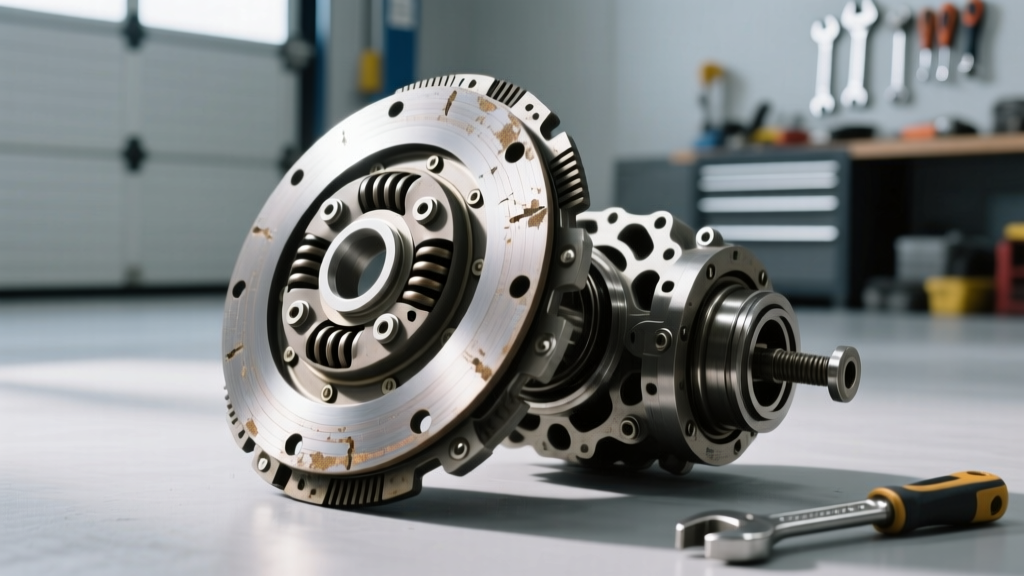
When your pedal feels weak, the clutch release bearing (throw-out bearing) fails to travel the necessary 8mm to 12mm required to fully compress the pressure plate fingers. This results in two major problems:
- Disengagement Issues: The clutch disc continues to drag against the flywheel, causing grinding when shifting into gear and premature synchronizer wear.
- Engagement Issues: If the hydraulic system is failing to maintain pressure, the pedal may not return fully, causing the release bearing to ride constantly on the pressure plate, leading to clutch slip and catastrophic friction material failure.
According to Car and Driver's manual transmission explainer, the synchronization of gear shifts relies entirely on the complete disengagement of the clutch disc. If your pedal is weak, you are forcing the transmission's brass or carbon synchronizers to do the work of matching engine and wheel speeds, which will quickly lead to a $2,000+ transmission rebuild.
The Anatomy of Pedal Feel: Hydraulics vs. Mechanics
To diagnose a weak clutch pedal, you must understand the two distinct systems working in tandem:
1. The Hydraulic Circuit
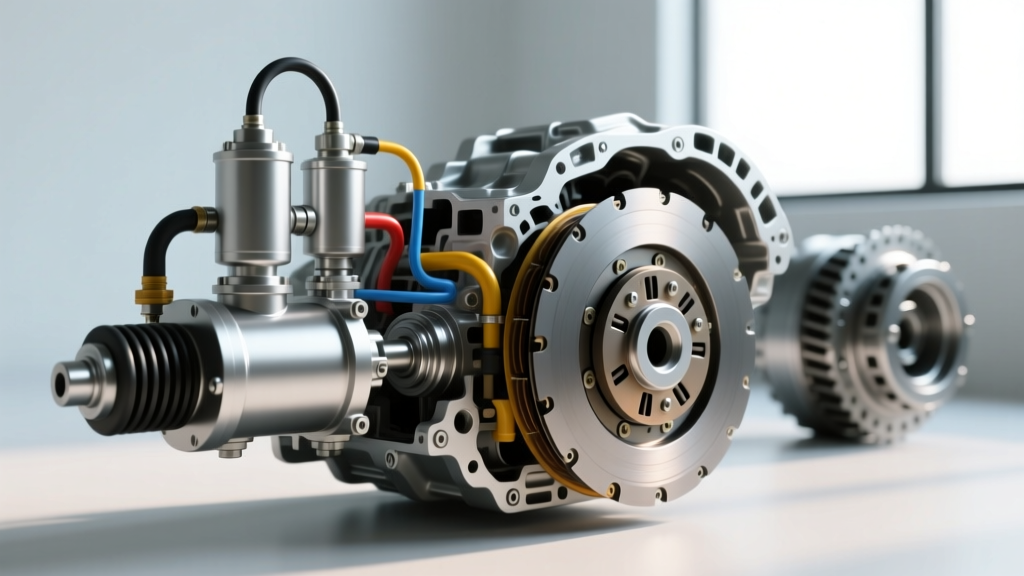
Most modern vehicles use a closed hydraulic loop consisting of a master cylinder (mounted on the firewall), a hard line, a flexible rubber hose, and a slave cylinder. The system uses DOT 3 or DOT 4 glycol-based brake fluid. Because glycol is hygroscopic (it absorbs moisture from the air), the fluid's boiling point drops over time. Fresh DOT 4 fluid boils at roughly 446°F (230°C), but fluid with 3% water content boils at just 311°F (155°C). Under heavy stop-and-go traffic, the heat from the bell housing transfers to the slave cylinder, boiling the contaminated fluid and creating vapor. Unlike liquid, vapor is compressible, resulting in a spongy, weak clutch pedal.
2. The Mechanical Linkage
The slave cylinder pushes a rod that actuates a clutch fork. This fork pivots on a ball stud and pushes the release bearing against the pressure plate's diaphragm spring. Wear in any of these mechanical components introduces 'slop' into the system, meaning the hydraulic cylinder uses up its stroke taking up slack rather than disengaging the clutch.
Top 4 Culprits Behind a Weak Clutch Pedal
1. Master Cylinder Internal Bypass
The master cylinder contains a primary rubber cup seal. Over time, this seal hardens or wears a groove into the aluminum bore. When you press the pedal, instead of pushing fluid down the line, the fluid sneaks past the seal back into the reservoir. This causes the pedal to slowly sink to the floor under constant pressure. Common OEM replacements from brands like FTE or Sachs (e.g., FTE KG19011.1.1) typically feature a 5/8-inch or 3/4-inch bore and cost between $60 and $140.
2. Concentric Slave Cylinder (CSC) Failure
Many modern front-wheel-drive and performance rear-wheel-drive cars use a Concentric Slave Cylinder, which wraps around the transmission input shaft inside the bell housing. While efficient, CSCs are prone to internal seal failure. If a CSC is leaking, you will lose hydraulic pressure, and the pedal will feel incredibly weak. Because it is located inside the transmission bell housing, fixing a CSC requires a full transmission removal (6 to 9 hours of labor), making it a costly repair.
3. Clutch Fork and Pivot Ball Wear
If your vehicle uses an external slave cylinder, the clutch fork rides on a pivot ball. Many factory pivot balls are made of nylon or soft steel. Over 80,000 miles, the hardened steel fork wears a deep 'divot' into the pivot ball. This mechanical wear can eat up 5mm to 10mm of pedal travel, making the pedal feel loose and causing incomplete disengagement.
4. Air in the Hydraulic Lines
Air can enter the system through a loose banjo bolt, a cracked rubber flex hose, or simply from fluid degradation. Air bubbles naturally rise to the highest point in the system, which is often the master cylinder or the hard line routing over the transmission.
Diagnostic Data Table: Symptom vs. Solution
| Primary Symptom | Likely Culprit | Beginner Diagnostic Step | Estimated Parts Cost (2026) |
|---|---|---|---|
| Pedal sinks slowly while held down | Master Cylinder Internal Bypass | Inspect reservoir for fluid movement while pedal is depressed | $60 - $140 |
| Spongy feel, pumping restores pressure | Air in Lines / Vapor Lock | Perform a manual gravity bleed; check fluid color | $15 (Fluid) |
| Pedal drops completely, fluid on ground | External Slave or Hard Line Leak | Inspect bell housing weep hole and hard line fittings | $40 - $90 (Ext. Slave) |
| Loose pedal, grinding into 1st/Reverse | Pivot Ball / Fork Wear | Have assistant press pedal while you watch fork travel | $25 - $60 (Pivot Kit) |
| Weak pedal, no visible external leaks | Concentric Slave Cylinder (CSC) | Check weep hole for fluid; requires trans drop if confirmed | $150 - $350 (CSC) |
Step-by-Step Beginner Troubleshooting Guide
If you are experiencing clutch engagement and disengagement issues, follow this diagnostic sequence before throwing parts at the car.
Step 1: The Pedal Pump Test
With the engine off, pump the clutch pedal 5 to 10 times rapidly. If the pedal feels firm and the resistance builds, but then goes soft after a few normal presses, you almost certainly have air in the hydraulic system or a failing master cylinder cup seal that is bypassing under sustained load.
Step 2: Reservoir and Fluid Inspection
Open the clutch fluid reservoir (often shared with the brake master cylinder or a standalone tank). The fluid should be clear or slightly amber. If it is dark brown or black, the rubber seals in your slave or master cylinder are degrading and contaminating the fluid. A complete flush with fresh DOT 4 fluid is mandatory.
Step 3: The Weep Hole Check
Locate the transmission bell housing inspection cover or weep hole at the bottom of the engine/transmission mating surface. If you see drops of brake fluid, your slave cylinder (whether external or internal CSC) has failed. For deep dives into specific bleeding procedures, Family Handyman's clutch bleeding guide offers excellent visual aids for beginners tackling their first hydraulic flush.
Bleeding the System: Torque Specs and Fluid Capacities
If you determine that air is the cause of your weak clutch pedal, you must bleed the system. Beginners often make the mistake of overtightening or snapping the bleeder valve.
- Fluid Capacity: Most manual transmission clutch hydraulic systems hold between 0.5 and 1.0 liters of fluid. Buy two 500ml bottles to ensure a complete flush.
- Fluid Choice: Standard DOT 4 is fine for daily drivers. For track use or heavy towing, upgrade to a high-temp fluid like Motul RBF 600 or Castrol SRF.
- Bleeder Valve Torque: The bleeder screw on the slave cylinder is typically a 7mm, 8mm, or 10mm hex or flare nut. It is made of soft brass or steel and threads into aluminum. Do not exceed 8 to 12 Nm (6 to 9 lb-ft) of torque when closing it, or you will strip the slave cylinder housing.
- Pushrod Adjustment: If you replace the master cylinder, ensure the pushrod free-play is set to the factory spec (usually 1mm to 3mm). If the pushrod is too tight, it will block the return port, causing the clutch to drag and slip.
Expert Tip: Never use a vacuum bleeder on a clutch system that has a flexible rubber line routing down to the transmission. Vacuum bleeders can collapse the internal lining of old rubber hoses, creating a blockage that mimics a weak, spongy pedal. Always use a positive-pressure bleeder or the traditional two-person manual pump method.
When to Replace vs. Repair: Cost and Part Selection
When a weak clutch pedal is traced to a failed hydraulic component, part selection is critical for long-term reliability. Avoid unbranded, ultra-cheap aftermarket master or slave cylinders found on discount sites. The internal seals are often made of inferior rubber compounds that swell and fail within 10,000 miles.
Always opt for OEM-equivalent brands like LuK, Sachs, FTE, or Exedy. When sourcing replacements, always consult LuK's official clutch system documentation to ensure you are getting the correct concentric slave cylinder and matching release bearing for your specific transmission model. A quality LuK or Sachs slave cylinder will cost between $80 and $250, but it will save you from paying for the same labor twice.
Finally, remember that if your weak clutch pedal has caused prolonged disengagement issues (grinding into gear), you must inspect the transmission's synchronizers and the clutch fork pivot ball during the repair. Replacing a $200 slave cylinder but ignoring a worn $15 nylon pivot ball will result in the exact same engagement issues returning within a few thousand miles. Address the hydraulics, verify the mechanical linkage, and your manual transmission will shift smoothly for years to come.