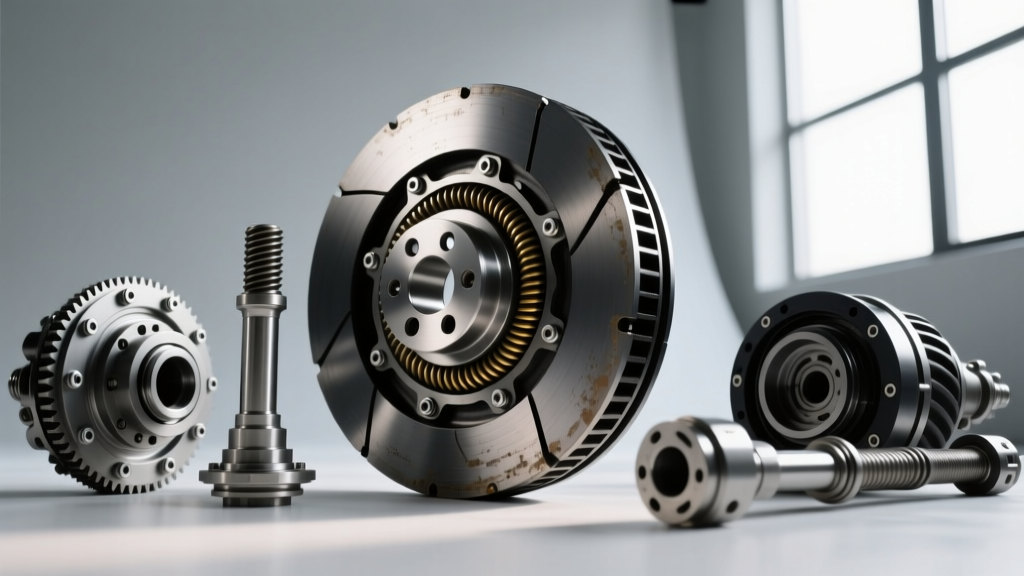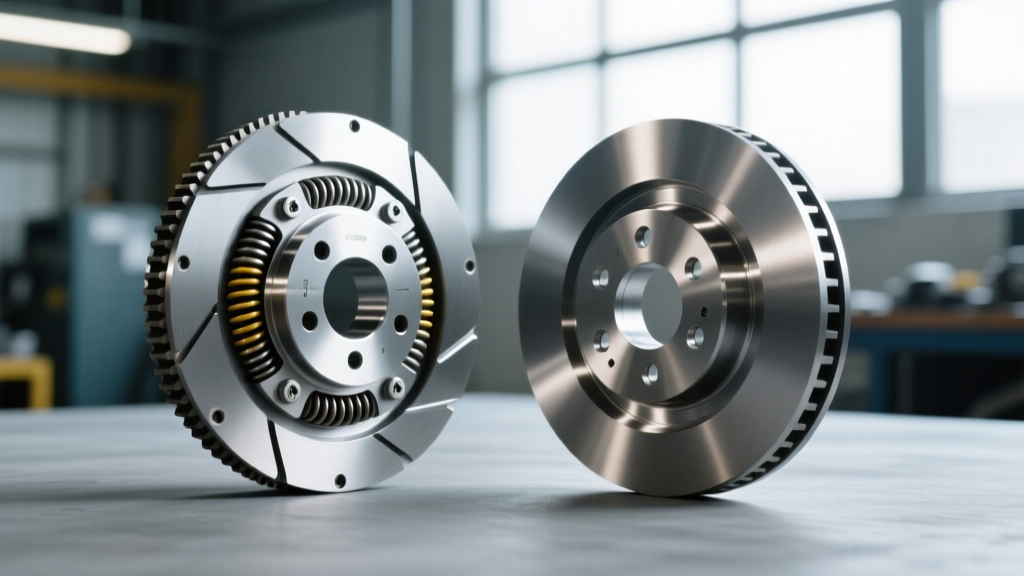
Introduction: The Flywheel's Role in Drivetrain Dynamics
The flywheel is the unsung hero of the manual and dual-clutch drivetrain. It serves as a rotational mass to smooth out engine pulses, a heat sink for clutch friction, and the critical mating surface for starter engagement. When flywheel problems arise, they often mimic transmission or engine misfire issues, leading to costly misdiagnoses. By consulting a detailed clutch and flywheel diagram, technicians and advanced DIYers can isolate the exact failing component—whether it is the friction surface, the ring gear, or the internal damping springs of a Dual Mass Flywheel (DMF).
In this expert guide, we will break down the anatomy of the assembly using diagram reference points, detail the top five flywheel failure modes, and provide actionable best practices, including exact torque specifications and resurfacing limits for popular platforms like the GM LS, Ford Coyote, and VW/Audi 2.0T.
Decoding the Clutch and Flywheel Diagram
Before diagnosing a driveline shudder or a starter grind, you must understand the visual layout of the assembly. When reviewing a standard clutch and flywheel diagram, the component is divided into four critical functional zones:
- The Friction Surface: The machined face where the clutch disc makes contact. In a single mass flywheel (SMF), this is a solid iron or steel plane. In a DMF, this is part of the secondary (output) mass.
- The Ring Gear: The toothed outer perimeter pressed onto the flywheel, engaged by the starter motor's pinion gear.
- The Mounting Bolt Circle: The array of threaded holes that secure the flywheel to the crankshaft flange. The precision of this flange dictates flywheel runout.
- The Pilot Spigot (Center Bore): The center hole that houses the pilot bearing or bushing, which supports the transmission input shaft.
Expert Tip: When tracing a vibration issue, always map the physical symptom to the specific zone on your clutch and flywheel diagram. A clunk on engine shutdown points to the internal arc springs (DMF), while chatter on takeoff points directly to the friction surface or pressure plate diaphragm.
Top 5 Flywheel Problems and Their Telltale Symptoms
1. Dual Mass Flywheel (DMF) Internal Spring Failure
DMFs utilize internal arc springs to absorb torsional vibrations from the crankshaft before they reach the transmission. Over time, these springs fatigue, or the internal grease degrades due to excessive heat from a slipping clutch.
Symptoms: A distinct metallic 'clunk' when turning the engine off, a rhythmic rattling at idle that disappears when the clutch pedal is depressed, and severe driveline shudder during low-RPM acceleration.
Expert Fix: DMFs cannot be rebuilt or resurfaced safely. Replacement with an OEM-equivalent unit (e.g., LuK or Sachs) is mandatory. Expect to pay between $600 and $900 for the part alone. Some enthusiasts opt for an SMF conversion kit (like the LuK RepSet), but this will transfer harsh torsional vibrations into the transmission, potentially accelerating synchro wear in gearboxes like the VW 02Q or Tremec T56.
2. Friction Surface Glazing and Hotspotting
Aggressive driving, riding the clutch, or improper clutch break-in procedures can overheat the friction surface. This causes the cast iron or steel to locally harden, creating blueish 'hotspots' or a glass-like glaze.
Symptoms: Clutch slip under heavy load, high-pitched squealing during engagement, and severe judder (chatter) when releasing the pedal in first gear.
Expert Fix: If the flywheel is an SMF and the hotspots are superficial (less than 0.010 inches deep), it can be resurfaced on a dedicated flywheel grinder. If the hardening is deep, or if it is a DMF, replacement is required.
3. Ring Gear Tooth Shearing
The ring gear is typically shrink-fitted onto the outer edge of the flywheel. Repeated aggressive starts, faulty starter Bendix drives, or improper starter shimming can chip or shear the teeth.
Symptoms: A loud, grinding metallic noise when turning the key, often resulting in a 'no-crank' condition if the missing teeth align with the starter pinion.
Expert Fix: On older SMF applications, a machine shop can sometimes press off the old ring gear, heat a new one to 400°F, and press it on. However, on modern integrated designs, full flywheel replacement is the standard best practice.
4. Flywheel Runout and Warping
Runout occurs when the friction surface is not perfectly parallel to the crankshaft's axis of rotation. This is often caused by improper torque sequencing during installation, debris between the crank flange and flywheel, or extreme thermal cycling.
Symptoms: Clutch drag (difficulty shifting into gear while running), pulsating clutch pedal feel, and premature wear on the clutch disc marcel springs.
Expert Fix: Measure runout using a magnetic base dial indicator mounted to the engine block, resting the needle on the friction surface. Maximum allowable runout is typically 0.005 inches (0.13mm). If it exceeds this, check the crank flange for fretting before condemning the flywheel.
5. Crankshaft Mounting Flange Fretting
While technically a crankshaft issue, fretting corrosion on the mating surface prevents the flywheel from seating flush, leading to catastrophic harmonic vibrations.
Symptoms: Unexplained vibrations that mimic a misfire, often accompanied by cracked flywheel mounting ears.
Expert Fix: Clean the crank flange with a Scotch-Brite pad and brake cleaner. Apply a microscopic layer of anti-seize or specific crank-flange paste (like Honda Bond or equivalent, depending on the OEM spec) to prevent micro-welding and fretting.
Diagnostic Data Table: Symptom vs. Root Cause vs. Fix
| Symptom | Diagram Component | Root Cause | Expert Solution |
|---|---|---|---|
| Clunk on engine shutdown | Internal Arc Springs (DMF) | Spring fatigue / grease burnout | Replace DMF; do not resurface |
| Chatter on takeoff | Friction Surface | Hotspotting / oil contamination | Resurface SMF or replace DMF; fix rear main seal |
| Starter grinding noise | Ring Gear | Sheared teeth / starter misalignment | Replace flywheel or press on new ring gear |
| Pulsating clutch pedal | Friction Surface / Mounting | Excessive runout (>0.005 in) | Check crank flange; replace warped flywheel |
| High-RPM clutch slip | Friction Surface / Pressure Plate | Glazing / weak diaphragm springs | Replace full clutch kit and flywheel as a set |
Expert Best Practices: Torque Specs and Installation
A clutch and flywheel diagram will show you the bolt circle, but it will not tell you how to torque it. Flywheel bolts are subjected to immense shear forces. Reusing old stretch bolts or failing to use a calibrated torque wrench is a recipe for catastrophic engine failure. Always reference the manufacturer or fastener specialist guidelines, such as those provided by Automotive Racing Products (ARP).
Platform-Specific Torque Specifications
- GM LS / LT V8 (e.g., Tremec T56 Magnum applications): Using ARP 200-2802 flywheel bolts with ARP Ultra-Torque lube, the target torque is 115 lb-ft. Tighten in a crisscross pattern starting from the center.
- Ford 5.0L Coyote (MT82 Manual applications): OEM M12x1.25 stretch bolts require a torque-to-yield procedure. Torque to 59 lb-ft, then turn an additional 90 degrees. Never reuse these bolts.
- VW/Audi 2.0T TSI (02Q 6-Speed): The DMF is secured with M10x1.0 stretch bolts. Torque to 44 lb-ft, followed by a 90-degree turn. Ensure the alignment dowel pin on the crank flange is perfectly seated to avoid runout.
Resurfacing Limits: When to Machine and When to Scrap
Machine shops use specific metrics to determine if a Single Mass Flywheel is salvageable. According to clutch engineering data from Schaeffler / LuK Aftermarket, you must measure two critical dimensions:
- Step Height: The difference in height between the friction surface and the mounting pad (where the pressure plate sits). Maximum allowable step is typically 0.020 inches. If machining removes too much material, the pressure plate diaphragm will sit at an incorrect angle, causing premature release bearing wear and heavy pedal feel.
- Minimum Thickness: Every flywheel has a discard thickness stamped on the edge or listed in the service manual. Machining below this threshold compromises the flywheel's structural integrity and its ability to absorb heat.
Note: Never attempt to resurface a Dual Mass Flywheel. The secondary plate is dynamically balanced with the primary mass and internal springs at the factory. Removing material alters the mass distribution, leading to destructive harmonic vibrations that can shatter the transmission bell housing.
Conclusion
Diagnosing driveline issues requires more than just guessing; it requires a systematic approach grounded in mechanical theory. By utilizing a clutch and flywheel diagram to pinpoint the exact zone of failure, measuring runout with precision tools, and adhering to strict torque-to-yield specifications, you can ensure a repair that lasts the lifetime of the clutch kit. Whether you are refreshing a daily-driven VW GTI or building a track-prepped LS3, respect the flywheel—it is the critical bridge between your engine's power and the pavement.