The Science of the Match: Why Kit Pairing Dictates Drivetrain Survival
When executing a clutch and flywheel replacement, the most frequent error made by both novice enthusiasts and general repair facilities is treating the flywheel as a static mounting surface. In reality, the flywheel and clutch assembly operate as a unified torsional management system. In 2026, with the resurgence of manual transmission swaps and the increasing complexity of OEM dual-mass designs, pairing the correct flywheel mass with the appropriate friction material and pressure plate clamping load is non-negotiable. A mismatched setup does not merely cause engagement chatter; it accelerates crankshaft thrust bearing wear, fractures aluminum bell housings, and twists transmission input shafts.
According to technical bulletins from Schaeffler REPXPERT, a significant percentage of premature clutch failures are traced back to improper kit pairing, mismatched clamp loads, or the failure to replace a fatigued dual-mass flywheel (DMFW) during a standard disc swap. This buyer's guide will dissect the critical variables you must evaluate before purchasing your next assembly.
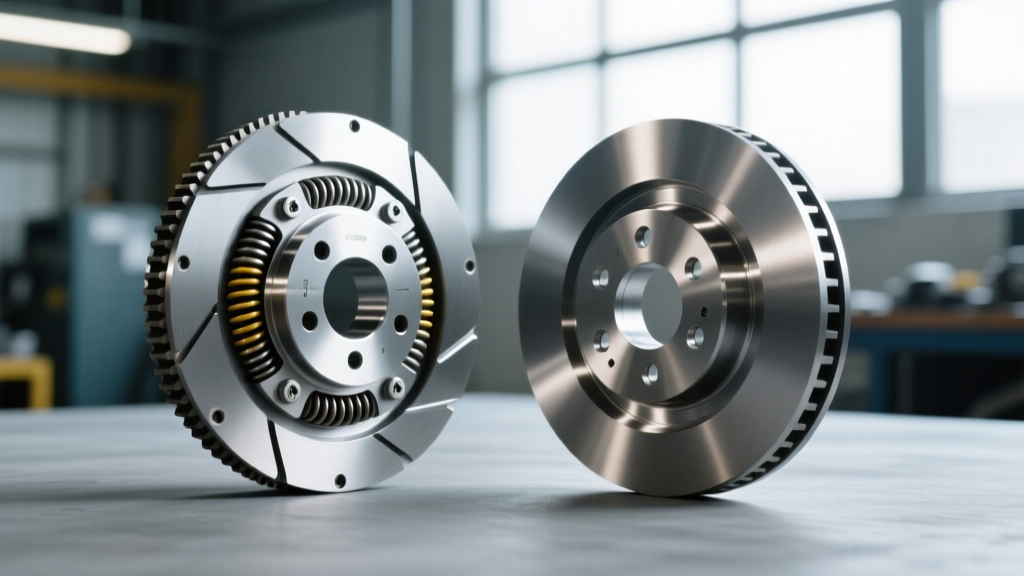
Flywheel Architecture: DMFW vs. SMFW Comparison
The foundation of any clutch kit pairing is the flywheel's mass and dampening capability. Modern diesel and high-compression gas engines generate severe torsional vibrations at low RPMs. Understanding the difference between Single Mass (SMFW) and Dual Mass (DMFW) flywheels is the first step in the buyer's journey.
| Specification | Dual Mass Flywheel (DMFW) | Single Mass Flywheel (SMFW) |
|---|---|---|
| Primary Function | Absorbs torsional engine vibrations via internal arc springs | Provides solid, direct rotational mass and heat dissipation |
| Clutch Disc Requirement | Solid hub disc (dampening is in the flywheel) | Sprung hub disc (dampening is in the clutch disc) |
| Typical Weight | 25 - 40 lbs (varies by application) | 15 - 25 lbs (varies by application) |
| NVH (Noise, Vibration, Harshness) | Exceptionally smooth, near-zero gear rattle at idle | Higher NVH, potential transmission gear rattle at idle |
| Cost Range (2026) | $450 - $900+ (Kit) | $300 - $700 (Kit) |
The SMFW Conversion Debate
Many buyers opt for an SMFW conversion kit to eliminate the recurring cost of replacing a failing DMFW. While an SMFW is virtually bulletproof and offers faster engine revving due to reduced rotational mass, it transfers torsional shock directly into the transmission. If you choose an SMFW conversion for a daily-driven vehicle, you must pair it with a clutch disc featuring high-quality marcel springs and a multi-stage sprung hub to compensate for the lost flywheel dampening. Pairing an SMFW with a rigid-hub ceramic puck disc on a street car will result in catastrophic driveline shock and stripped transmission splines.
Friction Material Matrix: Matching the Disc to the Application
Once the flywheel architecture is selected, the friction material must be matched to the engine's torque output and the vehicle's operating environment. The team at Advanced Clutch Technology (ACT) emphasizes that higher clamping force and aggressive friction materials require specific flywheel metallurgy to prevent rapid wear or surface checking.
- Organic (Full Face): The OEM standard. Offers smooth engagement and excellent heat tolerance for daily driving. Pairs perfectly with both DMFW and SMFW. Best for street applications up to 450 lb-ft of torque.
- Kevlar / Ceramic Composite: Provides a 20-30% increase in torque capacity over organic. Requires a solid SMFW or a heavy-duty DMFW. Engagement is slightly more aggressive, and it requires a proper bedding-in period to transfer material to the flywheel face.
- Ceramic Puck (Sprung or Rigid): Designed for high-horsepower track and drag applications. Capable of holding 700+ lb-ft. Must only be paired with a hardened, single-mass chromoly or billet steel flywheel. Using a ceramic puck on a standard cast-iron DMFW will gouge the friction surface and destroy the internal springs upon aggressive engagement.
Real-World Kit Comparisons & Pricing (2026 Market)
To illustrate proper pairing, here are three distinct buyer profiles and the exact kits that meet their engineering requirements.
1. The OEM Restorer: LuK RepSet DMF (Example Part # 05-161)
Target: Daily driven European or late-model domestic turbo-diesel (e.g., VW TDI, Ford Powerstroke).
The Pairing: LuK includes a new DMFW, a solid-hub organic clutch disc, a matched pressure plate, and a concentric slave cylinder (CSC). This is a direct 1:1 OEM replacement. Do not attempt to reuse the old DMFW with a new LuK clutch disc; the internal spring rates of the DMFW degrade, and a new solid-hub disc will chatter violently against a worn flywheel.
Estimated Cost: $550 - $850
2. The Track-Day Enthusiast: Sachs Performance SMFW Conversion
Target: Weekend track cars (e.g., BMW E46 M3, Porsche 997, Subaru WRX).
The Pairing: Sachs replaces the heavy OEM DMFW with a lightweight, dynamically balanced SMFW (often dropping 8-12 lbs of rotational mass). This is paired with a heavy-duty pressure plate (increased clamp load by 20-30%) and a sprung-hub organic or Kevlar disc. The sprung hub protects the gearbox during hard downshifts and track launches.
Estimated Cost: $750 - $1,100
3. The High-Power Builder: ACT Heavy Duty / Ceramic Puck (Example SB2-HDG6)
Target: 600+ WHP forced-induction builds, dedicated drag or drift cars.
The Pairing: ACT's heavy-duty pressure plate utilizes a hardened diaphragm spring for massive clamping force. The 6-puck ceramic disc provides instant, aggressive lock-up. This requires pairing with ACT's proprietary billet or chromoly SMFW. Standard cast-iron flywells will crack under the localized heat and impact stress of a ceramic puck.
Estimated Cost: $900 - $1,400
Critical Installation Specs: Torque, Runout, and Fasteners
Buying the right kit is only half the battle; improper installation voids warranties and causes immediate failure. Always reference factory service manuals, but adhere to these universal transmission engineering standards:
Flywheel Runout Limits
Before mounting the clutch, you must measure flywheel runout using a magnetic base dial indicator. According to SAE standards, maximum allowable runout at the friction surface is 0.005 inches (0.127mm). If a new SMFW exceeds this, check for debris between the crankshaft flange and the flywheel, or verify that the crankshaft flange itself is not warped. Never attempt to machine a DMFW; they cannot be resurfaced due to their internal floating architecture.
Fastener Selection and Torque Specifications
OEM flywheel bolts are typically Torque-to-Yield (TTY) and must be discarded. Upgrade to ARP fasteners for superior clamping and reusability. Always use the manufacturer's provided lubricant (e.g., ARP Ultra-Torque) on the threads and under the bolt head, as dry torque specs will result in severe under-clamping.
- GM LS-Series (e.g., LS3, LQ4) with ARP 200-2803: 74 lb-ft + 90 degrees turn.
- Ford 5.0L Coyote (OEM TTY): 59 lb-ft (Verify specific year, as 2018+ variants differ slightly).
- Pressure Plate to Flywheel (M8x1.25 bolts): 22 - 25 lb-ft, tightened in a sequential star pattern in three passes.
- Pressure Plate to Flywheel (M10x1.50 bolts): 35 - 40 lb-ft, star pattern.
For comprehensive fastener data, always consult the ARP Installation Instructions portal before applying torque.
The Buyer's Decision Framework
Use this quick diagnostic framework to finalize your purchase:
- Define the Duty Cycle: Is the car driven in stop-and-go traffic (Requires DMFW/Organic), or is it a dedicated track car (SMFW/Ceramic)?
- Calculate True WHTQ: Do not buy based on peak engine torque. Calculate wheel horsepower/torque and add a 15% safety margin for shock loading during aggressive shifts.
- Verify Bell Housing Clearance: Some heavy-duty pressure plates feature taller diaphragm fingers or thicker mounting flanges. Ensure your specific transmission bell housing has the depth to accommodate the new assembly without binding the throwout bearing.
- Include the Hydraulics: If your vehicle uses a Concentric Slave Cylinder (CSC), it must be replaced during the clutch and flywheel replacement. A leaking CSC will destroy your new friction surfaces within miles.
Expert Tip: When installing a new clutch kit, never use compressed air to clean the bell housing or flywheel. Oil and moisture from unfiltered shop air lines will contaminate the organic friction material instantly. Use only dedicated, residue-free brake cleaner and lint-free shop towels.
By treating the clutch and flywheel replacement as a holistic system upgrade rather than a simple wear-item swap, you ensure drivetrain longevity, predictable engagement, and maximum power transfer to the pavement.