The Core Dilemma: NVH vs. Longevity in Drivetrain Pairing
When enthusiasts and fleet mechanics search for a dual mass clutch vs single mass setup, they are navigating one of the most critical decisions in manual transmission maintenance. Technically, the term 'dual mass clutch' is an industry misnomer; the mass and damping characteristics belong to the flywheel, while the clutch disc must be specifically engineered to complement it. Pairing the wrong clutch disc hub design with the wrong flywheel type will result in catastrophic transmission input shaft failure, severe drivetrain shudder, or premature release bearing wear.
As we move through 2026, the debate between retaining Original Equipment (OE) Dual Mass Flywheel (DMF) systems versus converting to a Single Mass Flywheel (SMF) remains highly contested. The choice hinges on your tolerance for Noise, Vibration, and Harshness (NVH), your vehicle's torque output, and the specific transmission bolted to your engine. This guide breaks down the exact engineering requirements for flywheel and clutch kit pairing, providing actionable torque specs, part numbers, and real-world conversion data.
Anatomy of the Pairing: Why You Cannot Mix and Match
The fundamental rule of clutch pairing revolves around torsional damping. Internal combustion engines—especially high-compression diesels like the 6.7L Cummins or 6.7L Powerstroke—produce massive torsional vibration spikes with every cylinder firing event. This energy must be absorbed before it reaches the transmission gears.
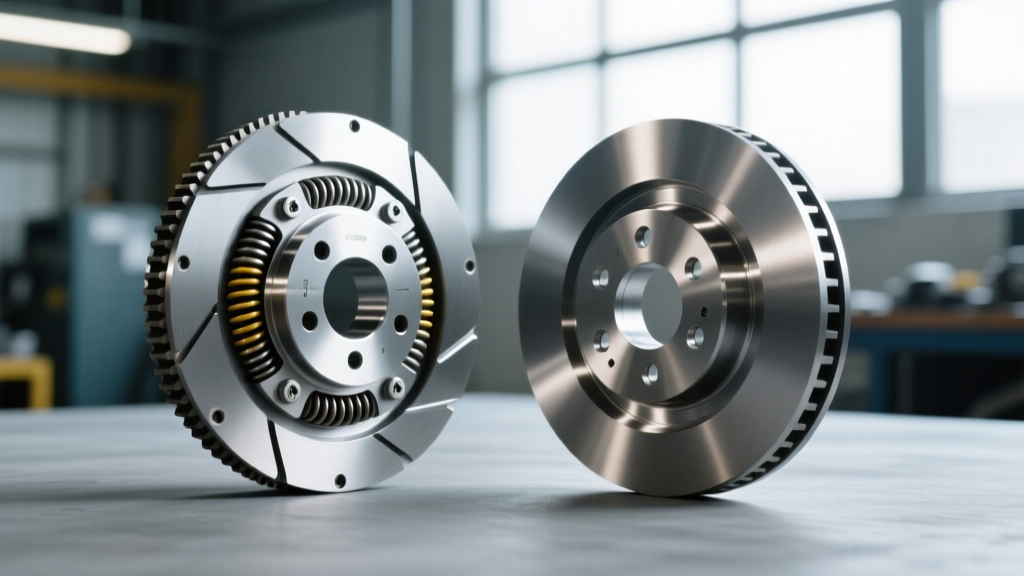
- Dual Mass Flywheel (DMF) Pairing: A DMF utilizes a primary mass (bolted to the crank), a secondary mass (bolted to the clutch), and an internal planetary gear/arc spring system to absorb torsional spikes. Because the flywheel handles the damping, the paired clutch disc must feature an unsprung or very lightly sprung hub. If you install a heavily sprung clutch disc on a DMF, the two spring rates will clash, creating a harmonic resonance that shatters the disc hub.
- Single Mass Flywheel (SMF) Pairing: An SMF is a solid, singular piece of cast iron or steel. It provides zero internal damping. Therefore, the clutch disc must feature a robust, multi-stage sprung hub (often utilizing polyurethane or heavy-duty steel coil springs) to absorb the engine's torsional vibrations. Installing an unsprung disc on an SMF will transmit raw engine harmonics directly into the transmission, causing gear rattle and eventual input shaft bearing failure.
Head-to-Head Comparison: DMF vs. SMF Conversion Kits
Understanding the trade-offs is essential before purchasing a kit. Below is a technical comparison matrix based on 2026 market data for heavy-duty and performance applications.
| Feature | OE Dual Mass Flywheel (DMF) Kit | Single Mass Flywheel (SMF) Conversion |
|---|---|---|
| Primary Damping Source | Internal flywheel arc springs | Clutch disc torsional hub springs |
| Clutch Disc Hub Type | Unsprung / Rigid | Heavy-Duty Multi-Stage Sprung |
| NVH (Gear Rattle) | Exceptionally quiet; smooth engagement | Moderate to high gear rattle at idle |
| Weight / Rotational Mass | Heavy (typically 35-45 lbs combined) | Lighter (typically 25-32 lbs combined) |
| Lifespan | 80,000 - 120,000 miles | 150,000+ miles (often outlasts the truck) |
| Average 2026 Kit Cost | $550 - $950 | $750 - $1,400 |
Real-World Application: Heavy Duty Diesel & Performance Gas
Case Study 1: Ford 6.0L/6.4L Powerstroke (ZF S6-650 Transmission)
The ZF S6-650 transmission paired with Ford's 6.0L and 6.4L Powerstroke engines is notorious for DMF failures. The OE Schaeffler/LuK DMF (Part # 415-013-001) often suffers from internal spring fatigue when subjected to modified tuning and heavy towing. When the internal dampers fail, the secondary plate wobbles, destroying the input shaft seal and pilot bearing.
The Conversion Solution: Many fleet owners opt for a South Bend SMF conversion kit. By switching to a solid nodular iron flywheel and a South Bend SFDD3250-6 (3250 lb-ft rated organic disc with a heavy-duty sprung hub), you eliminate the DMF failure point entirely. The trade-off is a noticeable increase in drivetrain clatter at idle, but the S6-650's robust helical cut gears handle the NVH without structural compromise.
Case Study 2: Dodge 5.9L/6.7L Cummins (Getrag G56 Transmission)
The Getrag G56 is a legendary, over-engineered manual transmission. Early models utilized an SMF, but later iterations introduced a DMF to meet stricter NVH regulations for daily drivers. For owners pushing 600+ rear-wheel horsepower, the OE DMF is a critical weak point. High-output applications demand an SMF conversion paired with a multi-disc or ceramic paddle clutch. However, ceramic paddles lack torsional dampening; therefore, a high-quality SMF paired with a full-face organic or Kevlar disc with an aggressive sprung hub (like the Exedy Mach 500 series) remains the gold standard for street-driven towing rigs.
Precision Installation: Torque Specs & Machining Tolerances
A premium flywheel and clutch pairing will fail prematurely if installation tolerances are ignored. The mating surface between the crankshaft flange and the flywheel must be surgically clean. Even a 0.001-inch piece of carbon buildup will induce flywheel runout, leading to clutch drag and release bearing wear.
Critical Machining Tolerances
- Crankshaft Flange Runout: Must not exceed 0.002 inches (0.05 mm) Total Indicator Runout (TIR). If the crank flange is warped, no flywheel—DMF or SMF—will operate correctly.
- Flywheel Face Runout: Measured at the friction surface, TIR must be less than 0.004 inches (0.10 mm) for SMF. (Note: DMF secondary plate runout limits are higher, often up to 0.030 inches, but the primary mating surface to the crank must still be near perfect).
Fastener Torque Specifications (Heavy-Duty Applications)
Always use new Torque-To-Yield (TTY) flywheel bolts. Reusing stretched TTY bolts is a primary cause of flywheel detachment and catastrophic engine block damage.
- Ford 6.0L/6.4L (ZF S6-650) Flywheel Bolts (M11 x 1.0 TTY): Torque to 59 lb-ft (80 Nm), then tighten an additional 90 degrees using an angle gauge.
- Dodge 5.9L/6.7L (Getrag G56) Flywheel Bolts (M12 x 1.25): Torque to 95 lb-ft (129 Nm), then tighten an additional 60 degrees.
- Pressure Plate to Flywheel Bolts (M8 Standard): Torque to 18-22 lb-ft (25-30 Nm) in a crisscross star pattern to ensure even diaphragm spring loading.
2026 Buyer’s Guide: Top Kit Recommendations
When sourcing your pairing, avoid unbundled 'budget' kits. The metallurgical compatibility between the flywheel friction surface and the clutch disc friction material is engineered at the factory. Stick to comprehensive, matched sets.
- LuK RepSet Pro (DMF Replacement): The undisputed king of OE DMF replacements. Includes a new DMF, unsprung disc, pressure plate, release bearing, and pilot bearing. Expect to pay between $600 and $850 depending on the application. Ideal for stock or mildly tuned daily drivers prioritizing cabin comfort.
- South Bend Clutch SMF Conversion Kits: South Bend machines their own nodular iron flywheels in-house, ensuring superior thermal stability compared to cheap overseas castings. Their heavy-duty sprung hubs are specifically tuned for diesel torsional spikes. Pricing ranges from $850 to $1,300.
- Sachs XTend Series: For European applications (BMW, Porsche, VW TDI), Sachs offers self-adjusting clutch technology (SAC) paired with precision-balanced SMF or DMF units. The XTend system compensates for friction material wear, maintaining consistent pedal feel over 100,000+ miles.
Final Verdict: Which Pairing Should You Choose?
The decision between a dual mass vs single mass clutch and flywheel setup ultimately depends on your operational profile. If you drive a modern daily-driver diesel, tow within factory limits, and value a quiet, vibration-free cabin, retain the DMF pairing using a premium LuK or Sachs kit. The NVH reduction is worth the 100,000-mile replacement interval.
However, if you are building a dedicated towing rig, running modified ECU tuning that increases low-RPM torque, or operating a commercial fleet where downtime is unacceptable, the SMF conversion is the superior financial and mechanical choice. The initial investment is higher, and you will sacrifice some idle refinement, but the elimination of the DMF's internal mechanical weak points ensures your drivetrain will survive the most punishing environments.