The Hidden Weak Link in Performance Drivetrains
In the 2026 landscape of high-horsepower street and track builds, enthusiasts routinely push powertrains past 800 wheel-horsepower. When it is time to replace flywheel with clutch assemblies to handle this increased torque, the focus is almost entirely on the friction materials, clamp loads, and sprung hub designs of kits from brands like McLeod, Centerforce, or Exedy. However, the most catastrophic failures rarely occur within the clutch disc itself; they happen at the hardware interface.
The kinetic energy stored in a 25-pound steel flywheel spinning at 7,500 RPM is immense. The hardware securing that mass to the crankshaft—and the pressure plate to the flywheel—must endure extreme tensile and shear forces. Relying on fatigued OEM hardware during a performance upgrade is a critical engineering oversight. This guide details the exact bolts, threadlockers, and alignment dowels required when executing a high-performance flywheel and clutch swap.
OEM Torque-to-Yield (TTY) vs. Reusable Performance Fasteners
Most modern OEM manufacturers, including General Motors (for the LS and LT platforms) and Ford (for the Coyote 5.0L), utilize Torque-to-Yield (TTY) flywheel bolts from the factory. TTY bolts are designed to stretch past their elastic limit into their plastic deformation zone during installation. This provides a highly accurate and uniform clamping load for automated assembly lines.
Why TTY Bolts Fail in Performance Applications
- One-Time Use: Once stretched, a TTY bolt cannot be safely reused. Reusing a stretched bolt on an aftermarket lightweight or dual-mass flywheel risks the bolt snapping under the harmonic vibrations of a high-compression V8.
- Harmonic Resonance: Aftermarket clutches (especially aggressive puck-style or unsprung metallic discs) transmit severe torsional spikes directly through the flywheel into the crankshaft flange. OEM Grade 8 or 10.9 bolts lack the fatigue strength to survive these repeated shock loads.
- Thermal Cycling: Track use generates immense heat at the friction surface. As the flywheel expands and contracts, inferior hardware loses its preload, leading to fretting, elongation of the bolt holes, and ultimately, a sheared crankshaft flange.
Essential Hardware Checklist for the Upgrade
When you order your new clutch kit, ensure your shopping cart includes the following specific hardware components to guarantee a bulletproof installation.
| Component | Recommended Brand / Spec | Application Example | Approx. Cost (USD) |
|---|---|---|---|
| Flywheel-to-Crank Bolts | ARP (Automotive Racing Products) 200,000 psi | GM LS V8 (ARP 200-2802) | $45 - $65 |
| Pressure Plate Bolts | ARP 12-Point or 10-Point (180,000 psi) | Standard M8 x 1.25 (ARP 200-3002) | $25 - $40 |
| Threadlocker (Flywheel) | Loctite 263 (High Strength, Red) | Crankshaft flange interface | $8 - $12 |
| Threadlocker (Pressure Plate) | Loctite 243 (Medium Strength, Blue) | Flywheel friction surface interface | $8 - $12 |
| Alignment Dowels | McLeod or Lakewood Offset Dowels | Tremec T56 / TKX Bellhousings | $40 - $75 |
Deep Dive: Flywheel-to-Crank Bolt Specifications
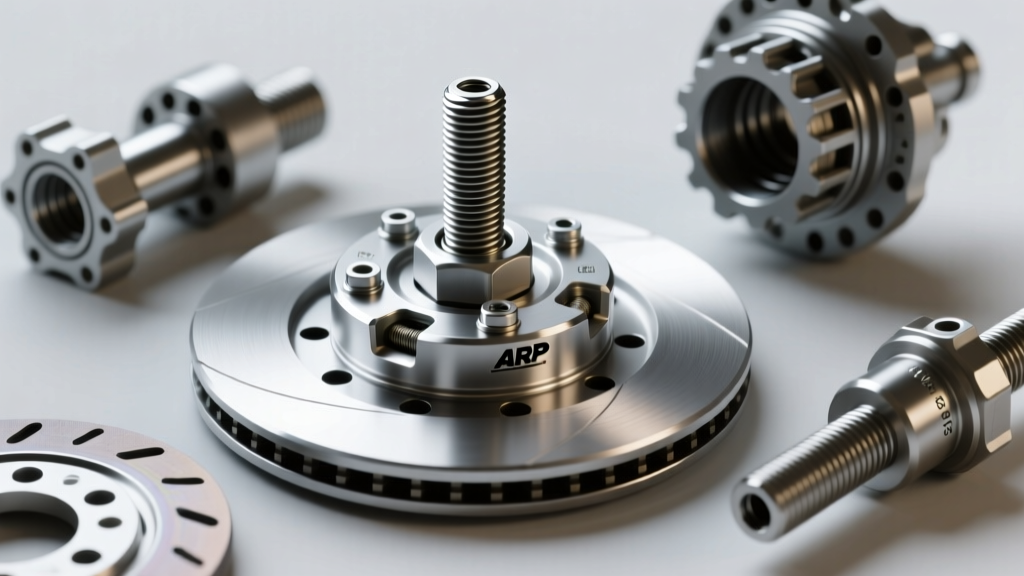
Upgrading to ARP (Automotive Racing Products) fasteners is the industry standard for performance builds. ARP utilizes proprietary chromoly steel alloys that are heat-treated to achieve vastly superior tensile strengths compared to OEM hardware.
GM LS / LT Platform (e.g., LS3, LT1, LT4)
The GM LS platform uses a 6-bolt flywheel pattern. The OEM bolts are M11 x 2.0 and are strictly TTY. The direct performance replacement is the ARP 200-2802 kit. These bolts feature a nominal tensile strength of 200,000 psi.
Installation Note: Unlike the OEM procedure (which requires a torque-to-angle yield method of 25 Nm + 50 degrees), ARP bolts are torqued to a static value. Using ARP's included Ultra-Torque fastener assembly lubricant, the target torque is 74 ft-lbs in a star pattern. Never use standard motor oil or dry torque specs with ARP hardware, as the friction coefficient changes drastically, leading to over-torquing and thread stripping in the aluminum or steel crank flange.
Ford 5.0L Coyote Platform (2011-2026)
Modern Coyote engines utilize an 8-bolt crankshaft flange. The OEM Ford flywheel bolts are also one-time-use stretch bolts. The premier upgrade is the ARP 150-2801 kit.
Installation Note: The Ford 8-bolt pattern requires a specific cross-hatch torque sequence to ensure the flywheel seats perfectly flat against the crank, preventing runout. Torque specification with ARP lube is 65 ft-lbs. For high-RPM drag applications exceeding 8,000 RPM, many engine builders add a drop of Loctite 263 to the threads to prevent backing out under extreme harmonic vibration.
Pressure Plate Hardware: The Overlooked Vulnerability
While builders obsess over the flywheel bolts, the pressure plate bolts are frequently ignored. Most OEM pressure plate bolts are standard Grade 8 or Metric 10.9 hex-head bolts. In high-clamp-load applications (such as a twin-disc setup generating 3,200+ lbs of clamp load), these bolts can stretch or snap during the installation process or under track-use thermal expansion.
Expert Insight: When installing a heavy-duty twin-disc clutch, the sheer physical effort required to compress the pressure plate fingers often leads to cross-threading or over-stressing cheap OEM bolts. Upgrading to ARP pressure plate bolts not only provides higher shear strength but the 12-point or 10-point heads allow for better socket engagement in the tight confines of a bellhousing.
Because pressure plate bolts thread directly into the flywheel (which is often made of nodular iron or steel), you must use Loctite 243 (Blue). Do not use Red Loctite here; if you ever need to service the clutch disc or replace the pressure plate diaphragm, Red Loctite will require localized heat exceeding 500°F to break the bond, which will destroy the heat-treatment of your flywheel and ruin the friction surface.
Bellhousing Alignment: The Critical Role of Dowel Pins
If you are upgrading your clutch to handle more power, you are likely pairing it with a robust manual transmission like the TREMEC T56 Magnum or the newer TKX. These transmissions feature heavy input shafts and tight-clearance pilot bearings.
Factory engine blocks are machined with standard dowel pins that can exhibit up to 0.015" of runout relative to the crankshaft centerline. TREMEC strictly mandates a maximum bellhousing runout of 0.005" for the T56 Magnum and TKX series. Exceeding this limit causes the transmission input shaft to bind, leading to premature pilot bearing failure, difficulty shifting at high RPM, and catastrophic wear on the clutch disc hub splines.
How to Correct Runout with Offset Dowels
- Measure: Mount a dial indicator to the crankshaft flange and sweep the inside bore of the bellhousing. Record the Total Indicated Runout (TIR).
- Calculate: If your TIR is 0.014", you need to shift the bellhousing centerline by half that amount (0.007").
- Select: Purchase offset dowel pins (available from Lakewood or McLeod in 0.007", 0.014", and 0.021" offsets).
- Install & Re-measure: Install the offset dowels, rotate them using a flathead screwdriver in the slotted head to 'dial in' the exact center, and re-sweep with the indicator until TIR is under 0.005".
Cost vs. ROI: Is the Hardware Upgrade Justified?
Let us evaluate the financial logic of upgrading your hardware when you replace a flywheel and clutch assembly. A high-end performance twin-disc clutch and lightweight flywheel kit typically costs between $1,200 and $2,500 in 2026. The labor to pull a transmission, swap the assembly, and bleed the hydraulic system averages $800 to $1,200 at a specialty performance shop.
The total cost for a complete ARP flywheel bolt kit, ARP pressure plate bolts, Loctite, and offset alignment dowels is approximately $135 to $180.
Spending an additional 5% of your total project budget to guarantee that your $2,000 rotating assembly remains securely fastened to the crankshaft—and that your transmission input shaft remains perfectly aligned—is not just justified; it is mandatory for any serious performance build. A sheared flywheel bolt at 6,500 RPM will not only destroy your clutch and bellhousing but can easily punch through the engine block, turning a simple weekend upgrade into a $15,000 engine replacement.
Final Torque & Assembly Reminders
Before buttoning up your drivetrain, adhere to these final E-E-A-T verified assembly rules:
- Clean all threads: Use an M11 or M12 thread chaser (not a standard tap, which cuts metal) to clean the crankshaft flange threads. Blow out blind holes with compressed air to prevent hydro-locking the bolt with oil or debris.
- Surface Prep: Wipe the flywheel mating surface on the crankshaft with brake cleaner. Any oil or anti-seize between the mating surfaces will alter the friction coefficient and lead to improper clamping.
- Hardware Sourcing: Beware of counterfeit fasteners on online marketplaces. Always purchase ARP and critical drivetrain hardware from authorized distributors like Summit Racing or directly from the manufacturer to ensure metallurgical integrity.
By treating your fasteners and alignment hardware with the same respect as your rotating assembly, you ensure that your drivetrain upgrade delivers power to the wheels reliably, shift after shift.