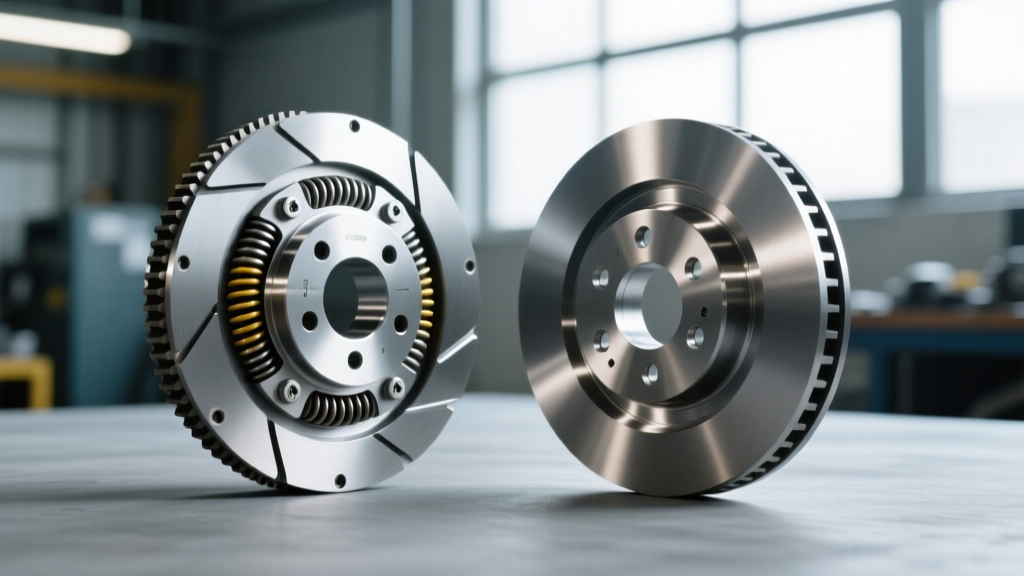
The Physics of Clamping and Rotational Shear
In any manual drivetrain, the transfer of power relies on a delicate balance of friction and mechanical fastening. When a high-performance pressure plate squeezes the clutch disc to flywheel, the resulting friction is what ultimately propels the vehicle. However, the immense clamping force generated by modern multi-disc setups introduces severe rotational shear and harmonic stress to the fasteners securing the flywheel to the crankshaft. As of 2026, with the widespread adoption of aggressive twin-disc and triple-disc clutch systems in both track and street applications, the stock hardware originally designed for single-mass, low-clamp factory setups is frequently the weakest link in the drivetrain.
A factory LS-based single-disc clutch might exert roughly 2,400 pounds of clamping force. In contrast, a performance-oriented twin-disc assembly, such as a McLeod RXT or Centerforce DYAD, can generate between 3,800 and 4,500 pounds of clamping load. This massive increase in static pressure, combined with the dynamic shock loads of aggressive launches and high-RPM shifts, means your flywheel bolts are subjected to extreme tensile and shear forces. Understanding the metallurgy and installation protocols of performance flywheel hardware is not just a recommendation; it is a mechanical necessity to prevent catastrophic crankshaft flange failure.
Why OEM Torque-To-Yield (TTY) Bolts Are a Liability
Most modern OEM manufacturers utilize Torque-To-Yield (TTY) bolts for flywheel attachment. TTY fasteners are engineered to stretch slightly past their elastic limit into their plastic deformation zone during installation. This provides a highly consistent, uniform clamping load from the factory, which is excellent for reducing NVH (Noise, Vibration, and Harshness) in daily drivers.
However, in a performance context, TTY bolts present several critical flaws:
- Single-Use Metallurgy: Because they stretch past their yield point, TTY bolts cannot be safely reused. Removing a stretched TTY bolt and reinstalling it compromises its structural integrity, drastically increasing the risk of snapping the bolt head off inside the crankshaft during high-RPM operation.
- Vulnerability to Heat Cycling: High-performance clutches generate immense heat at the friction surface. This heat transfers through the flywheel to the bolt heads, causing thermal expansion and contraction that can relax the tension on a stretched TTY bolt over time.
- Harmonic Fatigue: Lightweight aftermarket flywheels (often made from billet 4140 steel or 6061-T6 aluminum) alter the harmonic dampening characteristics of the rotating assembly. The resulting micro-vibrations can induce fatigue cracking in standard-grade TTY hardware.
Material Upgrades: 8740 Chromoly vs. ARP2000 vs. L19
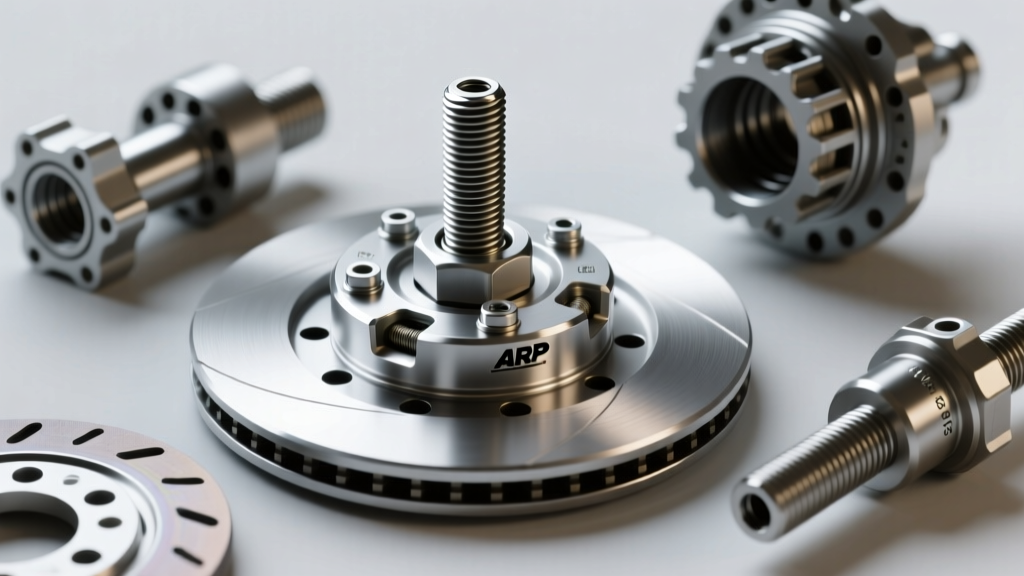
When upgrading your flywheel hardware, the material composition of the fastener dictates its tensile strength and resistance to shear. ARP (Automotive Racing Products) remains the industry benchmark for drivetrain fasteners, offering distinct material tiers for various performance brackets.
8740 Chromoly Steel
Standard OEM replacement performance bolts are typically forged from 8740 chromoly steel, heat-treated to a nominal tensile strength of 190,000 psi. While a massive step up from factory Grade 8 or TTY hardware, 8740 is generally reserved for mildly modified street cars retaining single-disc clutches.
ARP2000 Alloy
For serious track cars, drag radial builds, and forced-induction applications utilizing twin-disc clutches, ARP2000 is the gold standard. This proprietary alloy boasts a tensile strength ranging from 215,000 to 230,000 psi. ARP2000 fasteners exhibit superior fatigue life and resistance to the shock loads generated during hard launches on sticky compounds.
Custom Age 625+ and L19
Reserved for elite motorsport applications (such as 3,000+ HP Pro Mod or Top Sportsman drag cars), materials like L19 (>260,000 psi) and Custom Age 625+ (>280,000 psi) offer ultimate shear resistance. However, these materials are highly susceptible to stress corrosion and require meticulous maintenance, making them overkill and impractical for 99% of enthusiast builds.
Platform-Specific Hardware Guide and Torque Matrix
Below is a comprehensive matrix detailing the correct upgrade paths and torque specifications for the most popular performance manual transmission platforms. Always reference the specific instruction sheet included with your hardware, as thread pitches and flange thicknesses vary by model year.
| Engine Platform | OEM TTY Spec | ARP Upgrade Part # | ARP Material | Target Torque (with Ultra-Torque) | Approx. Cost (2026) |
|---|---|---|---|---|---|
| GM LS (4.8/5.3/6.0/6.2L) | 74 lb-ft + 3/8 turn | 134-2801 | 8740 Chromoly | 85 lb-ft | $65 - $75 |
| GM LT (Gen V 6.2L) | 60 lb-ft + 90 deg | 135-2801 | 8740 Chromoly | 85 lb-ft | $70 - $85 |
| Honda K-Series (K20/K24) | 54 lb-ft | 200-2802 | ARP2000 | 65 lb-ft | $80 - $95 |
| Ford Coyote 5.0 (2011-2023) | 59 lb-ft + 90 deg | 150-2801 | 8740 Chromoly | 80 lb-ft | $75 - $90 |
| Subaru EJ25 (Turbo) | 69 lb-ft | 260-2802 | 8740 Chromoly | 75 lb-ft | $60 - $70 |
The Installation Protocol: Friction, Lubrication, and Thread Prep
The most common cause of aftermarket flywheel bolt failure is not the bolt itself, but improper installation and lubrication. Torque is merely a measurement of twisting force; the actual goal is to achieve a specific clamp load. Up to 90% of applied torque is consumed by friction between the bolt threads and the bolt head's under-cut flange.
The Danger of Standard Thread Locker
A frequent mistake in the garage is applying red or blue Loctite to performance flywheel bolts. Unless explicitly mandated by the clutch or flywheel manufacturer (which is rare for standard flanged bolts), thread locker acts as a hydraulic fluid during installation and drastically alters the friction coefficient. This leads to severe over-torquing, potentially stripping the threads out of the crankshaft or snapping the bolt head.
Using ARP Ultra-Torque
For consistent clamp loads, you must use a high-quality fastener assembly lubricant. ARP's Ultra-Torque is specifically engineered to provide a consistent friction coefficient of 0.11 to 0.12. This ensures that when your torque wrench clicks at 85 lb-ft, the bolt is actually experiencing the engineered tensile stretch required to hold the flywheel securely.
Pro-Tip: Never use standard 30W motor oil or grease on ARP fasteners. The friction variance of standard oils can result in a 20% to 30% discrepancy in actual clamp load compared to the torque wrench reading, leading to under-clamped flywheels that walk on the crankshaft flange.
Flywheel Dowel Pins and Alignment
While the bolts provide the clamping force, the dowel pins provide the shear alignment. Many factory setups rely on the friction between the flywheel and crankshaft flange to maintain rotational alignment. However, when the pressure plate squeezes the clutch disc to flywheel during a violent drag strip launch, the rotational shock can overcome static friction, causing the flywheel to shift microscopically. This 'fretting' fatigues the bolts and elongates the bolt holes in the flywheel.
When performing a performance upgrade, always inspect the crankshaft dowel pins. If they are damaged, mushroomed, or missing, replace them. ARP offers precision-ground dowel pin kits (such as part number 428-5408 for GM LS applications) that ensure a zero-tolerance press fit between the crankshaft and the flywheel, transferring the shear load away from the fastener shanks and directly into the block's forged steel architecture.
Conclusion: Securing the Drivetrain
Upgrading your clutch to handle increased horsepower is only half the battle. The hardware that secures the rotating assembly must be matched to the clamping forces and shock loads your specific application demands. By abandoning single-use TTY bolts in favor of reusable, high-tensile chromoly or ARP2000 fasteners, utilizing proper friction modifiers, and ensuring precise dowel pin alignment, you guarantee that every ounce of torque makes it to the transmission input shaft safely and reliably.