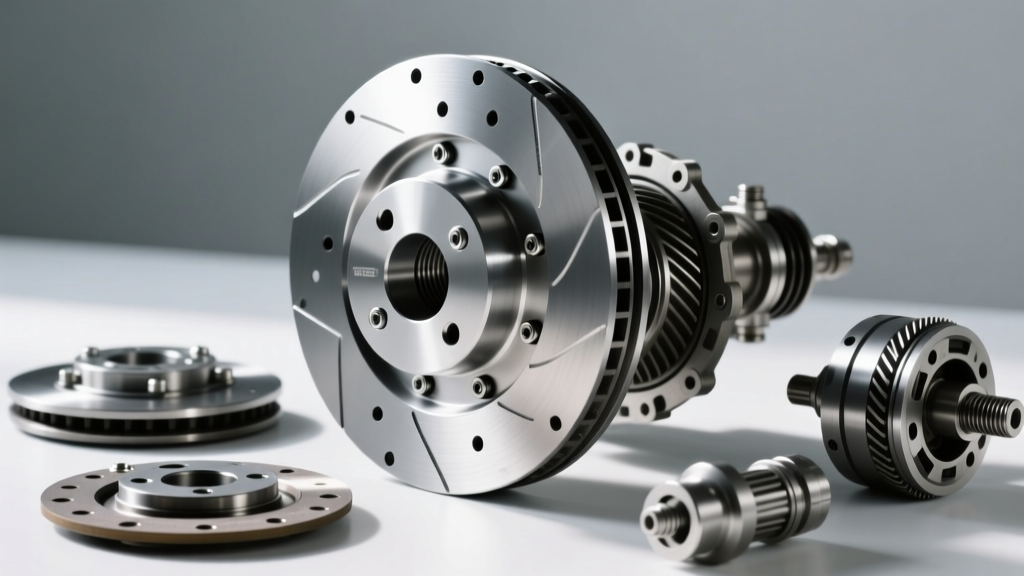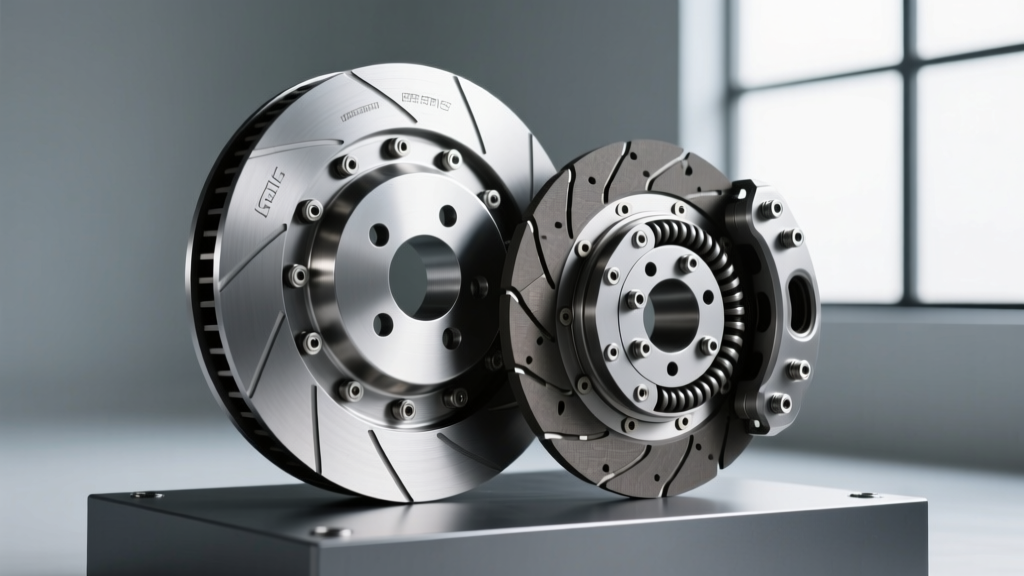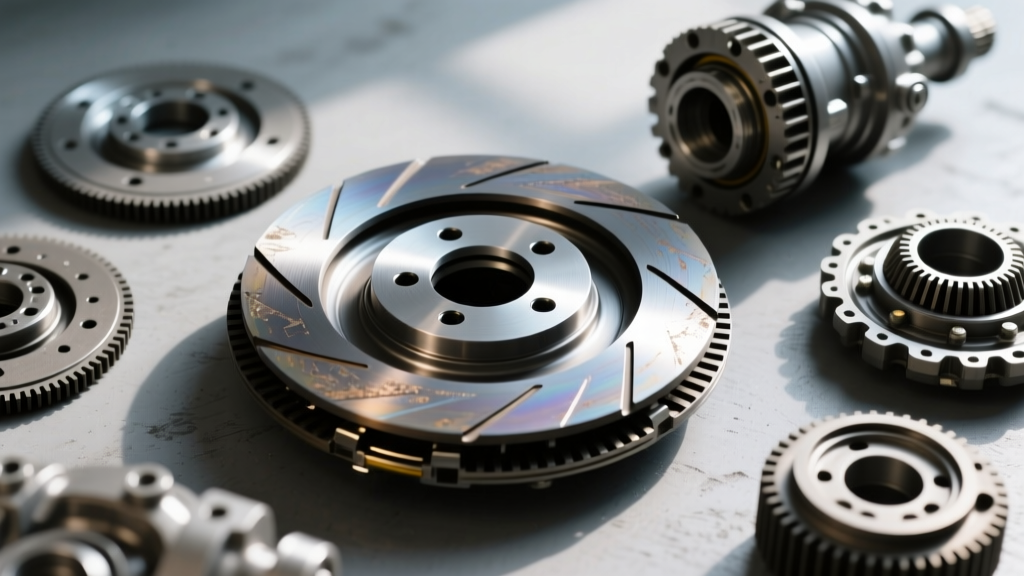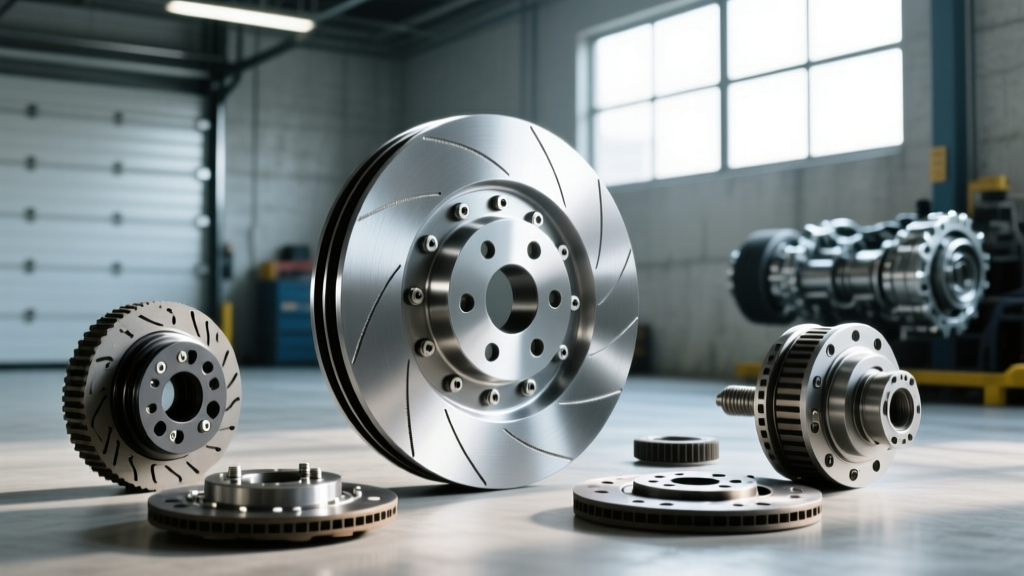
The Engineering Verdict: Does the Flywheel Need to Be Replaced With Clutch?
When planning a manual transmission service, the most frequent question we field at AutoGearNexus is: does the flywheel need to be replaced with clutch? The answer is not a simple yes or no; it is dictated by the flywheel architecture (Single Mass vs. Dual Mass), metallurgical wear limits, and precise step-height tolerances. In 2026, with the rising complexity of high-torque turbocharged powertrains, guessing on flywheel health is a gamble that often results in premature clutch chatter, slipped friction material, or catastrophic driveline failure.
From a strict mechanical standpoint, the flywheel and clutch operate as a matched friction couple. If the friction surface is compromised, or if the geometric relationship between the crankshaft flange and the pressure plate diaphragm spring is altered, the entire assembly must be addressed. Below, we break down the engineering thresholds, real-world replacement costs, and platform-specific data you need to make the right decision.
Single Mass vs. Dual Mass: The Resurfacing Threshold
To determine if replacement is mandatory, you must first identify your flywheel type. The metallurgical and mechanical properties of Single Mass Flywheels (SMF) and Dual Mass Flywheels (DMF) dictate entirely different service protocols.
Single Mass Flywheel (SMF) Resurfacing Limits
An SMF is a solid piece of cast iron or nodular steel. It can often be resurfaced rather than replaced, provided it passes three critical inspections:
- Surface Scoring and Heat Checking: Minor blue spots and light grooving can be machined out. However, if thermal cracks (heat checking) penetrate deeper than 0.015 inches, the structural integrity is compromised, and replacement is mandatory.
- Total Indicator Runout (TIR): After machining, the lateral runout measured at the outer edge of the friction surface must not exceed 0.005 inches (0.127 mm). Excessive runout causes uneven clutch engagement and premature release bearing wear.
- Step Height: This is the most critical and frequently ignored metric. Step height is the distance between the friction surface and the pressure plate mounting pad. Most modern diaphragm-style clutches require a step height between 0.010 and 0.030 inches. If a machine shop removes 0.040 inches of material to clean up the surface without using a shim, the pressure plate will sit too far back, reducing clamp load by up to 20% and causing severe slip under boost.
Dual Mass Flywheel (DMF) Failure Modes
If your vehicle uses a DMF, the answer to 'does the flywheel need to be replaced with clutch?' is almost universally yes. DMFs contain internal arc springs, friction rings, and complex mass-balancing bearings designed to dampen low-frequency torsional vibrations from modern, high-compression engines. According to Schaeffler REPXPERT technical bulletins, DMFs cannot be safely resurfaced. The heat from a slipping clutch degrades the internal grease and weakens the arc springs. Furthermore, removing material from the primary friction plate alters the internal clearances and mass balance, leading to violent driveline shudder. Always pair a new clutch kit with a new DMF.
2026 Flywheel and Clutch Replacement Cost Breakdown
Pricing in the automotive aftermarket has shifted significantly over the last few years due to supply chain normalization and the increased cost of high-carbon steel forgings. Below is the 2026 cost matrix for common flywheel and clutch services.
| Service Type | Parts Cost (OEM/OES) | Machine Shop / Labor | Total Estimated Cost |
|---|---|---|---|
| SMF Resurfacing + Clutch Kit | $250 - $450 (Clutch) | $60 - $120 (Resurface) + $800 Labor | $1,110 - $1,370 |
| SMF Replacement + Clutch Kit | $400 - $700 (SMF + Clutch) | $800 - $1,200 (Labor) | $1,200 - $1,900 |
| DMF Replacement + Clutch Kit | $750 - $1,300 (DMF + Clutch) | $900 - $1,500 (Labor) | $1,650 - $2,800 |
| Lightweight Flywheel (LWF) Upgrade | $450 - $900 (Billet LWF + Clutch) | $800 - $1,200 (Labor) | $1,250 - $2,100 |
Note: Labor costs vary wildly based on drivetrain layout. A longitudinal RWD setup (e.g., Chevrolet Camaro, Ford Mustang) typically requires 4-6 hours of labor, whereas a transverse AWD platform (e.g., Subaru WRX, Audi S4) can demand 8-12 hours due to subframe removal and front differential clearance issues.
Real-World Case Studies: Popular Platforms
To provide actionable E-E-A-T data, let us examine three common manual transmission platforms and their specific flywheel/clutch economics.
Case 1: VW/Audi EA888 Gen 3 (MQB Platform)
Vehicles like the Golf GTI and Audi A4 utilize a complex Dual Mass Flywheel to tame the NVH (Noise, Vibration, and Harshness) of the 2.0L turbocharged engine. You cannot resurface this component.
- OEM Part Number: LuK 415 0255 09 (DMF) + LuK 624 3174 00 (Clutch Kit).
- Cost Reality: The DMF alone retails for roughly $650. Paired with a genuine LuK RepSet and hydraulic concentric slave cylinder (CSC), parts will cost $950 - $1,100. Expect $1,200 in labor at an independent European specialist.
Case 2: Ford Mustang GT (5.0L Coyote / MT-82 or Tremec)
The Coyote V8 uses a robust Single Mass Flywheel. If the friction surface is clean and step height is within Ford's 0.012 - 0.028 inch specification, resurfacing is perfectly viable. However, many owners opt for an upgrade.
- Upgrade Path: Ford Performance M-6375-A50 Billet Aluminum Flywheel (approx. $350).
- Cost Reality: By upgrading to a lightweight billet SMF and pairing it with an Exedy Stage 1 organic clutch, you reduce rotational mass, improving throttle response. Total parts cost hovers around $750, with labor typically costing $700 - $900 due to easy RWD access.
Case 3: GM LS / LT Platform (T56 Magnum Swaps)
Whether in a C5 Corvette or an engine-swapped 240SX, GM LS engines use an SMF. The cast-iron GM flywheels are incredibly durable and can often be resurfaced multiple times throughout the engine's life, provided the machine shop respects the step height.
- Specification Warning: As noted by Sachs Engineering guidelines, altering the mass or friction plane of a flywheel without adjusting the pressure plate shims will destroy the diaphragm spring's clamping geometry. Always measure step height before and after machining.
Critical Installation Specifications and Torque Sequences
Replacing the flywheel is only half the battle; installing it incorrectly will result in warped friction surfaces or sheared crankshaft bolts. Never reuse flywheel bolts unless they are explicitly rated as reusable by the OEM (most are torque-to-yield and must be discarded).
Pro-Tip on Thread Locker: Always apply a medium-strength thread locker (e.g., Loctite 243) to flywheel bolt threads. The cyclic torsional loading from the clutch engagement can back out dry bolts over thousands of heat cycles.
Platform-Specific Torque Specs (Crankshaft to Flywheel)
- GM LS/LT Engines (M10x1.5 Bolts): 25 Nm (18 lb-ft) + 50-degree angle turn. Use a star pattern.
- Ford Modular / Coyote 5.0 (M11 Bolts): 59 lb-ft + 90-degree angle turn.
- Subaru FA20 / EJ25 (M10 Bolts): 35 Nm (26 lb-ft) + 90-degree angle turn.
After torquing the flywheel, the clutch pressure plate must be torqued in a spiral-outward sequence to ensure the diaphragm spring is loaded evenly. Typical M8 pressure plate bolts require 18-22 lb-ft, tightened in 3-5 incremental passes.
The 'While You're In There' Tax: Hidden Costs
When answering the question of whether to replace the flywheel, you must also factor in the ancillary components that share the same labor cost. If the transmission is already out of the car, ignoring these $50 parts is a massive financial mistake:
- Rear Main Seal (RMS): A $25 OEM seal prevents catastrophic oil leaks onto your new $800 clutch friction disc. Always replace it.
- Pilot Bearing / Bushing: The input shaft rides here. A seized pilot bearing will destroy the transmission input shaft and cause clutch release issues. Cost: $15 - $40.
- Concentric Slave Cylinder (CSC) / Release Bearing: On modern hydraulic clutch systems, the CSC lives inside the bellhousing. If it fails 10,000 miles after your clutch job, you will pay $1,200 in labor all over again. Always replace the CSC with the clutch kit.
Final Diagnosis
So, does the flywheel need to be replaced with clutch? If you are driving a modern diesel, a turbocharged European hatchback, or any vehicle equipped with a Dual Mass Flywheel, replacement is a non-negotiable engineering requirement. If you are driving a traditional RWD sports car or truck with a Single Mass Flywheel, resurfacing is a viable, cost-effective option—provided your machine shop strictly adheres to step-height and runout tolerances. Budget accordingly, respect the torque-to-yield fasteners, and never cut corners on the hydraulic release components.