As of 2026, a massive number of 13th-generation Ford F-150s are crossing the 100,000-mile threshold, bringing their drivetrain components into the critical wear zone. For truck owners and independent shop technicians, understanding the nuances of the Ford rear axle is no longer optional—it is essential for preventing catastrophic failures. While many DIYers search for the 2016 f150 rear differential fluid capacity before a routine service, the true value of a fluid change lies in its diagnostic potential. The differential fluid is the lifeblood of the ring and pinion set, and its condition, level, and specification directly dictate the acoustic health of the axle.
In this expert guide, we will bridge the gap between routine fluid maintenance and advanced noise diagnosis. Whether you are dealing with a high-pitch whine on the highway or a low-speed clunk when shifting into reverse, mastering these diagnostic protocols will save you from unnecessary parts swapping and misdiagnosed failures.
Exact 2016 F-150 Rear Differential Fluid Capacity & Specs
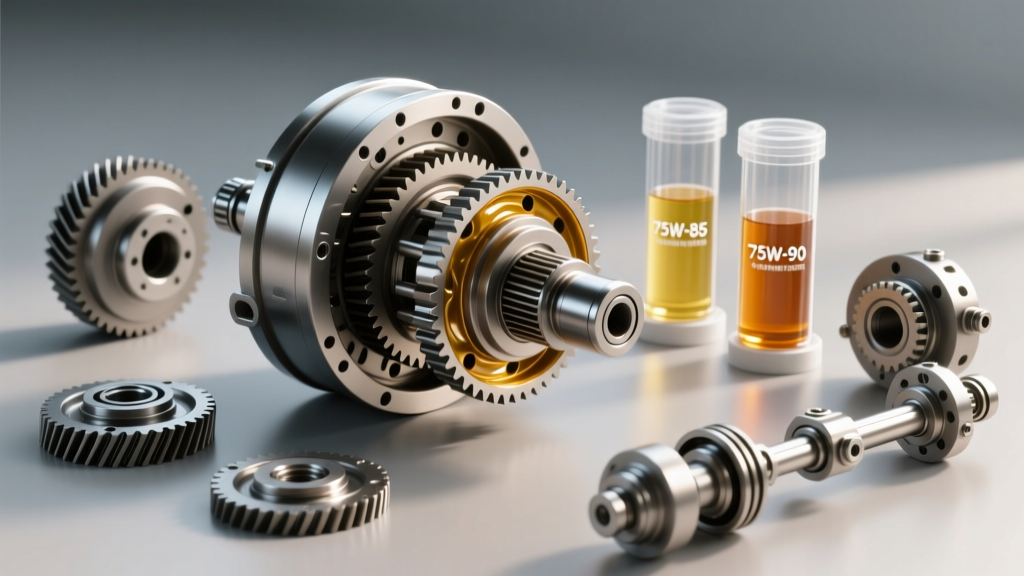
Before you can diagnose a noise, you must ensure the axle is operating with the correct fluid volume and chemistry. The 2016 F-150 was primarily equipped with two rear axle variants: the Super 8.8-inch and the heavy-duty 9.75-inch. Using the wrong fluid viscosity or neglecting the limited-slip friction modifier is the leading cause of premature clutch pack wear and gear whine.
| Axle Type | Fluid Capacity | OEM Fluid Spec (Standard) | OEM Fluid Spec (Max Tow/HD) | Friction Modifier |
|---|---|---|---|---|
| Ford Super 8.8 | 2.4 Quarts (2.27L) | SAE 75W-85 Premium | SAE 75W-140 Synthetic | Motorcraft XL-3 (if Traction-Lok) |
| Ford 9.75 | 3.0 Quarts (2.84L) | SAE 75W-85 Premium | SAE 75W-140 Synthetic | Motorcraft XL-3 (if Traction-Lok) |
Expert Note: The Super 8.8 features a 12-bolt cover but is entirely distinct from the legacy 8.8 or GM 12-bolt axles. It utilizes larger 1.32-inch, 32-spline axle shafts and a unique ring gear bolt pattern. Always verify your axle code on the driver's door jamb sticker before purchasing fluid.
The Fluid-Noise Connection: Why Your F-150 is Whining
Differential noise is rarely a sudden event; it is a cumulative symptom of fluid shear, thermal degradation, or improper gear lash. When gear oil exceeds its thermal threshold—common in F-150s used for towing without an aftermarket differential cover—the extreme pressure (EP) additives deplete. This leads to microscopic scoring on the ring and pinion teeth, manifesting as a steady whine that correlates directly with vehicle speed.
Furthermore, if the previous owner neglected to add the Motorcraft XL-3 Friction Modifier to a Traction-Lok (limited-slip) differential, the carbon-fiber clutch packs will bind and slip erratically. This produces a distinct 'chatter' or 'rumble' during low-speed, tight-radius turns. Many misdiagnose this as a failing wheel bearing, but a simple fluid and modifier flush resolves the issue 80% of the time if caught early.
Expert Troubleshooting: Decoding Ford Axle Noises
To accurately diagnose a failing differential, you must isolate the noise based on load, speed, and deceleration. Here is the professional framework for auditing Ford 8.8 and 9.75 axles.
1. Drive vs. Coast Whine (Ring & Pinion Wear)
- Drive Whine (Under Acceleration): If the axle howls when you apply throttle but goes silent when you let off the gas, the issue is typically on the drive side (convex side) of the ring gear teeth, or the pinion bearing is failing. This indicates excessive gear lash or a worn pinion depth shim.
- Coast Whine (Deceleration): A whine that appears only when coasting or engine-braking points to wear on the coast side (concave side) of the gear teeth. This is common in trucks that have seen heavy towing loads, which aggressively load the coast side during downhill engine braking.
2. Low-Speed Clunking (Backlash & Wear Washers)
A sharp 'clunk' when shifting from Park to Reverse, or when abruptly lifting off the throttle, is a hallmark of excessive backlash. In the Super 8.8, this is often caused by worn differential case wear washers (thrust washers) or spider gear wear. According to technical bulletins discussed by powertrain specialists on F150Forum, replacing the internal spider gear kit and thrust washers can restore tight backlash tolerances (spec: 0.008 - 0.012 inches) without requiring a full ring and pinion replacement.
3. Carrier Bearing Howl (Load-Independent Noise)
If the noise changes pitch when you swerve left or right (loading and unloading the axle shafts), you are likely dealing with a failing carrier bearing or axle shaft bearing, not the ring and pinion. Carrier bearings support the entire differential case; when their races pit, they generate a low-frequency rumble that vibrates through the chassis.
Step-by-Step Diagnostic Best Practices for 2026
Gone are the days of using a mechanic's stethoscope on a spinning driveshaft. Modern drivetrain diagnostics require precision tools to isolate frequencies and thermal anomalies.
- Thermal Imaging Audit: After a 20-mile highway drive, use an infrared thermal gun to measure the differential pinion snout and carrier bearing caps. The pinion bearing should read between 140°F and 170°F. If the pinion snout exceeds 200°F, the pinion bearing preload is too tight, or the fluid has degraded, causing localized friction welding.
- Chassis Ear Deployment: Clamp wireless acoustic sensors to the differential cover, the pinion snout, and the axle tube ends. Drive the vehicle at 60 MPH and isolate the dominant frequency. A high-pitch frequency localized to the pinion snout confirms pinion bearing failure.
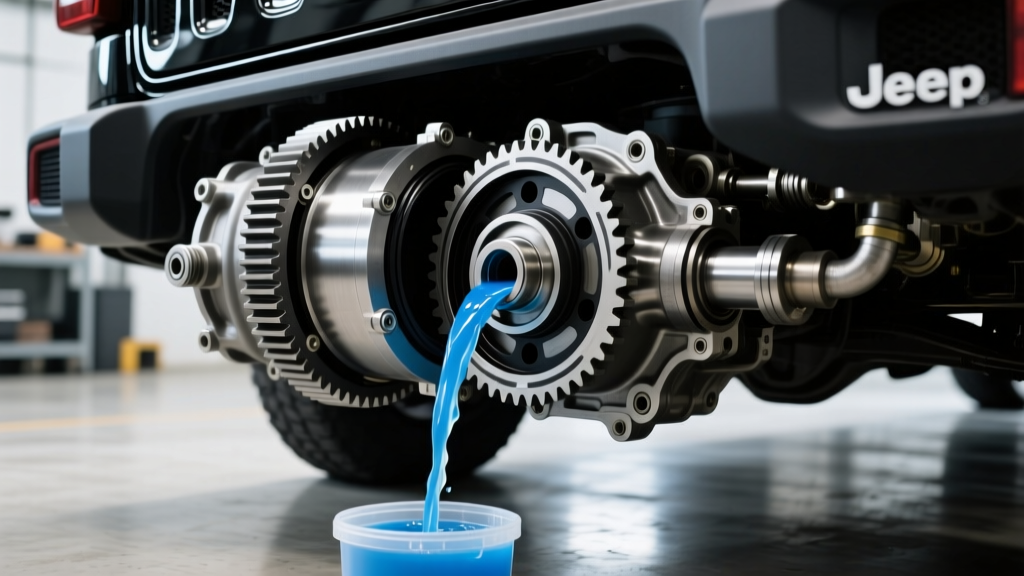
- Fluid Forensics: When draining the differential, do not just dump it into a pan. Drain it onto a white paper towel. Look for 'glitter' (fine metallic paste indicating normal clutch and gear wear) versus 'shrapnel' (large, jagged metal flakes indicating catastrophic bearing cage or gear tooth failure). If you find shrapnel, a fluid change will not save the axle; it requires a teardown.
Shop Foreman Tip: Never use a pneumatic impact wrench to remove the pinion nut if you plan on reusing the ring and pinion. The Super 8.8 uses a crush sleeve to set pinion bearing preload. Over-torquing or impacting the nut can over-crush the sleeve, resulting in excessive rotational drag and a guaranteed pinion whine within 500 miles.
When to Rebuild vs. Replace: Cost & Feasibility
If your diagnostic audit confirms internal gear or bearing failure, you face a critical decision: rebuild the existing axle or install a remanufactured unit. As of 2026, supply chains for OEM Ford axle assemblies remain volatile, making the rebuild route highly attractive for those with the right tools.
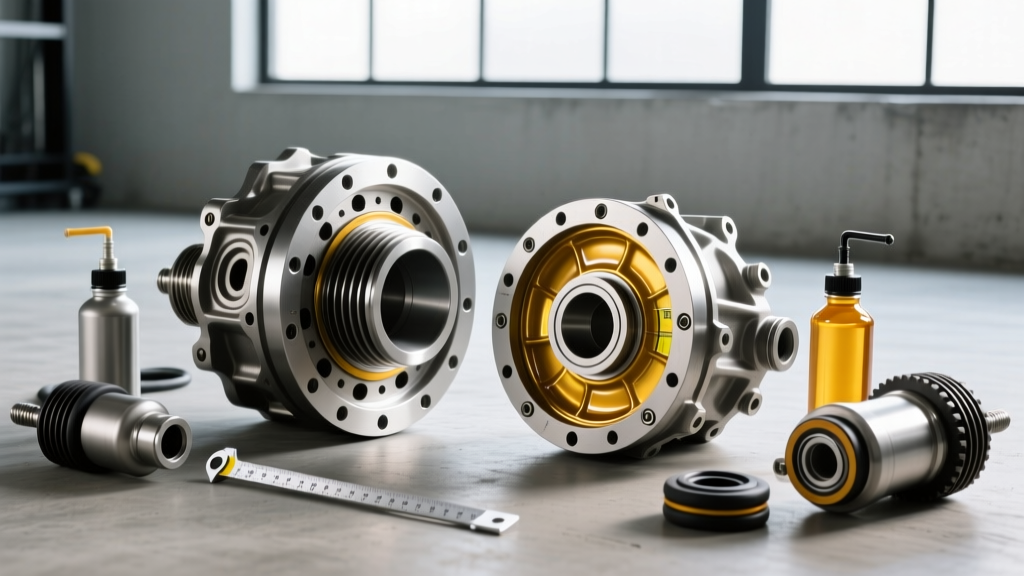
A premium master rebuild kit from a trusted manufacturer like Yukon Gear & Axle typically costs between $350 and $450. This kit includes Timken bearings, races, shims, crush sleeves, and ring gear bolts. However, the Super 8.8 requires specialized tools, specifically an inch-pound torque wrench to set the pinion bearing preload (target: 16-28 inch-pounds of rotational drag for new bearings) and a dial indicator to measure gear backlash.
If you lack these tools or the experience to read gear contact patterns using yellow marking compound, the labor cost for a professional drivetrain shop to rebuild a Ford 9.75 or Super 8.8 generally ranges from $1,200 to $1,800, including parts and fluid. Conversely, a bare remanufactured third-member assembly can cost upwards of $2,500 before core charges and installation labor.
Final Thoughts on Axle Longevity
Knowing the exact 2016 F-150 rear differential fluid capacity is merely the baseline of responsible truck ownership. The true test of mechanical sympathy lies in selecting the correct synthetic viscosity, strictly adhering to friction modifier requirements, and listening to the subtle acoustic warnings your drivetrain provides. By combining precise fluid maintenance with advanced diagnostic techniques, you can ensure your F-150's rear axle survives well past the 200,000-mile mark, whether it is hauling job site materials or towing a camper across the country. For verified OEM fluid part numbers and technical service bulletins, always consult the official Ford Parts catalog or your local dealership's parts counter.