Decoding the Ford F150 Rear Differential Diagram
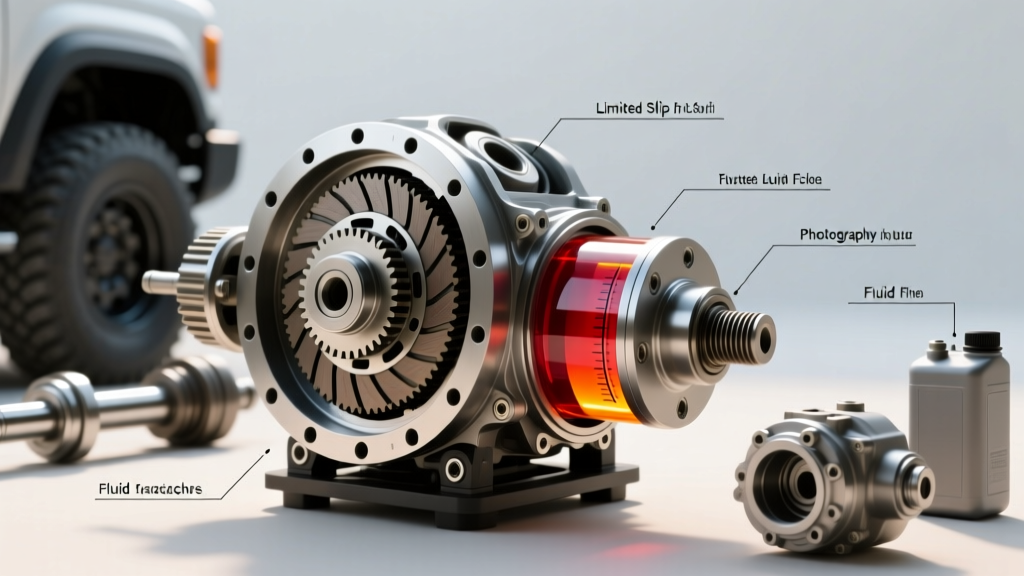
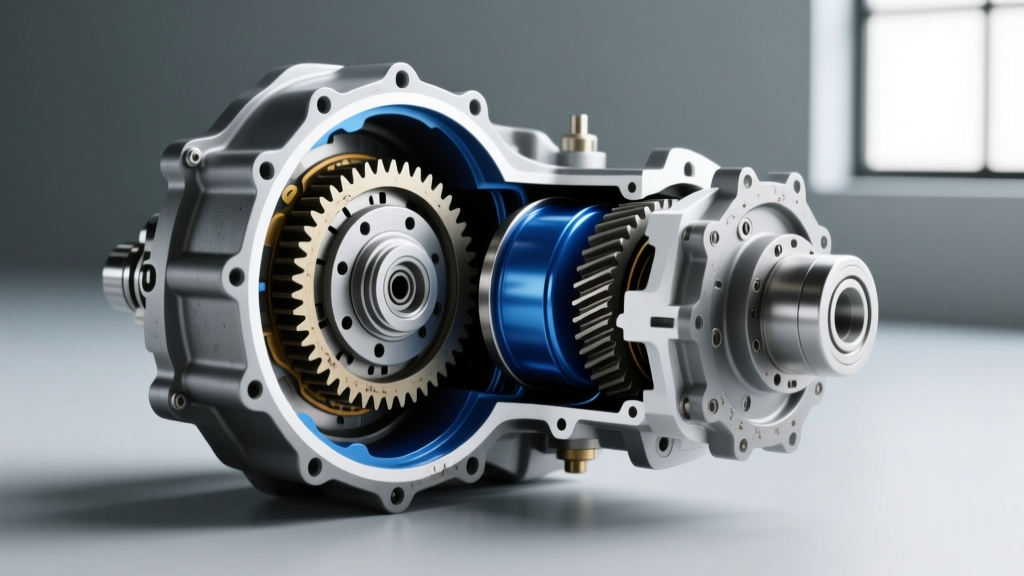
When you pull up a ford f150 rear differential diagram, you are looking at the mechanical heart of the truck's traction management system. Whether your F-150 is equipped with the ubiquitous 8.8-inch semi-floating axle or the heavier 9.75-inch ring gear found on the Max Tow and FX4 packages, understanding the internal layout is critical for proper maintenance. The rear differential does not simply transfer power; it must allow the outer wheel to rotate faster than the inner wheel during a turn while maintaining torque distribution. In modern F-150s, this is managed by a Limited Slip Differential (LSD), which introduces complex friction and gear-binding dynamics that directly dictate your fluid maintenance strategy.
Power Flow: From Driveshaft to Axle Shafts
Tracing the power flow on any Ford axle schematic begins at the pinion shaft. The driveshaft turns the pinion gear, which meshes with the massive ring gear at a 90-degree offset. Because these are hypoid gears, the pinion sits below the centerline of the ring gear. This design lowers the driveshaft tunnel but creates immense sliding friction between the gear teeth. This sliding friction is why API GL-5 certified gear oils, packed with sulfur-phosphorus Extreme Pressure (EP) additives, are mandatory. From the ring gear, torque enters the differential case, housing the internal LSD mechanism (either clutch packs or helical gears), which ultimately splines to the left and right axle shafts.
Torsen vs. Track-Lok: Inside the F-150 LSD
Ford utilizes two primary limited slip designs in the F-150 lineup. Identifying which one resides in your axle housing—often requiring a glance at the axle tag or a look through the fill hole—is the first step in determining your maintenance protocol.
| Feature | Torsen (Torque Sensing) LSD | Clutch-Based (Track-Lok) LSD |
|---|---|---|
| Operating Mechanism | Helical worm gears and spur gears bind under torque disparity. | Pre-loaded carbon or steel friction clutch packs behind side gears. |
| Friction Modifier Required? | No. Standard GL-5 synthetic is sufficient. | Yes. Requires Ford XL-3 or equivalent modifier. |
| Common Axle Application | 9.75-inch (FX4, Lariat, Tremor packages). | 8.8-inch (Base XLT, older 2015-2020 models). |
| Primary Failure Mode | Thrust washer wear; loss of torque bias ratio. | Clutch glazing, stick-slip chatter, complete wear-out. |
The Torsen differential, heavily featured in recent F-150 off-road packages, relies on the mechanical binding of worm gears. According to the engineering principles outlined by Torsen, the gear set multiplies torque to the wheel with traction without relying on clutch friction. Conversely, the traditional Track-Lok uses S-shaped preload springs to push side gears into clutch packs, requiring chemical friction modifiers to operate smoothly.
Fluid Specifications and Capacities
Using the correct fluid viscosity is non-negotiable for hypoid gear survival. Ford's engineering specifications for the F-150 generally call for 75W-140 Synthetic for heavy-duty or towing applications, and 75W-90 Synthetic for standard duty. Always verify your specific axle tag, but the baseline data for the most common F-150 axles is as follows:
- Ford 8.8-Inch Axle: Requires approximately 5.5 pints (2.6 Liters). Standard fill is often 75W-140 Synthetic (Ford Spec WSL-M2C192-A) for LSD variants.
- Ford 9.75-Inch Axle: Requires approximately 6.9 pints (3.3 Liters). Strictly requires 75W-140 Synthetic due to higher thermal loads and larger gear mass.
- Ford 10.5-Inch Axle (Super Duty/HD Payload): Requires 7.4 pints (3.5 Liters) of 75W-140.
While some aftermarket brands claim their synthetic oils contain 'sufficient friction modifiers' out of the bottle, veteran drivetrain technicians on Ford Truck Enthusiasts universally recommend adding the dedicated modifier separately for clutch-based axles to guarantee chatter-free operation.
The Friction Modifier Debate: XL-3 Additive Explained
If your F-150 has a clutch-based Track-Lok, you must add a friction modifier. The OEM standard is Motorcraft XL-3 (Part # XL-3), typically requiring 4 to 8 ounces per axle. Chemically, these modifiers are long-chain organic esters. They coat the carbon or steel clutch plates, altering the coefficient of friction to ensure the plates slip smoothly against one another during low-speed turns. Without this ester layer, the clutch packs experience 'stick-slip'—grabbing and releasing rapidly, which manifests as a violent shuddering or groaning noise from the rear axle when pulling out of a parking space. Note again: If you have a Torsen differential, adding XL-3 is unnecessary and can slightly reduce the mechanical torque bias efficiency of the helical gears.
Step-by-Step LSD Service and Torque Specs
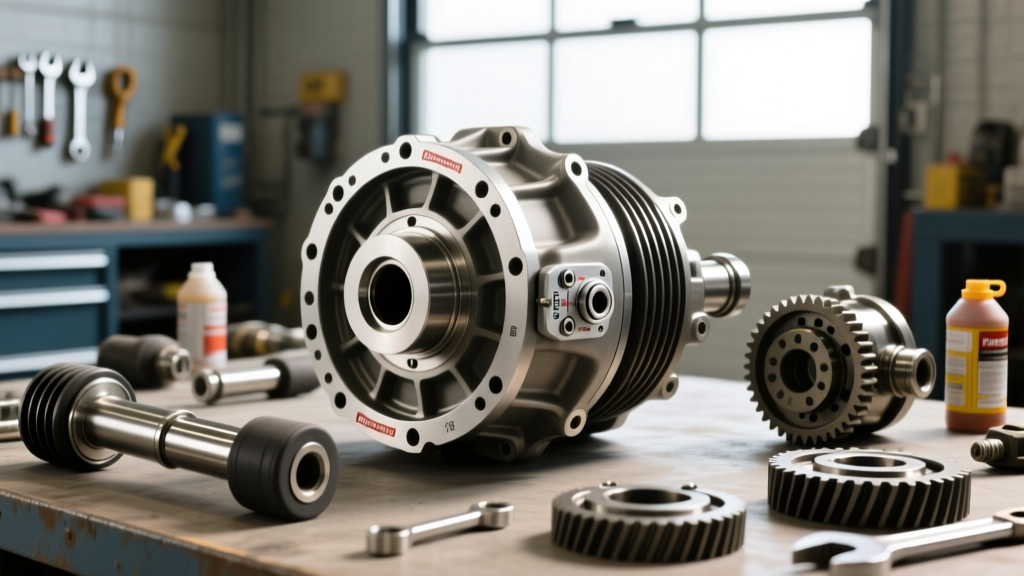
Servicing the rear differential involves dropping the cover, cleaning the housing, and refilling. Unlike some front differentials or transfer cases, the F-150 rear axles rarely feature a bottom drain plug; fluid extraction via the fill hole or by pulling the cover is required.
1. Cover Removal and Cleaning
The 8.8-inch axle uses a 10-bolt cover, while the 9.75-inch uses a 12-bolt cover. Use a 13mm or 1/2-inch socket. Once removed, scrape the mating surface clean. Ford does not use pre-cut gaskets for these axles from the factory; they use RTV silicone. Apply a continuous 3mm bead of Motorcraft TA-32 (Black RTV) or equivalent high-temp gear oil resistant silicone. Allow the RTV to tack up for 15 minutes before mating the cover, and wait at least one hour before filling with fluid to prevent the silicone from extruding into the gear path.
2. Torque Specifications
Overtorquing the thin stamped-steel differential covers will warp the flange and guarantee a leak. Use a calibrated inch-pound or low-range foot-pound torque wrench.
- 8.8-Inch Cover Bolts: 28 - 38 lb-ft.
- 9.75-Inch Cover Bolts: 33 lb-ft.
- Fill Plug (if equipped on aftermarket covers): 22 - 25 lb-ft.
3. The Refill Process
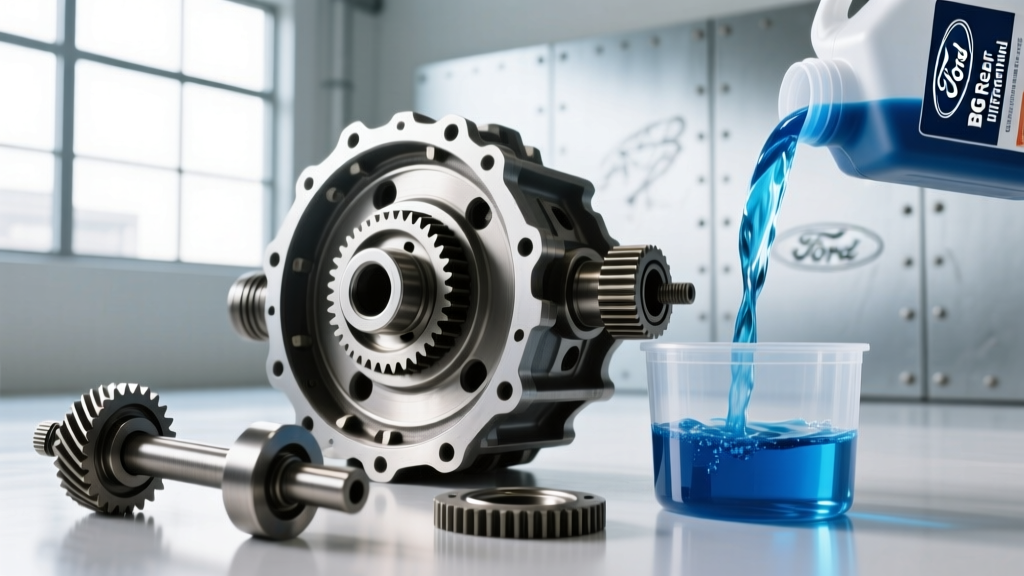
Pump the 75W-140 synthetic fluid into the fill hole until it reaches the bottom edge of the threads. If using a clutch-based LSD, pour the 4oz bottle of XL-3 modifier into the fill hole before pumping the thick gear oil, ensuring the modifier is drawn deep into the housing and mixes thoroughly as the axle rotates.
Diagnosing LSD Chatter and Wear
How do you know if your LSD clutch packs are worn out, or if the fluid simply needs changing? Perform the 'Figure-8 Test'. Find an empty, wet parking lot. Drive the truck in tight, continuous figure-8 patterns at 5 mph with the windows down. If you hear a rhythmic 'clunk-groan-clunk' from the rear end, the clutch packs are experiencing stick-slip.
Expert Diagnostic Tip: If a fresh fluid change with 4oz of XL-3 modifier does not cure the Figure-8 chatter within 50 miles of driving, the carbon friction material on the clutch discs is likely glazed or worn down to the steel backing plates. At this stage, no chemical additive will save the differential. A teardown and installation of a Ford Performance or Eaton clutch pack rebuild kit (typically $150-$250 in parts) is required to restore limited-slip functionality.
Understanding the mechanics behind the ford f150 rear differential diagram transforms a messy garage chore into a precise, data-driven maintenance procedure. By matching the correct synthetic viscosity and friction modifier to your specific LSD type, you ensure optimal torque biasing and extend the life of the ring and pinion well past the 150,000-mile mark.
For further reading on API gear oil classifications and hypoid gear protection, consult the AMSOIL Technical Database regarding GL-5 sulfur-phosphorus additive shear stability.