The Mechanics of the F-150 Limited Slip Differential
When servicing the rear axle of a modern Ford F-150, understanding the internal architecture of the differential is just as critical as the fluid you pour into it. Unlike open differentials that send power to the wheel with the least resistance, the F-150’s factory Limited Slip Differential (LSD) utilizes a complex arrangement of clutch packs, side gears, and preload springs to bias torque across the rear axle. For most 2015 through 2023+ F-150s equipped with the 8.8-inch or 9.75-inch ring and pinion, Ford relies on an Eaton-style clutch-type LSD.
Clutch Pack Biasing vs. Helical Torsen Gears
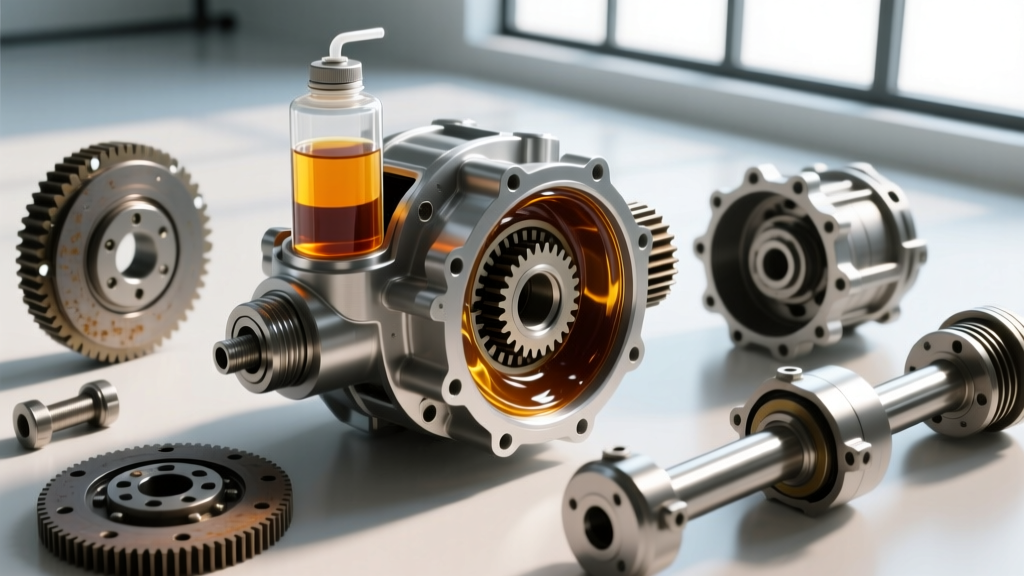
In the traditional clutch-type LSD found in the F-150 Max Tow and standard EcoBoost packages, torque transfer is managed by alternating friction discs and steel separator plates splined to the side gears and the differential case. An S-shaped preload spring (the "S-spring") presses these packs together, creating a baseline locking force. When one wheel loses traction, the internal torque spike overcomes the clutch pack's static friction, transferring power to the planted wheel.
Conversely, specific off-road and performance trims (such as certain Tremor or Raptor configurations) utilize a Torsen (Torque-Sensing) helical gear differential. Torsen units rely on precise gear binding and friction rings rather than wearable clutch packs. This distinction is vital: Torsen differentials do not require friction modifier additives, whereas the clutch-type LSD absolutely depends on it to prevent destructive stick-slip chatter. Misidentifying your axle type is the most common error DIYers make when selecting their Ford F150 rear differential fluid.
Axle Identification, Fluid Viscosities, and Capacities
Selecting the correct gear oil viscosity depends on your axle housing size, payload package, and towing requirements. While standard commuting requires a lighter synthetic, heavy towing generates immense heat in the ring and pinion contact zone, necessitating a heavier 75W-140 weight.
| Axle Type | Common Applications | Fluid Specification | Capacity (Approx.) | Friction Modifier? |
|---|---|---|---|---|
| 8.8-inch | Base, XL, XLT (Non-Tow) | SAE 75W-85 Synthetic | 2.3 Quarts (2.2L) | Yes (Clutch LSD) |
| 9.75-inch | EcoBoost, Lariat, Max Tow | 75W-85 or 75W-140 (Towing) | 2.7 Quarts (2.6L) | Yes (Clutch LSD) |
| 10.5-inch Sterling | HD Payload Package, V8 Tow | SAE 75W-140 Synthetic | 3.3 Quarts (3.1L) | Yes (Clutch LSD) |
| M210/M275 (Dana) | Raptor, Tremor (Torsen/Locker) | 75W-85 or 75W-140 | Varies by Housing | No (Torsen) / Varies |
The Friction Modifier Imperative: Motorcraft XL-3
The most debated topic in F-150 drivetrain maintenance is the necessity of the friction modifier. Ford officially specifies the addition of Motorcraft XL-3 Friction Modifier Additive (EST-M2C118-A) for all clutch-type limited slip axles. While many modern synthetic gear oils claim to be "LS compatible" or have modifier pre-mixed into the chemical suspension, real-world drivetrain diagnostics show that Ford's specific Eaton clutch packs are highly sensitive to the exact coefficient of friction.
If the fluid is too "slippery," the differential will act like an open diff, failing to transfer torque. If the fluid lacks sufficient modifier, the clutch packs will grab and release rapidly during low-speed cornering, resulting in a violent shuddering known as "chatter." This stick-slip phenomenon not only destroys the friction material but can eventually snap the S-spring, leaving you with an open differential.
Expert Drivetrain Tip: Never dump the entire 4oz bottle of XL-3 into the axle immediately. Over-modifying the fluid will cause the clutches to slip excessively, leading to premature wear and power loss. Always start with 2oz, perform a Figure-8 calibration test, and add the remaining 2oz only if chatter persists. For comprehensive OEM maintenance intervals, refer to the Ford Motorcraft Maintenance Schedule.
Step-by-Step LSD Fluid Service Procedure
Unlike some heavy-duty trucks that feature convenient drain plugs, the F-150’s 8.8-inch and 9.75-inch axles typically require the removal of the differential cover. This requires meticulous surface preparation to prevent gear oil leaks and contamination.
1. Cover Removal and Surface Prep
Break loose the cover bolts using a socket (10mm for the 8.8-inch, 13mm for the 9.75-inch). Leave the top two bolts loosely threaded while you pry the bottom edge of the cover to allow the fluid to drain into a catch pan safely. Once drained, remove the cover and immediately inspect the internal magnet. A fine metallic paste is normal; however, metallic shards or brass-colored flakes indicate spider gear or clutch pack failure requiring a teardown.
Scrape the mating surfaces on both the housing and the cover using a plastic scraper to avoid gouging the aluminum or stamped steel. Wipe down with brake cleaner and a lint-free shop towel. Apply a continuous 3mm bead of Motorcraft TA-1-B (Black RTV) or equivalent high-temp silicone. Allow the RTV to skin over for 15 minutes before mating the cover to the housing.
2. Torque Specifications and Refill
Proper torque sequencing is critical to prevent warping the differential cover, which leads to chronic seepage. Tighten the bolts in a crisscross star pattern.
- 8.8-inch Axle Cover Bolts: 20 lb-ft
- 9.75-inch Axle Cover Bolts: 33 lb-ft
- 10.5-inch Axle Cover Bolts: 35 lb-ft
Wait a minimum of two hours for the RTV to cure before filling. Using a fluid transfer pump, inject your chosen synthetic gear oil into the fill hole until it reaches the bottom of the threads. If using a clutch LSD, mix the first 2oz of XL-3 modifier directly into the pump reservoir or inject it into the fill hole before topping off with gear oil.
3. The Figure-8 Chatter Calibration Test
Before declaring the service complete, drive the truck to an empty parking lot. Perform a series of tight, continuous Figure-8 maneuvers at 5 to 10 MPH with the windows down. Listen and feel for binding, hopping, or a chattering sensation from the rear axle. If the axle operates smoothly, the fluid chemistry is balanced. If chatter is present, return to the fill hole, add another ounce of modifier, and repeat the test.
Rebuilding the Clutch Pack: When Fluid Isn't Enough
If you have maxed out the 4oz limit of friction modifier and the F-150’s rear end still chatters, or if the axle behaves like an open differential when one wheel is on ice, the internal clutch packs are physically worn out. The friction material on the discs has degraded past the point of chemical rescue.
Rebuilding the clutch pack requires removing the differential carrier, compressing the S-spring, and swapping the friction and steel plates. When sourcing replacement parts, experts often recommend upgrading to carbon-fiber composite clutches over the factory paper-based Raybestos clutches for heavy-duty towing applications. Carbon fiber dissipates heat significantly faster and resists glazing under high-torque load reversals. You can source high-quality rebuild kits, such as those from Yukon Gear and Axle, which include new S-springs, shims, and composite friction discs.
Cost and Labor Breakdown for LSD Rebuilds
- Parts (Clutch Kit & Bearings): $120 - $250 depending on axle spline count (e.g., 31-spline vs. 34-spline).
- Specialty Tools: Dial indicator and carrier puller (if not already owned).
- Professional Labor: $400 - $700. Rebuilding an LSD requires measuring side gear clearances with precision shims. If the clearance between the spider gears and side gears exceeds 0.010 inches, the entire carrier may need replacement to prevent catastrophic gear binding.
Maintaining the Ford F150 rear differential fluid is not merely about swapping old oil for new; it is an exercise in chemical calibration and mechanical preservation. By understanding the precise interaction between your specific axle architecture, the gear oil viscosity, and the friction modifier, you ensure that your F-150 maintains optimal traction and drivetrain longevity, whether you are navigating a rain-slicked highway or pulling a 10,000-pound trailer up a grade.
For further technical specifications on Dana and Spicer heavy-duty axle components found in Ford's HD payload packages, consult the Spicer Drivetrain Engineering Catalog.