The Acoustics of Axle Failure: Decoding Differential Noise
When executing a comprehensive 4 wheel drive differential service, the most critical diagnostic tool you possess is your hearing. A 4WD drivetrain subjects front and rear axles to immense torsional stress, especially when traversing off-road terrain or towing heavy loads. Long before a ring and pinion gear set catastrophically fails, it broadcasts its degradation through specific acoustic frequencies. Understanding the difference between a pinion bearing whine, a carrier bearing rumble, and a gear mesh howl is the hallmark of a true drivetrain specialist. Ignoring these auditory warnings inevitably leads to spun bearings, shattered gear teeth, and locked axles on the trail.
Differential noise is generally categorized by the driving condition under which it occurs: acceleration (drive side), deceleration (coast side), steady-state cruising, or cornering. Because 4WD systems lock the front and rear driveshafts together in 4-High or 4-Low, isolating the exact source of the noise requires methodical elimination. Transfer case chain stretch and driveshaft U-joint degradation can mimic differential noise, making chassis-ear diagnostics and fluid forensics mandatory first steps in your troubleshooting protocol.
Diagnostic Matrix: Sound, Condition, and Failure Mode
Use the following matrix to cross-reference the customer's complaint or your own road-test findings with the most probable mechanical failure. This framework streamlines the teardown and inspection process.
| Noise Type | Driving Condition | Probable Culprit | Estimated Repair Cost |
|---|---|---|---|
| High-Pitch Whine | Deceleration (Coast) | Worn pinion bearings or incorrect pinion depth | $450 - $750 |
| Low-Frequency Howl | Steady-State Cruising | Worn ring and pinion gear teeth (pitting/spalling) | $600 - $1,100 |
| Clunk or Knock | Throttle Tip-In / Reversing | Excessive backlash, worn spider gears, or loose ring gear bolts | $300 - $900 |
| Chatter or Binding | Low-Speed Cornering | Degraded limited-slip clutch packs or missing friction modifier | $150 - $350 |
| Growling Rumble | Acceleration and Deceleration | Failing carrier bearings or side gear washers | $400 - $650 |
Fluid Forensics: The First Step in 4 Wheel Drive Differential Service
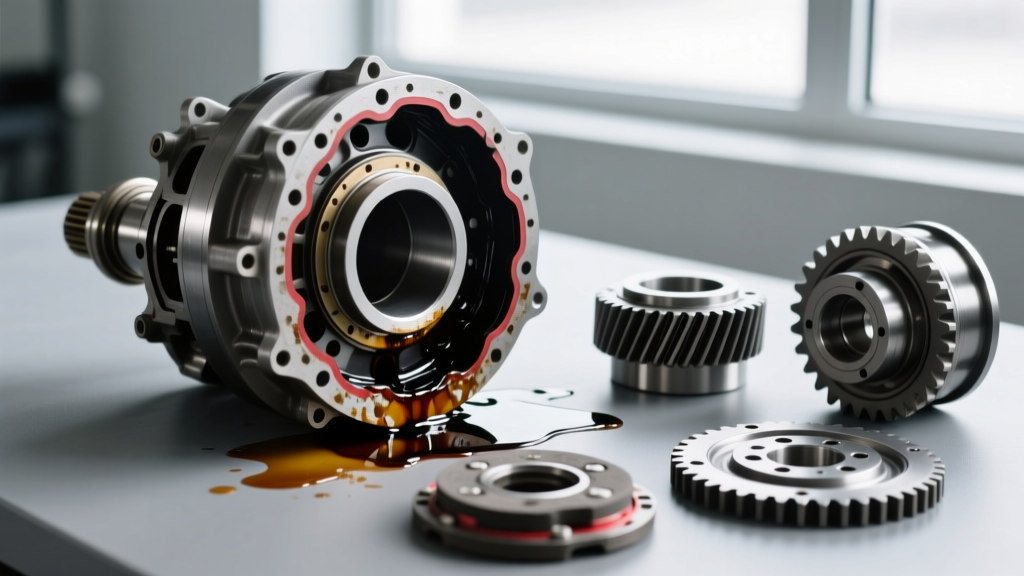
Before unbolting a single differential cover, perform a thorough fluid analysis. The condition of the gear oil provides a direct window into the internal health of the axle assembly. For most modern 4WD applications, OEMs specify a 75W-90 or 75W-140 GL-5 synthetic gear oil. However, severe off-road use and heavy towing accelerate fluid shearing, stripping the zinc and phosphorus anti-wear additives from the lubricant.
When draining the differential, inspect the fluid for the following indicators:
- Glitter/Suspended Mica: Normal wear for high-mileage axles. The fluid will sparkle under a flashlight, but the particulates are microscopic and captured by the magnetic drain plug.
- Chunky Metal Shards: Indicates catastrophic bearing cage failure or gear tooth spalling. If you find chunks larger than a grain of rice, a complete teardown and carrier rebuild is mandatory.
- Burnt Smell / Dark Sludge: Evidence of extreme thermal breakdown. This is common in vehicles towing near their Gross Combined Weight Rating (GCWR) without an aftermarket differential cover featuring cooling fins.
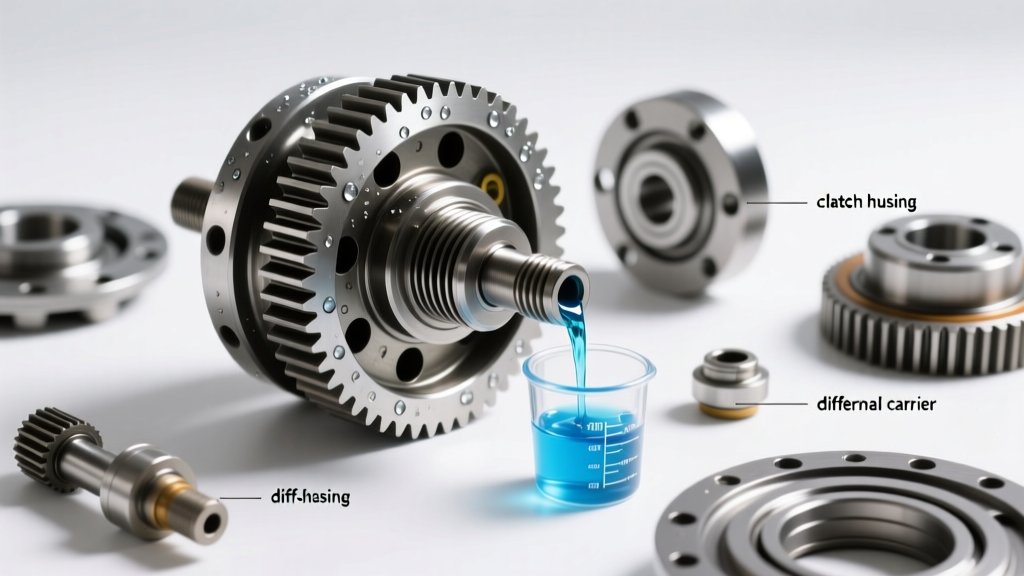
- Water Contamination (Milky Emulsion):strong> Suggests a compromised axle seal or breather tube. Water ingress destroys the boundary lubrication layer of GL-5 fluids, leading to rapid corrosion of the bearing races.
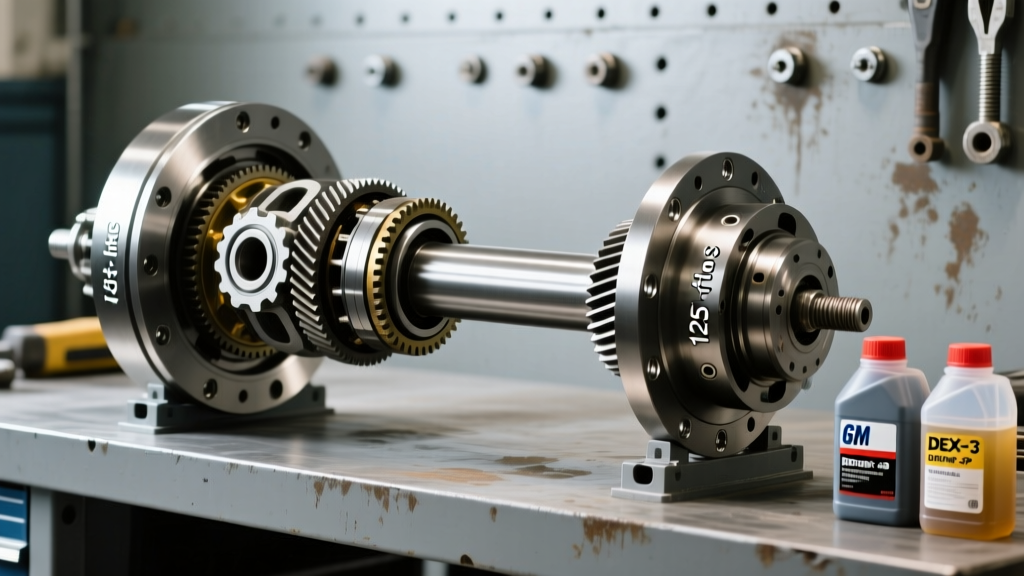
For clutch-type limited-slip differentials (LSD), such as the Auburn or Eaton Positraction units, the absence of a specialized friction modifier (e.g., Ford XL-3 or GM EOS) will cause severe chatter during cornering. Conversely, torque-biasing helical gear differentials like the Torsen or Detroit Truetrac do not require friction modifiers and operate optimally on standard AMSOIL Severe Gear synthetic lubricants.
Precision Measurement: Backlash and Preload Protocols
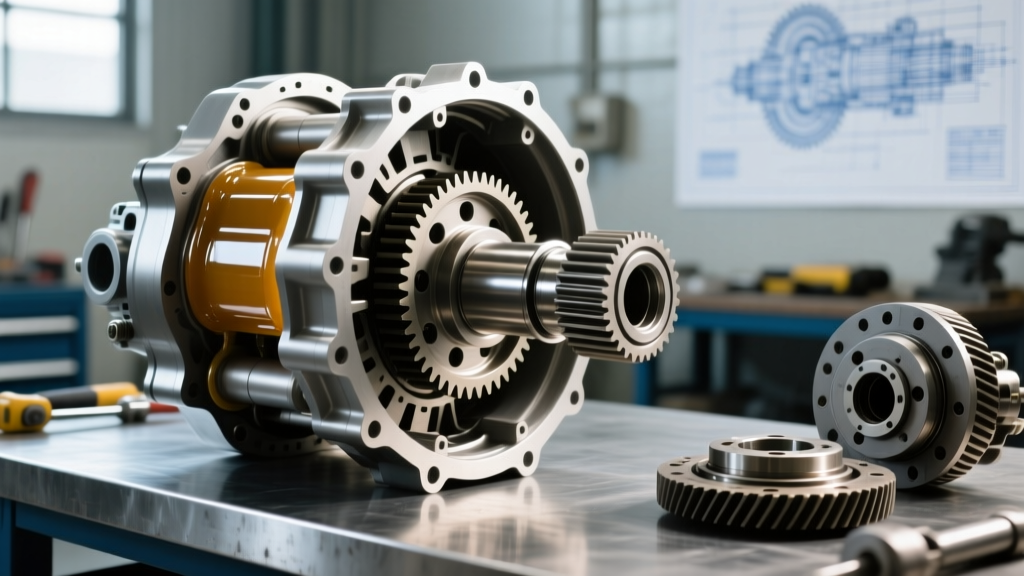
If road testing and fluid analysis point to internal gear degradation, the next phase of your 4 wheel drive differential service involves precision measurement. You cannot diagnose gear setup issues by eye; you must use a magnetic base dial indicator and an inch-pound torque wrench.
Critical Setup Specifications (Reference Data)
While you must always consult the specific OEM service manual for your axle ratio and model, the following baseline specifications apply to the most common 4WD axles found in Jeep Wranglers, Ford F-150s, and Chevrolet Silverados:
- Dana 44 (Jeep Wrangler JK/JL): Ring gear backlash target: 0.006' - 0.010'. Pinion bearing preload (used bearings): 10-15 in-lbs. Ring gear bolt torque: 77 ft-lbs (with Loctite 242).
- Ford 8.8 (F-150 / Explorer): Ring gear backlash target: 0.008' - 0.012'. Pinion bearing preload (new bearings): 16-29 in-lbs. Pinion nut torque: 200-250 ft-lbs (crush sleeve type).
- GM 9.5-inch (14-Bolt Semi-Floating): Backlash target: 0.005' - 0.009'. Pinion preload: 20-30 in-lbs. Ring gear bolt torque: 90 ft-lbs.
When measuring backlash, mount the dial indicator perpendicular to the ring gear tooth face. Rotate the ring gear back and forth while holding the pinion yoke stationary. If the backlash exceeds 0.015', the side bearings are likely collapsed, or the carrier shims have worn down, allowing the ring gear to pull away from the pinion under load. This manifests as a distinct 'clunk' when shifting from reverse to drive.
Gear Pattern Analysis: Reading the Contact Patch
If you are performing a full rebuild or resetting a used ring and pinion, analyzing the gear contact pattern is non-negotiable. Using a high-contrast yellow or white gear marking compound, apply a thin, even layer to three or four consecutive teeth on the ring gear. Apply moderate rotational resistance to the ring gear using a rag or brake pliers while turning the pinion yoke to simulate load.
Expert Tip: Never trust a 'no-load' gear pattern. The deflection of the carrier and pinion shaft under torque significantly alters the contact patch. Always apply drag to the ring gear when rolling the pattern. According to Spicer Parts engineering guidelines, a proper pattern under load will center on the tooth face, slightly biased toward the heel, without creeping over the top land or root fillet.
Drive Side vs. Coast Side: The drive side (convex) pattern indicates how the gears mesh under acceleration, while the coast side (concave) pattern reveals deceleration loading. If the pattern is high on the tooth (toward the top land), the pinion is too close to the ring gear centerline; you must increase the pinion depth shim thickness. If the pattern is low (toward the root), the pinion is too far away. Adjusting pinion depth requires pressing the inner pinion bearing off and on, which is why having a dedicated hydraulic press and bearing puller set (like the OTC 4539 Master Bearing Puller Set) is essential for professional 4 wheel drive differential service.
When to Rebuild vs. Replace: The Economic Threshold
Not every noisy differential warrants a meticulous rebuild. As a drivetrain expert, you must weigh the cost of precision setup against the price of a remanufactured drop-in assembly. If the differential housing is cracked, the bearing bores are spun (oversized), or the ring gear shows severe step-wear on the tooth face, the core is compromised.
A complete ring and pinion master rebuild kit (including Timken or SKF bearings, shims, seals, and high-grade ring gear bolts) typically costs between $250 and $450. However, the labor to properly set pinion depth, crush a new sleeve, and map the gear pattern can take 4 to 6 hours, pushing the total shop bill to $1,200 or more. In contrast, a remanufactured third-member assembly (common for Ford 8.8 or Toyota 8-inch axles) can be sourced for $800 to $1,400 and swapped in under two hours, complete with a warranty. For fleet vehicles or daily drivers where downtime is costly, the drop-in replacement is often the superior best practice.
Conclusion
Mastering differential noise diagnosis elevates your 4 wheel drive differential service from a simple fluid swap to a comprehensive drivetrain health intervention. By combining auditory road-test diagnostics, fluid forensics, and precision dial-indicator measurements, you can accurately pinpoint failure modes before they strand the vehicle. Always adhere to strict torque specifications, utilize high-quality synthetic GL-5 lubricants, and never skip the gear pattern analysis. Your attention to these minute details ensures the longevity and reliability of the axle systems that keep 4WD vehicles conquering the toughest terrains.