Mastering F-150 Locking Differential Leak Detection and Repair
The Ford F-150 remains America's best-selling truck, and as of 2026, the electronic locking differential (eLocker) is a staple across the FX4 Off-Road, Tremor, and Raptor trims. While the eLocker provides unmatched traction by physically locking the rear axles together via a dog-clutch mechanism, the added complexity introduces unique failure points. If you are dealing with a leaking rear end, misdiagnosing the source can lead to hundreds of dollars in wasted labor and the eventual destruction of your ring and pinion gears.
This model-specific repair guide dives deep into the anatomy of the F-150's 8.8-inch and 9.75-inch rear axles. We will cover exact leak detection methodologies, the truth about friction modifiers, precise torque specifications, and step-by-step repair protocols to get your truck back on the trail or job site.
Understanding the F-150 Electronic Locking Differential (eLocker)
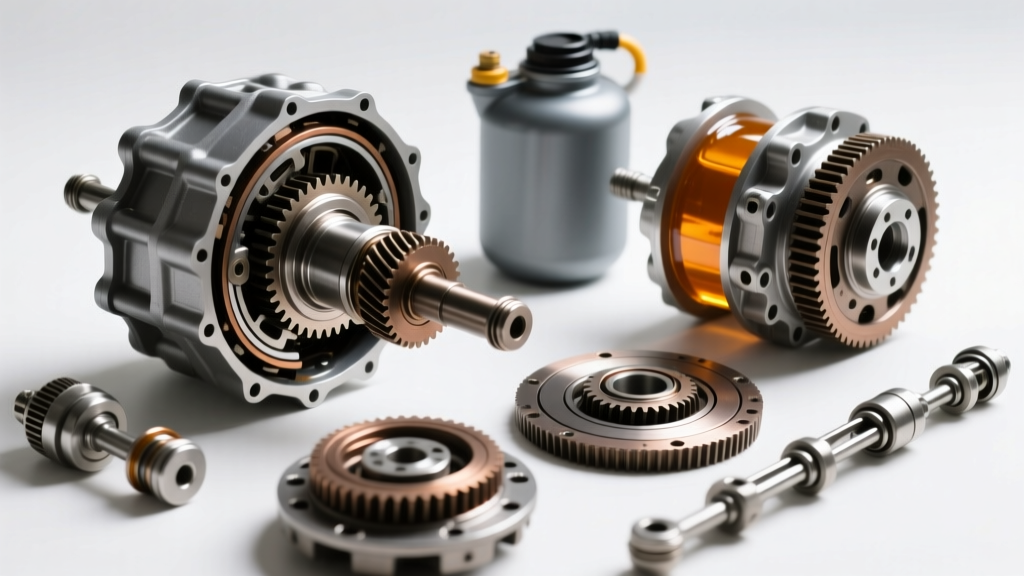
Unlike traditional clutch-based limited-slip differentials (LSDs) such as Ford's older Traction-Lok, the F-150's eLocker is a true mechanical locking differential. An electric motor mounted to the axle housing actuates a shift fork, which slides a locking collar to engage the side gears. Because it relies on a physical mechanical lock rather than clutch pack friction, the internal fluid dynamics and external sealing requirements are distinctly different. The most common axle housings paired with the eLocker in the 13th and 14th generation F-150s are the Ford 8.8-inch (standard duty) and the 9.75-inch / 10.5-inch (heavy-duty towing packages).
The 4 Primary Leak Points on F-150 Rear Axles
Before you drain a single drop of gear oil, you must accurately identify the leak source. Gear oil has a distinct, pungent sulfur smell, which helps differentiate it from brake fluid or rear differential cooling line leaks found on high-end trims.
1. The E-Locker Actuator Motor Seal
Unique to the locking differential F150 setup is the electronic actuator motor bolted to the front or side of the differential housing. The O-ring seal mating the actuator to the cast-iron axle housing is a frequent culprit for slow weeping. Over time, heat cycling and exposure to road grime cause the rubber O-ring to flatten and crack. If you see gear oil pooling directly beneath the actuator motor wiring harness, this is your primary suspect.
2. Pinion Shaft Seal
The pinion seal sits behind the driveshaft yoke or flange. It is the most common failure point on high-mileage F-150s, especially those used for towing. A failing pinion seal will sling gear oil in a radial pattern across the underside of the truck bed and the rear driveshaft. Causes include worn pinion bearings allowing shaft runout, or simply the degradation of the seal's internal garter spring.
3. Axle Shaft (Wheel) Seals
Located at the extreme ends of the axle tubes, these seals keep fluid inside the housing and prevent it from contaminating the rear brake pads. A leak here is often misdiagnosed as a brake fluid leak. If your rear brake pads are saturated in a thick, smelly oil, the axle shaft seal has failed. This often requires pulling the axle shaft and inspecting the bearing surface for grooving.
4. Differential Cover Gasket
While Ford uses high-temperature silicone RTV from the factory on many 8.8-inch and 9.75-inch housings, aftermarket services or previous owners may have used cheap cork or rubber gaskets. Leaks here manifest as a wet film tracing the exact perimeter of the differential cover bolts.
Diagnostic Matrix: Fluid Color, Location, and Smell
| Leak Location | Visual Symptoms | Common F-150 Axle Application | Severity & Drivability |
|---|---|---|---|
| E-Locker Actuator O-Ring | Wetness directly below actuator motor; dripping onto leaf springs. | 8.8-inch & 9.75-inch eLocker | Moderate. Will eventually cause low fluid and locker engagement failure. |
| Pinion Shaft Seal | Oil slung radially on driveshaft and bed crossmembers. | All F-150 Rear Axles | High. Rapid fluid loss can destroy ring and pinion within 500 miles. |
| Axle Shaft Seal | Inside of rear wheel wet; brake pads contaminated; ABS tone ring fouled. | All F-150 Rear Axles | Critical. Compromises braking performance and ABS sensor readings. |
| Differential Cover RTV | Seeping along the 10 or 12-bolt cover perimeter. | Aftermarket or prior service | Low to Moderate. Slow weep, easily monitored. |
Fluid Specifications: The Friction Modifier Myth
One of the most pervasive myths in the Ford truck community revolves around friction modifiers. According to the Motorcraft Lubricants Guide, clutch-based limited-slip differentials require Motorcraft XL-3 Friction Modifier Additive to prevent clutch chatter during low-speed turns.
Here is the critical E-E-A-T distinction: The F-150's electronic locking differential (eLocker) is a dog-clutch mechanical locker. It does not contain clutch packs. Therefore, adding XL-3 Friction Modifier to an eLocker-equipped axle is entirely unnecessary and provides zero mechanical benefit. While it will not harm the internal components, it is a waste of money.
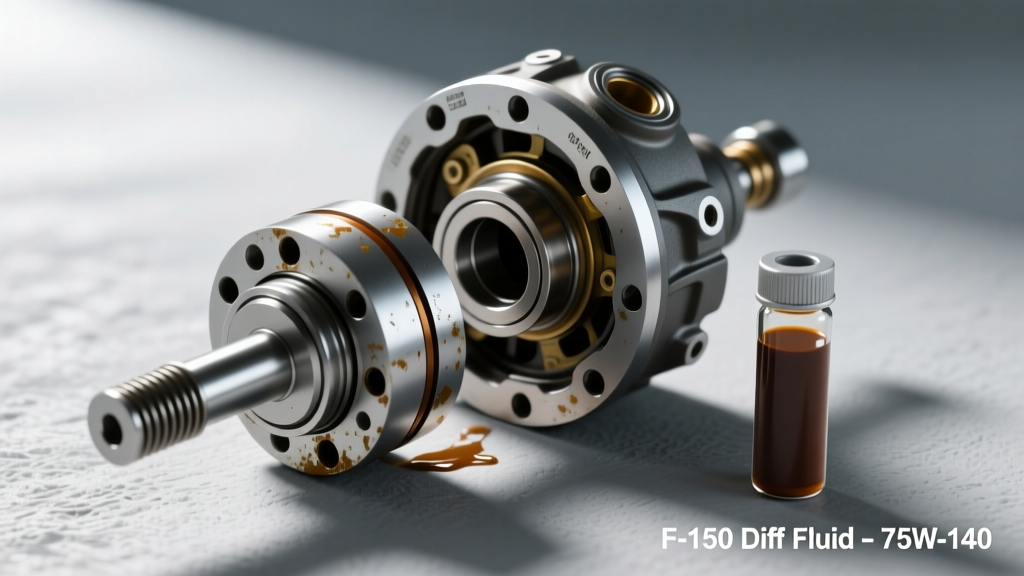
For standard F-150 eLocker applications, use Motorcraft SAE 75W-85 Premium Rear Axle Lubricant (Part # XO-75W85-QSP). If your F-150 is equipped with the Max Trailer Tow Package, HD Payload Package, or if you frequently tow near your Gross Combined Weight Rating (GCWR), Ford specifies upgrading to SAE 75W-140 Synthetic Gear Lubricant (Part # XO-75W140-QL) to maintain film strength under extreme thermal loads. Always verify your specific axle tag located on the rear differential cover or driver's door jamb.
Step-by-Step Repair: E-Locker Actuator and Cover Service
If your diagnostic points to the actuator seal or a general cover reseal, follow this professional-grade procedure. This guide assumes you are working on a standard 8.8-inch eLocker housing.
Step 1: Preparation and Drainage
Jack up the rear of the F-150 and support it securely on jack stands placed under the rear axle tubes. Never support the truck by the differential housing, as this alters the suspension geometry and can cause the vehicle to roll. Place a drain pan beneath the differential. If your cover has a drain plug (common on aftermarket covers, rare on Ford OEM steel covers), remove it. Otherwise, use a gasket scraper to gently break the seal at the bottom of the factory steel cover, allowing the fluid to drain into the pan.
Step 2: Actuator Motor Removal
Disconnect the negative battery terminal to prevent accidental eLocker engagement. Unplug the electrical connector from the actuator motor. Remove the three or four mounting bolts (typically 10mm or 13mm depending on the exact year) securing the actuator to the housing. Carefully pull the actuator straight out to avoid bending the internal shift fork. Inspect the large O-ring on the actuator snout. Clean the mating surface on the axle housing with brake cleaner and a lint-free rag.
Step 3: Cover Removal and Cleaning
Remove all perimeter cover bolts. Note that Ford often uses a specific bolt length for the top two holes; keep your bolts organized. Scrape all old RTV silicone from both the cover and the axle housing mating surfaces. Use a brass-bristle brush or plastic scraper to avoid gouging the cast iron, which creates permanent leak paths. Wipe down with isopropyl alcohol.
Step 4: Reassembly and Sealing
Install a new actuator O-ring, lightly lubricating it with fresh gear oil before seating it back into the housing. Torque the actuator bolts to spec. For the differential cover, apply a continuous 3mm bead of high-temperature automotive RTV silicone (such as Permatex Ultra Black or Motorcraft TA-1-B) to the cover. Reinstall the cover and hand-thread all bolts.
Torque Specifications and Fluid Capacities
Precision torque is vital to prevent warping the thin steel differential cover or stripping the cast-iron housing threads. Refer to the RockAuto Ford Drivetrain Catalog for replacement hardware if your factory bolts are corroded.
| Component | 8.8-Inch Axle Spec | 9.75 / 10.5-Inch Axle Spec |
|---|---|---|
| Differential Cover Bolts | 24 lb-ft (33 Nm) | 33 lb-ft (45 Nm) |
| E-Locker Actuator Bolts | 18 lb-ft (25 Nm) | 18 lb-ft (25 Nm) |
| Pinion Nut (Crush Sleeve) | 200 - 250 lb-ft (Rotational torque: 8-14 in-lbs) | 250 - 300 lb-ft (Rotational torque: 10-16 in-lbs) |
| Fluid Capacity (Approximate) | 2.0 - 2.2 Quarts | 2.5 - 3.0 Quarts |
Expert Note on Pinion Nuts: If you are replacing the pinion seal, Ford officially requires replacing the crush sleeve and retorquing to achieve the correct rotational preload. The 'mark and reuse' method for the pinion nut is a common DIY shortcut, but it risks improper bearing preload, leading to premature pinion bearing failure and howling noises.
Cost Analysis: Dealership vs. Independent vs. DIY
Understanding the financial landscape of F-150 differential repairs helps you make informed decisions. Prices reflect average 2026 market rates.
- E-Locker Actuator O-Ring Replacement: The O-ring itself costs less than $5. A dealership will typically charge 1.5 hours of labor ($200-$250 total). A competent DIYer can complete this in 45 minutes with basic hand tools for under $20 including a quart of top-off fluid.
- Pinion Seal Replacement: Parts (seal and crush sleeve) run about $35-$60. Independent shops usually charge between $350 and $550 for this job due to the specialized inch-pound torque wrench required for the crush sleeve. Dealerships can exceed $700.
- Axle Shaft Seal Replacement: Requires draining the differential, removing the brake caliper and rotor, and pulling the axle shaft using a slide hammer. Parts are $15-$30 per side. Expect to pay $400-$600 at a shop per side due to the labor intensity.
- Full Differential Fluid Service: A dealership 'flush and fill' will cost $150-$220. Doing it yourself with premium Motorcraft 75W-85 or 75W-140 synthetic fluid and a new cover gasket/RTV will cost roughly $60-$90, taking about an hour of your time.
Final Thoughts on F-150 Axle Longevity
The F-150's locking differential is a robust piece of engineering, but it is not immune to the realities of heat, mileage, and environmental exposure. By catching leaks early, utilizing the correct Motorcraft gear oil without unnecessary friction modifiers, and adhering strictly to factory torque specifications, you can easily push your F-150's rear axle past the 200,000-mile mark. For further maintenance schedules and towing specifications, always consult the official Ford Owner Support Towing Guide specific to your vehicle's VIN.