The Diagnostic Value of Gear Oil in the Ford 9.75" and 8.8" Axles
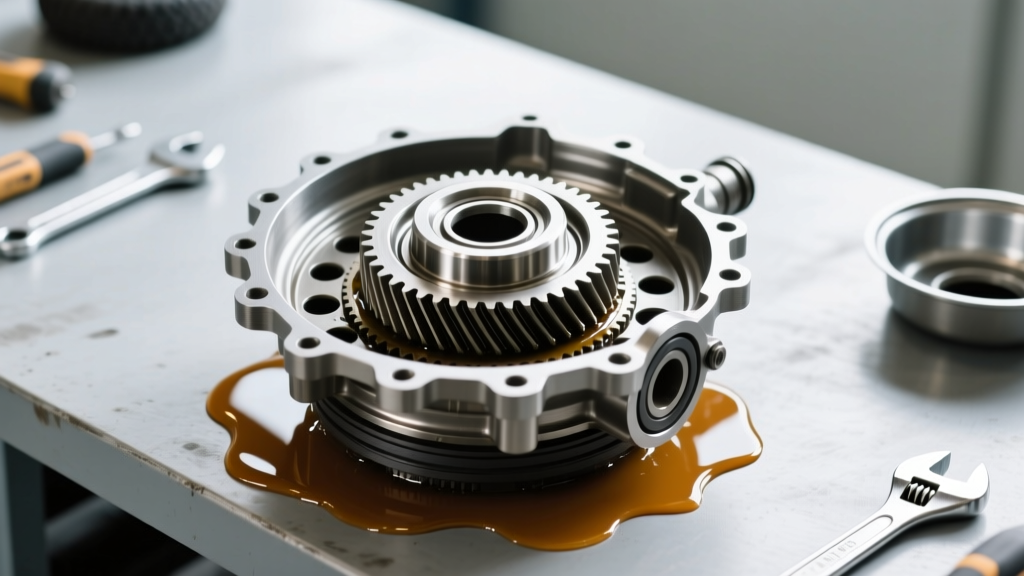
When truck owners schedule a Ford F150 differential fluid change, the primary goal is usually simple preventive maintenance. However, draining the gear oil from your F150’s axles presents one of the most valuable, yet frequently ignored, diagnostic opportunities in drivetrain care. The Ford F150 relies heavily on its rear 9.75-inch semi-floating axle (standard on most EcoBoost and 5.0L V8 models) and the front 8.8-inch independent front suspension (IFS) differential to transfer torque to the ground. These hypoid gear sets operate under immense sliding friction and extreme pressure (EP), generating significant heat and shear forces.
While Ford’s maintenance schedule often labels the factory gear oil as a 'lifetime' fill or recommends service only under 'severe' towing conditions at 150,000 miles, real-world tribology tells a different story. Extreme pressure additives, specifically zinc and phosphorus compounds (ZDDP), deplete over time. By visually and physically inspecting the fluid before it goes into the waste oil pan, you can predict ring and pinion wear, identify failing axle seals, and catch water intrusion before it destroys your bearings. Here is your expert guide to decoding differential fluid color, texture, and smell as part of a comprehensive preventive maintenance protocol.
Decoding Differential Fluid Color and Texture
The visual state of your F150's gear oil is a direct reflection of the internal health of the differential. Because hypoid gears rely on a thick elastohydrodynamic lubricant film to prevent metal-on-metal asperity contact, any degradation in the fluid's chemical structure or physical contamination is an immediate red flag.
Amber to Light Honey (Normal / Healthy)
Fresh Motorcraft SAE 75W-85 or 75W-140 synthetic gear oil is naturally translucent amber or light honey. If you drain the differential at 50,000 miles and the fluid retains this hue with a smooth, viscous texture, your axle is in excellent health. The EP additive package is intact, and the seals are keeping external contaminants out. No immediate corrective action is required beyond completing the standard Ford F150 differential fluid change.
Dark Brown or Opaque Black (Thermal Breakdown and Oxidation)
Gear oil that looks like used motor oil—dark brown or pitch black—indicates severe thermal oxidation. This is incredibly common on F150s equipped with the Max Trailer Tow Package that frequently pull heavy loads through mountainous terrain. The fluid has been subjected to temperatures exceeding 250°F (121°C), causing the base oil to oxidize and the EP additives to precipitate out of the suspension. Action: If the fluid is black but smooth to the touch, the gears are likely fine, but the fluid has lost its protective film strength. Perform an immediate fluid swap and consider installing an aftermarket differential cover with cooling fins or an active fluid cooler loop to manage heat.
Milky, Frothy, or 'Chocolate Milk' (Water Intrusion)
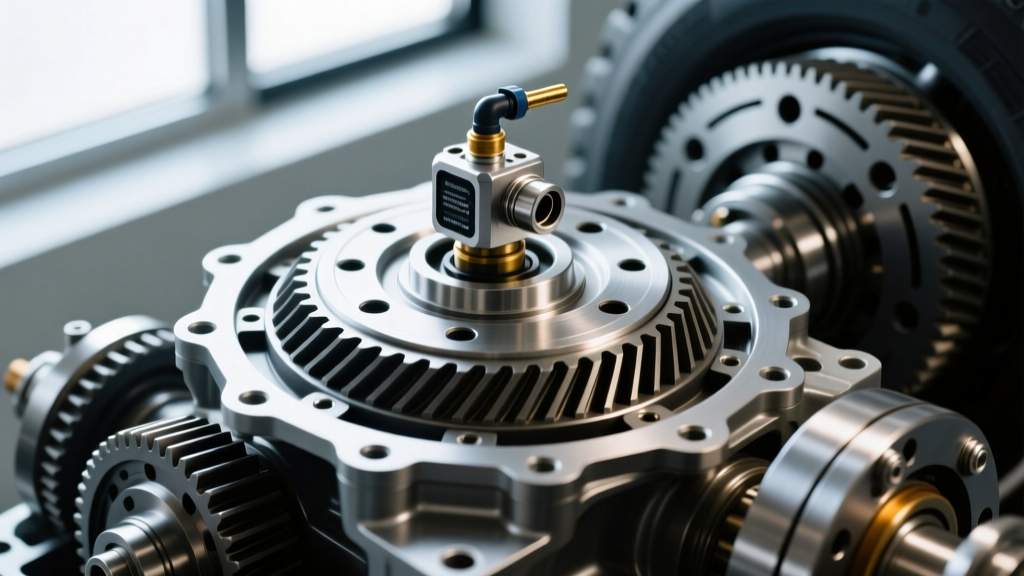
If the fluid resembles a coffee creamer or mayonnaise, water has emulsified with the gear oil. This is a critical failure of the axle's sealing system. On the F150, this almost always traces back to a clogged or submerged axle breather valve. When a hot axle is suddenly submerged in cold water (e.g., crossing a deep puddle or launching a boat), the rapid temperature drop creates a vacuum inside the differential housing. If the breather is clogged with mud or debris, the vacuum pulls water directly past the axle shaft seals or the pinion seal. Action: Flush the housing with a cheap flush oil, replace the axle breather valve (Ford Part # F75Z-4222-AA), and inspect the axle seals for weeping.
Glitter, Metallic Flakes, or Grit (Catastrophic Wear)
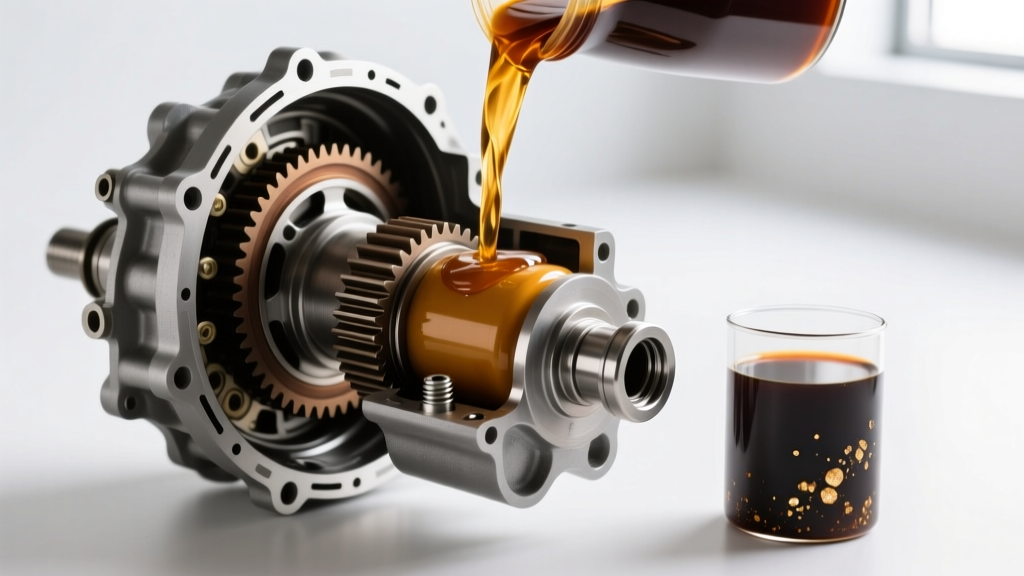
Fine, magnetic sludge on the drain plug is normal for the first 30,000 miles as the ring and pinion gears wear into their final mating pattern. However, if you see distinct metallic flakes, brass-colored shavings, or feel a gritty 'sand' texture between your fingers, your differential is actively destroying itself. Brass flakes indicate spider gear thrust washer failure, while steel chunks point to spalling on the hypoid gear teeth or bearing cage disintegration. Action: Do not just change the fluid. The differential cover must be removed for a full internal inspection, and a rebuild or replacement crate axle may be necessary.
F150 Differential Fluid Condition Diagnostic Chart
| Visual Cue | Texture & Smell | Probable Root Cause | Required Preventive Action |
|---|---|---|---|
| Translucent Amber | Smooth, thick, mild sulfur odor | Normal operating condition; additive package intact. | Standard drain and fill; reset maintenance minder. |
| Opaque Black | Smooth but thin; burnt/acrid odor | Thermal breakdown from heavy towing or low fluid level. | Change fluid; inspect pinion seal for heat bluing; add cooling capacity. |
| Milky / Frothy | Watery, emulsified, lacks viscosity | Water ingress via clogged breather or failed axle seal. | Flush housing; replace breather valve; inspect bearings for rust pitting. |
| Brass / Gold Flakes | Gritty, visible metallic shards | Spider gear thrust washer wear or side gear degradation. | Remove cover; inspect limited-slip clutch packs and cross-pin shafts. |
| Steel Chunks / Glitter | Highly magnetic, coarse grit | Ring and pinion spalling; bearing cage failure. | Complete differential teardown and rebuild; check backlash and pattern. |
The Sulfur Smell and Limited-Slip Clutch Degradation
Gear oil naturally contains sulfur-phosphorus compounds to handle the extreme sliding pressures of hypoid gears. However, a distinctly sharp, acrid, or 'burnt' smell when draining the rear 9.75-inch axle on an F150 equipped with a clutch-type Trac-Lok limited-slip differential (LSD) indicates that the internal friction modifiers have failed. When the clutch packs slip excessively during cornering, they generate localized hot spots that literally cook the gear oil and glaze the friction discs.
If you notice this burnt smell, simply refilling with standard gear oil will result in severe axle chatter and binding during tight turns. For clutch-type LSDs, you must add Motorcraft XL-3 Friction Modifier Additive (typically 4 oz per axle) alongside your 75W-140 gear oil. Note: If your F150 is equipped with a Torsen (torque-sensing) helical gear LSD, often found in specific off-road packages, friction modifiers are not required and can actually reduce the bias ratio of the Torsen unit. Always verify your axle code on the driver's door jamb sticker before adding modifiers.
OEM Specs, Torque Values, and the Maintenance Protocol
Executing a proper Ford F150 differential fluid change requires adherence to exact engineering specifications. Using the wrong viscosity or over-torquing the aluminum differential housings can lead to stripped threads and catastrophic leaks.
- Rear 9.75" Axle (Towing/Heavy Duty): Requires ~2.2 to 2.5 quarts of Motorcraft SAE 75W-140 Synthetic Gear Lubricant (Part # XL-19, meeting Ford Spec WSS-M2C192-A). If equipped with a Trac-Lok LSD, add 4 oz of XL-3 Friction Modifier.
- Rear 9.75" Axle (Standard Duty): Requires ~2.2 quarts of Motorcraft SAE 75W-85 Premium Gear Oil (meeting Ford Spec WSS-M2C942-A).
- Front 8.8" IFS Differential: Requires ~1.25 to 1.5 quarts of Motorcraft SAE 75W-85. Note: The front IFS diff is highly sensitive to overfilling, which causes fluid to aerate and leak past the pinion seal.
- Torque Specifications: The 9.75" rear fill and drain plugs (if equipped) must be torqued to exactly 33 lb-ft (45 Nm). The rear differential cover bolts (on models without a drain plug) should be torqued to 28 lb-ft (38 Nm) in a crisscross pattern to prevent warping the stamped steel cover or cracking the aluminum housing on newer models.
For detailed community testing on gear oil shear rates and additive depletion in Ford axles, the Bob Is The Oil Guy Automotive Lubricants Forum provides extensive used oil analysis (UOA) data that proves synthetic 75W-140 fluids maintain their viscosity index far longer than conventional 80W-90 alternatives under heavy EcoBoost towing loads.
Preventive Maintenance Costs and Intervals
Ignoring the condition of your differential fluid is a gamble with a high-stakes payout. A complete rear axle replacement for a 2024-2026 F150 can exceed $2,500 at the dealership, whereas a preventive fluid change costs between $45 and $80 in DIY materials. If you take the truck to an independent shop, expect to pay $150 to $250 for a front and rear axle service.
To maximize the lifespan of your F150's drivetrain, abandon the 'lifetime' fluid myth. If you tow a camper, haul heavy payloads, or frequently drive in dusty or wet environments, inspect and change your differential gear oil every 60,000 miles. By taking the extra 60 seconds to analyze the fluid's color, texture, and smell before tossing it in the recycling bin, you transform a routine maintenance chore into a powerful predictive diagnostic tool. For official chemical specifications and part numbers, always cross-reference the Ford Motorcraft Chemicals catalog to ensure you are using fluids that meet the exact WSS engineering requirements for your specific model year.